
Scalable Silver-Promoted Cyclization for High-Purity 5-Trifluoromethyl Imidazole Intermediates
Scalable Silver-Promoted Cyclization for High-Purity 5-Trifluoromethyl Imidazole Intermediates
The pharmaceutical and fine chemical industries are constantly seeking robust methodologies to access complex heterocyclic scaffolds that serve as critical building blocks for bioactive molecules. A recent technological breakthrough detailed in patent CN113735778A introduces a highly efficient preparation method for 5-trifluoromethyl substituted imidazole compounds, addressing long-standing challenges in synthetic accessibility and cost-effectiveness. This innovation leverages a transition metal silver oxide-promoted [3+2] cycloaddition reaction, utilizing trifluoroethylimidoyl chloride and imidate esters as key starting materials to construct the imidazole core with exceptional precision. The significance of this development cannot be overstated, as polysubstituted imidazole compounds are ubiquitous in medicinal chemistry, forming the backbone of widely used drugs such as metronidazole, losartan, and various antifungal agents like econazole and clotrimazole. Furthermore, the incorporation of the trifluoromethyl group is strategically vital for enhancing physicochemical properties, including metabolic stability, lipophilicity, and bioavailability, making these intermediates indispensable for modern drug discovery pipelines.
The Limitations of Conventional Methods vs. The Novel Approach
The Limitations of Conventional Methods
Historically, the synthesis of trifluoromethyl-substituted imidazoles has been hindered by reliance on expensive and less accessible synthons that limit scalability and economic viability. Traditional literature methods primarily depend on the reaction of methylene amine ylides with trifluoromethyl-substituted imines via [3+2] cycloaddition, a pathway that necessitates the use of costly trifluoro-acetaldehyde ethyl hemiacetal compounds. The procurement of these specific precursors often involves complex supply chains and high price points, creating a significant bottleneck for manufacturers aiming to produce these intermediates on a commercial scale. Additionally, the synthetic routes involving these traditional synthons frequently suffer from limited substrate scope and harsh reaction conditions that can compromise the integrity of sensitive functional groups. Consequently, the industry has faced persistent challenges in achieving high yields consistently across diverse substrate libraries, leading to increased waste generation and higher overall production costs that ultimately impact the pricing of downstream active pharmaceutical ingredients.
The Novel Approach
In stark contrast to these legacy methods, the novel approach disclosed in the patent utilizes cheap and easily obtainable trifluoroethylimidoyl chloride and imidoesters as the foundational building blocks for constructing the imidazole ring system. This strategy employs a silver oxide-promoted cyclization mechanism that proceeds under remarkably mild conditions, typically requiring temperatures between 40°C and 80°C and reaction times of merely 2 to 4 hours. The versatility of this method is demonstrated by its ability to tolerate a wide array of substituents, allowing for the design and synthesis of diversified fully substituted imidazole compounds tailored to specific molecular requirements. By shifting the synthetic paradigm to these more accessible precursors, the process not only simplifies the operational workflow but also drastically reduces the raw material costs associated with production. The reaction scheme below illustrates the general transformation where the imidate and trifluoroethylimidoyl chloride converge to form the target 5-trifluoromethyl imidazole structure with high atom economy.

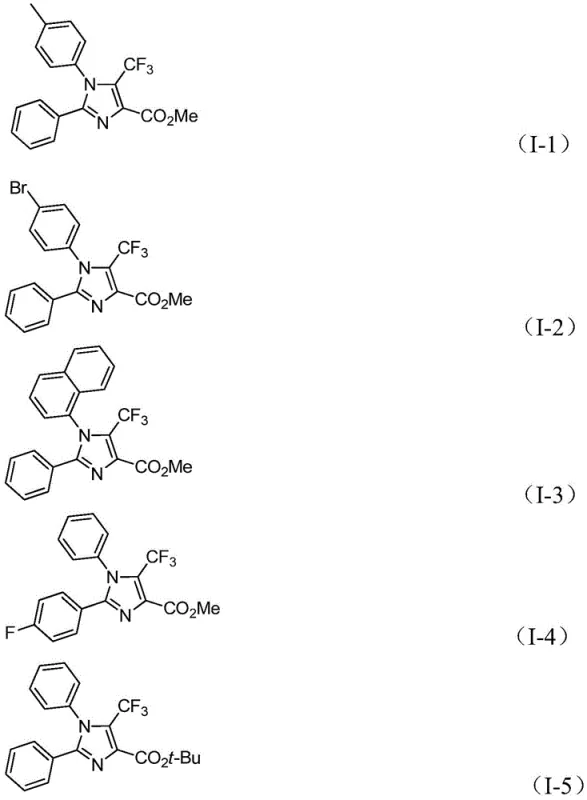
Furthermore, the substrate flexibility is exemplified by the successful synthesis of various derivatives, including those bearing electron-donating and electron-withdrawing groups on the aromatic rings, as shown in the specific examples provided in the patent data. This broad applicability ensures that the method serves as a reliable platform for generating diverse chemical libraries essential for structure-activity relationship studies in drug development.
Mechanistic Insights into Silver-Promoted Oxidative Cyclization
The mechanistic pathway of this transformation involves a sophisticated sequence of bond-forming events orchestrated by the silver promoter and the alkaline additive. Initially, an alkali-promoted intermolecular carbon-carbon bond formation occurs between the reactants to generate a bisimine intermediate, which serves as the precursor for the subsequent cyclization steps. This bisimine species then undergoes a crucial isomerization process followed by a silver-promoted intramolecular cyclization, effectively closing the five-membered imidazole ring to yield a 2-hydroimidazole compound. The final and decisive step involves oxidative aromatization under the promotion of silver oxide, which drives the equilibrium towards the fully aromatic 5-trifluoromethyl-substituted imidazole product, ensuring thermodynamic stability and high purity. Understanding this mechanism is critical for process chemists, as it highlights the dual role of silver oxide as both a cyclization promoter and an oxidant, eliminating the need for separate oxidation reagents that could introduce additional impurities.
From an impurity control perspective, the mild reaction conditions play a pivotal role in minimizing side reactions such as over-oxidation or decomposition of sensitive functional groups. The use of acetonitrile as the preferred organic solvent ensures sufficient dissolution of reactants while effectively promoting the reaction kinetics without facilitating unwanted byproduct formation. The stoichiometric balance between the promoter, additive, and substrates is carefully optimized to maximize conversion rates, with molar ratios typically maintained at 1:1.5:2 for trifluoroethylimidoyl chloride, imidate, and silver oxide respectively. This precise control over reaction parameters allows for the consistent production of high-purity intermediates, reducing the burden on downstream purification processes and ensuring that the final material meets the stringent quality specifications required for pharmaceutical applications.
How to Synthesize 5-Trifluoromethyl Imidazole Efficiently
Implementing this synthesis route in a laboratory or pilot plant setting requires adherence to specific operational protocols to ensure safety and reproducibility. The process begins with the precise weighing and mixing of trifluoroethylimidoyl chloride, the corresponding imidate, silver oxide, and sodium carbonate in a suitable reaction vessel such as a Schlenk tube. Acetonitrile is added as the solvent to facilitate homogeneous mixing, and the reaction mixture is heated to the optimal temperature range, typically around 60°C, for a duration of approximately 3 hours. Upon completion, the reaction mixture is filtered to remove inorganic salts, and the crude product is subjected to standard purification techniques such as column chromatography to isolate the target compound. The specific reaction setup for representative examples is depicted below, providing a visual guide for the stoichiometry and conditions employed.
- Combine trifluoroethylimidoyl chloride, imidate, silver oxide (2.0 equiv), and sodium carbonate (2.0 equiv) in acetonitrile solvent within a reaction vessel.
- Heat the reaction mixture to 60°C and stir continuously for 3 hours to ensure complete conversion via oxidative aromatization.
- Filter the reaction mixture, mix the residue with silica gel, and purify using column chromatography to isolate the final high-purity imidazole product.

Commercial Advantages for Procurement and Supply Chain Teams
For procurement managers and supply chain directors, the adoption of this novel synthesis method presents a compelling value proposition driven by significant reductions in raw material costs and enhanced process reliability. The shift away from expensive hemiacetal synthons to readily available imidates and trifluoroethylimidoyl chlorides fundamentally alters the cost structure of manufacturing these critical intermediates. By leveraging commodity chemicals that are widely produced and easily sourced from multiple suppliers, manufacturers can mitigate the risks associated with supply chain disruptions and price volatility often seen with specialized reagents. This strategic sourcing advantage translates directly into improved margin protection and more predictable budgeting for long-term production campaigns.
- Cost Reduction in Manufacturing: The elimination of costly transition metal catalysts beyond the promoter level and the use of inexpensive inorganic bases like sodium carbonate contribute to a leaner cost profile. The high reaction efficiency reported in the patent, with yields approaching quantitative levels for many substrates, means that less raw material is wasted, and the throughput per batch is maximized. This efficiency gain reduces the cost per kilogram of the final product, allowing for more competitive pricing in the global market for pharmaceutical intermediates. Additionally, the simplified post-treatment process involving basic filtration and standard chromatography minimizes the consumption of solvents and consumables, further driving down operational expenditures.
- Enhanced Supply Chain Reliability: The reliance on commercially available starting materials such as aromatic amines, aldehydes, and glycines ensures a robust and resilient supply chain that is less susceptible to single-source bottlenecks. Since these precursors are produced on a massive scale for various industries, their availability is generally stable, reducing the lead time for procuring necessary inputs for synthesis. This reliability is crucial for maintaining continuous production schedules and meeting the tight delivery deadlines demanded by downstream pharmaceutical clients. The ability to source materials locally or from a broad network of vendors enhances the overall agility of the supply chain, enabling rapid response to fluctuations in market demand.
- Scalability and Environmental Compliance: The method's compatibility with gram-level reactions and its potential for industrial scale-up make it an ideal candidate for commercial manufacturing without the need for extensive process re-engineering. The use of acetonitrile, a common industrial solvent, simplifies solvent recovery and recycling efforts, aligning with green chemistry principles and environmental regulations. The absence of highly toxic or hazardous reagents reduces the complexity of waste treatment and disposal, lowering the environmental compliance burden on the manufacturing facility. This scalability ensures that the process can grow alongside market demand, supporting the transition from clinical trial quantities to full commercial production seamlessly.
Frequently Asked Questions (FAQ)
The following questions address common technical and commercial inquiries regarding the implementation and benefits of this patented synthesis technology. These insights are derived directly from the experimental data and technical disclosures within the patent documentation to provide accurate guidance for potential partners. Understanding these details is essential for evaluating the feasibility of integrating this method into existing manufacturing workflows.
Q: What are the primary advantages of this silver-promoted method over traditional synthesis?
A: This method utilizes cheap and readily available starting materials like trifluoroethylimidoyl chloride and imidates, avoiding the expensive trifluoro-acetaldehyde ethyl hemiacetal required in conventional [3+2] cycloadditions. It offers extremely high reaction efficiency with yields approaching quantification and operates under mild conditions suitable for industrial scaling.
Q: Can this process accommodate diverse substrate functional groups?
A: Yes, the protocol demonstrates excellent substrate tolerance, successfully synthesizing derivatives with various substituents including methyl, tert-butyl, halogens (Cl, Br, F), and trifluoromethyl groups on the aromatic rings without significant loss in yield.
Q: Is this synthesis method suitable for large-scale commercial production?
A: Absolutely. The patent explicitly states the method can be expanded to gram-level reactions and provides a strong possibility for industrial large-scale production due to its simple operation, inexpensive reagents, and straightforward post-treatment involving standard filtration and chromatography.
Partnering with NINGBO INNO PHARMCHEM: Your Reliable 5-Trifluoromethyl Imidazole Supplier
At NINGBO INNO PHARMCHEM, we recognize the transformative potential of this silver-promoted cyclization technology for the production of high-value pharmaceutical intermediates. As a leading CDMO partner, we possess extensive experience scaling diverse pathways from 100 kgs to 100 MT/annual commercial production, ensuring that our clients receive consistent quality regardless of volume. Our state-of-the-art facilities are equipped with rigorous QC labs capable of verifying stringent purity specifications, guaranteeing that every batch of 5-trifluoromethyl imidazole meets the highest industry standards. We are committed to leveraging our technical expertise to optimize this process further, delivering cost-effective solutions that accelerate your drug development timelines.
We invite you to engage with our technical procurement team to discuss how this innovative synthesis route can be tailored to your specific project needs. By requesting a Customized Cost-Saving Analysis, you can gain a clear understanding of the economic benefits associated with switching to this efficient manufacturing method. We encourage you to contact us today to obtain specific COA data and route feasibility assessments, allowing you to make informed decisions that drive value and efficiency in your supply chain.