
Revolutionizing Levetiracetam Production: Advanced Enzymatic Catalysis for Commercial Scale-Up
The pharmaceutical industry is currently witnessing a paradigm shift towards greener, more efficient synthetic methodologies, particularly for high-volume antiepileptic drugs like Levetiracetam. Patent CN102260721A introduces a groundbreaking enzymatic process for the preparation of (S)-2-aminobutanamide, a critical chiral intermediate that dictates the efficacy and safety of the final active pharmaceutical ingredient. This technology addresses the longstanding challenges of high production costs, low yields, and significant environmental hazards associated with conventional chemical synthesis routes. By leveraging the specificity of nitrile hydratase enzymes within a controlled buffer system, this method achieves exceptional stereo-selectivity without the reliance on hazardous organic solvents. For R&D directors and procurement strategists, this patent represents a viable pathway to optimize the supply chain for next-generation neurological therapeutics.
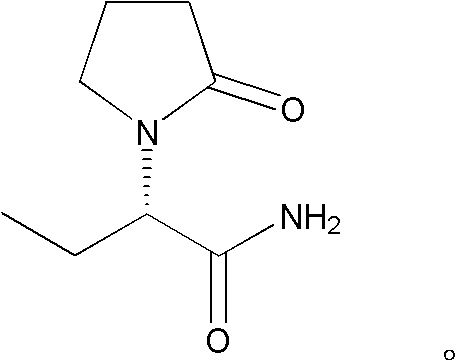
The Limitations of Conventional Methods vs. The Novel Approach
The Limitations of Conventional Methods
Historically, the industrial production of (S)-2-aminobutanamide has relied heavily on two primary strategies: chemical resolution and asymmetric synthesis, both of which suffer from inherent inefficiencies that impact the bottom line. Chemical resolution techniques, often utilizing chromatographic separation or chiral acid/base resolving agents, are plagued by a theoretical maximum yield of only 50%, necessitating the disposal or complex recycling of the unwanted enantiomer. Furthermore, these processes typically demand large volumes of toxic organic solvents such as dichloromethane or ethyl acetate, creating substantial environmental liabilities and increasing the cost of waste management. Asymmetric synthesis routes, while potentially offering higher yields, frequently require expensive chiral catalysts or auxiliaries that are difficult to recover, alongside harsh reaction conditions that complicate scale-up and pose safety risks in a manufacturing environment.
The Novel Approach
In stark contrast, the enzymatic methodology disclosed in the patent utilizes a nitrile hydratase-catalyzed hydration of 2-aminobutyronitrile in an aqueous buffer system, fundamentally altering the economic and ecological footprint of the synthesis. This biocatalytic approach operates under mild conditions, typically between 15°C and 40°C, eliminating the need for energy-intensive heating or cooling cycles and high-pressure equipment. The use of water as the primary solvent not only removes the fire hazards and toxicity associated with volatile organic compounds but also simplifies the downstream isolation of the product through crystallization. Moreover, the kinetic resolution capability of the enzyme allows for the potential recycling of the unreacted (R)-isomer, effectively breaking the 50% yield barrier of traditional resolution and driving down the cost per kilogram of the high-purity pharmaceutical intermediate.
Mechanistic Insights into Nitrile Hydratase-Catalyzed Hydrolysis
The core of this technological advancement lies in the stereoselective activity of specific nitrile hydratases, such as ES-NHT-105, ES-NHT-107, and ES-NHT-120, which are produced via E. coli clonal expression. These enzymes facilitate the hydration of the nitrile group in 2-aminobutyronitrile to form the corresponding amide with high enantioselectivity, preferentially converting the (S)-substrate while leaving the (R)-enantiomer largely untouched. The reaction mechanism involves the coordination of the nitrile nitrogen to a metal center within the enzyme's active site, followed by nucleophilic attack by a water molecule, a process that is highly sensitive to the pH of the surrounding buffer solution. Maintaining the pH between 6.0 and 8.0 is critical for preserving the structural integrity and catalytic efficiency of the enzyme, ensuring that the reaction proceeds with minimal side-product formation such as the corresponding carboxylic acid.
From an impurity control perspective, the enzymatic route offers a distinct advantage by minimizing the formation of racemic by-products and heavy metal residues often found in transition-metal catalyzed reactions. The high specificity of the biocatalyst ensures that the resulting (S)-2-aminobutanamide possesses an optical purity exceeding 98% ee, which is essential for the subsequent cyclization step in Levetiracetam synthesis. Any residual (R)-2-aminobutyronitrile can be separated and subjected to racemization under alkaline conditions, allowing it to re-enter the reaction loop and thereby maximizing atom economy. This closed-loop potential significantly reduces the raw material consumption index, making the process not only chemically elegant but also economically robust for large-scale commercial operations seeking reliable pharmaceutical intermediate suppliers.
How to Synthesize (S)-2-Aminobutanamide Efficiently
The implementation of this enzymatic process requires precise control over reaction parameters to maximize conversion rates and enantiomeric excess. The protocol involves dissolving the substrate 2-aminobutyronitrile in a phosphate buffer system, followed by the addition of the immobilized or free nitrile hydratase catalyst. The reaction mixture is then agitated at a controlled temperature, typically around 25°C to 30°C, for a duration ranging from 15 to 24 hours depending on the specific enzyme variant employed. Detailed standard operating procedures regarding enzyme loading ratios, buffer molarity, and work-up protocols are essential for reproducibility and are outlined in the comprehensive guide below.
- Prepare a phosphate buffer solution with a pH range of 6.0 to 8.0 and introduce the substrate 2-aminobutyronitrile.
- Add the specific Nitrile hydratase catalyst (such as ES-NHT-120) at a mass ratio between 1: 100 and 1:10 relative to the substrate.
- Maintain the reaction temperature between 15°C and 40°C for 3 to 24 hours to achieve high conversion and enantiomeric excess.
Commercial Advantages for Procurement and Supply Chain Teams
For procurement managers and supply chain heads, the transition to this enzymatic platform offers transformative benefits that extend far beyond simple yield improvements. The elimination of expensive chiral resolving agents and the reduction in solvent usage directly translate to a leaner cost structure, shielding the supply chain from volatility in petrochemical-derived solvent markets. Additionally, the use of fermentation-derived enzymes ensures a sustainable and scalable source of catalyst, reducing dependency on scarce precious metals or complex synthetic ligands that often bottleneck production schedules. This stability is crucial for maintaining continuous supply lines for high-purity pharmaceutical intermediates in a regulated global market.
- Cost Reduction in Manufacturing: The shift to an aqueous-based enzymatic process drastically simplifies the manufacturing infrastructure by removing the need for explosion-proof solvent recovery systems and complex distillation units. By avoiding the purchase of stoichiometric amounts of chiral acids or bases required for resolution, the variable cost of goods sold is significantly lowered. Furthermore, the ability to recycle the unreacted (R)-isomer substrate means that raw material utilization is optimized, leading to substantial cost savings over the lifecycle of the product without compromising on quality standards.
- Enhanced Supply Chain Reliability: Biocatalysts produced via fermentation offer a highly reliable and consistent supply compared to chemically synthesized chiral catalysts which may have long lead times. The robustness of the enzyme variants described, such as ES-NHT-120, allows for flexible production scheduling as the reaction tolerates a broad range of mild conditions. This flexibility reduces the risk of batch failures due to equipment malfunction or parameter drift, ensuring that delivery commitments to downstream API manufacturers are met consistently and reducing lead time for high-purity pharmaceutical intermediates.
- Scalability and Environmental Compliance: Scaling a water-based reaction is inherently safer and more straightforward than scaling organic solvent processes, as it mitigates risks associated with flammability and VOC emissions. The simplified waste stream, consisting primarily of aqueous buffer and biomass, is easier and cheaper to treat, ensuring compliance with increasingly stringent environmental regulations. This 'green' credential not only future-proofs the manufacturing site against regulatory changes but also aligns with the sustainability goals of major multinational pharmaceutical clients seeking responsible partners.
Frequently Asked Questions (FAQ)
The following questions address common technical and commercial inquiries regarding the enzymatic synthesis of (S)-2-aminobutanamide. These insights are derived directly from the experimental data and claims within the patent literature, providing clarity on the feasibility and advantages of this technology for potential adopters.
Q: What are the primary advantages of the enzymatic method over traditional resolution?
A: The enzymatic method eliminates the need for toxic organic solvents and expensive chiral resolving agents, utilizing water as the primary solvent which drastically reduces environmental hazards and waste treatment costs.
Q: Can the unwanted (R)-isomer be utilized in this process?
A: Yes, the unreacted (R)-2-aminobutyronitrile remaining after kinetic resolution can be recycled through racemization under alkaline conditions, significantly improving overall atom economy and yield.
Q: What represents the critical quality attributes of the final intermediate?
A: The process yields (S)-2-aminobutanamide with a chemical purity exceeding 99% and an optical purity greater than 98% ee, meeting stringent requirements for downstream API synthesis.
Partnering with NINGBO INNO PHARMCHEM: Your Reliable (S)-2-Aminobutanamide Supplier
At NINGBO INNO PHARMCHEM, we recognize the strategic importance of robust intermediate supply chains for the neurological therapeutic sector. Our team possesses extensive experience scaling diverse pathways from 100 kgs to 100 MT/annual commercial production, ensuring that the transition from laboratory bench to industrial reactor is seamless and efficient. We maintain stringent purity specifications and operate rigorous QC labs to guarantee that every batch of (S)-2-aminobutanamide meets the exacting standards required for GMP API synthesis, providing our partners with absolute confidence in material quality.
We invite you to collaborate with us to leverage this advanced enzymatic technology for your Levetiracetam projects. Contact our technical procurement team today to request a Customized Cost-Saving Analysis tailored to your specific volume requirements. We are prepared to provide specific COA data and route feasibility assessments to demonstrate how our optimized processes can enhance your operational efficiency and reduce overall manufacturing costs.