
Advanced Synthesis of 1-Fluoro-2-bromo-3-iodobenzene for Commercial Pharmaceutical Manufacturing
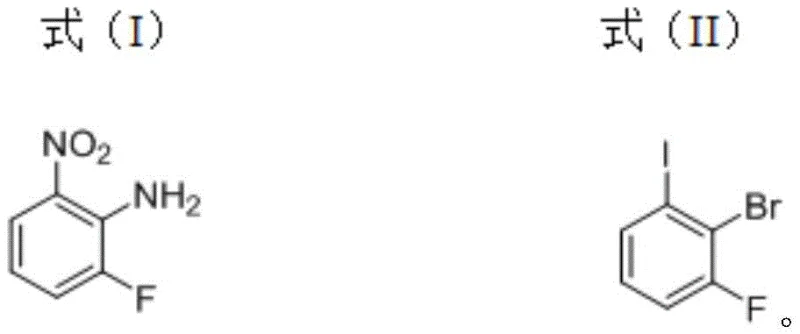
The global demand for poly-halogenated aromatic compounds continues to surge, driven by their critical role as building blocks in the synthesis of advanced active pharmaceutical ingredients (APIs) and agrochemicals. A pivotal development in this sector is detailed in patent CN108002976B, which discloses a robust and economically viable preparation method for 1-fluoro-2-bromo-3-iodobenzene. This specific tri-halogenated benzene derivative serves as a high-value intermediate, enabling complex cross-coupling reactions essential for modern drug discovery. The patent outlines a strategic shift away from hazardous cryogenic chemistries toward a safer, room-temperature diazotization pathway. By leveraging 1-fluoro-2-amino-3-nitrobenzene as the primary feedstock, the disclosed methodology achieves high regioselectivity and superior yields while mitigating the severe safety risks associated with traditional organolithium reagents. For procurement leaders and R&D directors alike, this innovation represents a significant opportunity to optimize supply chain resilience and reduce manufacturing overheads without compromising on chemical purity.
The Limitations of Conventional Methods vs. The Novel Approach
The Limitations of Conventional Methods
Historically, the synthesis of densely functionalized halobenzenes like 1-fluoro-2-bromo-3-iodobenzene has relied heavily on organometallic strategies that are fraught with operational difficulties. Prior art, such as the methods disclosed in WO2011100502A1, typically employs lithiation reactions using tert-butyllithium or n-butyllithium. These reagents are notoriously pyrophoric, requiring stringent exclusion of moisture and air, which necessitates specialized equipment and highly trained personnel. Furthermore, these reactions must be conducted at extremely low temperatures, often ranging from -75°C to -78°C, imposing a massive energy burden on the manufacturing process. Beyond the safety and energy costs, the economic efficiency is compromised by the high price of the lithiating agents and the frequent loss of expensive iodine atoms during the multi-step transformation. The cumulative effect is a process that is difficult to scale, expensive to operate, and inherently risky for large-scale commercial production.
The Novel Approach
In stark contrast, the methodology presented in CN108002976B introduces a paradigm shift by utilizing classical diazotization chemistry combined with catalytic hydrogenation. This novel approach initiates with a diazotization bromination reaction to install the bromine atom, followed by a reduction of the nitro group, and concludes with a diazotization iodination to introduce the iodine moiety. This sequence allows all reactions to proceed under mild conditions, predominantly at room temperature, eliminating the need for energy-intensive cryogenic cooling systems. By deferring the introduction of iodine to the final step, the process ensures high utilization rates of this costly element, preventing waste during intermediate transformations. The reliance on abundant and stable reagents such as sodium nitrite, hydrobromic acid, and potassium iodide further simplifies the supply chain logistics. This strategic redesign not only enhances safety profiles but also aligns perfectly with the principles of green chemistry, making it an ideal candidate for cost reduction in pharmaceutical intermediate manufacturing.
Mechanistic Insights into Diazotization-Halogenation Cascade
The core of this synthetic breakthrough lies in the precise control of diazonium salt formation and subsequent substitution. In the first stage, 1-fluoro-2-amino-3-nitrobenzene undergoes diazotization in the presence of concentrated hydrobromic acid and a cuprous bromide catalyst. The generation of the diazonium intermediate is carefully managed by the dropwise addition of sodium nitrite over several hours, ensuring that the concentration of the reactive species remains low to prevent side reactions. The cuprous bromide facilitates the Sandmeyer-type replacement of the diazo group with a bromine atom, yielding 1-fluoro-2-bromo-3-nitrobenzene with high regio-fidelity. This step is critical as it establishes the halogen pattern required for downstream coupling reactions. The subsequent reduction of the nitro group to an amine is achieved via catalytic hydrogenation using Raney nickel. This heterogeneous catalysis method is highly efficient, operating under moderate hydrogen pressures (0.1-10 MPa) to cleanly convert the nitro functionality without affecting the sensitive carbon-halogen bonds already present in the molecule.
The final iodination step mirrors the initial bromination but utilizes iodide sources such as potassium iodide or hydrogen iodide. The 1-fluoro-2-bromo-3-aminobenzene is again subjected to diazotization under acidic conditions, generating a fresh diazonium salt which is immediately displaced by the iodide ion. This late-stage functionalization is mechanistically advantageous because it avoids exposing the carbon-iodine bond to the reducing conditions of the previous step or the harsh basic conditions often required for lithiation. The use of aqueous workups and standard organic solvents like methylene chloride for extraction ensures that impurities, including residual copper catalysts and inorganic salts, are effectively removed. This rigorous control over the reaction environment results in a product with a clean impurity profile, which is paramount for meeting the stringent quality specifications demanded by regulatory bodies in the pharmaceutical industry.
How to Synthesize 1-Fluoro-2-bromo-3-iodobenzene Efficiently
Implementing this synthesis route requires careful attention to stoichiometry and addition rates to maximize yield and safety. The process is divided into three distinct operational units: bromination, reduction, and iodination. Each step utilizes common industrial chemicals but demands precise control over reaction parameters such as temperature and pH. The following guide outlines the standardized protocol derived from the patent examples, providing a clear roadmap for process chemists aiming to replicate this high-efficiency pathway. Detailed standard operating procedures regarding specific equipment setups and safety protocols should be consulted prior to execution.
- Perform diazotization bromination on 1-fluoro-2-amino-3-nitrobenzene using hydrobromic acid, cuprous bromide, and sodium nitrite to obtain 1-fluoro-2-bromo-3-nitrobenzene.
- Conduct catalytic hydrogenation reduction on the nitro intermediate using Raney nickel under hydrogen pressure to yield 1-fluoro-2-bromo-3-aminobenzene.
- Execute diazotization iodination on the amino intermediate with sodium nitrite and potassium iodide under acidic conditions to finalize 1-fluoro-2-bromo-3-iodobenzene.
Commercial Advantages for Procurement and Supply Chain Teams
For procurement managers and supply chain directors, the transition to this novel synthesis route offers tangible strategic benefits that extend beyond simple unit cost calculations. The elimination of cryogenic infrastructure represents a significant capital expenditure saving, as facilities no longer require specialized low-temperature reactors or the extensive insulation and refrigeration systems associated with organolithium chemistry. Furthermore, the shift to room temperature operations drastically reduces energy consumption, contributing to lower utility costs and a smaller carbon footprint for the manufacturing site. The use of non-pyrophoric reagents simplifies storage and handling requirements, reducing insurance premiums and safety compliance costs. These factors collectively contribute to a more resilient and cost-effective supply chain capable of withstanding market fluctuations.
- Cost Reduction in Manufacturing: The replacement of expensive and hazardous organolithium reagents with commodity chemicals like sodium nitrite and hydrobromic acid drives down raw material costs significantly. Additionally, the high atom economy of the final iodination step ensures that expensive iodine resources are not wasted, optimizing the cost per kilogram of the final API intermediate. The simplified workup procedures, involving standard extraction and distillation, further reduce processing time and solvent usage, leading to substantial overall cost savings in the production budget.
- Enhanced Supply Chain Reliability: Sourcing pyrophoric reagents like tert-butyllithium can be logistically challenging and subject to strict transportation regulations, often leading to delays. In contrast, the reagents required for this diazotization pathway are widely available bulk chemicals with stable supply lines. This accessibility ensures consistent production schedules and reduces the risk of supply disruptions caused by regulatory hurdles or vendor shortages, thereby enhancing the reliability of the supply chain for downstream pharmaceutical customers.
- Scalability and Environmental Compliance: The mild reaction conditions and aqueous nature of key steps make this process inherently scalable from pilot plant to multi-ton commercial production. The absence of heavy metal catalysts in the final steps (using Raney Nickel which is filtered off) and the use of standard solvents simplify waste treatment and disposal. This alignment with environmental, health, and safety (EHS) standards facilitates easier regulatory approval and supports sustainable manufacturing practices, which are increasingly critical for maintaining social license to operate in the fine chemical sector.
Frequently Asked Questions (FAQ)
The following questions address common technical and commercial inquiries regarding the production of 1-fluoro-2-bromo-3-iodobenzene using this patented methodology. These insights are derived directly from the experimental data and technical specifications outlined in the patent documentation, providing clarity on process capabilities and limitations. Understanding these details is crucial for making informed sourcing and development decisions.
Q: Why is this new synthesis route safer than conventional lithiation methods?
A: Conventional methods rely on highly flammable tert-butyllithium or n-butyllithium at cryogenic temperatures (-78°C), posing significant fire and operational risks. This novel patent utilizes aqueous diazotization and catalytic hydrogenation at room temperature, drastically reducing safety hazards and equipment requirements.
Q: How does this method improve iodine utilization compared to prior art?
A: Traditional routes often introduce iodine early in the synthesis, leading to potential loss during subsequent harsh transformations like lithiation. By positioning the iodination as the final step via a mild diazotization mechanism, this process maximizes atom economy and minimizes the loss of expensive iodine resources.
Q: Is this process suitable for large-scale industrial production?
A: Yes, the reaction conditions are mild (room temperature) and utilize standard reagents like sodium nitrite and hydrobromic acid. The elimination of cryogenic cooling and pyrophoric reagents makes the process highly scalable and compatible with standard stainless steel reactors used in fine chemical manufacturing.
Partnering with NINGBO INNO PHARMCHEM: Your Reliable 1-Fluoro-2-bromo-3-iodobenzene Supplier
At NINGBO INNO PHARMCHEM, we recognize the critical importance of high-quality intermediates in the drug development lifecycle. Our technical team has extensively analyzed the pathway described in CN108002976B and possesses the expertise to implement this advanced synthesis route at scale. We boast extensive experience scaling diverse pathways from 100 kgs to 100 MT/annual commercial production, ensuring that your project needs are met with precision and consistency. Our state-of-the-art facilities are equipped with rigorous QC labs capable of verifying stringent purity specifications, guaranteeing that every batch of 1-fluoro-2-bromo-3-iodobenzene meets the highest industry standards for pharmaceutical applications.
We invite you to collaborate with us to leverage this innovative technology for your next project. By partnering with our technical procurement team, you can request a Customized Cost-Saving Analysis tailored to your specific volume requirements. We encourage you to reach out today to discuss your needs,索取 specific COA data, and review our comprehensive route feasibility assessments. Let us help you secure a stable, cost-effective, and high-quality supply of this essential chemical building block.