
Advanced Manufacturing of Diclazuril: A High-Yield Route for Global Veterinary Supply Chains
The global demand for effective anticoccidial agents in the poultry and livestock sectors continues to drive innovation in veterinary pharmaceutical manufacturing. Patent CN107746390B, published in March 2021, introduces a significant technological breakthrough in the synthesis of Diclazuril, a broad-spectrum, residue-free anticoccidial drug. This patent details a novel preparation method that fundamentally restructures the synthetic pathway to enhance yield and environmental compliance. Unlike traditional routes that suffer from low efficiency and heavy metal waste, this new approach utilizes a condensation reaction between 3,4,5-trichloronitrobenzene and p-chlorobenzonitrile, followed by a sophisticated catalytic reduction and a streamlined one-pot cyclization. For R&D directors and procurement specialists seeking a reliable agrochemical intermediate supplier, understanding the mechanistic advantages of this patent is crucial for securing long-term supply chain stability. The structural integrity of the final product, as depicted below, relies on precise control over the triazine ring formation and the dichlorophenylacetonitrile moiety.
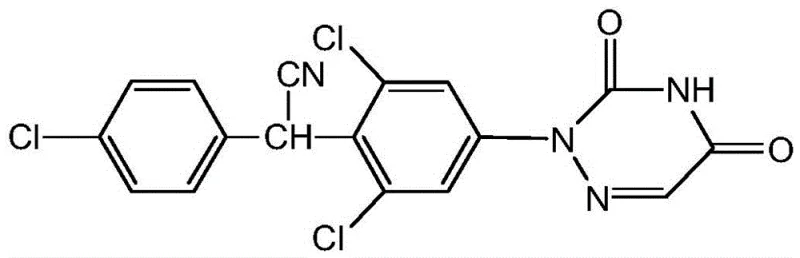
This technical insight report analyzes the patent data to demonstrate how this specific synthetic route offers a viable solution for cost reduction in veterinary drug manufacturing. By shifting away from stoichiometric metal reductions and optimizing the cyclization precursors, the process not only improves the total yield to 43.8% but also drastically simplifies the downstream purification requirements. For supply chain heads, the elimination of difficult-to-handle byproducts translates directly into reduced lead times and lower operational risks. The following sections provide a deep dive into the chemical engineering principles behind this innovation, offering a roadmap for scaling this technology from laboratory benchtop to multi-ton commercial production.
The Limitations of Conventional Methods vs. The Novel Approach
The Limitations of Conventional Methods
Historically, the industrial synthesis of Diclazuril has been plagued by significant inefficiencies and environmental hazards that burden both R&D budgets and waste management protocols. Conventional literature describes routes starting from 2,6-dichloro-p-nitroaniline, which typically involve a diazotization step followed by condensation and reduction. A critical bottleneck in these legacy processes is the reliance on iron powder for the reduction of nitro groups. This stoichiometric reduction generates vast quantities of iron mud, a hazardous solid waste that requires complex filtration and expensive disposal procedures, thereby inflating the overall production cost. Furthermore, these older methods often necessitate the use of phase transfer catalysts like tetrabutylammonium bromide and chloroform extractions, which introduce additional toxicity concerns and solvent recovery costs. The total yield in these traditional pathways rarely exceeds 35%, meaning a significant portion of valuable raw materials is lost as waste, creating a fragile supply chain vulnerable to raw material price fluctuations.
The Novel Approach
The methodology disclosed in patent CN107746390B represents a paradigm shift by replacing the problematic iron powder reduction with a catalytic hydrazine hydrate system. This novel approach initiates with the condensation of 3,4,5-trichloronitrobenzene and p-chlorobenzonitrile in a 2-butanone solvent system, achieving high conversion rates under mild alkaline conditions. The subsequent reduction step utilizes ferric trichloride and activated carbon as catalysts rather than stoichiometric reagents, effectively eliminating the generation of iron sludge. Moreover, the final stage employs a "one-pot" strategy where diazotization, coupling, cyclization, hydrolysis, and decarboxylation occur sequentially in the same vessel using malonyl ethyl dicarbamate. This consolidation of steps not only minimizes solvent usage and transfer losses but also leverages a cheaper, more readily available precursor compared to the cyanoacetyl ethyl carbamate used in prior art. The result is a robust, scalable process that aligns perfectly with modern green chemistry principles while delivering superior economic performance.
Mechanistic Insights into Catalytic Hydrazine Reduction and One-Pot Cyclization
The core chemical innovation lies in the transition from stoichiometric metal reduction to a catalytic transfer hydrogenation mechanism. In the second step of the synthesis, the nitro-intermediate, 2,6-dichloro-alpha-(4-chlorophenyl)-4-nitrophenylacetonitrile, is reduced to the corresponding amine using hydrazine hydrate. The presence of ferric trichloride (FeCl3) acts as a Lewis acid catalyst that facilitates the electron transfer from hydrazine to the nitro group. This mechanism proceeds through the formation of azo and hydrazo intermediates which are rapidly reduced to the amine, regenerating the catalyst in the cycle. Unlike iron powder reduction, which consumes the metal and produces oxide sludge, this catalytic cycle ensures that the metal salt remains in solution or adsorbed on the activated carbon support, allowing for easy removal via simple filtration. The reaction is conducted in methanol at reflux temperatures (55-65°C), ensuring high solubility of intermediates and preventing the precipitation of side products that could lower purity. This precise control over the reduction environment is critical for maintaining the integrity of the sensitive nitrile group, which might otherwise hydrolyze under harsher acidic reduction conditions.
Furthermore, the final cyclization mechanism demonstrates exceptional atom economy through its one-pot design. The amine intermediate undergoes diazotization with sodium nitrite in an acetic acid medium, forming a diazonium salt in situ. This highly reactive species immediately couples with malonyl ethyl dicarbamate, initiating a cascade of reactions that build the triazinone ring system. The subsequent hydrolysis and decarboxylation steps are carefully managed by controlling the temperature and acidity, eventually leading to the closure of the heterocyclic ring. A key feature of this mechanism is the management of the decarboxylation byproduct; while thioglycolic acid is utilized, the process includes specific oxidation steps with hydrogen peroxide post-reaction. This oxidative treatment likely converts residual sulfhydryl compounds into less odorous sulfones or sulfonic acids, addressing the notorious odor issues associated with thioglycolic acid degradation. This mechanistic elegance ensures that the final high-purity veterinary drug intermediate is obtained with minimal impurity profiles, reducing the burden on downstream crystallization and drying units.
How to Synthesize Diclazuril Efficiently
Implementing this synthesis route requires strict adherence to the thermal and pH parameters outlined in the patent examples to ensure reproducibility and safety. The process begins with the precise condensation of the chlorinated aromatic rings, followed by the critical catalytic reduction which sets the stage for the final cyclization. Operators must monitor the exothermic nature of the hydrazine addition and maintain the reflux conditions to drive the reduction to completion without degrading the product. The final one-pot sequence demands careful control of the diazotization temperature to prevent premature decomposition of the diazonium species, followed by a controlled ramp-up for cyclization. For detailed operational parameters, stoichiometry, and safety warnings, please refer to the standardized protocol below.
- Condense 3,4,5-trichloronitrobenzene with p-chlorobenzonitrile in 2-butanone using sodium hydroxide at 50-55°C to form the nitro-intermediate.
- Perform catalytic reduction using hydrazine hydrate and ferric trichloride in methanol to convert the nitro group to an amine without generating iron mud.
- Execute a one-pot reaction involving diazotization, coupling with malonyl ethyl dicarbamate, cyclization, and decarboxylation to finalize the diclazuril structure.
Commercial Advantages for Procurement and Supply Chain Teams
For procurement managers and supply chain directors, the adoption of this patented synthesis route offers tangible strategic advantages beyond mere chemical yield. The primary value driver is the drastic simplification of the waste stream profile. By eliminating the iron powder reduction step, manufacturers remove the need for handling, filtering, and disposing of tons of hazardous iron mud per batch. This reduction in solid waste translates directly into lower disposal fees and reduced regulatory compliance burdens, which are increasingly stringent in global chemical manufacturing hubs. Additionally, the switch to malonyl ethyl dicarbamate as a cyclization precursor leverages a commodity chemical that is significantly cheaper and more abundant than the specialized cyanoacetyl derivatives used in older methods. This raw material substitution creates a buffer against supply volatility, ensuring that production schedules remain uninterrupted even during market shortages of niche reagents.
- Cost Reduction in Manufacturing: The economic benefits of this process are derived from multiple vectors of efficiency. First, the elimination of stoichiometric iron powder removes a major raw material cost and the associated logistics of handling bulk metals. Second, the catalytic nature of the reduction means that expensive metal salts are used in minute quantities, further driving down the bill of materials. Third, the one-pot finalization reduces the number of unit operations, saving on labor hours, energy consumption for heating and cooling multiple vessels, and solvent losses during transfers. These cumulative effects result in a significantly lower cost of goods sold (COGS), allowing for more competitive pricing in the global veterinary market without sacrificing margin.
- Enhanced Supply Chain Reliability: Supply chain resilience is bolstered by the use of widely available starting materials such as 3,4,5-trichloronitrobenzene and p-chlorobenzonitrile. These commodities are produced at scale by multiple suppliers globally, reducing the risk of single-source dependency. Furthermore, the simplified workup procedures, particularly the avoidance of difficult filtrations associated with iron sludge, accelerate the batch cycle time. Faster turnover means that manufacturing capacity can be utilized more effectively, allowing suppliers to respond more agilely to sudden spikes in demand from the poultry industry. The robustness of the catalytic system also ensures consistent batch-to-batch quality, minimizing the risk of production delays caused by out-of-specification results.
- Scalability and Environmental Compliance: Scaling this process from pilot plant to commercial production is facilitated by the homogeneous nature of the catalytic reduction and the consolidated one-pot final step. The absence of heterogeneous iron sludge prevents reactor fouling and heat transfer issues that often plague scale-up efforts in traditional routes. From an environmental perspective, the process aligns with modern sustainability goals by minimizing solid waste generation and addressing volatile organic compound (VOC) emissions through improved odor control during decarboxylation. This environmental stewardship not only ensures compliance with local regulations but also enhances the brand reputation of the manufacturer as a responsible partner in the pharmaceutical supply chain.
Frequently Asked Questions (FAQ)
The following questions address common technical and commercial inquiries regarding the implementation of this Diclazuril synthesis method. These answers are derived directly from the experimental data and comparative examples provided in patent CN107746390B, offering clarity on yield expectations, environmental impact, and process robustness. Understanding these nuances is essential for technical teams evaluating the feasibility of technology transfer.
Q: How does this new process improve upon traditional iron powder reduction methods?
A: The patented method replaces traditional iron powder reduction with a catalytic hydrazine hydrate system using ferric trichloride. This eliminates the generation of massive amounts of iron mud sludge, significantly reducing solid waste disposal costs and simplifying the filtration process.
Q: What is the total yield advantage of this synthesis route?
A: While conventional routes starting from 2,6-dichloro-p-nitroaniline often achieve total yields around 20% to 35%, this optimized process utilizing 3,4,5-trichloronitrobenzene achieves a total yield of approximately 43.8%, representing a substantial increase in material efficiency.
Q: Is the decarboxylation step environmentally compliant?
A: Yes, the process addresses the environmental concerns associated with thioglycolic acid odor during decarboxylation. By optimizing the reaction conditions and workup procedures, including specific oxidation steps, the method mitigates the severe odor issues typically associated with large-scale production.
Partnering with NINGBO INNO PHARMCHEM: Your Reliable Diclazuril Supplier
At NINGBO INNO PHARMCHEM, we recognize that the transition from patent literature to commercial reality requires deep technical expertise and robust infrastructure. As a leading CDMO partner, we possess the extensive experience scaling diverse pathways from 100 kgs to 100 MT/annual commercial production, ensuring that the theoretical benefits of this novel synthesis route are fully realized in practice. Our facilities are equipped with state-of-the-art reactors capable of handling the specific thermal and pressure requirements of the hydrazine reduction and one-pot cyclization steps. We maintain stringent purity specifications and operate rigorous QC labs to guarantee that every batch of Diclazuril meets the highest international standards for veterinary applications, providing our partners with absolute confidence in product quality.
We invite global pharmaceutical and agrochemical companies to collaborate with us to leverage this advanced manufacturing technology. By partnering with our technical procurement team, you can access a Customized Cost-Saving Analysis tailored to your specific volume requirements. We encourage you to contact us today to request specific COA data and route feasibility assessments, allowing us to demonstrate how our optimized supply chain can deliver high-purity Diclazuril with superior reliability and cost efficiency.