
Revolutionizing Cyclam Production: A Safer, High-Yield Route for Critical Pharmaceutical Intermediates
The pharmaceutical and fine chemical industries are constantly seeking more efficient pathways to synthesize complex macrocyclic structures, particularly those serving as critical scaffolds for life-saving drugs. A recent technological breakthrough documented in patent CN114014819A introduces a novel preparation method for 1,4,8,11-tetraazacyclotetradecane, commonly known as Cyclam. This macrocyclic polyamine is not merely a laboratory curiosity but a pivotal building block in the synthesis of Plerixafor, a potent chemokine receptor antagonist used in stem cell mobilization, as well as a key ligand for MRI contrast agents and biosensors. The significance of this patent lies in its departure from traditional, hazardous synthetic routes, offering a streamlined process that utilizes oxalate protection strategies to achieve superior yields and purity profiles. By fundamentally re-engineering the protection and deprotection steps, this innovation addresses long-standing bottlenecks in atom economy and operational safety, positioning it as a transformative approach for reliable pharmaceutical intermediate supplier networks globally.
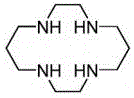
The Limitations of Conventional Methods vs. The Novel Approach
The Limitations of Conventional Methods
Historically, the synthesis of 1,4,8,11-tetraazacyclotetradecane has been plagued by inefficiencies inherent to the use of p-toluenesulfonyl (tosyl) protecting groups. As detailed in prior art literature, such as the work by Chenbei et al., the conventional route relies heavily on p-toluenesulfonyl chloride to protect the amine functionalities prior to cyclization. This approach suffers from five critical deficiencies that hinder commercial viability. Firstly, the bulky nature of the tosyl group creates significant steric hindrance, which drastically reduces the efficiency of the ring-closing step, often capping yields at mediocre levels around 73%. Secondly, the atom economy is poor because the process requires a large excess of the protecting agent, typically four equivalents, generating substantial amounts of sulfonate waste. Thirdly, the nucleophilic attack required for cyclization is sluggish, necessitating the addition of large quantities of strong bases to activate the protected amines, which complicates the operation and increases the burden of three-waste treatment. Perhaps most critically, the deprotection step is exceptionally hazardous, requiring prolonged heating at 100°C with 90% concentrated sulfuric acid. This creates severe safety risks for personnel and demands expensive, corrosion-resistant equipment, while the overall route yield remains dismally low at approximately 54%, rendering the process economically unattractive for large-scale manufacturing.
The Novel Approach
In stark contrast, the methodology disclosed in patent CN114014819A presents a paradigm shift by employing oxalate derivatives as the protecting group instead of sulfonates. This strategic substitution fundamentally alters the reaction landscape, eliminating the steric bulk that previously hampered cyclization efficiency. The new process initiates with the formation of a cyclic oxamide intermediate using diethyl oxalate or similar agents in a mixed solvent system of 2-methyltetrahydrofuran and water. This intermediate is then subjected to alkylation with 1,2-dibromoethane in L-tert-butyl methyl ether, a step that proceeds with much greater facility due to the reduced steric constraints. The subsequent deprotection is achieved under markedly milder conditions using aqueous potassium hydroxide rather than concentrated sulfuric acid. This switch not only mitigates the extreme safety hazards associated with handling hot concentrated acids but also simplifies the downstream processing, as the byproducts are easier to separate and treat. The result is a robust, three-step sequence that boasts a total yield of 89.1%, a dramatic improvement over the legacy methods, ensuring a more sustainable and cost-effective supply chain for this high-value intermediate.
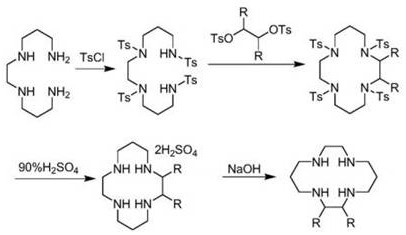
Mechanistic Insights into Oxalate-Mediated Macrocyclization
The core innovation of this synthesis lies in the mechanistic behavior of the oxalate protecting group during the macrocyclization event. Unlike the rigid and bulky tosyl groups, the oxalate moiety forms a planar amide structure that imposes minimal steric interference on the approaching electrophile, 1,2-dibromoethane. In the first stage, the diamine precursor reacts with the oxalate ester to form a bis-amide, effectively masking the nucleophilicity of the nitrogens while maintaining a conformation that favors intramolecular or controlled intermolecular reactions. During the cyclization phase in L-tert-butyl methyl ether, the reduced steric bulk allows the terminal bromo-ethyl chains to access the nitrogen centers more readily, facilitating the formation of the 14-membered ring with high fidelity. The use of L-tert-butyl methyl ether as a solvent is particularly advantageous due to its stability under basic conditions and its ability to dissolve the organic intermediates while allowing for easy precipitation of salts, thereby driving the equilibrium towards the desired cyclic product. This mechanistic elegance ensures that the formation of linear oligomers, a common side reaction in macrocyclizations, is significantly suppressed.
Furthermore, the purification mechanism embedded within this process is designed to maximize product purity through selective crystallization. After the initial protection step, the reaction mixture is subjected to rotary evaporation and recrystallization with toluene. This step is crucial for removing unreacted starting materials and linear byproducts before the cyclization even begins, ensuring that the subsequent ring-closing reaction starts with a high-purity substrate. In the final deprotection stage, the use of potassium hydroxide hydrolyzes the oxalate groups cleanly back to the free amines and oxalate salts. The workup involves extraction with dichloromethane followed by the addition of petroleum ether to induce crystallization at 0°C. This temperature-controlled crystallization is highly effective at excluding impurities that might have co-extracted, yielding white crystals of 1,4,8,11-tetraazacyclotetradecane with exceptional purity. Such rigorous control over the impurity profile is essential for pharmaceutical applications, where trace contaminants can impact the safety and efficacy of the final drug product like Plerixafor.
How to Synthesize 1,4,8,11-Tetraazacyclotetradecane Efficiently
The synthesis of this macrocyclic polyamine via the oxalate route is characterized by its operational simplicity and reliance on standard chemical engineering unit operations. The process begins with the precise weighing and mixing of 2-methyltetrahydrofuran, the diamine precursor, an oxalate protective agent, and water, followed by a reflux period of 5 to 8 hours to ensure complete conversion to the protected intermediate. Once the solvent is recovered, the solid is recrystallized to prepare it for the critical cyclization step. The second stage involves reacting this purified intermediate with 1,2-dibromoethane in L-tert-butyl methyl ether, maintaining the temperature to facilitate ring closure over 4 to 7 hours. The final step entails a controlled deprotection using aqueous KOH, where temperature management is key to preventing degradation while ensuring complete hydrolysis. For a comprehensive, step-by-step technical guide including exact mass ratios and specific temperature ramps, please refer to the standardized protocol below.
- Protect 1,2-bis(3-aminopropylamino)ethane using diethyl oxalate in 2-methyltetrahydrofuran and water under reflux to form the cyclic oxamide intermediate.
- Perform cyclization by reacting the protected intermediate with 1,2-dibromoethane in L-tert-butyl methyl ether, followed by hot filtration and crystallization.
- Execute deprotection using aqueous potassium hydroxide at elevated temperatures, followed by extraction and final crystallization to isolate the pure product.
Commercial Advantages for Procurement and Supply Chain Teams
For procurement managers and supply chain directors, the adoption of this novel synthesis route offers compelling economic and logistical benefits that directly impact the bottom line. The transition from a tosyl-based chemistry to an oxalate-based strategy eliminates the need for expensive and hazardous reagents like p-toluenesulfonyl chloride and 90% sulfuric acid. This substitution not only reduces the direct cost of raw materials but also significantly lowers the capital expenditure required for equipment, as the process no longer demands specialized acid-resistant reactors capable of withstanding extreme corrosive environments. Moreover, the drastic improvement in total yield—from roughly half in the old process to nearly ninety percent in the new one—means that less starting material is required to produce the same amount of final product, effectively doubling the throughput capacity of existing facilities without additional investment. This efficiency gain translates into substantial cost savings in manufacturing, making the final API more competitive in the global market.
- Cost Reduction in Manufacturing: The elimination of the harsh deprotection step using concentrated sulfuric acid removes a major cost center associated with waste neutralization and disposal. Handling 90% sulfuric acid requires stringent safety protocols, specialized personal protective equipment, and expensive waste treatment infrastructure to manage acidic effluents. By switching to aqueous potassium hydroxide, the process generates benign salt byproducts that are far easier and cheaper to treat. Additionally, the higher atom economy of the oxalate protection means less reagent waste is generated per kilogram of product, further driving down the variable costs of production and enhancing the overall profitability of the manufacturing campaign.
- Enhanced Supply Chain Reliability: The robustness of this new method significantly reduces the risk of production delays caused by safety incidents or equipment failures. The legacy process, with its high-temperature acid digestion step, was prone to operational upsets that could halt production lines for extended periods. The milder conditions of the oxalate route ensure smoother, more predictable batch cycles, allowing for tighter scheduling and more reliable delivery commitments to downstream pharmaceutical customers. Furthermore, the raw materials required, such as diethyl oxalate and 1,2-dibromoethane, are commodity chemicals with stable global supply chains, reducing the risk of raw material shortages that could disrupt production continuity.
- Scalability and Environmental Compliance: From an environmental, health, and safety (EHS) perspective, this process represents a significant leap forward in green chemistry principles. The reduction in hazardous waste generation aligns perfectly with increasingly stringent global environmental regulations, minimizing the regulatory burden on manufacturing sites. The simplicity of the workup procedures, involving standard filtration and crystallization techniques rather than complex distillations or extractions under extreme conditions, makes the process highly scalable from pilot plant to multi-ton commercial production. This scalability ensures that suppliers can rapidly ramp up capacity to meet surging demand for Cyclam derivatives in the MRI and oncology sectors without compromising on quality or safety standards.
Frequently Asked Questions (FAQ)
The following questions address common technical and commercial inquiries regarding the production of 1,4,8,11-tetraazacyclotetradecane using this advanced oxalate protection methodology. These insights are derived directly from the technical specifications and experimental data provided in the patent literature, aiming to clarify the practical implications for industrial adoption. Understanding these nuances is critical for R&D teams evaluating process transfer and procurement officers assessing supplier capabilities.
Q: Why is the oxalate protection method superior to the traditional tosyl protection for Cyclam synthesis?
A: The oxalate method avoids the severe steric hindrance associated with p-toluenesulfonyl groups, leading to significantly higher ring-closing efficiency. Furthermore, it eliminates the need for hazardous 90% sulfuric acid during deprotection, replacing it with safer aqueous KOH, thereby improving operational safety and reducing waste treatment costs.
Q: What represents the key quality advantage of this new preparation method?
A: The process incorporates multiple recrystallization steps, specifically using toluene in the initial stage and petroleum ether in the final stage. This rigorous purification protocol ensures the removal of linear oligomers and unreacted starting materials, resulting in a final product with exceptional purity suitable for sensitive applications like MRI contrast agents.
Q: Is this synthesis route scalable for industrial production of Plerixafor intermediates?
A: Yes, the patent explicitly highlights the simplicity of the production process and the use of common, low-cost solvents like 2-methyltetrahydrofuran and petroleum ether. The avoidance of extreme conditions and the high total yield make it highly amenable to kilogram and multi-ton scale-up required for commercial API manufacturing.
Partnering with NINGBO INNO PHARMCHEM: Your Reliable 1,4,8,11-Tetraazacyclotetradecane Supplier
At NINGBO INNO PHARMCHEM, we recognize that the synthesis of complex macrocycles like 1,4,8,11-tetraazacyclotetradecane requires not just chemical expertise but a deep commitment to process excellence and quality assurance. As a leading CDMO partner, we possess extensive experience scaling diverse pathways from 100 kgs to 100 MT/annual commercial production, ensuring that our clients receive a consistent and reliable supply of high-purity intermediates. Our state-of-the-art facilities are equipped to handle the specific solvent systems and crystallization requirements of this novel oxalate route, guaranteeing stringent purity specifications that meet the rigorous demands of the pharmaceutical industry. With our rigorous QC labs and dedicated technical support, we bridge the gap between innovative patent chemistry and commercial reality.
We invite pharmaceutical companies and research institutions to collaborate with us to leverage this superior synthesis technology for their next-generation therapies. Whether you require custom synthesis services or bulk supply of Cyclam derivatives, our team is ready to provide a Customized Cost-Saving Analysis tailored to your specific project needs. We encourage you to contact our technical procurement team today to request specific COA data and route feasibility assessments, and let us demonstrate how our advanced manufacturing capabilities can accelerate your drug development timeline.