
Advanced Non-Controlled Synthesis of Benzphetamine Hydrochloride for Commercial Scale-Up
Advanced Non-Controlled Synthesis of Benzphetamine Hydrochloride for Commercial Scale-Up
The pharmaceutical industry constantly seeks robust, compliant, and cost-effective pathways for producing active pharmaceutical ingredients (APIs) and their intermediates. Patent CN110655466B introduces a groundbreaking preparation method for Benzphetamine Hydrochloride, a clinically significant anorectic agent used in the management of obesity and diabetes. This technology represents a strategic departure from traditional synthetic routes that rely heavily on strictly regulated precursors. By leveraging a chiral pool strategy starting from abundant amino acids, this novel process addresses critical supply chain vulnerabilities associated with controlled substance regulations. For R&D directors and procurement specialists, this innovation offers a viable pathway to secure high-purity intermediates while mitigating regulatory risks inherent in legacy manufacturing protocols.
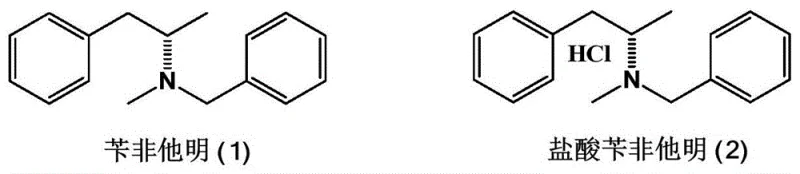
Benzphetamine Hydrochloride functions as a sympathomimetic amine with pharmacological properties similar to amphetamine, primarily indicated for short-term adjunctive treatment of exogenous obesity. The molecular architecture, characterized by a chiral phenylpropylamine backbone with N-methyl and N-benzyl substituents, presents specific synthetic challenges regarding stereocontrol and regioselectivity. The disclosed invention not only resolves these chemical complexities but also aligns with modern green chemistry principles by utilizing safer, non-narcotic starting materials. This shift is paramount for global supply chains aiming to maintain continuity without the administrative burdens of handling scheduled chemicals.
The Limitations of Conventional Methods vs. The Novel Approach
The Limitations of Conventional Methods
Historically, the industrial synthesis of Benzphetamine Hydrochloride has been inextricably linked to the use of naturally occurring alkaloids or their derivatives, which are subject to stringent international control measures. As illustrated in prior art such as US20110046416A1, conventional routes often commence with L-methamphetamine hydrochloride, necessitating an alkylation step with benzyl chloride. Similarly, literature methods described in Tetrahedron Letters and Organic Process Research & Development utilize ephedrine or pseudoephedrine as chiral templates. These starting materials are classified as controlled substances in many jurisdictions due to their potential diversion for illicit drug manufacture.

The reliance on these controlled precursors creates substantial operational friction for pharmaceutical manufacturers. Procurement of ephedrine or methamphetamine derivatives requires special licenses, rigorous inventory tracking, and often faces unpredictable supply disruptions due to government quotas. Furthermore, the disposal of waste streams containing traces of these controlled substances incurs additional compliance costs and environmental hazards. From a commercial perspective, the volatility in the availability and pricing of these regulated alkaloids introduces significant risk to the long-term economic viability of Benzphetamine production, making alternative non-controlled routes highly desirable for forward-thinking enterprises.
The Novel Approach
The methodology outlined in patent CN110655466B fundamentally重构 s the synthetic landscape by eliminating controlled precursors entirely. Instead of relying on restricted alkaloids, this innovative process initiates with D-phenylalanine, a commercially available, inexpensive, and non-regulated amino acid. The synthetic logic involves converting this abundant feedstock into a chiral aziridine intermediate, which serves as a versatile scaffold for constructing the target amine skeleton. This strategic pivot allows manufacturers to bypass the complex regulatory framework surrounding narcotic precursors, thereby streamlining the supply chain and reducing administrative overhead.
Moreover, the new route demonstrates exceptional versatility in reagent selection, accommodating a wide range of reducing agents and solvents compatible with large-scale operations. The process flow is designed to maximize atom economy and minimize hazardous waste generation. By decoupling the production of Benzphetamine Hydrochloride from the volatile market of controlled substances, this approach offers a stable, predictable, and legally unencumbered manufacturing pathway. This is particularly advantageous for generic drug manufacturers seeking to enter the anti-obesity market with a robust and defensible supply chain strategy that is resilient to regulatory shifts.
Mechanistic Insights into Chiral Aziridine Ring Opening and Methylation
The core chemical innovation of this patent lies in the stereoselective construction of the amine backbone via a chiral aziridine intermediate. The process begins with the reduction of D-phenylalanine to the corresponding amino alcohol, followed by dehydration cyclization to form (R)-2-benzylethylenimine. This aziridine ring acts as a masked 1,2-diamino equivalent, allowing for precise control over the stereochemistry at the benzylic position. The subsequent N-benzylation yields a dibenzyl-substituted aziridine, which is then subjected to a critical reductive ring-opening step. This transformation is pivotal, as it establishes the correct carbon-nitrogen connectivity while preserving the chiral integrity established at the start of the synthesis.

In the reductive ring-opening step, the choice of reducing agent is crucial for both yield and selectivity. The patent discloses the use of sophisticated hydride sources such as sodium dihydrobis(2-methoxyethoxy)aluminate (Red-Al) or various borohydrides. These reagents facilitate the nucleophilic attack on the less hindered carbon of the aziridine ring, effectively opening the strained three-membered ring to generate the secondary amine intermediate (S)-N-benzyl-1-phenylpropan-2-amine. The mechanism ensures that the stereochemical information from the original D-phenylalanine is faithfully transferred to the final product, resulting in high enantiomeric excess. Following this, a standard reductive amination with formaldehyde installs the final N-methyl group, completing the construction of the Benzphetamine base before salt formation.
Impurity control is inherently built into this mechanistic pathway. By avoiding the harsh conditions often required for deoxygenation of ephedrine derivatives, the process minimizes the formation of racemization byproducts and elimination side products. The use of mild acidic or basic workups during the cyclization and ring-opening stages further ensures that the final crude product possesses a clean impurity profile. This high level of chemical purity simplifies downstream purification, often requiring only a single recrystallization step to achieve pharmaceutical-grade specifications. For quality assurance teams, this translates to a more robust process with fewer variables affecting the critical quality attributes (CQAs) of the final API intermediate.
How to Synthesize Benzphetamine Hydrochloride Efficiently
Implementing this novel synthesis requires a clear understanding of the sequential transformations involved, from the initial amino acid reduction to the final salt crystallization. The process is divided into distinct operational units that can be easily scaled in a multipurpose chemical plant. The initial phase focuses on generating the chiral aziridine building block, followed by the functionalization steps to build the final amine structure. Detailed standard operating procedures (SOPs) regarding temperature control, reagent addition rates, and quenching protocols are essential for maintaining safety and reproducibility. The following guide outlines the critical stages of this efficient manufacturing protocol.
- Preparation of Chiral Aziridine: Convert D-Phenylalanine to (R)-2-benzylethylenimine via reduction to amino alcohol followed by dehydration cyclization.
- N-Benzylation and Ring Opening: Benzylate the aziridine nitrogen, then perform stereoselective reductive ring opening using Red-Al or borohydrides to form the secondary amine backbone.
- Final Methylation and Salt Formation: Execute reductive amination with formaldehyde to install the N-methyl group, followed by hydrochloride salt formation and crystallization.
Commercial Advantages for Procurement and Supply Chain Teams
For procurement managers and supply chain directors, the transition to this non-controlled synthetic route offers profound strategic benefits beyond mere chemical elegance. The primary value proposition lies in the stabilization of raw material sourcing. By shifting dependence from volatile, quota-restricted alkaloids to stable, commodity-grade amino acids, companies can secure long-term supply contracts at predictable price points. This decoupling from the regulatory constraints of narcotic precursors significantly reduces the lead time associated with procurement approvals and customs clearance, ensuring a smoother flow of materials into the production facility.
- Cost Reduction in Manufacturing: The elimination of expensive controlled precursors directly impacts the bill of materials. D-phenylalanine is a bulk commodity chemical produced via fermentation, offering a much lower cost basis compared to extracted or semi-synthetic ephedrine derivatives. Furthermore, the process avoids the need for specialized security infrastructure and licensing fees associated with handling scheduled substances. The simplified regulatory compliance also reduces the administrative burden on legal and EHS departments, leading to substantial indirect cost savings across the organization.
- Enhanced Supply Chain Reliability: Supply chain resilience is markedly improved as the raw materials are not subject to sudden government bans or quota reductions. The availability of D-phenylalanine is global and consistent, unlike the geographically concentrated and politically sensitive supply of ephedra extracts. This reliability allows for better production planning and inventory management, reducing the risk of stockouts that could disrupt downstream formulation activities. It also opens up the supplier base to a wider range of chemical manufacturers who may not hold narcotics licenses but can produce high-quality amino acids.
- Scalability and Environmental Compliance: The synthetic route is designed with scalability in mind, utilizing common organic solvents like toluene, methanol, and isopropanol which are easily recovered and recycled. The avoidance of heavy metal catalysts often used in hydrogenolysis steps of traditional routes simplifies waste treatment and reduces the environmental footprint. The process generates less hazardous waste, aligning with increasingly strict environmental regulations and corporate sustainability goals. This ease of scale-up facilitates a seamless transition from pilot plant to multi-ton commercial production without the need for exotic equipment or specialized containment facilities.
Frequently Asked Questions (FAQ)
The following questions address common technical and commercial inquiries regarding the implementation of this novel Benzphetamine Hydrochloride synthesis. These insights are derived directly from the technical disclosures within patent CN110655466B and are intended to clarify the operational feasibility and regulatory advantages of the method. Understanding these details is crucial for technical teams evaluating the adoption of this new process for their manufacturing portfolios.
Q: Does this synthesis method require controlled precursors like ephedrine?
A: No. A key advantage of patent CN110655466B is that it completely avoids controlled substances such as ephedrine, pseudoephedrine, and methamphetamine, utilizing D-phenylalanine instead.
Q: What is the optical purity achievable with this route?
A: The process maintains high stereochemical integrity from the chiral starting material, achieving an optical purity of up to 99.98% ee in the final product.
Q: Is this process suitable for large-scale industrial production?
A: Yes. The method utilizes common solvents like toluene and isopropanol and standard unit operations, making it highly scalable for commercial manufacturing without specialized equipment.
Partnering with NINGBO INNO PHARMCHEM: Your Reliable Benzphetamine Hydrochloride Supplier
At NINGBO INNO PHARMCHEM, we recognize the critical importance of adopting innovative, compliant, and cost-efficient synthetic routes for high-value pharmaceutical intermediates. Our team of expert process chemists has thoroughly analyzed the technology disclosed in CN110655466B and is fully prepared to translate this laboratory-scale success into robust commercial reality. We possess extensive experience scaling diverse pathways from 100 kgs to 100 MT/annual commercial production, ensuring that the transition from pilot to plant is seamless and efficient. Our state-of-the-art facilities are equipped with rigorous QC labs capable of meeting stringent purity specifications, guaranteeing that every batch of Benzphetamine Hydrochloride meets the highest international standards.
We invite global partners to collaborate with us to leverage this advanced non-controlled synthesis for their supply chains. By partnering with us, you gain access to a Customized Cost-Saving Analysis tailored to your specific volume requirements and logistical needs. We encourage interested parties to contact our technical procurement team to request specific COA data and route feasibility assessments. Let us help you secure a sustainable, high-quality supply of Benzphetamine Hydrochloride that drives your business forward while minimizing regulatory risk and maximizing operational efficiency.