
Scalable Nickel-Catalyzed Aryl Ketone Synthesis for High-Purity Pharmaceutical Intermediates
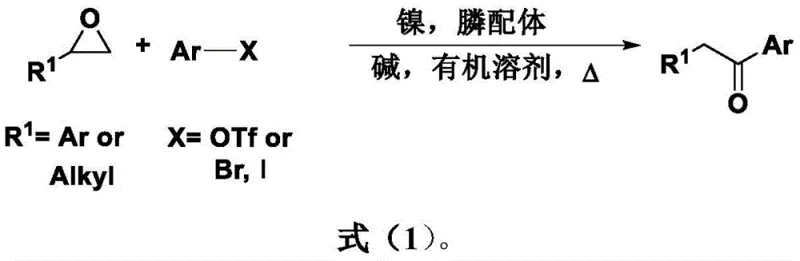
The chemical industry is constantly seeking more efficient pathways to construct carbonyl frameworks, which are ubiquitous in active pharmaceutical ingredients and advanced materials. Patent CN113480416A introduces a transformative preparation method for aryl ketones that addresses long-standing challenges in synthetic efficiency and cost. This innovation leverages a sophisticated nickel-catalyzed system to couple phenyl epoxy compounds with aryl triflates in a single operational step. By bypassing traditional multi-step sequences, this technology offers a streamlined route that is particularly attractive for the manufacturing of complex drug intermediates. The method operates under relatively mild thermal conditions and utilizes earth-abundant nickel rather than expensive precious metals, signaling a major shift towards more sustainable and economically viable chemical production strategies for high-value fine chemicals.
The Limitations of Conventional Methods vs. The Novel Approach
The Limitations of Conventional Methods
Historically, the synthesis of ketone compounds has relied heavily on classical methodologies such as the oxidation of secondary alcohols or Friedel-Crafts acylation reactions. These traditional routes are fraught with significant operational drawbacks that hinder modern manufacturing efficiency. For instance, alcohol oxidation typically necessitates the use of stoichiometric amounts of strong oxidants, generating substantial chemical waste and requiring rigorous safety protocols to handle hazardous reagents. Furthermore, Friedel-Crafts acylation often demands harsh acidic environments and elevated temperatures, which can lead to poor functional group compatibility and the formation of difficult-to-remove byproducts. These limitations not only increase the environmental footprint of the process but also complicate the purification stages, thereby driving up the overall cost of goods sold for critical pharmaceutical intermediates.
The Novel Approach
In stark contrast, the novel approach detailed in the patent utilizes a dual-activity catalytic system based on nickel and phosphine ligands to achieve a direct transformation. This method ingeniously combines isomerization and cross-coupling into a single pot, effectively converting readily available epoxides and aryl electrophiles directly into the desired aryl ketone structure. The reaction proceeds smoothly at temperatures ranging from 80°C to 140°C, avoiding the extreme conditions associated with legacy methods. By employing aryl triflates or halides as coupling partners, the process demonstrates remarkable versatility and tolerance for various substituents. This one-step strategy drastically reduces the number of unit operations required, minimizing solvent consumption and labor costs while maximizing the overall throughput of the synthesis line for aryl ketone derivatives.
Mechanistic Insights into Nickel-Catalyzed Isomerization and Coupling
The core of this technological breakthrough lies in the unique ability of the nickel-phosphine catalyst system to orchestrate two distinct chemical transformations simultaneously. The mechanism likely initiates with the oxidative addition of the aryl triflate to the zero-valent nickel center, forming an active organometallic species. Concurrently, the phenyl epoxy compound undergoes a nickel-mediated isomerization, potentially forming an aldehyde or enolate-like intermediate in situ. The phosphine ligand, such as TriPhos or DavePhos, plays a critical role in stabilizing the nickel center and modulating its electronic properties to facilitate the subsequent migratory insertion or nucleophilic attack. This synergistic interaction ensures that the carbon-carbon bond formation occurs with high regioselectivity, preventing the formation of unwanted isomers that often plague non-catalytic approaches.
From an impurity control perspective, this catalytic cycle offers distinct advantages over stoichiometric methods. Because the reaction relies on a well-defined catalytic cycle rather than brute-force reagent excess, the generation of side products is inherently suppressed. The use of specific bases like 2,2,6,6-tetramethylpiperidine (TMP) further aids in scavenging protons generated during the cycle without promoting decomposition of sensitive functional groups. The result is a cleaner reaction profile, which translates to higher crude purity before any chromatographic purification. This mechanistic elegance allows manufacturers to produce high-purity aryl ketones with reduced burden on downstream processing units, ensuring that the final material meets the stringent quality specifications required for regulatory submission in the pharmaceutical sector.
How to Synthesize Aryl Ketones Efficiently
The practical implementation of this synthesis route is designed for straightforward execution in standard chemical reactors. The process begins by charging a reactor with the phenyl epoxy compound and the aryl triflate coupling partner under an inert atmosphere to prevent catalyst deactivation. A precise amount of the nickel source, such as Ni(PPh3)4, and the selected phosphine ligand are introduced along with the organic solvent, preferably fluorobenzene or toluene. The detailed standardized synthesis steps, including specific molar ratios and workup procedures, are outlined below to ensure reproducibility and safety during scale-up operations.
- Mix phenyl epoxy compound, aryl triflate, nickel source (e.g., Ni(PPh3)4), phosphine ligand (e.g., TriPhos), base, and organic solvent under inert gas.
- Heat the reaction mixture to 80-140°C and maintain for 10-36 hours to facilitate isomerization and coupling.
- Filter the mixture, wash the cake with ethyl acetate, combine filtrates, remove solvent, and purify via column chromatography.
Commercial Advantages for Procurement and Supply Chain Teams
For procurement specialists and supply chain managers, the adoption of this nickel-catalyzed technology represents a strategic opportunity to optimize the cost structure of key intermediate production. The shift away from precious metal catalysts like palladium or rhodium to abundant nickel significantly lowers the raw material expenditure per kilogram of product. Additionally, the simplification of the synthetic route from multiple steps to a single telescoped operation reduces the consumption of solvents and utilities, leading to substantial operational cost savings. These efficiencies allow suppliers to offer more competitive pricing models while maintaining healthy margins, providing a buffer against volatility in the global chemical market.
- Cost Reduction in Manufacturing: The elimination of expensive noble metal catalysts is a primary driver for cost optimization in this process. By utilizing nickel salts and commercially available phosphine ligands, the direct material cost is drastically reduced compared to traditional cross-coupling methods. Furthermore, the high atom economy of the one-step reaction minimizes waste disposal costs, which are often a hidden but significant expense in fine chemical manufacturing. This economic advantage enables the production of complex aryl ketones at a price point that makes them viable for large-volume applications in generic drug synthesis.
- Enhanced Supply Chain Reliability: The reliance on widely available starting materials such as epoxides and aryl triflates ensures a robust and resilient supply chain. Unlike specialized reagents that may have limited suppliers or long lead times, these precursors are commodity chemicals produced by multiple vendors globally. This diversity in sourcing options mitigates the risk of supply disruptions and allows procurement teams to negotiate better terms. The stability of the catalyst system also means that production schedules are less likely to be delayed by reagent shortages or quality inconsistencies.
- Scalability and Environmental Compliance: The mild reaction conditions and simplified workup procedure make this process highly amenable to scale-up from laboratory to commercial production. The reduced need for hazardous oxidants and strong acids aligns with increasingly strict environmental regulations, lowering the compliance burden for manufacturing sites. The ability to run the reaction in common organic solvents facilitates easier solvent recovery and recycling, further enhancing the sustainability profile of the manufacturing process and supporting corporate green chemistry initiatives.
Frequently Asked Questions (FAQ)
The following questions address common technical and commercial inquiries regarding the implementation of this aryl ketone synthesis technology. These answers are derived directly from the experimental data and technical disclosures within the patent documentation to provide accurate guidance for potential adopters.
Q: What are the primary advantages of this nickel-catalyzed method over traditional Friedel-Crafts acylation?
A: Unlike Friedel-Crafts acylation which requires harsh acidic conditions and high temperatures with poor functional group compatibility, this nickel-catalyzed method operates under mild conditions (80-140°C) with excellent tolerance for diverse functional groups, simplifying downstream purification.
Q: Is this process suitable for large-scale industrial production?
A: Yes, the process utilizes inexpensive nickel catalysts instead of precious metals and involves a simplified one-step reaction sequence, significantly reducing raw material costs and operational complexity for commercial scale-up.
Q: What specific ligands and nickel sources are most effective in this transformation?
A: The patent highlights the effectiveness of zero-valent nickel sources like Ni(PPh3)4 paired with multidentate phosphine ligands such as TriPhos (1,1,1-tris(diphenylphosphinomethyl)ethane) to achieve high yields and selectivity.
Partnering with NINGBO INNO PHARMCHEM: Your Reliable Aryl Ketone Supplier
At NINGBO INNO PHARMCHEM, we recognize the critical importance of efficient synthetic routes in maintaining a competitive edge in the pharmaceutical and fine chemical sectors. Our team of expert chemists has extensively evaluated the nickel-catalyzed methodology described in CN113480416A and confirmed its potential for robust commercial application. We possess extensive experience scaling diverse pathways from 100 kgs to 100 MT/annual commercial production, ensuring that your transition from lab-scale discovery to full-scale manufacturing is seamless. Our state-of-the-art facilities are equipped with rigorous QC labs capable of meeting stringent purity specifications, guaranteeing that every batch of aryl ketone intermediate delivered meets the highest industry standards.
We invite you to collaborate with us to leverage this advanced technology for your specific project needs. By partnering with our technical procurement team, you can request a Customized Cost-Saving Analysis tailored to your target molecule. We encourage you to contact us today to obtain specific COA data and route feasibility assessments, allowing you to make informed decisions that drive value and efficiency in your supply chain.