
Scalable Synthesis of Novel Prothioconazole Metabolites for Advanced Agrochemical Residue Analysis
Scalable Synthesis of Novel Prothioconazole Metabolites for Advanced Agrochemical Residue Analysis
The agrochemical industry continuously demands higher fidelity in residue analysis to ensure food safety and environmental compliance, driving the need for authentic reference standards of pesticide metabolites. Patent CN115894387A introduces a groundbreaking methodology for the preparation of a novel prothioconazole metabolite, specifically addressing the critical bottleneck of obtaining high-purity standards for analytical detection. This innovation shifts the paradigm from laborious biological extraction to a robust, chemically defined oxidation process that is inherently suitable for mass production. By leveraging controlled low-temperature oxidation conditions, the disclosed method achieves exceptional conversion rates while maintaining the structural integrity of the complex triazole scaffold. For R&D directors and procurement specialists, this represents a significant opportunity to secure reliable supplies of high-purity agrochemical intermediates essential for regulatory testing and mechanistic studies.
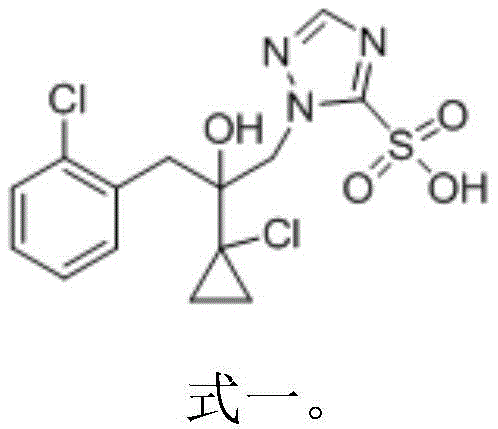
The significance of this technology extends beyond mere synthesis; it provides a standardized pathway to generate materials that were previously accessible only through inefficient isolation from treated crops or livestock. The ability to produce this specific metabolite, characterized by the oxidation of the sulfur moiety to a sulfonic acid derivative, allows for precise quantification of prothioconazole residues in complex matrices. As global regulations tighten around triazole fungicide usage, the demand for such certified reference materials is escalating rapidly. This patent outlines a versatile protocol that accommodates various common organic solvents and oxidants, offering flexibility in manufacturing setups while ensuring the final product meets the stringent purity requirements demanded by modern chromatographic analysis techniques like HPLC and LC-MS.
The Limitations of Conventional Methods vs. The Novel Approach
The Limitations of Conventional Methods
Historically, the acquisition of prothioconazole metabolites for research and regulatory purposes has been plagued by significant inefficiencies and supply chain vulnerabilities. Traditional approaches predominantly rely on the extraction and purification of metabolites from biological samples such as plants or animals that have been treated with the parent fungicide. This biological sourcing method is inherently unpredictable, yielding extremely low quantities of the target compound amidst a complex matrix of natural products and other metabolic byproducts. The purification process is arduous, often requiring multiple chromatographic steps that result in substantial material loss and exorbitant costs. Furthermore, batch-to-batch variability is a major concern, as the metabolic profile in biological systems can fluctuate based on environmental factors, making it nearly impossible to guarantee the consistent purity and identity required for analytical standards. These limitations severely hinder the ability of laboratories to conduct large-scale residue monitoring or toxicological assessments effectively.
The Novel Approach
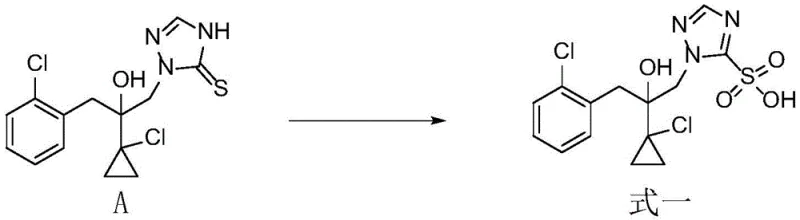
In stark contrast, the methodology disclosed in patent CN115894387A presents a direct, synthetic route that bypasses the uncertainties of biological extraction entirely. The core innovation lies in the selective oxidation of prothioconazole technical material using common oxidizing agents under mild, controlled conditions. By dissolving the raw material in solvents like acetonitrile or methanol and maintaining the reaction temperature between 0°C and 15°C, the process ensures high selectivity towards the desired sulfonic acid metabolite. This chemical synthesis approach transforms the production landscape from a scarce, artisanal extraction process into a scalable manufacturing operation. The reaction is straightforward, utilizing readily available reagents such as hydrogen peroxide, which simplifies procurement and reduces hazardous waste handling compared to more aggressive oxidants. The result is a streamlined workflow that delivers high yields and superior purity, fundamentally solving the supply constraints associated with conventional metabolite sourcing.
Mechanistic Insights into Selective Low-Temperature Oxidation
The chemical transformation at the heart of this patent involves the oxidative modification of the sulfur-containing functional group on the triazole ring of prothioconazole. Mechanistically, the process targets the thione or thiol tautomer present in the parent molecule, converting it into a sulfonic acid group (-SO3H) through a multi-step oxidation sequence. The choice of operating temperature is critical; maintaining the reaction mixture between 0°C and 15°C serves to kinetically control the oxidation pathway, preventing over-oxidation or degradation of the sensitive triazole and cyclopropyl moieties. At higher temperatures, competing side reactions could lead to ring opening or the formation of sulfone byproducts, which would complicate downstream purification. The use of hydrogen peroxide as the preferred oxidant facilitates a clean reaction profile, generating water as the primary byproduct, which aligns with green chemistry principles. This controlled environment ensures that the electron density on the sulfur atom is managed precisely, allowing for the formation of the stable sulfonic acid derivative without compromising the stereochemistry of the adjacent chiral centers.
Impurity control is another pivotal aspect of this mechanistic design, directly impacting the suitability of the product for analytical applications. The patent describes a workup procedure that includes washing the reaction mixture with water to remove inorganic salts and excess oxidant, followed by extraction with organic solvents. This phase separation effectively partitions the polar sulfonic acid product from non-polar impurities and unreacted starting materials. The final purification step utilizes recrystallization from binary solvent systems, such as ethyl acetate and n-hexane or dichloromethane and petroleum ether. This crystallization process exploits the differential solubility of the target metabolite versus potential isomers or oxidation byproducts. By carefully selecting the solvent ratio, manufacturers can achieve purity levels exceeding 99%, effectively removing trace impurities that could interfere with sensitive detection methods. This rigorous control over the solid-state properties of the final product ensures that the reference standard behaves predictably during calibration and quantitative analysis.
How to Synthesize Prothioconazole Metabolite Efficiently
The synthesis protocol outlined in the patent is designed for operational simplicity while maintaining high standards of quality control, making it ideal for both laboratory-scale preparation and potential commercial scale-up. The process begins with the dissolution of prothioconazole technical grade material in a selected organic solvent, followed by precise temperature regulation before the introduction of the oxidant. The subsequent reaction period allows for complete conversion, after which a straightforward aqueous workup and recrystallization yield the final high-purity solid. This sequence minimizes the need for complex equipment or hazardous reagents, reducing the barrier to entry for production. For detailed operational parameters, stoichiometry, and specific safety considerations, please refer to the standardized synthesis guide below.
- Dissolve prothioconazole raw material in an organic solvent such as acetonitrile, methanol, or ethanol under stirring.
- Cool the reaction mixture to a strictly controlled temperature range between 0°C and 15°C to ensure selectivity.
- Slowly add an oxidizing agent like hydrogen peroxide dropwise, maintain temperature, and proceed to workup via extraction and recrystallization.
Commercial Advantages for Procurement and Supply Chain Teams
For procurement managers and supply chain leaders, the adoption of this synthetic route offers transformative benefits in terms of cost stability and supply security. The shift from biological extraction to chemical synthesis eliminates the dependency on agricultural cycles and biological variability, ensuring a consistent and predictable supply of this critical analytical standard. The use of commodity chemicals such as hydrogen peroxide, acetonitrile, and methanol means that raw material costs are low and sourcing is resilient against market fluctuations. Furthermore, the high yields reported in the patent examples indicate a highly efficient use of starting materials, which directly translates to reduced waste disposal costs and improved overall process economics. This efficiency allows suppliers to offer competitive pricing for high-purity agrochemical intermediates, making it easier for downstream testing laboratories to budget for their regulatory compliance needs without compromising on quality.
- Cost Reduction in Manufacturing: The elimination of expensive and time-consuming biological extraction processes results in substantial cost savings throughout the production lifecycle. By utilizing a direct one-step oxidation reaction, the method significantly reduces labor hours, solvent consumption, and energy requirements associated with multi-stage purification. The ability to use common, low-cost oxidants like hydrogen peroxide instead of specialized reagents further drives down the bill of materials. Additionally, the high recovery rates achieved through optimized recrystallization mean that less raw material is wasted, maximizing the value extracted from every kilogram of prothioconazole technical purchased. These cumulative efficiencies create a lean manufacturing model that supports sustainable margin structures while delivering value to the end customer.
- Enhanced Supply Chain Reliability: Relying on a synthetic chemical process rather than biological sourcing drastically improves the reliability and lead times for product delivery. Biological extraction is subject to seasonal variations and biological inconsistencies, whereas chemical synthesis can be performed year-round in a controlled factory setting. The robustness of the reaction conditions, which tolerate a range of common solvents, provides flexibility in case of temporary shortages of specific reagents. This resilience ensures that supply chains remain uninterrupted, allowing customers to maintain their own testing schedules without delay. The scalability of the process means that production volumes can be ramped up quickly to meet surges in demand, such as those driven by new regulatory mandates or expanded monitoring programs.
- Scalability and Environmental Compliance: The process is inherently designed for scalability, with reaction conditions that are easily transferable from laboratory flasks to industrial reactors. The use of hydrogen peroxide as an oxidant is particularly advantageous from an environmental standpoint, as it decomposes into water and oxygen, minimizing the generation of hazardous heavy metal waste often associated with other oxidation methods. This aligns with increasingly strict environmental regulations and corporate sustainability goals. The straightforward workup involving aqueous washing and solvent recovery further simplifies waste management. Consequently, manufacturers can scale production to meet commercial demands while maintaining a low environmental footprint, ensuring long-term operational viability and compliance with global green chemistry standards.
Frequently Asked Questions (FAQ)
The following questions address common technical and commercial inquiries regarding the production and application of this novel prothioconazole metabolite. These answers are derived directly from the technical specifications and experimental data provided in patent CN115894387A, ensuring accuracy and relevance for industry professionals. Understanding these details is crucial for integrating this material into your quality control workflows or research pipelines.
Q: What is the primary advantage of this synthetic route over biological extraction?
A: Unlike traditional methods that rely on difficult purification from plant or animal tissues with low yields, this chemical oxidation route offers high yields (up to 98%) and consistent purity suitable for industrial scaling.
Q: Which oxidizing agents are compatible with this process?
A: The patent specifies several viable oxidants including hydrogen peroxide, permanganic acid, dichromic acid, or oxygen, with hydrogen peroxide being preferred for its environmental profile and ease of handling.
Q: How is high purity achieved in the final product?
A: High purity (up to 99%) is secured through a combination of controlled low-temperature reaction conditions to minimize byproducts and a final recrystallization step using binary solvent systems like ethyl acetate and n-hexane.
Partnering with NINGBO INNO PHARMCHEM: Your Reliable Prothioconazole Metabolite Supplier
At NINGBO INNO PHARMCHEM, we recognize the critical role that high-quality reference standards play in ensuring the safety and efficacy of agrochemical products globally. Our team of expert chemists possesses extensive experience scaling diverse pathways from 100 kgs to 100 MT/annual commercial production, ensuring that we can meet your volume requirements with consistency. We are committed to delivering materials that meet stringent purity specifications, supported by our rigorous QC labs equipped with state-of-the-art analytical instrumentation. Whether you require this novel metabolite for residue analysis, toxicology studies, or method validation, our manufacturing capabilities are aligned to support your most demanding projects with speed and precision.
We invite you to collaborate with us to optimize your supply chain for agrochemical intermediates. Contact our technical procurement team today to request a Customized Cost-Saving Analysis tailored to your specific volume needs. We are ready to provide specific COA data and route feasibility assessments to demonstrate how our advanced synthesis methods can enhance your operational efficiency. Let us be your partner in navigating the complexities of agrochemical compliance with confidence and reliability.