
Advanced Solid-Phase Synthesis for High-Purity CJC-1134 and Exenatide Analogs
Advanced Solid-Phase Synthesis for High-Purity CJC-1134 and Exenatide Analogs
In the rapidly evolving landscape of pharmaceutical intermediates, the demand for efficient and high-yield synthesis of complex polypeptides has never been more critical. Patent CN115819493A introduces a groundbreaking modification to the standard Fmoc/tBu solid-phase synthesis protocol, specifically targeting the persistent challenge of low crude purity in long-chain sequences. This innovation is particularly relevant for the production of Exenatide analogs like CJC-1134, where traditional methods often struggle with accumulation of deletion sequences and aggregation. By integrating a novel sequential acid-base washing step between deprotection and coupling cycles, this technology effectively disrupts secondary structures and removes reactive intermediates, laying the foundation for a more robust and economical manufacturing process for reliable polypeptide intermediate suppliers.
The Limitations of Conventional Methods vs. The Novel Approach
The Limitations of Conventional Methods
Traditional solid-phase peptide synthesis (SPPS), while revolutionary since its inception by Merrifield, faces significant hurdles when applied to longer sequences exceeding 40 amino acids. In conventional Fmoc chemistry, the repetitive cycles of deprotection and coupling inevitably lead to the accumulation of side products such as truncated peptides, deletion sequences, and racemized impurities. These errors compound with each addition, resulting in a crude peptide mixture where the target molecule may constitute less than 30% of the total mass. For procurement managers, this low crude purity translates directly into exorbitant downstream purification costs, as preparative HPLC becomes a bottleneck requiring massive solvent consumption and extended processing time to isolate the active pharmaceutical ingredient from a sea of structurally similar impurities.
The Novel Approach
The methodology outlined in CN115819493A addresses these inefficiencies by introducing a strategic intervention step immediately following the removal of the Fmoc protecting group. Instead of proceeding directly to amino acid coupling, the resin is subjected to a sequential wash with a dilute acidic solution followed by a dilute alkaline solution. This dual-treatment protocol serves to neutralize and remove unstable intermediates formed during the deprotection phase, ensuring that the alpha-amino groups are fully liberated and ready for reaction. Experimental data within the patent demonstrates that this simple yet effective modification can elevate the crude purity of CJC-1134 from approximately 26.55% to over 34%, representing a substantial improvement in process efficiency that drastically simplifies the subsequent purification workflow.
Mechanistic Insights into Acid-Base Mediated Resin Treatment
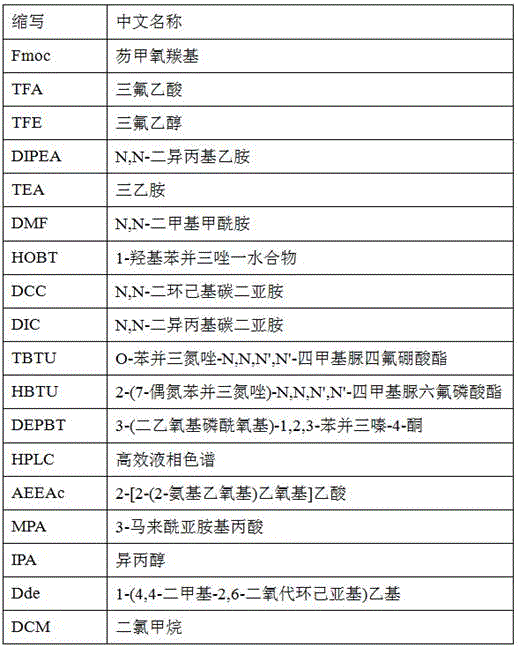
The core mechanistic advantage of this invention lies in its ability to mitigate the formation of secondary structures and suppress side reactions inherent to the Fmoc deprotection mechanism. During the standard removal of the Fmoc group using piperidine, transient species such as dibenzofulvene-piperidine adducts can form and potentially re-react with the growing peptide chain or obstruct active sites. The introduction of an acidic wash, utilizing agents like trifluoroacetic acid (TFA) or trifluoroethanol (TFE) at concentrations between 0.1% and 20%, effectively protonates residual amines and solubilizes these hydrophobic adducts. Subsequent treatment with a mild base, such as DIPEA or triethylamine, restores the nucleophilicity of the terminal amine without inducing racemization, thereby creating an ideal chemical environment for the next coupling event.
Furthermore, this acid-base cycling plays a crucial role in disrupting the intermolecular hydrogen bonding that leads to beta-sheet formation in long polypeptide chains. By periodically swelling and shrinking the resin matrix with solvents of varying polarity and pH, the method prevents the peptide chain from collapsing into inaccessible conformations that hinder reagent diffusion. This is particularly vital for sequences rich in hydrophobic residues or those prone to aggregation, as it maintains the resin in a highly solvated state throughout the synthesis. The result is a significant reduction in 'difficult sequences' where coupling yields typically drop, ensuring a more uniform growth of the peptide chain and minimizing the generation of n-1 deletion impurities that are notoriously difficult to separate during final purification.
How to Synthesize CJC-1134 Efficiently
The synthesis of high-purity CJC-1134 using this patented method follows a streamlined protocol that integrates seamlessly into existing automated synthesizers or manual batch processes. The procedure begins with the loading of the first amino acid onto a suitable resin, such as Wang or Rink Amide resin, followed by iterative cycles of deprotection, acid-base washing, and coupling. Critical parameters include maintaining the acid concentration between 1% and 15% and the base concentration between 2% and 8% to avoid premature cleavage or side reactions. This standardized approach ensures reproducibility across different batches and scales, making it an ideal candidate for technology transfer from laboratory development to commercial manufacturing facilities seeking to optimize their polypeptide production lines.
- Remove the temporary Fmoc protecting group from the amino acid on the solid-phase resin using a secondary amine solution.
- Sequentially soak or rinse the resin with a dilute acidic solution followed by a dilute alkaline solution to remove reaction intermediates.
- Couple the next protected amino acid using condensation reagents like TBTU or HBTU, repeating the cycle until the target sequence is complete.
- Cleave the final polypeptide from the resin using a TFA-based mixture to obtain the high-purity crude product.
Commercial Advantages for Procurement and Supply Chain Teams
For supply chain leaders and procurement specialists, the adoption of this enhanced synthesis protocol offers tangible benefits that extend far beyond mere chemical yield. By significantly increasing the crude purity of the polypeptide prior to purification, the overall manufacturing footprint is reduced, leading to lower consumption of expensive chromatography columns and organic solvents. This efficiency gain directly contributes to cost reduction in pharmaceutical manufacturing, allowing for more competitive pricing of the final active ingredient without compromising on quality standards. Additionally, the robustness of the method reduces the risk of batch failures due to poor coupling efficiency, thereby enhancing supply chain reliability and ensuring consistent availability of critical intermediates for drug development pipelines.
- Cost Reduction in Manufacturing: The primary economic driver of this technology is the drastic reduction in downstream processing burdens. Since the crude product enters the purification stage with a much higher percentage of the target molecule, the load on preparative HPLC systems is significantly lowered. This means fewer runs are required to achieve the same output of pure API, which translates to substantial savings in solvent disposal costs, column replacement expenses, and labor hours. Furthermore, the use of common, inexpensive reagents like TFA and DIPEA ensures that raw material costs remain stable and predictable, avoiding the volatility associated with exotic catalysts or specialized additives.
- Enhanced Supply Chain Reliability: The simplicity and versatility of the acid-base washing step make the process highly resilient to variations in raw material quality or environmental conditions. Unlike complex enzymatic methods or specialized ligation techniques that require strict temperature control and sterile environments, this chemical modification can be performed under standard ambient conditions using widely available solvents like DCM and DMF. This ease of execution minimizes the risk of production delays caused by equipment malfunctions or operator error, ensuring that delivery schedules for high-purity polypeptide intermediates are met consistently, even during periods of high market demand.
- Scalability and Environmental Compliance: From an environmental and regulatory perspective, this method aligns well with green chemistry principles by improving atom economy and reducing waste generation. The higher crude purity means less chemical waste is generated during the purification phase, simplifying the management of hazardous effluents. Moreover, the process is inherently scalable; the washing steps can be easily adapted from gram-scale laboratory synthesis to kilogram or ton-scale production in large reactors without requiring fundamental changes to the reaction engineering. This scalability supports the commercial scale-up of complex polypeptides, enabling manufacturers to meet the growing global demand for peptide-based therapeutics efficiently.
Frequently Asked Questions (FAQ)
The following questions address common technical inquiries regarding the implementation and scope of this patented synthesis method. Understanding these details is essential for R&D teams evaluating the feasibility of adopting this protocol for their specific peptide targets. The answers are derived directly from the experimental data and claims presented in the patent documentation, providing a clear framework for assessing the technology's applicability to various drug candidates and intermediate synthesis projects.
Q: How does the acid-base washing step improve polypeptide purity?
A: The sequential acid and base treatment effectively removes intermediate byproducts generated during Fmoc deprotection, converting them into expected free amino groups and reducing deletion sequences.
Q: What specific acids and bases are compatible with this synthesis method?
A: Compatible acids include trifluoroacetic acid (TFA), trifluoroethanol (TFE), or hydrochloric acid, while suitable bases include DIPEA, triethylamine, pyridine, or ammonia water.
Q: Is this method suitable for long-chain polypeptides prone to aggregation?
A: Yes, this method is specifically designed for polypeptides with 40 to 100 amino acids that are prone to forming secondary structures, significantly enhancing crude purity compared to conventional methods.
Partnering with NINGBO INNO PHARMCHEM: Your Reliable CJC-1134 Supplier
At NINGBO INNO PHARMCHEM, we recognize the critical importance of purity and efficiency in the production of complex pharmaceutical intermediates like CJC-1134. As a leading CDMO partner, we possess extensive experience scaling diverse pathways from 100 kgs to 100 MT/annual commercial production, ensuring that our clients receive materials that meet the most stringent purity specifications. Our rigorous QC labs are equipped to validate the efficacy of advanced synthesis protocols, including the acid-base washing technique described in CN115819493A, guaranteeing that every batch delivered adheres to the highest international quality standards for safety and efficacy.
We invite potential partners to engage with our technical procurement team to discuss how this innovative synthesis method can be tailored to your specific project needs. By requesting a Customized Cost-Saving Analysis, you can gain deeper insights into how optimizing crude purity can reduce your overall manufacturing expenses. We encourage you to contact us today to obtain specific COA data and route feasibility assessments, allowing you to make informed decisions that accelerate your drug development timeline and secure a competitive advantage in the marketplace.