
Advanced Solid-Phase Synthesis of Liraglutide via Glu-21 Side-Chain Anchoring for Commercial Scale-Up
The global demand for effective type II diabetes treatments has driven intense innovation in the synthesis of Glucagon-Like Peptide-1 (GLP-1) analogs, with Liraglutide standing out as a premier therapeutic agent. Patent CN107880111B discloses a groundbreaking solid-phase synthesis method that fundamentally alters the conventional approach to constructing this complex peptide. Unlike traditional methods that anchor the peptide chain at the C-terminal glycine, this invention utilizes a novel strategy of supporting the solid-phase resin through the side chain carboxyl of Glutamic acid at position 21. This strategic shift addresses critical bottlenecks in peptide synthesis, specifically targeting the issues of steric hindrance and aggregation that often plague the production of long-chain peptides. By positioning the solid support closer to the middle of the peptide chain, the method effectively transforms the Glu side chain into a flexible connecting bridge, thereby enhancing the conformational freedom of the growing peptide. This technical breakthrough is pivotal for manufacturers seeking a reliable liraglutide supplier capable of delivering high-purity intermediates with consistent quality.
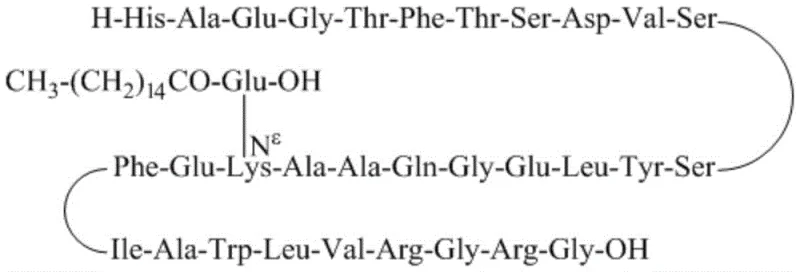
The Limitations of Conventional Methods vs. The Novel Approach
The Limitations of Conventional Methods
Historically, the solid-phase synthesis of Liraglutide has relied heavily on anchoring the peptide resin at the carbon terminal position, typically through the main chain carboxyl of the C-terminal Glycine residue. While this approach is conceptually straightforward, it suffers from significant inherent drawbacks when applied to a molecule of this complexity. As the peptide chain elongates from the C-terminus towards the N-terminus, the growing chain becomes increasingly prone to twisting and folding due to the rigid connection point at the very end. This structural constraint leads to severe steric hindrance, making subsequent amino acid couplings, particularly in the hydrophobic regions, exceptionally difficult and inefficient. Furthermore, the proximity of the growing chain to the solid support matrix often induces intermolecular aggregation or polycondensation, resulting in the formation of "difficult sequences" that are resistant to standard coupling conditions. These issues inevitably lead to lower crude product purity, a proliferation of deletion impurities, and a cumbersome purification process that drastically increases manufacturing costs and extends lead times.
The Novel Approach
The methodology described in patent CN107880111B introduces a paradigm shift by relocating the anchoring point to the side chain carboxyl of Glu-21. This modification effectively inserts a longer, more flexible spacer between the rigid polystyrene resin and the peptide backbone. The increased flexibility allows the peptide chain to adopt more favorable conformations during the coupling cycles, significantly reducing the steric clash between the incoming activated amino acids and the resin-bound peptide. Consequently, the reaction efficiency is markedly improved, allowing for the completion of coupling reactions in fewer steps and with higher conversion rates. Additionally, this strategy facilitates a hybrid synthesis approach where the C-terminal fragment (from Phe-22 to Gly-31) can be synthesized separately and coupled as a single unit. This fragment condensation technique not only shortens the overall synthesis cycle but also alters the impurity profile in a way that makes chromatographic purification far more efficient, ensuring a robust supply chain for high-purity active pharmaceutical ingredients.
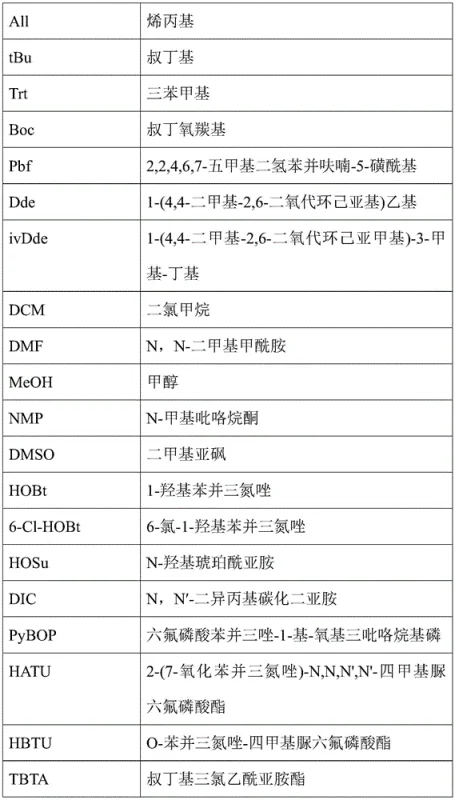
Mechanistic Insights into Side-Chain Anchored Solid-Phase Peptide Synthesis
The core mechanistic advantage of this process lies in the orthogonal protection strategy employed to facilitate the mid-chain anchoring. The synthesis initiates with the preparation of Fmoc-Glu(Resin)-OAll, where the alpha-amino group is protected by Fmoc, the side-chain carboxyl is linked to the resin, and the C-terminal carboxyl is protected by an Allyl (OAll) group. This orthogonal arrangement is crucial because it allows for the selective deprotection of the C-terminal carboxyl later in the synthesis without disturbing the resin linkage. As the N-terminal sequence (His-1 to Lys-20) is assembled, the flexible tether provided by the Glu side chain minimizes the "difficult sequence" effects often observed in linear SPPS. The reduced aggregation tendency means that reagents like HATU or PyBOP can penetrate the resin matrix more effectively, ensuring near-quantitative coupling yields even for bulky residues. This mechanistic refinement is essential for controlling the impurity spectrum, as incomplete couplings are the primary source of deletion peptides that are notoriously difficult to separate from the final product.
Furthermore, the process incorporates a sophisticated fragment coupling step to finalize the peptide chain. After the N-terminal segment is fully assembled and the Lys-26 side chain is acylated with the palmitoyl-glutamic acid moiety, the OAll protecting group is selectively removed using a palladium-catalyzed system. This exposes the C-terminal carboxyl group for coupling with the pre-synthesized C-terminal fragment (Phe-22 to Gly-31). This convergent synthesis strategy is superior to linear elongation because it limits the number of repetitive coupling cycles the most sensitive parts of the molecule undergo. By joining two substantial fragments rather than adding amino acids one by one, the cumulative risk of racemization and side reactions is minimized. The final cleavage under acidic conditions releases the full-length peptide, which retains the critical structural homology with native GLP-1 while incorporating the fatty acid side chain necessary for albumin binding and prolonged half-life.
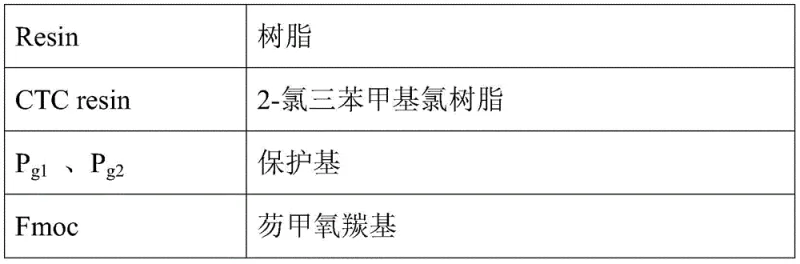
How to Synthesize Liraglutide Efficiently
The synthesis of Liraglutide via this advanced solid-phase method involves a meticulously orchestrated series of chemical transformations designed to maximize yield and purity. The process begins with the loading of Fmoc-Glu-OAll onto a hydroxyl-type resin, such as Wang or CTC resin, to form the foundational amino acid resin. Following this, the N-terminal sequence is extended step-by-step using standard Fmoc chemistry, with careful attention paid to the coupling of the Lysine residue at position 20, which requires orthogonal protection (Dde or ivDde) to allow for subsequent side-chain modification. Once the N-terminal fragment is complete, the palmitoyl chain is attached, and the C-terminal fragment is coupled to the exposed carboxyl group after OAll deprotection. For a detailed breakdown of the specific reaction conditions, reagent ratios, and workup procedures required to execute this synthesis, please refer to the standardized guide below.
- Synthesize Fmoc-Glu(Resin)-OAll amino acid resin by supporting the Glu side chain carboxyl onto hydroxyl-type resin.
- Perform multi-step solid-phase coupling to build the N-terminal sequence (His1 to Lys20) and modify the Lys20 side chain with Palmitoyl-gamma-Glu.
- Remove the OAll protecting group and couple the pre-synthesized C-terminal fragment (Phe22 to Gly31) to complete the peptide chain before cleavage and purification.
Commercial Advantages for Procurement and Supply Chain Teams
For procurement managers and supply chain directors, the adoption of this side-chain anchored synthesis route offers tangible benefits that translate directly into operational efficiency and cost stability. The primary advantage lies in the significant reduction of raw material waste associated with failed coupling cycles. In traditional C-terminal synthesis, the accumulation of deletion sequences often necessitates the use of large excesses of expensive protected amino acids and coupling reagents to drive reactions to completion. By improving the intrinsic coupling efficiency through better steric management, this novel method drastically lowers the consumption of these high-value inputs. Furthermore, the simplified impurity profile reduces the burden on downstream purification processes, meaning less solvent consumption and shorter column run times during HPLC purification. These factors collectively contribute to a more sustainable and cost-effective manufacturing model, making it an attractive option for cost reduction in pharmaceutical intermediate manufacturing.
- Cost Reduction in Manufacturing: The enhanced coupling efficiency achieved by the Glu-21 side-chain anchoring strategy directly correlates to lower reagent consumption. Because the peptide chain remains flexible and accessible, the need for double or triple coupling steps is minimized, leading to substantial savings on Fmoc-protected amino acids and activators. Additionally, the ability to use fragment condensation for the C-terminal portion reduces the total number of synthesis cycles, further lowering labor and utility costs associated with reactor time. This streamlined approach ensures that the overall cost of goods sold (COGS) is optimized without compromising the stringent quality standards required for injectable peptides.
- Enhanced Supply Chain Reliability: The reliance on standard, commercially available Fmoc-amino acids and common protecting groups ensures a robust supply chain with minimal risk of raw material shortages. Unlike proprietary enzymatic methods that may depend on specialized biocatalysts, this chemical synthesis route utilizes well-established reagents that are sourced from multiple global suppliers. The improved yield and purity of the crude product also mean that production schedules are more predictable, with fewer batches rejected due to failing purity specifications. This reliability is critical for maintaining continuous supply to downstream formulation partners and reducing lead time for high-purity peptide intermediates.
- Scalability and Environmental Compliance: The process is inherently scalable, transitioning smoothly from laboratory gram-scale to multi-kilogram commercial production. The suppression of peptide resin aggregation prevents the formation of intractable gels that can clog reactors and hinder filtration at large scales. Moreover, the reduction in solvent usage during both the synthesis and purification phases aligns with modern environmental, social, and governance (ESG) goals. By minimizing the volume of hazardous organic solvents like DMF and DCM required per kilogram of product, manufacturers can more easily comply with increasingly strict environmental regulations regarding waste disposal and emissions.
Frequently Asked Questions (FAQ)
The following questions address common technical and commercial inquiries regarding the production of Liraglutide using this specific solid-phase methodology. These insights are derived directly from the technical specifications and experimental data provided in the patent literature, offering clarity on the feasibility and advantages of this synthetic route for potential partners and stakeholders.
Q: How does the Glu-21 side-chain anchoring method improve synthesis efficiency compared to traditional C-terminal support?
A: By anchoring the resin to the side chain carboxyl of Glu-21, the peptide chain gains increased flexibility similar to having a longer linker. This reduces steric hindrance and prevents the peptide chain from twisting, which significantly improves coupling efficiency, particularly for the difficult sequences between His1 and Lys20.
Q: What purification strategies are employed to achieve high-purity Liraglutide in this process?
A: The process utilizes a multi-step purification protocol involving reversed-phase preparative HPLC. This includes initial purification using C8 alkyl bonded silica gel followed by secondary and tertiary purification steps using C18 columns with specific mobile phase systems (TFA/water/methanol and ammonium salt/acetonitrile) to remove deletion sequences and truncated impurities.
Q: Is this synthesis method suitable for large-scale commercial production of Liraglutide intermediates?
A: Yes, the method is designed for industrial feasibility. By combining solid-phase synthesis with fragment condensation, it shortens the production cycle and suppresses polycondensation phenomena. The use of standard Fmoc-protected amino acids and orthogonal protecting groups ensures the process is robust and scalable for commercial manufacturing.
Partnering with NINGBO INNO PHARMCHEM: Your Reliable Liraglutide Supplier
At NINGBO INNO PHARMCHEM, we recognize the critical importance of adopting advanced synthetic strategies to meet the growing global demand for anti-diabetic therapeutics. Our technical team possesses extensive experience scaling diverse pathways from 100 kgs to 100 MT/annual commercial production, ensuring that the innovative Glu-21 side-chain anchoring method can be seamlessly transferred to industrial manufacturing. We are committed to delivering products that meet stringent purity specifications, utilizing our rigorous QC labs to verify that every batch of Liraglutide intermediate adheres to the highest pharmacopeial standards. Our facility is equipped to handle the complex orthogonal protection schemes and fragment couplings required by this patent, guaranteeing a supply of high-quality material for your drug development needs.
We invite you to collaborate with us to leverage this cutting-edge technology for your supply chain. By partnering with NINGBO INNO PHARMCHEM, you gain access to a Customized Cost-Saving Analysis tailored to your specific volume requirements. We encourage you to contact our technical procurement team today to request specific COA data and route feasibility assessments, ensuring that your project moves forward with the most efficient and reliable synthesis strategy available in the market.