
Advanced Nickel-Catalyzed Synthesis of Alkyl Silicon Compounds for Commercial Scale-Up
In the rapidly evolving landscape of organosilicon chemistry, patent CN113717209A introduces a transformative methodology for the synthesis of alkyl silicon compounds, specifically targeting the efficient production of triethylsilane derivatives. This innovation addresses critical bottlenecks in traditional organometallic synthesis by leveraging a divalent nickel catalyst system coupled with an N-heterocyclic carbene ligand. Unlike conventional approaches that often struggle with inert bond activation, this process successfully cleaves carbon-oxygen bonds in alkenyl methyl ethers while simultaneously reducing carbon-carbon double bonds. For R&D directors and process chemists, this represents a significant leap forward in accessing complex silane architectures that are pivotal for pharmaceutical intermediates and advanced material science applications. The robustness of this catalytic system allows for the conversion of a wide array of substrates, ranging from electron-rich aryl vinyl methyl ethers to those containing electron-deficient aryl or heterocyclic structures, thereby extending the utility of inert C-O bond activation in modern synthetic organic chemistry.
The Limitations of Conventional Methods vs. The Novel Approach
The Limitations of Conventional Methods
Traditionally, the production of functional silicon compounds and bioactive silanes has relied heavily on olefin-catalyzed hydrosilylation using noble metal catalysts such as platinum, rhodium, palladium, and ruthenium. While these methods are well-established, their widespread industrial application is severely constrained by the exorbitant cost and supply volatility associated with precious metals. Furthermore, existing synthetic methodologies are frequently limited to terminal olefins or simple disubstituted olefins, exhibiting poor reactivity towards olefins containing heteroatom groups such as nitrogen and oxygen. This lack of functional group tolerance necessitates complex protecting group strategies or multi-step synthetic routes, which drastically increase the overall process mass intensity and waste generation. Additionally, the removal of trace heavy metal residues from the final active pharmaceutical ingredients (APIs) remains a persistent and costly challenge for quality control laboratories, often requiring specialized scavenging resins or extensive purification protocols to meet stringent regulatory standards.
The Novel Approach
The novel approach disclosed in the patent circumvents these historical limitations by employing a cost-effective divalent nickel catalyst, specifically Ni(acac)2, in conjunction with a commercially available carbene ligand, IMes·HCl. This catalytic system enables a one-pot demethoxyhydrosilylation of alkenyl methyl ethers, effectively transforming inexpensive and readily available starting materials into high-value alkyl silicon products. The method is not only economically superior due to the use of base metals but also chemically superior in its ability to tolerate a diverse range of functional groups, including halogens, esters, amides, and various nitrogen-containing heterocycles. By utilizing alkenyl methyl ethers derived from aldehydes via Wittig reactions, the process ensures a wide source of raw materials and high overall yields. This strategic shift from precious metal catalysis to base metal activation of inert C-O bonds provides a sustainable and scalable pathway for the commercial manufacturing of complex organosilicon intermediates.
Mechanistic Insights into Ni-Catalyzed C-O Bond Activation
The mechanistic elegance of this transformation lies in the synergistic action of the nickel center and the N-heterocyclic carbene ligand, which facilitates the oxidative addition into the inert C-O bond of the alkenyl methyl ether. The presence of zinc powder serves as a stoichiometric reductant, regenerating the active low-valent nickel species necessary for the catalytic cycle, while potassium phosphate acts as a base to assist in the transmetallation or protonation steps. The reaction proceeds through a sequence involving the activation of the silicon-boron reagent (Et3Si-BPin) and triethylsilane, which function as the silicon source and hydrogen donor, respectively. This dual activation mechanism allows for the simultaneous formation of carbon-silicon bonds and the saturation of the alkene moiety, resulting in straight-chain alkyl silicon compounds with high regioselectivity. The ability of the catalyst to distinguish between the reactive C-O bond and other potentially sensitive functional groups ensures that the structural integrity of complex molecular scaffolds is maintained throughout the synthesis.
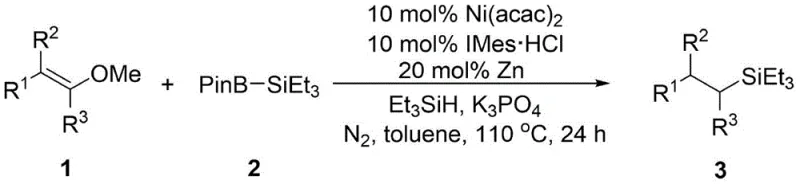
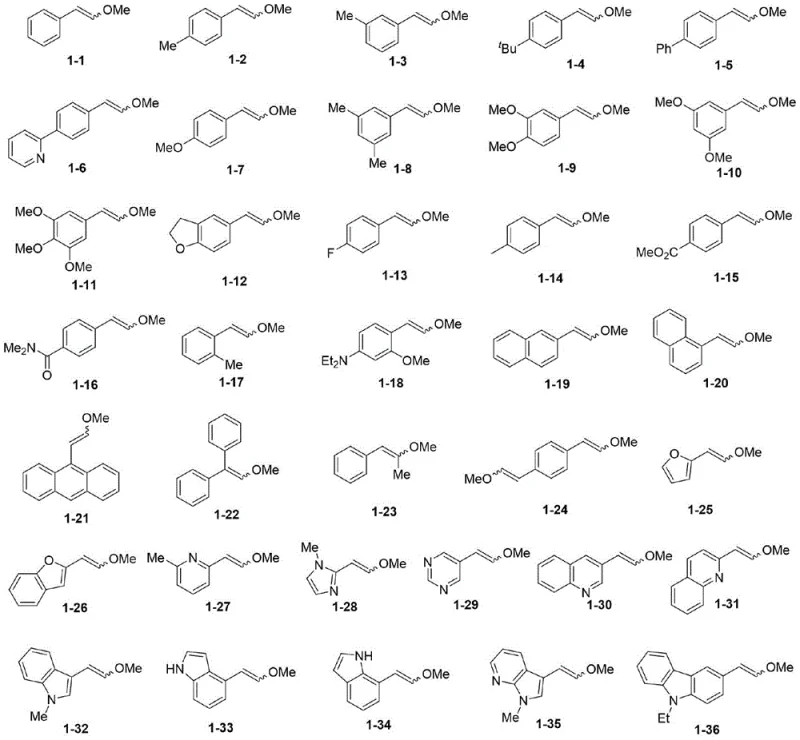
Impurity control is inherently managed by the high chemoselectivity of the nickel catalyst, which minimizes side reactions such as homocoupling or over-reduction of other functional groups. The use of toluene as a solvent at 110°C provides an optimal thermal environment that balances reaction kinetics with stability, ensuring that the catalytic turnover number remains high over the 24-hour reaction period. Post-reaction workup involves simple solvent removal and column chromatography, which effectively separates the desired alkyl silicon product from inorganic salts and ligand byproducts. For process development teams, this implies a streamlined purification workflow that reduces the burden on downstream processing units. The compatibility with heterocyclic frameworks, such as pyridines, indoles, and quinolines, further demonstrates the robustness of the catalytic system against catalyst poisoning, a common issue in base metal catalysis involving nitrogenous substrates.
How to Synthesize Triethylsilane Derivatives Efficiently
To implement this synthesis route effectively, operators must adhere to strict anhydrous conditions and inert atmosphere protocols to maintain catalyst activity. The standardized procedure involves charging a Schlenk tube with the nickel precursor, ligand, zinc powder, and base, followed by degassing and backfilling with nitrogen to exclude oxygen and moisture. Subsequently, the alkenyl methyl ether substrate, silicon boron reagent, and triethylsilane are introduced into the reaction mixture in toluene. The detailed standardized synthesis steps are outlined below to ensure reproducibility and safety during scale-up operations.
- Prepare the reaction vessel by adding Ni(acac)2, IMes·HCl ligand, zinc powder, and potassium phosphate under nitrogen protection.
- Introduce anhydrous toluene, alkenyl methyl ether substrate, silicon boron reagent (Et3Si-BPin), and triethylsilane to the mixture.
- Heat the reaction to 110°C for 24 hours, then purify the crude product via column chromatography to isolate the alkyl silicon compound.
Commercial Advantages for Procurement and Supply Chain Teams
For procurement strategists and supply chain managers, the adoption of this nickel-catalyzed technology offers substantial opportunities for cost optimization and risk mitigation. The substitution of expensive platinum group metals with abundant nickel directly translates to a significant reduction in raw material expenditure, which is critical for maintaining margin stability in high-volume chemical manufacturing. Moreover, the reliance on alkenyl methyl ethers, which are easily synthesized from commodity aldehydes, ensures a stable and diversified supply chain that is less susceptible to the geopolitical fluctuations often affecting precious metal markets. The simplicity of the reaction setup and the use of common solvents like toluene further lower the barrier to entry for contract manufacturing organizations, facilitating easier technology transfer and faster time-to-market for new product introductions.
- Cost Reduction in Manufacturing: The elimination of precious metal catalysts removes the need for expensive metal scavenging processes and reduces the overall cost of goods sold. By utilizing a base metal catalyst system that operates efficiently at moderate temperatures, energy consumption is optimized, and the requirement for specialized high-pressure equipment is negated. This economic efficiency is compounded by the high atom economy of the reaction, where the silicon and hydrogen sources are incorporated directly into the product with minimal waste generation. Consequently, manufacturers can achieve a more competitive pricing structure for fine chemical intermediates without compromising on quality or purity specifications.
- Enhanced Supply Chain Reliability: The broad substrate scope of this methodology allows for the consolidation of multiple synthetic routes onto a single flexible manufacturing platform. Since the process tolerates a wide variety of functional groups and heterocyclic structures, it can be applied to the synthesis of diverse intermediates for pharmaceuticals, agrochemicals, and electronic materials. This versatility reduces the need for dedicated production lines for specific chemistries, thereby enhancing asset utilization and operational flexibility. Furthermore, the availability of nickel and the associated ligands ensures a consistent supply of critical reagents, mitigating the risk of production delays caused by catalyst shortages.
- Scalability and Environmental Compliance: From an environmental perspective, the use of non-toxic base metals aligns with green chemistry principles and simplifies waste disposal protocols. The reaction generates fewer hazardous byproducts compared to traditional methods involving toxic heavy metals, reducing the environmental footprint of the manufacturing process. The scalability of the protocol is evidenced by its robust performance across a wide range of substrates, suggesting that translation from laboratory scale to multi-ton commercial production can be achieved with minimal process re-engineering. This ease of scale-up supports the rapid expansion of production capacity to meet growing market demand for high-purity organosilicon compounds.
Frequently Asked Questions (FAQ)
The following questions address common technical inquiries regarding the implementation and capabilities of this nickel-catalyzed synthesis method. These insights are derived directly from the experimental data and scope defined in the patent documentation, providing clarity on reaction parameters and substrate compatibility. Understanding these details is essential for evaluating the feasibility of this technology for specific project requirements.
Q: What are the advantages of using nickel catalysts over platinum for hydrosilylation?
A: Nickel catalysts significantly reduce raw material costs compared to precious metals like platinum or rhodium. Furthermore, this specific Ni-catalyzed method activates inert C-O bonds in alkenyl methyl ethers, expanding the substrate scope beyond simple terminal olefins typically limited in traditional hydrosilylation.
Q: Does this synthesis method tolerate heterocyclic functional groups?
A: Yes, the method demonstrates excellent compatibility with various heteroatom-containing groups. The patent data confirms successful synthesis with substrates containing nitrogen, oxygen, and fluorine, as well as complex heterocyclic frameworks like pyridines, indoles, and quinolines.
Q: What are the typical reaction conditions for this transformation?
A: The reaction typically proceeds in toluene solvent at 110°C under a nitrogen atmosphere for 24 hours. It utilizes a catalytic system of Ni(acac)2 and an N-heterocyclic carbene ligand, with zinc powder and potassium phosphate as essential additives.
Partnering with NINGBO INNO PHARMCHEM: Your Reliable Alkyl Silicon Compound Supplier
At NINGBO INNO PHARMCHEM, we recognize the strategic value of this advanced nickel-catalyzed technology in driving innovation within the fine chemical sector. As a premier CDMO partner, we possess extensive experience scaling diverse pathways from 100 kgs to 100 MT/annual commercial production, ensuring that your transition from benchtop discovery to industrial manufacturing is seamless and efficient. Our state-of-the-art facilities are equipped with rigorous QC labs capable of meeting stringent purity specifications, guaranteeing that every batch of alkyl silicon compound delivered meets the highest international standards. We are committed to leveraging our technical expertise to optimize this novel synthetic route, delivering cost-effective solutions that enhance your competitive advantage in the global marketplace.
We invite you to engage with our technical procurement team to discuss how this technology can be tailored to your specific needs. By requesting a Customized Cost-Saving Analysis, you can gain a deeper understanding of the economic benefits associated with switching to this nickel-catalyzed process. We encourage potential partners to contact us for specific COA data and route feasibility assessments, allowing us to demonstrate our capability to deliver high-quality alkyl silicon intermediates reliably and consistently. Let us collaborate to unlock the full potential of this cutting-edge chemistry for your next commercial project.