
Advanced One-Pot Manufacturing of 1-Chloro-1-Chloroacetyl-Cyclopropane for Global Agrochemical Supply Chains
Introduction to High-Efficiency Agrochemical Intermediate Manufacturing
The global demand for high-performance fungicides, particularly prothioconazole, has necessitated the development of robust and scalable supply chains for key intermediates like 1-chloro-1-chloroacetyl-cyclopropane (CAS: 120983-72-4). This critical building block serves as the foundational scaffold for triazolinthione fungicides, which are essential for protecting cereal crops against a broad spectrum of fungal diseases. Recent advancements in process chemistry, specifically detailed in patent CN104447262B, have introduced a transformative one-pot synthesis methodology that addresses historical bottlenecks in production efficiency and cost. By leveraging a streamlined two-step sequence starting from readily available 5-chloro-2-pentanone, this technology offers a compelling value proposition for pharmaceutical and agrochemical manufacturers seeking to optimize their upstream supply networks.
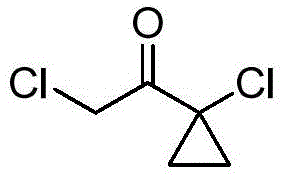
The structural integrity and purity of 1-chloro-1-chloroacetyl-cyclopropane are paramount for downstream coupling reactions, where impurities can lead to significant yield losses or the formation of toxic by-products. The patented approach ensures high selectivity and minimizes the generation of hazardous waste, aligning with modern green chemistry principles. For R&D directors and procurement strategists, understanding the mechanistic nuances and commercial implications of this synthesis route is vital for making informed sourcing decisions. This report provides a deep-dive analysis of the technology, evaluating its potential to redefine cost structures and supply reliability in the agrochemical intermediate sector.
The Limitations of Conventional Methods vs. The Novel Approach
The Limitations of Conventional Methods
Historically, the synthesis of 1-chloro-1-chloroacetyl-cyclopropane has been plagued by inefficient multi-step protocols that impose heavy burdens on both capital expenditure and operational complexity. Traditional literature methods, such as those described in patent WO2013035674, rely on 1-chloro-1-acetyl-cyclopropane as a starting material. However, this precursor is not commercially available off-the-shelf, requiring custom synthesis which drives up costs and extends lead times significantly. Furthermore, academic studies utilizing alpha-acetyl-gamma-butyrolactone involve a cumbersome four-step sequence comprising chlorination, hydrolysis, decarboxylation, and ring-closing substitution. Each of these stages necessitates separate isolation and purification procedures, resulting in substantial solvent consumption, high energy usage, and the generation of significant volumes of acidic and organic waste. The cumulative effect of these inefficiencies renders conventional methods economically unviable for large-scale industrial application, creating a supply gap that this new technology aims to fill.
The Novel Approach
In stark contrast to legacy processes, the one-pot method disclosed in CN104447262B utilizes 5-chloro-2-pentanone, a commodity chemical, to achieve the target molecule in just two synthetic operations within a single reactor. This paradigm shift eliminates the need for intermediate isolation, thereby drastically reducing equipment occupancy and processing time. The process begins with a controlled chlorination followed immediately by a base-mediated cyclization, facilitated by phase transfer catalysis. This integration not only simplifies the workflow but also enhances the overall atom economy of the reaction. By consolidating the synthesis into a continuous operation, manufacturers can achieve a significant reduction in utility costs and labor requirements. The ability to obtain the final product with a purity of 97% directly after distillation underscores the high selectivity of this route, minimizing the need for resource-intensive recrystallization or chromatographic purification steps.

Mechanistic Insights into Sulfuryl Chloride Mediated Chlorination and Cyclization
The core of this innovative synthesis lies in the precise orchestration of electrophilic chlorination followed by intramolecular nucleophilic substitution. In the first stage, sulfuryl chloride (SO2Cl2) acts as a potent chlorinating agent, reacting with the alpha-position of the ketone in 5-chloro-2-pentanone. This step is conducted at low temperatures (0-10°C) initially to control exothermicity and prevent over-chlorination or side reactions, before warming to 40°C to drive the reaction to completion. The use of sulfuryl chloride is advantageous as it generates gaseous by-products (SO2 and HCl) which can be easily scrubbed, simplifying the workup compared to liquid chlorinating agents that leave behind difficult-to-remove residues. The resulting alpha-chloro ketone intermediate is highly reactive and prone to decomposition if isolated, which validates the strategic decision to proceed directly to the next step without purification.
The subsequent cyclization step is driven by the addition of a strong base, such as sodium hydroxide or potassium hydroxide, in the presence of a quaternary ammonium salt phase transfer catalyst. The base deprotonates the remaining alpha-hydrogen adjacent to the carbonyl group, generating an enolate ion. This nucleophile then attacks the terminal carbon bearing the chlorine atom in an intramolecular SN2 reaction, closing the three-membered cyclopropane ring. The phase transfer catalyst plays a critical role here by shuttling hydroxide ions from the aqueous phase into the organic phase where the substrate resides, significantly accelerating the reaction rate under mild conditions (40-100°C). This mechanistic pathway ensures high regioselectivity for the formation of the 1,1-disubstituted cyclopropane ring, effectively suppressing polymerization or elimination side reactions that often plague cyclopropanation chemistries.
How to Synthesize 1-Chloro-1-Chloroacetyl-Cyclopropane Efficiently
Implementing this synthesis requires careful attention to stoichiometry and temperature control to maximize yield and safety. The process is designed to be robust, tolerating a range of solvents including dichloromethane, toluene, and dichloroethane, though dichloromethane is preferred for its optimal solubility profile. The standardized protocol involves dissolving the ketone substrate, adding sulfuryl chloride dropwise to manage heat evolution, and subsequently introducing the base and catalyst system for ring closure. Detailed operational parameters, including specific molar ratios and stirring rates, are critical for reproducibility on a commercial scale. For a comprehensive, step-by-step guide tailored to pilot and plant-scale operations, please refer to the technical protocol below.
- Dissolve 5-chloro-2-pentanone in an organic solvent and react with excess sulfuryl chloride at 0-10°C, then warm to 40°C for chlorination.
- Add excess alkali to adjust pH to 7-11, introduce a phase transfer catalyst, and heat to 40-100°C to induce intramolecular cyclization.
- Wash the reaction mixture to neutrality, extract the organic phase, remove solvent, and perform vacuum distillation to isolate the product with 97% purity.
Commercial Advantages for Procurement and Supply Chain Teams
For procurement managers and supply chain directors, the adoption of this one-pot synthesis technology translates into tangible strategic benefits that extend beyond simple unit price reductions. The consolidation of four discrete chemical transformations into a single pot operation fundamentally alters the cost structure of manufacturing 1-chloro-1-chloroacetyl-cyclopropane. By eliminating intermediate isolation steps, the process drastically reduces the consumption of organic solvents and the associated costs of solvent recovery and disposal. Furthermore, the use of 5-chloro-2-pentanone as a feedstock leverages a mature supply chain, ensuring consistent availability and shielding buyers from the volatility associated with custom-synthesized specialty reagents. This stability is crucial for long-term production planning and inventory management in the agrochemical sector.
- Cost Reduction in Manufacturing: The economic impact of this process is driven primarily by the reduction in unit operations. Traditional methods require multiple reactors, filtration units, and drying ovens for intermediate handling, all of which incur significant capital depreciation and maintenance costs. By performing the reaction in a single vessel, the new method minimizes equipment footprint and energy consumption for heating and cooling cycles. Additionally, the high selectivity of the reaction reduces the formation of by-products, leading to higher effective yields and lower raw material waste. While specific percentage savings depend on local utility costs, the qualitative reduction in processing time and material throughput offers a clear path to substantially lower cost of goods sold (COGS).
- Enhanced Supply Chain Reliability: Supply continuity is often jeopardized by complex synthesis routes that have multiple points of failure. The simplicity of the one-pot method reduces the risk of batch failures and quality deviations. Since the starting material is a commodity chemical, suppliers are not reliant on a single niche vendor for precursors, diversifying the supply risk. The robustness of the reaction conditions, which operate at moderate temperatures and pressures, further ensures that production can be maintained consistently without frequent shutdowns for equipment repair or cleaning. This reliability allows downstream formulators to maintain leaner inventory levels while confident in the steady flow of critical intermediates.
- Scalability and Environmental Compliance: Scaling chemical processes often amplifies environmental challenges, particularly regarding waste generation. This technology inherently mitigates such risks by reducing the volume of waste acid and organic effluent generated per kilogram of product. The absence of heavy metal catalysts or exotic reagents simplifies wastewater treatment protocols, ensuring easier compliance with increasingly stringent environmental regulations. The process is amenable to continuous flow chemistry adaptations, offering a future-proof pathway for further capacity expansion without proportional increases in facility size. This scalability ensures that the supply chain can grow in tandem with market demand for prothioconazole without encountering technical bottlenecks.
Frequently Asked Questions (FAQ)
The following questions address common technical and commercial inquiries regarding the production of 1-chloro-1-chloroacetyl-cyclopropane. These insights are derived directly from the experimental data and claims presented in the patent literature, providing a factual basis for evaluating the technology's fit within your supply chain. Understanding these details helps stakeholders assess the feasibility of integrating this intermediate into their existing manufacturing workflows.
Q: What are the primary advantages of the one-pot synthesis method for 1-chloro-1-chloroacetyl-cyclopropane?
A: The one-pot method significantly reduces production costs and complexity by combining chlorination and cyclization in a single vessel. This eliminates the need for intermediate isolation, reduces solvent consumption, and shortens the overall processing time compared to traditional multi-step routes.
Q: What is the expected purity and yield of the final product using this patented process?
A: According to patent CN104447262B, the process yields 1-chloro-1-chloroacetyl-cyclopropane with a gas chromatography content of approximately 97% to 98%. The isolated yield typically ranges around 60%, which is competitive given the simplified operational workflow.
Q: Why is 5-chloro-2-pentanone preferred as the starting material over other precursors?
A: 5-Chloro-2-pentanone is a commercially available and cost-effective feedstock. Unlike alternative precursors such as 1-chloro-1-acetyl-cyclopropane, which is expensive and difficult to source, or alpha-acetyl-gamma-butyrolactone, which requires four complex reaction steps, 5-chloro-2-pentanone enables a direct and economical two-step synthesis.
Partnering with NINGBO INNO PHARMCHEM: Your Reliable 1-Chloro-1-Chloroacetyl-Cyclopropane Supplier
At NINGBO INNO PHARMCHEM, we recognize that the efficiency of your final agrochemical product depends heavily on the quality and consistency of its precursors. As a leading CDMO partner, we possess extensive experience scaling diverse pathways from 100 kgs to 100 MT/annual commercial production, ensuring that the transition from laboratory innovation to industrial reality is seamless. Our facilities are equipped with rigorous QC labs and adhere to stringent purity specifications, guaranteeing that every batch of 1-chloro-1-chloroacetyl-cyclopropane meets the exacting standards required for fungicide synthesis. We are committed to leveraging advanced process technologies, such as the one-pot method analyzed here, to deliver superior value to our global partners.
We invite you to engage with our technical procurement team to discuss how we can tailor this synthesis route to your specific volume and quality requirements. By requesting a Customized Cost-Saving Analysis, you can gain a clearer understanding of the potential economic benefits for your specific operation. We encourage you to contact us today to obtain specific COA data and route feasibility assessments, ensuring that your supply chain is built on a foundation of scientific excellence and commercial reliability.