
Scalable Production of Chiral Benzyl Alcohol Intermediates via Aqueous Ruthenium Catalysis
The global demand for high-performance antifungal agents continues to surge, driving the need for robust manufacturing processes for key pharmaceutical intermediates. Patent CN109574797B, published in September 2021, introduces a groundbreaking preparation method for chiral benzyl alcohol, specifically the critical intermediate (S)-2-chloro-1-(2,4-dichlorophenyl) ethanol, often referred to as S-Int A. This molecule serves as the chiral backbone for Luliconazole, a potent imidazole antifungal drug known for its superior skin retention and efficacy against resistant fungal strains. The patent discloses a novel aqueous-phase asymmetric transfer hydrogenation strategy that leverages a ruthenium complex catalyst paired with a specialized chiral ligand and beta-cyclodextrin. This technological advancement addresses long-standing challenges in the industry, such as the reliance on hazardous organic solvents, difficult purification steps caused by surfactants, and the high cost of enzymatic or borane-based reductions. By shifting the reaction medium to water and utilizing a recyclable supramolecular additive, this process offers a compelling pathway for cost reduction in pharmaceutical intermediates manufacturing while ensuring exceptional stereochemical control.
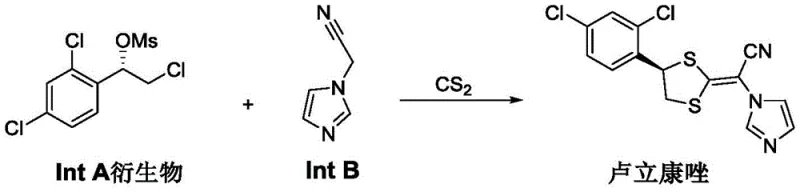
The Limitations of Conventional Methods vs. The Novel Approach
The Limitations of Conventional Methods
Historically, the synthesis of S-Int A has been plagued by significant technical and economic hurdles that hinder efficient commercial scale-up of complex pharmaceutical intermediates. Early literature methods, such as those utilizing diisopinocampheylchloroborane, suffer from exorbitant reagent costs and safety concerns associated with handling pyrophoric boron species on a multi-ton scale. Alternatively, biocatalytic routes employing carbonyl reductase enzymes, while selective, often require expensive cofactors and suffer from low substrate concentrations, necessitating large reactor volumes and complex downstream processing. Furthermore, previous transition metal-catalyzed approaches, such as those described in CN103044192, relied heavily on surfactants like sodium dodecyl sulfate to solubilize organic substrates in water. As illustrated in comparative studies, these surfactant-based systems generate persistent foaming during agitation, creating severe operational difficulties and requiring extensive washing steps to remove residual surfactants from the product, which drastically lowers overall yield to as little as 45% in some comparative examples.
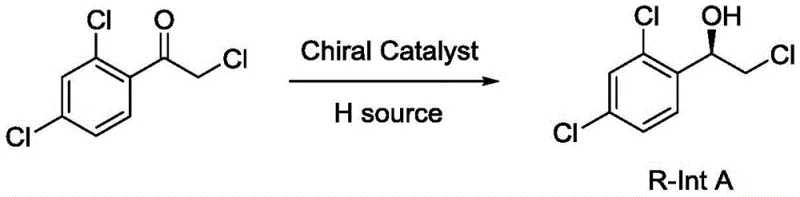
The Novel Approach
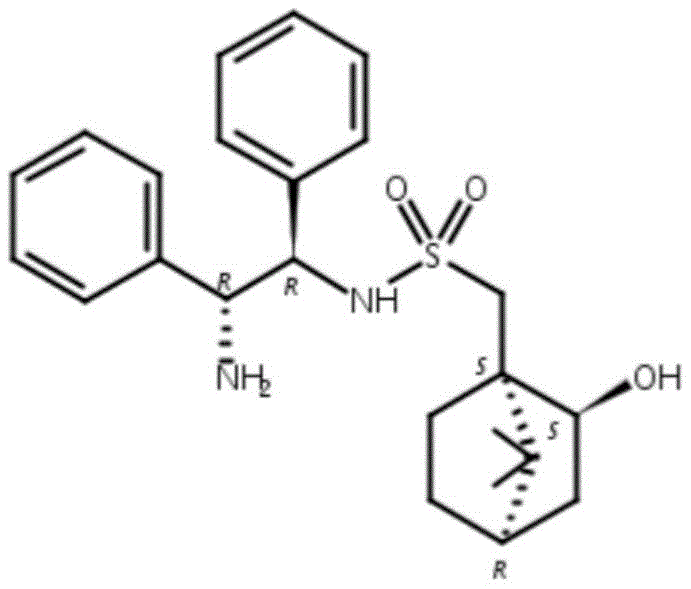
The methodology outlined in CN109574797B represents a paradigm shift by replacing problematic surfactants with beta-cyclodextrin, an amphoteric cyclic oligosaccharide. This innovative approach facilitates the reduction of 2,2',4-trichloroacetophenone in a purely aqueous environment without the formation of troublesome foam. The reaction utilizes a ruthenium precursor, [Ru(p-cymene)Cl2]2, coordinated with the chiral ligand (R,R,R)-CrDPEN, and sodium formate as a benign hydrogen donor. Unlike previous methods that struggled with product isolation, this novel process allows the beta-cyclodextrin to be recovered simply by hot filtration after the reaction, enabling its continuous recycling. The result is a streamlined workflow that achieves yields exceeding 95% with optical purity reaching 99.9% ee, effectively solving the purity and cost issues inherent in prior art while establishing a reliable luliconazole intermediate supplier framework for industrial adoption.
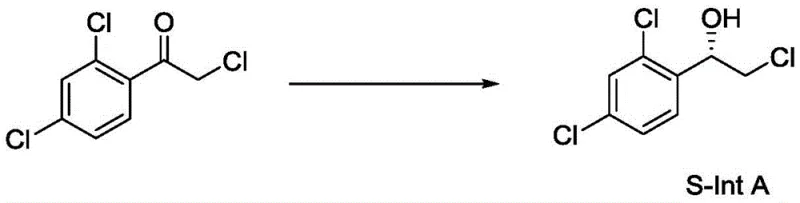
Mechanistic Insights into Ru-Catalyzed Asymmetric Transfer Hydrogenation
The core of this synthetic breakthrough lies in the precise orchestration of the ruthenium-catalyzed transfer hydrogenation mechanism within a supramolecular host-guest environment. The active catalytic species is generated in situ from the dimeric ruthenium precursor and the chiral diamine ligand (R,R,R)-CrDPEN. This ligand, featuring a rigid chiral backbone with specific stereocenters, creates a highly defined chiral pocket around the metal center. During the catalytic cycle, the ruthenium hydride species transfers a hydride ion to the prochiral ketone substrate, 2,2',4-trichloroacetophenone, while a proton is simultaneously delivered from the solvent or ligand NH group. The stereochemical outcome is dictated by the spatial arrangement of the ligand, which forces the substrate to approach the metal center from a specific face, thereby ensuring the exclusive formation of the (S)-enantiomer required for Luliconazole synthesis. The presence of beta-cyclodextrin further enhances this selectivity by potentially forming inclusion complexes with the aromatic substrate, pre-organizing it near the catalytic site and shielding it from non-selective background reactions.
Impurity control in this system is exceptionally robust due to the mild reaction conditions and the specificity of the catalyst. Traditional methods often generate racemic byproducts or over-reduced impurities due to harsh reducing agents or non-selective enzymes. In contrast, the formate-driven transfer hydrogenation operates at moderate temperatures of 40-45°C, minimizing thermal degradation and side reactions. The use of water as the sole solvent eliminates the risk of solvent-derived impurities and simplifies the removal of inorganic salts formed during the reaction. Furthermore, the ability to recover and recycle the beta-cyclodextrin ensures that the reaction medium remains consistent across batches, preventing the accumulation of degradation products that could poison the catalyst or contaminate the final API. This rigorous control over the reaction environment translates directly to a cleaner crude product profile, reducing the burden on downstream purification units and ensuring consistent batch-to-batch quality.
How to Synthesize (S)-2-chloro-1-(2,4-dichlorophenyl) ethanol Efficiently
The operational protocol for this synthesis is designed for seamless integration into existing multipurpose chemical plants. The process begins with the preparation of the catalytic solution under an inert nitrogen atmosphere, where degassed water is charged with beta-cyclodextrin, the ruthenium complex, and the chiral ligand. Following a brief activation period at 35-40°C, the ketone substrate and sodium formate are introduced, and the mixture is stirred at 40-45°C for approximately 10 to 12 hours. Upon completion, the reaction mass is cooled to induce precipitation, allowing for the physical separation of the cyclodextrin additive. The detailed standardized synthesis steps, including specific mass ratios, stirring speeds, and crystallization parameters, are provided below to ensure reproducibility and safety during technology transfer.
- Prepare the catalytic system by mixing beta-cyclodextrin, [Ru(p-cymene)Cl2]2, and (R,R,R)-CrDPEN ligand in degassed water under inert gas, heating to 35-40°C.
- Add 2,2',4-trichloroacetophenone and sodium formate dihydrate to the reaction mixture, maintaining temperature at 40-45°C for 10-12 hours.
- Cool the reaction to 0-10°C to precipitate solids, filter to recover beta-cyclodextrin, and crystallize the organic phase to obtain the pure product.
Commercial Advantages for Procurement and Supply Chain Teams
For procurement managers and supply chain directors, the adoption of this patented technology offers substantial strategic benefits beyond mere technical feasibility. The elimination of expensive and hazardous reagents like borane complexes or specialized enzymes directly correlates to a significant reduction in raw material expenditure. Moreover, the ability to recycle the beta-cyclodextrin additive multiple times without loss of efficiency creates a closed-loop material flow that minimizes waste disposal costs and environmental compliance burdens. The simplified workup procedure, which avoids the tedious extraction and washing steps required to remove surfactants, drastically shortens the production cycle time, thereby enhancing the overall throughput of the manufacturing facility. These factors combined contribute to a more resilient and cost-effective supply chain for high-purity pharmaceutical intermediates.
- Cost Reduction in Manufacturing: The replacement of high-cost enzymatic or borane reagents with inexpensive sodium formate and recyclable beta-cyclodextrin fundamentally alters the cost structure of the intermediate. By avoiding the need for specialized surfactant removal processes and reducing solvent consumption through the use of water, the overall cost of goods sold is significantly optimized. This economic efficiency allows for more competitive pricing strategies in the global market for antifungal APIs.
- Enhanced Supply Chain Reliability: Reliance on exotic biological enzymes or hazardous boron reagents often introduces supply chain volatility due to limited vendor availability and strict transportation regulations. In contrast, the reagents utilized in this process—ruthenium salts, formates, and cyclodextrins—are commodity chemicals with robust global supply networks. This shift ensures a stable and continuous supply of raw materials, mitigating the risk of production stoppages and securing long-term availability for downstream API manufacturers.
- Scalability and Environmental Compliance: The aqueous nature of the reaction aligns perfectly with modern green chemistry principles, facilitating easier regulatory approval and environmental permitting. The absence of volatile organic compounds (VOCs) and the minimization of hazardous waste streams simplify the scale-up from pilot plant to commercial production. This environmental compatibility not only reduces the carbon footprint of the manufacturing process but also future-proofs the supply chain against increasingly stringent environmental regulations.
Frequently Asked Questions (FAQ)
The following questions address common technical and commercial inquiries regarding the implementation of this chiral synthesis technology. These insights are derived directly from the experimental data and comparative analysis presented in the patent documentation, providing clarity on process robustness and product quality. Understanding these details is crucial for technical teams evaluating the feasibility of adopting this route for large-scale production.
Q: What are the advantages of using beta-cyclodextrin over traditional surfactants in this reduction?
A: Unlike traditional surfactants which generate excessive foam and complicate post-treatment, beta-cyclodextrin acts as an amphoteric compound that solubilizes reactants without foaming. It can be easily recovered by hot filtration and recycled, significantly simplifying the purification workflow and reducing waste.
Q: How does this aqueous method compare to borane-based reduction in terms of safety?
A: Traditional borane-complex reductions involve hazardous reagents that pose significant risks for large-scale production. This patented method utilizes sodium formate as a safe hydrogen source in water, eliminating the safety hazards associated with pyrophoric borane reagents while maintaining high optical purity.
Q: What optical purity can be achieved with the (R,R,R)-CrDPEN ligand system?
A: The process consistently achieves an optical purity of 99.9% ee. This high enantiomeric excess is critical for the synthesis of Luliconazole, ensuring the final API meets stringent regulatory standards for chiral drugs.
Partnering with NINGBO INNO PHARMCHEM: Your Reliable Luliconazole Intermediate Supplier
At NINGBO INNO PHARMCHEM, we recognize the critical importance of mastering complex chiral synthesis routes to meet the evolving demands of the pharmaceutical industry. Our team possesses extensive experience scaling diverse pathways from 100 kgs to 100 MT/annual commercial production, ensuring that innovative laboratory processes like the one described in CN109574797B can be successfully translated into robust manufacturing operations. We maintain stringent purity specifications and operate rigorous QC labs equipped with advanced chiral chromatography to guarantee that every batch of (S)-2-chloro-1-(2,4-dichlorophenyl) ethanol meets the highest international standards for optical purity and chemical integrity.
We invite global partners to collaborate with us to leverage this advanced technology for their antifungal drug portfolios. By engaging with our technical procurement team, you can request a Customized Cost-Saving Analysis tailored to your specific volume requirements. We encourage you to contact us today to obtain specific COA data and comprehensive route feasibility assessments, ensuring a secure and efficient supply of high-quality chiral intermediates for your next-generation pharmaceutical products.