
Advanced Manufacturing of 5-Bromo-2-(3-chloro-pyridin-2-yl)-2H-pyrazole-3-carboxylic Acid for Scalable Agrochemical Production
The global demand for high-efficacy anthranilamide insecticides, such as chlorantraniliprole and cyantraniliprole, has necessitated the development of robust and economically viable synthetic routes for their key precursors. Patent CN114650984A discloses a groundbreaking methodology for the preparation of 5-bromo-2-(3-chloro-pyridin-2-yl)-2H-pyrazole-3-carboxylic acid, a critical building block in this class of agrochemicals. This novel approach addresses long-standing industrial challenges related to processability, environmental safety, and cost-efficiency that have plagued conventional manufacturing techniques. By leveraging a sequence of selective halogenation, controlled dehalogenation, and efficient carboxylation, the disclosed technology achieves an overall yield of about 50% while utilizing commercially available reagents. For procurement leaders and supply chain managers seeking a reliable agrochemical intermediate supplier, understanding the technical nuances of this patent is essential for securing a stable supply of high-purity materials.
The Limitations of Conventional Methods vs. The Novel Approach
The Limitations of Conventional Methods
Traditional processes for producing 5-bromo-2-(3-chloro-pyridin-2-yl)-2H-pyrazole-3-carboxylic acid have historically been fraught with significant industrial drawbacks that impact both cost and sustainability. Conventional routes often suffer from poor processability, requiring complex multi-step sequences that involve hazardous reagents and dedicated equipment capable of withstanding aggressive reaction conditions. A major bottleneck in older methodologies is the generation of excessive waste streams and the necessity for difficult mixed solvent separations, which drastically inflate production costs and environmental compliance burdens. Furthermore, the use of unstable intermediates and harsh halogenating agents in prior art methods frequently leads to safety incidents and inconsistent product quality, creating volatility in the supply chain for downstream insecticide manufacturers.
The Novel Approach
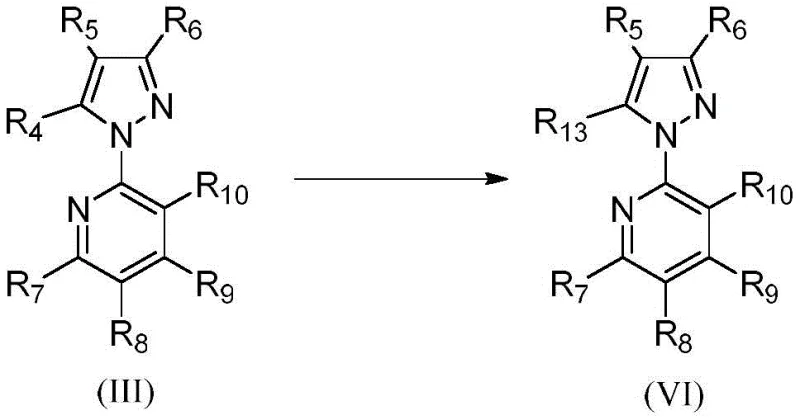
In stark contrast, the novel approach detailed in the patent introduces a streamlined synthesis pathway that fundamentally re-engineers the construction of the pyrazole-pyridine scaffold. This method replaces hazardous and inefficient steps with safer, high-yielding transformations, such as the use of aqueous hydrogen peroxide and hydrogen bromide for halogenation, which significantly reduces process hazards. The new route eliminates the need for complex mixed solvent separations and simplifies operational complexity, allowing for a more direct path to the target carboxylic acid. As illustrated in the reaction scheme below, the process integrates selective dehalogenation and efficient coupling strategies that enhance the overall material throughput.

By optimizing each transformation, from the initial functionalization of pyrazole to the final carboxylation, this technology delivers a commercially superior alternative that aligns with modern green chemistry principles while maintaining high economic viability for large-scale production facilities.
Mechanistic Insights into Selective Halogenation and Carboxylation
The core innovation of this synthesis lies in the precise control of halogenation and subsequent functional group manipulation. The process initiates with the halogenation of pyrazole derivatives using a mixture of hydrogen peroxide and hydrogen bromide in an aqueous medium, optionally in the presence of an inorganic base. This specific reagent combination allows for the controlled introduction of bromine atoms at the 3, 4, and 5 positions of the pyrazole ring, generating a mixture of poly-brominated intermediates. Crucially, the ratio of hydrogen bromide to hydrogen peroxide can be tuned to favor specific substitution patterns, providing a level of selectivity that is difficult to achieve with molecular bromine alone. Following halogenation, a selective dehalogenation step is employed using a reducing agent such as sodium sulfite and a dehalogenating agent like potassium iodide. This step strategically removes excess halogen atoms to isolate the desired 3-bromo-1H-pyrazole motif, which serves as the nucleophile for the subsequent coupling reaction.
The final stage involves the installation of the carboxylic acid moiety, which is critical for the biological activity of the final insecticide. This is achieved through a metal-mediated carboxylation strategy, where the pyrazolyl-pyridine intermediate is treated with a metal-containing compound, such as a Grignard reagent (e.g., iPr2NMgCl) or a lithium-containing compound. The resulting organometallic species reacts with a carbonyl source, either carbon dioxide gas or dimethyl carbonate, to form the carboxylate salt. This step is particularly advantageous as it avoids the use of toxic cyanide sources often found in older literature. The reaction is conducted at mild temperatures ranging from 0°C to 60°C, ensuring high stability of the sensitive intermediates. Subsequent hydrolysis with an aqueous metal hydroxide solution followed by acidification yields the final high-purity 5-bromo-2-(3-chloro-pyridin-2-yl)-2H-pyrazole-3-carboxylic acid.
How to Synthesize 5-Bromo-2-(3-chloro-pyridin-2-yl)-2H-pyrazole-3-carboxylic Acid Efficiently
Implementing this synthesis requires careful attention to reaction conditions, particularly during the halogenation and metalation steps, to ensure optimal yield and purity. The process begins with the dissolution of pyrazole in water, followed by the controlled addition of hydrogen bromide and hydrogen peroxide at low temperatures to manage exotherms. After isolating the brominated intermediate, it undergoes dehalogenation in a polar solvent system with a reducing agent to generate the mono-brominated pyrazole. This intermediate is then coupled with 2,3-dichloropyridine under basic conditions to form the N-aryl bond. The detailed standardized synthesis steps, including specific molar ratios, temperature profiles, and workup procedures required for GMP-compliant manufacturing, are outlined in the guide below.
- Perform selective halogenation of pyrazole using hydrogen peroxide and hydrogen bromide in water, followed by dehalogenation to obtain 3-bromo-1H-pyrazole.
- Couple the 3-bromo-1H-pyrazole with 2,3-dichloropyridine in the presence of an inorganic base and solvent to form the pyrazolyl-pyridine intermediate.
- Execute carboxylation using a metal-containing compound (Grignard or Lithium reagent) with CO2 or dimethyl carbonate, followed by hydrolysis to yield the final acid.
Commercial Advantages for Procurement and Supply Chain Teams
For procurement managers and supply chain heads, the adoption of this novel synthesis route translates into tangible strategic benefits that extend beyond simple chemical transformation. The primary advantage is the substantial cost savings achieved through the elimination of expensive and hazardous reagents, as well as the reduction of waste disposal costs associated with mixed solvent streams. By utilizing commercially available and easily handled reagents like hydrogen peroxide and common inorganic bases, the process reduces dependency on specialized supply chains for exotic chemicals, thereby enhancing supply chain reliability and reducing lead time for high-purity agrochemical intermediates. Furthermore, the simplified operational complexity means that the process can be scaled up more rapidly in existing multipurpose reactors without the need for significant capital expenditure on dedicated equipment.
- Cost Reduction in Manufacturing: The process achieves cost optimization by replacing hazardous molecular bromine handling with safer aqueous systems and eliminating the need for complex mixed solvent separations which are energy-intensive and costly. The use of inexpensive reagents such as hydrogen peroxide, sodium sulfite, and common Grignard reagents significantly lowers the raw material cost per kilogram of the final product. Additionally, the improved overall yield of about 50% means less starting material is wasted, directly improving the cost of goods sold (COGS) and allowing for more competitive pricing in the global agrochemical market.
- Enhanced Supply Chain Reliability: By relying on commodity chemicals that are widely available from multiple global suppliers, the risk of supply disruption due to single-source dependency is drastically minimized. The robustness of the reaction conditions, which tolerate a range of temperatures and solvent choices (such as toluene, THF, or water), ensures that production can continue even if specific solvent grades are temporarily unavailable. This flexibility is crucial for maintaining continuous supply to downstream insecticide manufacturers, preventing production stoppages that could ripple through the agricultural supply chain during peak seasons.
- Scalability and Environmental Compliance: The reduction in process hazards and waste generation aligns perfectly with increasingly stringent environmental regulations, reducing the regulatory burden and potential fines associated with hazardous waste disposal. The ability to perform key steps in aqueous media or common organic solvents simplifies the scale-up process from pilot plant to commercial tonnage, ensuring that the technology can meet growing market demand without compromising on safety or environmental standards. This scalability ensures a consistent supply of high-quality intermediates necessary for the production of next-generation insecticides.
Frequently Asked Questions (FAQ)
The following questions address common technical and commercial inquiries regarding the implementation of this synthesis technology. These answers are derived directly from the experimental data and embodiments disclosed in the patent documentation, providing a clear understanding of the process capabilities and limitations for potential licensees or manufacturing partners.
Q: What are the primary advantages of this novel synthesis process over conventional methods?
A: The disclosed process offers significant improvements including an increased overall yield of about 50%, reduced operational complexity, elimination of mixed solvent separation steps, and substantially reduced waste generation compared to traditional industrial methods.
Q: Which halogenating agents are preferred for the initial pyrazole functionalization?
A: The process utilizes environmentally friendlier reagents such as a mixture of hydrogen peroxide and hydrogen bromide, or alternatively bromine with sodium hydroxide, avoiding the hazards associated with handling pure molecular bromine in large quantities.
Q: Is this manufacturing route suitable for commercial scale-up?
A: Yes, the process is designed for scalability using commercially available and easily handled reagents, simplified operational steps, and reduced process hazards, making it highly suitable for large-scale agrochemical intermediate production.
Partnering with NINGBO INNO PHARMCHEM: Your Reliable 5-Bromo-2-(3-chloro-pyridin-2-yl)-2H-pyrazole-3-carboxylic Acid Supplier
At NINGBO INNO PHARMCHEM, we recognize the critical role that high-quality intermediates play in the success of agrochemical formulations. Our team possesses extensive experience scaling diverse pathways from 100 kgs to 100 MT/annual commercial production, ensuring that the complex chemistry described in CN114650984A can be translated into reliable industrial reality. We maintain stringent purity specifications and operate rigorous QC labs to guarantee that every batch of 5-bromo-2-(3-chloro-pyridin-2-yl)-2H-pyrazole-3-carboxylic acid meets the exacting standards required for the synthesis of potent insecticides like chlorantraniliprole.
We invite you to contact our technical procurement team to discuss how we can support your supply chain needs with this advanced manufacturing technology. By requesting a Customized Cost-Saving Analysis, you can gain deeper insights into how our optimized process can reduce your overall production costs. We are ready to provide specific COA data and route feasibility assessments to demonstrate our commitment to being your trusted partner in agrochemical intermediate manufacturing.