
Advanced Stereoselective Alpha-Glycosylation Technology for High-Purity Pharmaceutical Intermediates
Introduction to Patent CN114163483A
The landscape of carbohydrate chemistry is constantly evolving to meet the rigorous demands of modern drug discovery, particularly in the synthesis of complex oligosaccharides and glycoconjugates. Patent CN114163483A introduces a groundbreaking methodology for the efficient stereoselective synthesis of alpha-glycoside compounds, addressing a long-standing challenge in the field. This technology leverages the unique remote participation effects of an N-phenyl-trifluoroacetimide (PTFAI) group installed on the glycosyl donor. By strategically positioning this bulky functional group, the invention achieves exceptional control over the stereochemical outcome of the glycosidic bond formation. This approach is particularly transformative for the production of alpha-configured glucosides, 2-deoxy sugars, and 2-deoxy-2-azido sugars, which are critical structural motifs in numerous bioactive molecules including antibiotics and anticoagulants. The robustness of this method offers a reliable pathway for manufacturing high-purity pharmaceutical intermediates with consistent quality.
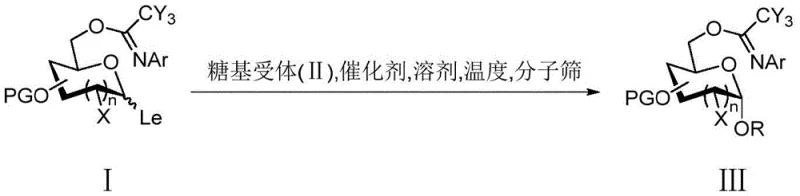
The Limitations of Conventional Methods vs. The Novel Approach
The Limitations of Conventional Methods
Traditionally, the construction of beta-glycosidic bonds has been relatively straightforward, often relying on the neighboring group participation of acyl groups such as acetates or benzoates at the C2 position. However, the synthesis of alpha-glycosidic bonds presents a formidable synthetic hurdle. Conventional strategies typically depend on the anomeric effect, where the thermodynamically stable alpha-isomer is favored in the absence of participating groups. Unfortunately, this reliance on thermodynamic control often results in poor stereoselectivity, yielding mixtures of alpha and beta anomers that are difficult and costly to separate. Furthermore, when synthesizing 2-deoxy sugars or 2-amino sugars, the lack of a participating group at the C2 position exacerbates the problem, leading to unpredictable outcomes and low yields. These limitations significantly hinder the scalable production of complex carbohydrate-based drugs, creating bottlenecks in the supply chain for critical active pharmaceutical ingredients.
The Novel Approach
The methodology disclosed in CN114163483A revolutionizes this process by introducing a remote participation strategy that does not rely on the C2 position. By installing a PTFAI group at a remote hydroxyl position, such as the C6-hydroxyl, the method creates a large steric shield that effectively blocks the beta-face of the oxocarbenium ion intermediate. This steric hindrance forces the incoming glycosyl acceptor to attack exclusively from the alpha-face, resulting in highly selective formation of the alpha-glycosidic bond. This approach decouples stereoselectivity from the substitution pattern at the C2 position, making it universally applicable to glucose, galactose, mannose, and challenging 2-deoxy derivatives. The result is a streamlined synthesis that delivers products with alpha-to-beta ratios often exceeding 20:1, drastically reducing the need for extensive purification and improving overall process efficiency for commercial scale-up of complex pharmaceutical intermediates.
Mechanistic Insights into PTFAI-Mediated Remote Participation
The core innovation of this technology lies in the mechanistic behavior of the N-phenyl-trifluoroacetimide (PTFAI) moiety. Unlike traditional participating groups that form five-membered cyclic intermediates from the C2 position, the PTFAI group operates through a long-range interaction. Upon activation of the anomeric leaving group by a Lewis acid catalyst such as TMSOTf, the carbonyl oxygen of the remote PTFAI group coordinates with the developing cationic center. This interaction generates a transient, rigid cyclic structure that locks the conformation of the sugar ring. Crucially, the bulky N-phenyl and trifluoromethyl components of the PTFAI group project over the beta-face of the sugar, creating a significant steric barrier. This shielding effect prevents the nucleophilic attack of the alcohol acceptor from the beta-direction. Consequently, the reaction proceeds with high facial selectivity, ensuring that the new glycosidic bond is formed with the desired alpha-configuration. This mechanistic feature is robust across various solvent systems, including dichloromethane and diethyl ether mixtures, and tolerates a wide range of temperatures from -40°C to 25°C.
Furthermore, the chemical stability and orthogonality of the PTFAI group add another layer of utility to this process. The group serves a dual purpose: first as a stereocontrolling element during glycosylation, and second as a protecting group that can be selectively removed post-reaction. The patent details that the PTFAI group can be cleaved under mild basic conditions using potassium carbonate (K2CO3). This chemoselective deprotection is vital for downstream processing, as it allows for the conversion of the intermediate into uronic acids or highly deoxygenated sugars without disturbing other acid-sensitive or base-sensitive protecting groups like benzyl ethers or acetals. This level of control over the impurity profile is essential for meeting the stringent purity specifications required in the manufacture of high-purity OLED materials or advanced pharmaceutical intermediates.
How to Synthesize Stereoselective Alpha-Glycosides Efficiently
The practical implementation of this synthesis route is designed for operational simplicity and scalability. The process begins with the preparation of the specialized glycosyl donor, where the PTFAI group is installed onto the sugar scaffold. This precursor is then reacted with a diverse array of glycosyl acceptors, ranging from simple alcohols to complex carbohydrate derivatives. The reaction conditions are mild, utilizing standard Lewis acid catalysts and commercially available solvents. The workup procedure is straightforward, involving quenching with triethylamine, filtration of molecular sieves, and standard chromatographic purification. For a comprehensive understanding of the specific experimental parameters and stoichiometry required to replicate these results, please refer to the standardized synthesis steps outlined below.
- Prepare the glycosyl donor by installing the PTFAI group at the remote hydroxyl position (e.g., C6-OH) using N-phenyl-trifluoroacetyl chloride and potassium carbonate.
- Dissolve the PTFAI-protected donor and the glycosyl acceptor in anhydrous dichloromethane and diethyl ether mixture with activated molecular sieves.
- Add a Lewis acid catalyst such as TMSOTf at low temperature (0°C to -20°C) to initiate glycosylation, yielding the alpha-product with high selectivity.
Commercial Advantages for Procurement and Supply Chain Teams
From a commercial perspective, this patented technology offers substantial benefits for procurement managers and supply chain directors looking to optimize their sourcing strategies for carbohydrate building blocks. The ability to consistently produce alpha-glycosides with high stereoselectivity translates directly into reduced manufacturing costs and improved supply reliability. By minimizing the formation of unwanted beta-anomers, the process eliminates the need for costly and time-consuming separation techniques, such as preparative HPLC, which are often required in conventional syntheses. This efficiency gain allows for faster throughput and lower operational expenditures, facilitating cost reduction in API manufacturing. Additionally, the mild reaction conditions and the use of stable reagents contribute to a safer and more environmentally compliant production environment, aligning with modern green chemistry initiatives.
- Cost Reduction in Manufacturing: The elimination of complex separation processes for anomeric mixtures significantly lowers the cost of goods sold. Since the reaction inherently favors the desired alpha-product with ratios greater than 20:1, the yield of usable material per batch is maximized. Furthermore, the PTFAI group can be installed and removed using inexpensive reagents like potassium carbonate, avoiding the need for precious metal catalysts or exotic reagents that drive up raw material costs. This economic efficiency makes the technology highly attractive for large-scale production runs where margin optimization is critical.
- Enhanced Supply Chain Reliability: The broad substrate scope of this method ensures that a wide variety of glycosyl acceptors can be utilized without re-optimizing the core reaction conditions. This flexibility means that suppliers can rapidly adapt to changing customer requirements for different sugar moieties, such as switching between glucose, galactose, or 2-deoxy sugar derivatives. The robustness of the reaction against variations in temperature and solvent composition also reduces the risk of batch failures, ensuring a continuous and reliable supply of high-quality intermediates. This stability is crucial for maintaining uninterrupted production schedules for downstream drug manufacturers.
- Scalability and Environmental Compliance: The synthetic route is amenable to scale-up from laboratory to commercial production volumes. The use of common solvents like dichloromethane and diethyl ether, combined with simple filtration steps for removing molecular sieves and resins, simplifies the engineering requirements for large reactors. Moreover, the ability to remove the PTFAI group under mild conditions reduces the generation of hazardous waste associated with harsh acidic or basic hydrolysis steps. This aligns with increasingly strict environmental regulations, reducing the burden of waste treatment and enhancing the overall sustainability profile of the manufacturing process.
Frequently Asked Questions (FAQ)
The following questions address common technical inquiries regarding the implementation and scope of this stereoselective glycosylation technology. These answers are derived directly from the experimental data and claims presented in the patent documentation, providing clarity on the method's capabilities and limitations for potential partners and technical teams evaluating this route for their own production needs.
Q: What is the primary advantage of using PTFAI groups in alpha-glycosylation?
A: The PTFAI group provides remote participation that sterically shields the beta-face of the sugar ring, forcing the nucleophilic attack to occur from the alpha-face, thereby achieving high alpha-stereoselectivity (>20:1) even for challenging substrates like 2-deoxy sugars.
Q: Can this method be applied to 2-deoxy and 2-azido sugars?
A: Yes, the patent explicitly demonstrates high efficiency and selectivity for synthesizing alpha-configured 2-deoxy sugars and 2-deoxy-2-azido sugars, which are traditionally difficult to control due to the lack of neighboring group participation at the C2 position.
Q: How is the PTFAI protecting group removed after glycosylation?
A: The PTFAI group can be chemoselectively removed under mild basic conditions using potassium carbonate (K2CO3), allowing for further functionalization into uronic acids or highly deoxygenated sugars without affecting other sensitive protecting groups.
Partnering with NINGBO INNO PHARMCHEM: Your Reliable Alpha-Glycoside Supplier
At NINGBO INNO PHARMCHEM, we recognize the critical importance of stereochemical purity in the development of next-generation therapeutics. Our team possesses extensive experience scaling diverse pathways from 100 kgs to 100 MT/annual commercial production, ensuring that the innovative PTFAI-mediated glycosylation method can be seamlessly transferred from benchtop discovery to industrial manufacturing. We are committed to delivering high-purity pharmaceutical intermediates that meet stringent purity specifications, supported by our rigorous QC labs equipped with state-of-the-art analytical instrumentation. Our expertise in carbohydrate chemistry allows us to navigate the complexities of alpha-selective synthesis, guaranteeing a consistent supply of materials that accelerate your drug development timelines.
We invite you to collaborate with us to leverage this advanced technology for your specific project needs. Our technical procurement team is ready to provide a Customized Cost-Saving Analysis tailored to your target molecule, demonstrating how this efficient route can optimize your budget. Please contact us to request specific COA data for our available glycoside intermediates or to discuss route feasibility assessments for your custom synthesis projects. Let us be your partner in transforming complex chemical challenges into commercial successes.