
Advanced 6FDA Synthesis: Revolutionizing Fluoropolyimide Monomer Production
The rapid expansion of the microelectronics and optoelectronic industries has driven an unprecedented demand for high-performance fluorine-containing polyimides, with 4,4'-(hexafluoroisopropylidene) diphthalic anhydride (6FDA) serving as the critical monomer enabling these advanced materials. Patent CN110963985B introduces a groundbreaking preparation method that fundamentally restructures the synthetic pathway for this valuable compound, addressing long-standing issues regarding safety, environmental impact, and process complexity. By shifting away from traditional xylene-based Friedel-Crafts reactions that rely on hazardous hydrogen fluoride and aggressive oxidation steps, this innovation utilizes N-alkyl phthalimide derivatives to achieve superior yields and purity. For R&D directors and procurement strategists, this patent represents a pivotal shift towards more sustainable and economically viable manufacturing protocols for high-purity electronic chemicals. The ability to produce 6FDA under atmospheric pressure with yields exceeding 87% offers a compelling value proposition for scaling production to meet the rigorous demands of the semiconductor and display sectors.
The Limitations of Conventional Methods vs. The Novel Approach
The Limitations of Conventional Methods
Historically, the industrial synthesis of 6FDA has been plagued by significant safety hazards and environmental burdens inherent to the traditional Friedel-Crafts alkylation of o-xylene with hexafluoroacetone. This legacy process necessitates the use of anhydrous hydrogen fluoride as a catalyst, a substance known for its extreme corrosivity and toxicity, requiring specialized and expensive containment infrastructure to manage reaction risks. Furthermore, the subsequent conversion of the resulting dimethyl intermediate into the requisite tetracarboxylic acid involves a strenuous oxidation step utilizing heavy metal oxidants such as potassium permanganate or chromium trioxide. These oxidation reactions are not only chemically inefficient with moderate yields but also generate vast quantities of toxic heavy metal waste, creating severe disposal challenges and escalating compliance costs for manufacturers. The combination of high-pressure requirements, hazardous reagents, and complex purification sequences renders the conventional route increasingly untenable in a modern regulatory landscape focused on green chemistry and operational safety.
The Novel Approach
In stark contrast, the methodology disclosed in CN110963985B elegantly circumvents these bottlenecks by employing N-alkyl phthalimide as the foundational building block for the aromatic core. This strategic selection of starting material allows for the direct introduction of the hexafluoroisopropylidene bridge through a condensation reaction that proceeds efficiently under atmospheric pressure and moderate temperatures ranging from 100°C to 130°C. 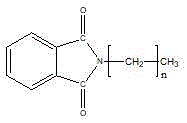 As illustrated by the reactant structure, the N-alkyl group serves as a versatile handle that facilitates the reaction while being easily removed in subsequent hydrolysis steps. By completely eliminating the methyl oxidation stage, this novel approach removes the need for expensive and polluting oxidizing agents, thereby streamlining the workflow into a cleaner, three-step sequence of condensation, hydrolysis, and dehydration. This simplification not only enhances the overall atom economy but also drastically reduces the generation of hazardous byproducts, positioning this method as a superior alternative for the cost reduction in electronic chemical manufacturing.
Mechanistic Insights into Acid-Catalyzed Condensation and Cyclization
The core chemical transformation in this patented process relies on an electrophilic substitution mechanism where hydrated hexafluoroacetone acts as the electrophile attacking the electron-rich aromatic rings of the N-alkyl phthalimide. Under the influence of acidic catalysts such as concentrated sulfuric acid or Lewis acids like ferric chloride, the carbonyl carbon of the hexafluoroacetone becomes highly activated, facilitating the formation of the carbon-carbon bonds that link the two phthalimide units. The reaction conditions are meticulously optimized to balance reaction kinetics with selectivity, ensuring that the hexafluoroisopropylidene bridge forms exclusively at the desired positions without inducing unwanted side reactions or polymerization. The use of hydrated hexafluoroacetone rather than the anhydrous form further modulates the reactivity, providing a controlled release of the active species which contributes to the high selectivity observed in the formation of the 4,4-bis(N-alkyl phthalimide) intermediate. This mechanistic precision is crucial for maintaining the structural integrity of the fluorine-containing backbone, which is essential for the thermal and dielectric properties of the final polyimide material.
Following the condensation, the conversion to the final dianhydride involves a robust hydrolysis and dehydration sequence designed to maximize purity and minimize impurity carryover. The alkaline hydrolysis step effectively cleaves the imide rings to generate the soluble tetra-carboxylate salt, which is then acidified to precipitate the hexafluoro-tetracarboxylic acid with high specificity. This phase separation technique is instrumental in removing non-acidic organic impurities and residual catalysts that might otherwise contaminate the final product. The subsequent dehydration, achievable either through acetic anhydride reflux or high-temperature thermal treatment, ensures the complete cyclization to the anhydride form without degrading the sensitive hexafluoroisopropylidene linkage. This rigorous control over the reaction pathway ensures that the final 6FDA product meets the stringent purity specifications required for high-end applications, effectively suppressing the formation of isomeric impurities that could detrimentally affect the crystallinity and performance of the resulting polymer films.
How to Synthesize 4,4'-(hexafluoroisopropylidene) diphthalic anhydride Efficiently
Implementing this synthesis route requires precise control over stoichiometry and temperature profiles to replicate the high yields reported in the patent data. The process begins with the dissolution of N-alkyl phthalimide in a strong acid medium, followed by the controlled addition of the fluorinated ketone to manage exothermicity.
- Condense N-alkyl phthalimide with hydrated hexafluoroacetone using an acid catalyst at 100-130°C to form the bis-imide intermediate.
- Perform alkaline hydrolysis on the intermediate using NaOH or KOH, followed by acidification to isolate hexafluoro-tetracarboxylic acid.
- Execute dehydration of the tetra-acid using acetic anhydride reflux or high-temperature thermal treatment to yield the final dianhydride.
Commercial Advantages for Procurement and Supply Chain Teams
For procurement managers and supply chain leaders, the adoption of this patented synthesis route offers transformative benefits that extend far beyond simple chemical efficiency. The most immediate impact is the drastic simplification of the supply chain for raw materials, as the process eliminates the dependency on hazardous oxidizing agents like potassium permanganate and chromium trioxide, which are subject to strict regulatory controls and volatile pricing. By removing these costly and logistically challenging reagents, manufacturers can achieve significant cost reduction in electronic chemical manufacturing while simultaneously reducing the burden on waste treatment facilities. The shift to atmospheric pressure operations further lowers capital expenditure requirements, as it negates the need for expensive high-pressure reactors and the associated safety systems mandated for handling anhydrous hydrogen fluoride. This operational flexibility allows for more agile production scheduling and reduces the risk of supply disruptions caused by safety incidents or regulatory shutdowns common in traditional high-risk chemical processes.
- Cost Reduction in Manufacturing: The elimination of the methyl oxidation step represents a profound economic advantage, as it removes one of the most expensive and yield-limiting stages of the traditional synthesis. Without the need for stoichiometric amounts of heavy metal oxidants and the subsequent complex purification to remove metal residues, the variable cost per kilogram of 6FDA is substantially lowered. Additionally, the avoidance of hydrogen fluoride reduces costs related to specialized corrosion-resistant equipment and hazardous material handling protocols. These cumulative savings allow for a more competitive pricing structure, enabling suppliers to offer high-purity fluorine-containing monomers at a price point that supports the mass adoption of fluoropolyimides in cost-sensitive consumer electronics applications.
- Enhanced Supply Chain Reliability: Utilizing N-alkyl phthalimides and hydrated hexafluoroacetone creates a more resilient supply chain compared to routes dependent on scarce or heavily regulated oxidants. The starting materials are commercially available and stable, reducing the lead time for high-purity fluorine-containing monomers and minimizing the risk of production halts due to raw material shortages. Furthermore, the milder reaction conditions reduce the likelihood of unplanned maintenance or equipment failure, ensuring a consistent and reliable flow of product to downstream polymer manufacturers. This stability is critical for long-term contracts in the semiconductor industry, where supply continuity is often valued higher than marginal price differences.
- Scalability and Environmental Compliance: The process is inherently scalable due to its operation at atmospheric pressure and the absence of highly exothermic oxidation steps that are difficult to control on a large scale. This facilitates the commercial scale-up of complex fluorinated intermediates from pilot plants to multi-ton production facilities with minimal engineering hurdles. From an environmental perspective, the significant reduction in heavy metal waste and the avoidance of toxic HF emissions align perfectly with global sustainability goals and increasingly strict environmental regulations. This compliance advantage future-proofs the manufacturing asset against tightening legislation, ensuring long-term operational viability and reducing the risk of fines or forced closures.
Frequently Asked Questions (FAQ)
The following questions address common technical and commercial inquiries regarding the implementation of this novel 6FDA synthesis technology.
Q: How does this new 6FDA synthesis method improve safety compared to traditional routes?
A: The patented method eliminates the use of hazardous hydrogen fluoride (HF) catalysts and avoids high-pressure reaction conditions typically required in Friedel-Crafts alkylation of xylenes. Furthermore, it removes the need for dangerous oxidizing agents like potassium permanganate or chromium trioxide, significantly reducing environmental risks and operational hazards.
Q: What represents the primary cost-saving advantage of using N-alkyl phthalimide as a starting material?
A: By utilizing N-alkyl phthalimide, the synthesis bypasses the complex and expensive methyl oxidation step found in conventional xylene-based routes. This omission not only reduces raw material costs associated with strong oxidants but also simplifies waste treatment processes, leading to substantial overall manufacturing cost reductions.
Q: What purity levels can be achieved with this preparation method?
A: Experimental data from the patent indicates that this method consistently yields 4,4'-(hexafluoroisopropylidene) diphthalic anhydride with purity levels exceeding 99.0%, with specific examples demonstrating purity up to 99.5% and yields greater than 87%, making it highly suitable for high-performance electronic applications.
Partnering with NINGBO INNO PHARMCHEM: Your Reliable 4,4'-(hexafluoroisopropylidene) diphthalic anhydride Supplier
As the global demand for high-performance polyimides continues to surge, securing a stable source of high-quality 6FDA is paramount for maintaining competitive advantage in the electronic materials sector. NINGBO INNO PHARMCHEM stands ready to support your development and production needs with extensive experience scaling diverse pathways from 100 kgs to 100 MT/annual commercial production. Our state-of-the-art facilities are equipped to handle the specific requirements of fluorine chemistry, ensuring stringent purity specifications and rigorous QC labs verify every batch against the highest industry standards. We understand that the transition to new synthetic routes requires confidence in both quality and quantity, and our dedicated technical team is committed to delivering consistent supply continuity for your critical projects.
We invite you to engage with our technical procurement team to discuss how this advanced preparation method can optimize your specific application requirements. By requesting a Customized Cost-Saving Analysis, you can gain deeper insights into the economic benefits of switching to this greener, more efficient synthesis route. We encourage potential partners to contact us directly to obtain specific COA data and route feasibility assessments tailored to your volume needs, ensuring that your supply chain is built on a foundation of innovation, reliability, and technical excellence.