
Advanced Stereoselective Synthesis of Indanylamine Intermediates for Commercial Fungicide Production
Advanced Stereoselective Synthesis of Indanylamine Intermediates for Commercial Fungicide Production
The development of high-efficacy agrochemicals increasingly relies on the precise control of molecular stereochemistry, where specific enantiomers often exhibit superior biological activity compared to their racemic counterparts. Patent CN1108239A discloses a groundbreaking process for the preparation of 2,3-dihydroindenamine compounds, specifically targeting the preferred stereoisomers required for potent fungicidal N-2,3-dihydroindenylcarboxamide derivatives. This technology represents a significant leap forward from traditional resolution methods, offering a direct, stereoselective pathway that enhances both purity and process efficiency. For R&D directors and procurement specialists in the agrochemical sector, understanding this mechanism is crucial for securing a reliable agrochemical intermediate supplier capable of delivering high-value active ingredients with consistent optical purity.
The Limitations of Conventional Methods vs. The Novel Approach
The Limitations of Conventional Methods
Historically, the production of optically active N-2,3-dihydroindenyl thiazole carboxamides, such as those disclosed by Mitsubishi Kasei, relied heavily on the optical resolution of racemic mixtures. Traditional approaches often involved the separation of optical isomers using chromatographic columns, a technique that is inherently inefficient for large-scale manufacturing. The fundamental drawback of these conventional resolution methods is the theoretical maximum yield of 50% for the desired enantiomer, with the remaining material often being discarded or requiring complex recycling processes. Furthermore, chromatographic separation introduces significant operational costs, requires specialized equipment, and can lead to bottlenecks in supply chains due to slow throughput. The resulting preferred enantiomer may also be obtained in relatively low overall yields, driving up the cost of goods sold and limiting the economic viability of the final fungicide product in competitive agricultural markets.
The Novel Approach
In stark contrast, the methodology outlined in CN1108239A circumvents these inefficiencies by employing a stereoselective synthesis strategy that builds chirality directly into the molecular framework before the final ring closure. This novel approach involves the hydrogenation of a specific quinoline derivative (Formula II) followed by a rearrangement reaction. By utilizing a chiral acylating agent in the initial steps, the process induces diastereoselectivity during the hydrogenation phase. This means that the reaction naturally favors the formation of one specific diastereomer over others, effectively transferring the chiral information from the side chain to the core ring structure. This eliminates the need for post-synthesis resolution, drastically simplifying the workflow and significantly improving the overall atom economy. The result is a streamlined process that produces the target 2,3-dihydroindenamine compounds with a predominant preference for the biologically active stereoisomer.
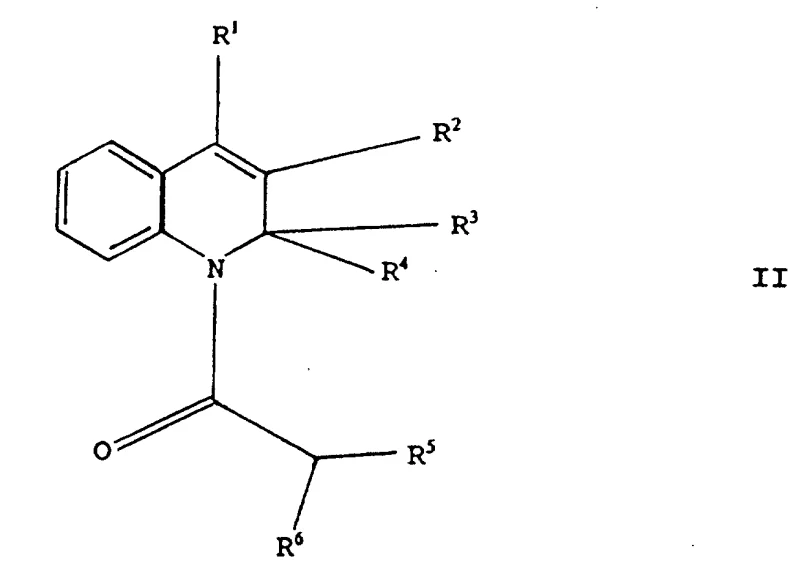
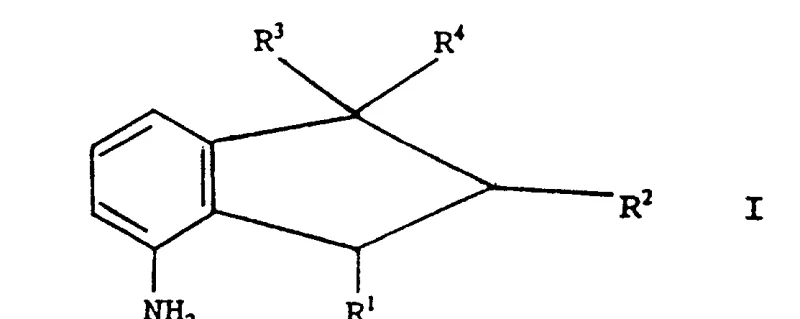
The core of this innovation lies in the transformation of the quinoline precursor, represented by General Formula II, into the saturated tetrahydroquinoline intermediate. As illustrated in the structural diagram, the molecule contains a chiral center at the R5R6CH- group. When this compound undergoes hydrogenation, the existing chirality influences the approach of the hydrogen catalyst to the double bond, leading to a preferred configuration at the newly formed chiral centers. This diastereoselective hydrogenation is the key differentiator that allows manufacturers to bypass traditional resolution techniques. Following hydrogenation, the intermediate undergoes an acid-catalyzed rearrangement to form the indane skeleton, preserving the stereochemical integrity established in the earlier steps. This sequence ensures that the final product, General Formula I, is enriched with the desired stereoisomer, ready for conversion into high-performance fungicides.
Mechanistic Insights into Stereoselective Hydrogenation and Rearrangement
The mechanistic pathway described in the patent offers profound insights into how stereocontrol is achieved without enzymatic catalysis. The process begins with the preparation of the Formula II compound, typically by reacting a 1,2-dihydroquinoline with a chiral acid anhydride, such as S-(-)-2-chloropropionic anhydride or L-(+)-acetoxyacetic anhydride. This step installs the chiral auxiliary. The subsequent hydrogenation is preferably carried out using a heterogeneous transition metal catalyst, with palladium on carbon (Pd/C) being the most effective choice. The reaction is conducted in a polar organic solvent, such as methanol or acetic acid, under a hydrogen atmosphere at room temperature and pressure. Under these mild conditions, the catalyst reduces the C=C double bond of the quinoline ring. Crucially, the steric bulk and electronic nature of the chiral side chain direct the hydrogen addition, resulting in a diastereomeric ratio that heavily favors the desired configuration, often exceeding a 3:1 or even higher ratio depending on the specific substituents.
Following hydrogenation, the tetrahydroquinoline intermediate (Formula III) is subjected to a rearrangement reaction to generate the indane core. This is achieved by treating the intermediate with a strong acid, such as 98% sulfuric acid, at elevated temperatures (50-60°C), followed by hydrolysis with water and a weak acid like acetic acid. Mechanistically, this likely involves protonation of the amide nitrogen or the aromatic ring, facilitating a ring contraction or rearrangement that forms the five-membered ring of the indane system. Experimental data indicates that the stereochemical configuration established during hydrogenation is largely retained during this harsh acidic treatment. For instance, in preferred embodiments where R1, R3, and R4 are methyl groups, the process yields the 3R-isomer of the indanylamine predominantly. This retention of configuration is vital for ensuring that the effort put into creating the initial chiral center is not lost, thereby maximizing the optical purity of the final agrochemical intermediate.
How to Synthesize 4-Amino-1,1,3-trimethyl-2,3-dihydroindane Efficiently
To implement this technology for the production of high-purity fungicide intermediates, manufacturers must adhere to strict process parameters regarding catalyst loading, solvent purity, and temperature control during the rearrangement phase. The detailed标准化 synthesis steps involve precise stoichiometric ratios of the chiral anhydride to the quinoline base, followed by careful filtration of the spent catalyst to prevent metal contamination in the final product.
- Prepare the quinoline precursor (Formula II) by reacting a dihydroquinoline with a chiral acylating agent such as S-(-)-2-chloropropionic anhydride.
- Perform stereoselective hydrogenation using a heterogeneous Pd/C catalyst in a polar solvent like methanol or acetic acid to form the tetrahydroquinoline intermediate (Formula III).
- Effect rearrangement and derivatization by adding the intermediate to strong sulfuric acid, followed by hydrolysis with water and weak acid to isolate the target 2,3-dihydroindenamine (Formula I).
Commercial Advantages for Procurement and Supply Chain Teams
For procurement managers and supply chain heads, the adoption of this stereoselective synthesis route offers transformative advantages in terms of cost structure and supply reliability. By shifting from a resolution-based model to a direct asymmetric synthesis model, the process fundamentally alters the economics of producing complex chiral intermediates. The elimination of chromatographic separation steps removes a major bottleneck, allowing for continuous flow processing or larger batch sizes that were previously impractical. This translates directly into cost reduction in fungicide manufacturing, as the capital expenditure on separation columns and the operational expenditure on solvents and time are drastically reduced. Furthermore, the use of heterogeneous catalysts like Pd/C simplifies downstream processing, as the catalyst can be removed by simple filtration, reducing waste generation and easing the burden on environmental compliance teams.
- Cost Reduction in Manufacturing: The primary economic driver of this technology is the substantial increase in overall yield and the removal of the 50% yield ceiling inherent in racemic resolution. By synthesizing the desired isomer directly, the process effectively doubles the theoretical output from the same amount of starting raw materials compared to traditional resolution methods. Additionally, the reagents used, such as substituted quinolines and simple chiral acids, are commercially available and cost-effective. The avoidance of expensive chiral stationary phases and the reduction in solvent consumption for purification further contribute to a leaner cost profile. This efficiency allows suppliers to offer high-purity agrochemical intermediates at a more competitive price point, enhancing the margin potential for downstream formulators.
- Enhanced Supply Chain Reliability: Supply chain resilience is significantly bolstered by the robustness of the chemical steps involved. Hydrogenation using Pd/C is a mature, well-understood unit operation that can be easily scaled from pilot plants to multi-ton reactors without significant re-engineering. Unlike enzymatic processes that may require strict temperature and pH controls or specialized fermentation facilities, this chemical route is tolerant of standard industrial conditions. The reliance on commodity chemicals for solvents (methanol, acetic acid) and catalysts ensures that raw material sourcing remains stable even during market fluctuations. This stability reduces lead time for high-purity agrochemical intermediates, ensuring that production schedules for the final fungicide formulations can be met consistently without unexpected delays caused by complex purification failures.
- Scalability and Environmental Compliance: From an environmental and scalability perspective, the process aligns well with modern green chemistry principles. The heterogeneous nature of the catalyst allows for its recovery and potential reuse, minimizing heavy metal waste. The rearrangement step, while using strong acid, is contained and followed by a neutralization and extraction workup that is standard in fine chemical plants. The overall reduction in solvent usage and the higher atom economy mean less waste per kilogram of product, simplifying waste treatment protocols. This makes the commercial scale-up of complex chiral intermediates more feasible and environmentally sustainable, meeting the increasingly stringent regulatory requirements of global agrochemical markets.
Frequently Asked Questions (FAQ)
The following questions address common technical and commercial inquiries regarding the implementation of this patented synthesis route. These answers are derived directly from the experimental data and claims presented in the patent documentation, providing clarity on the feasibility and advantages of the technology for potential partners.
Q: How does this process control stereochemistry without chiral chromatography?
A: The process utilizes diastereoselective hydrogenation. By introducing a chiral center via the acyl side chain (R5R6CH-) prior to hydrogenation, the subsequent reduction of the quinoline ring is directed to form a specific diastereomer predominantly. This chirality is then transferred to the indane ring system during the acid-catalyzed rearrangement, eliminating the need for expensive resolution steps.
Q: What are the typical yields for this synthetic route?
A: According to the experimental data in patent CN1108239A, the acylation step achieves yields around 80-81%. The subsequent hydrogenation step proceeds with high efficiency, reaching crude yields of approximately 84-100%. The final rearrangement and isolation step provides the target amine in roughly 69-83% yield over two steps, demonstrating a robust and efficient overall process.
Q: Is this method suitable for large-scale commercial production?
A: Yes, the method is highly scalable. It relies on heterogeneous catalysis (Pd/C) which is easily filtered and recycled, and uses common industrial solvents like methanol and acetic acid. The avoidance of complex chiral columns and the use of standard hydrogenation equipment make it ideal for metric-ton scale manufacturing of agrochemical intermediates.
Partnering with NINGBO INNO PHARMCHEM: Your Reliable Indanylamine Supplier
The technological potential of stereoselective indanylamine synthesis represents a critical opportunity for agrochemical companies seeking to optimize their supply chains for next-generation fungicides. NINGBO INNO PHARMCHEM stands at the forefront of this innovation, leveraging extensive experience scaling diverse pathways from 100 kgs to 100 MT/annual commercial production. Our facility is equipped with state-of-the-art hydrogenation reactors and rigorous QC labs capable of monitoring optical purity and impurity profiles with precision. We understand that maintaining stringent purity specifications is non-negotiable for active pharmaceutical and agrochemical ingredients, and our quality management systems are designed to ensure every batch meets the highest international standards.
We invite strategic partners to collaborate with us to unlock the full value of this efficient synthesis route. By engaging with our technical procurement team, you can request a Customized Cost-Saving Analysis tailored to your specific volume requirements. We encourage you to reach out for specific COA data and route feasibility assessments to determine how our optimized manufacturing capabilities can support your long-term supply goals. Let us help you secure a stable, cost-effective source of high-quality intermediates for your fungicide portfolio.