
High-Purity 2,6-Dihydroxynaphthalene: Advanced Purification and Commercial Scalability
The global demand for high-performance organic intermediates continues to drive innovation in purification technologies, particularly for critical building blocks like 2,6-dihydroxynaphthalene. As detailed in Chinese Patent CN103467249A, a breakthrough methodology has been established that transforms crude naphthalene derivatives into ultra-high-purity specifications suitable for advanced pharmaceutical and polymer applications. This technical insight report analyzes the proprietary recrystallization technique that leverages a unique binary solvent system comprising C1-C5 fatty alcohols and fatty acid esters. By addressing the longstanding challenges of impurity removal and solvent toxicity, this process offers a robust pathway for manufacturers seeking to upgrade their production capabilities. The structural integrity of the target molecule, as depicted below, is preserved while achieving purity levels exceeding 99%, a critical threshold for downstream synthesis.
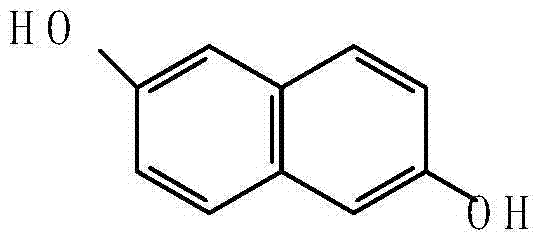
Historically, the production of 2,6-dihydroxynaphthalene has been plagued by inefficiencies in the refining stage, where crude products derived from alkali fusion typically exhibit purities ranging only from 80% to 85%. Conventional purification strategies, such as those documented in Japanese Patent JPS6339831, often rely on mixed solvents containing significant amounts of water and aliphatic ketones, necessitating complex and energy-intensive rectification processes for solvent recovery. Furthermore, alternative approaches like United States Patent US4861920A utilize hazardous aromatic hydrocarbons such as benzene, posing severe health risks and regulatory compliance burdens for modern manufacturing facilities. These legacy methods not only compromise worker safety but also struggle to consistently achieve the >99% purity required for high-end electronic materials and active pharmaceutical ingredients (APIs). The novel approach described in CN103467249A circumvents these pitfalls by utilizing a non-toxic, safe common solvent system that simplifies the operational workflow while dramatically enhancing product quality.
The Limitations of Conventional Methods vs. The Novel Approach
The Limitations of Conventional Methods
Traditional refinement techniques for dihydroxy naphthalenes are frequently characterized by their reliance on toxic reagents and thermally demanding separation processes. For instance, methods involving fractional sublimation, as seen in Japanese Patent JPS6270334A, require high-temperature distillation which results in substantial energy consumption and limits the feasibility of large-scale industrial production. Additionally, processes utilizing acetic acid for recrystallization, referenced in US4814521A, introduce significant corrosion risks to standard stainless steel reactors, thereby increasing maintenance costs and shortening equipment lifespan. The use of benzene and petroleum ether in older protocols creates a volatile organic compound (VOC) management nightmare, requiring expensive abatement systems to meet environmental standards. Moreover, these conventional routes often fail to push purity beyond 97-98%, leaving trace impurities that can catalyze degradation in sensitive downstream polymerization or coupling reactions.
The Novel Approach
The innovative purification strategy outlined in the patent data introduces a paradigm shift by employing a binary solvent system based on fatty alcohols and fatty acid esters. In this method, the crude 2,6-dihydroxynaphthalene is dissolved in a C1-C5 fatty alcohol, such as ethanol or isopropanol, at moderate temperatures between 60°C and 100°C. Following a decolorization step with activated carbon, a fatty acid ester solvent like ethyl acetate or isobutyl acetate is introduced to the filtrate. This addition drastically alters the solubility profile of the solution, inducing the precipitation of highly pure 2,6-dihydroxynaphthalene crystals upon cooling. This mechanism avoids the need for complex distillation columns, as the mixed solvent can be recovered through simple distillation and recycled, representing a significant advancement in green chemistry principles and operational efficiency for the fine chemical sector.
Mechanistic Insights into Mixed-Solvent Recrystallization
The core of this purification technology lies in the precise manipulation of solubility parameters through the use of a co-solvent system. When the crude material, containing approximately 80-85% active ingredient along with various sulfonated byproducts and tarry impurities, is dissolved in a fatty alcohol, the polar hydroxyl groups of the naphthalene derivative interact favorably with the alcohol solvent. However, the introduction of the fatty acid ester acts as an anti-solvent or precipitating agent. This works because the ester modifies the dielectric constant and polarity of the bulk medium, reducing the solvation capacity for the target 2,6-dihydroxynaphthalene while keeping certain impurities in solution or facilitating their removal via the initial activated carbon treatment. The activated carbon plays a dual role, adsorbing colored high-molecular-weight byproducts and residual tars that are common in alkali fusion crude products, ensuring the final crystal lattice is free from chromophoric defects.
From a kinetic perspective, the controlled cooling and standing period of over 10 hours allows for the orderly growth of the crystal lattice, which inherently excludes impurity molecules that do not fit the specific geometric and electronic configuration of the 2,6-dihydroxynaphthalene structure. This slow crystallization is crucial for achieving the reported melting point range of 221°C to 223°C and purity levels surpassing 99.28%. The choice of solvents is also chemically strategic; fatty alcohols and esters are relatively inert under these conditions, preventing any potential esterification of the phenolic hydroxyl groups, a side reaction that could occur with more aggressive acidic or basic recrystallization media. This ensures that the chemical identity of the API intermediate remains intact, providing a reliable feedstock for subsequent synthetic transformations such as etherification or condensation reactions.
How to Synthesize 2,6-Dihydroxynaphthalene Efficiently
The implementation of this purification protocol requires careful attention to solvent ratios and temperature control to maximize yield and purity. The process begins with the dissolution of the crude substrate in a fatty alcohol at a weight ratio of 1:3 to 1:10, followed by the addition of activated carbon at 1-15% of the substrate weight. After hot filtration to remove the carbon and insoluble particulates, the critical step involves the addition of the fatty acid ester solvent at a ratio of 1:1 to 1:3 relative to the alcohol. The mixture is then agitated and cooled to room temperature, allowing the purified product to crystallize out of the solution over a prolonged period. For a comprehensive breakdown of the specific operational parameters, temperature gradients, and filtration techniques required for GMP-compliant manufacturing, please refer to the standardized synthesis guide below.
- Dissolve crude 2,6-dihydroxynaphthalene (80-85% purity) in a C1-C5 fatty alcohol solvent such as ethanol or isopropanol at elevated temperatures between 60°C and 100°C.
- Add activated carbon (1-15% weight ratio) to the solution for decolorization, maintain temperature for 30 minutes, and perform hot filtration to remove solid impurities.
- Under agitation, add a fatty acid ester solvent like ethyl acetate to the filtrate, cool the mixture to room temperature, allow crystallization for over 10 hours, then filter and dry to obtain >99% purity product.
Commercial Advantages for Procurement and Supply Chain Teams
For procurement managers and supply chain directors, the transition to this novel purification method offers substantial strategic benefits beyond mere technical specification improvements. The elimination of carcinogenic solvents like benzene and the avoidance of corrosive acids like acetic acid significantly reduce the regulatory burden and insurance costs associated with chemical handling and storage. This shift towards safer, greener solvents aligns perfectly with the increasingly stringent environmental, social, and governance (ESG) mandates imposed by multinational corporations on their supply chains. Furthermore, the simplicity of the solvent recovery process, which bypasses the need for energy-intensive rectification, translates directly into lower utility costs and a reduced carbon footprint for the manufacturing site. These factors combined create a more resilient and cost-effective supply chain for high-purity fine chemicals.
- Cost Reduction in Manufacturing: The economic advantages of this process are driven primarily by the simplification of the downstream processing units. By removing the requirement for complex fractional distillation columns to separate water-containing solvent mixtures, the capital expenditure (CAPEX) for new production lines is significantly lowered, and the operational expenditure (OPEX) for existing lines is reduced through decreased energy consumption. The ability to recover and reuse the fatty alcohol and fatty acid ester solvents through simple distillation further minimizes raw material waste, leading to substantial cost savings over the lifecycle of the production campaign. Additionally, the reduced corrosion potential of the solvent system extends the service life of reactor vessels and piping, deferring replacement costs and minimizing unplanned downtime.
- Enhanced Supply Chain Reliability: Sourcing raw materials for this process is inherently more stable due to the use of commodity chemicals like ethanol, isopropanol, and ethyl acetate, which are widely available in the global market compared to specialized or restricted solvents. The non-toxic nature of these solvents simplifies logistics and transportation, reducing the risk of shipment delays caused by hazardous material regulations. This reliability ensures a consistent flow of high-purity 2,6-dihydroxynaphthalene to downstream customers, mitigating the risk of production stoppages in their own facilities. The robustness of the purification method against variations in crude feedstock quality also adds a layer of security, ensuring that final product specifications are met even if the upstream alkali fusion process experiences minor fluctuations.
- Scalability and Environmental Compliance: The straightforward nature of the dissolution-filtration-crystallization sequence makes this technology exceptionally easy to scale from pilot plant quantities to multi-ton commercial production. Unlike fractional sublimation which faces significant engineering hurdles at large scales, this liquid-phase processing can be easily accommodated in standard glass-lined or stainless steel reactors found in most fine chemical plants. The use of non-toxic solvents greatly simplifies waste treatment protocols, as the effluent streams are less hazardous and easier to treat biologically or through standard incineration. This ease of compliance with environmental regulations facilitates faster permitting for capacity expansions and ensures long-term operational continuity in regions with strict pollution controls.
Frequently Asked Questions (FAQ)
The following questions address common technical and commercial inquiries regarding the production and application of purified 2,6-dihydroxynaphthalene. These answers are derived directly from the experimental data and technical disclosures found in the relevant patent literature, providing a transparent view of the process capabilities. Understanding these details is essential for R&D teams evaluating this material for new drug substances or high-performance polymers.
Q: What is the achievable purity of 2,6-dihydroxynaphthalene using this novel purification method?
A: The patented mixed-solvent recrystallization process consistently achieves a final purity exceeding 99%, significantly upgrading the crude material which typically starts at 80-85% purity following alkali fusion and acidification.
Q: Why is this method superior to conventional benzene-based purification techniques?
A: Unlike traditional methods utilizing carcinogenic solvents like benzene or complex fractional sublimation, this approach employs non-toxic fatty alcohols and fatty acid esters, ensuring operator safety, reduced environmental impact, and simpler equipment requirements.
Q: How does the solvent recovery process contribute to cost efficiency?
A: The process eliminates the need for energy-intensive rectification columns; solvents can be recovered through simple distillation and reused directly, drastically lowering energy consumption and operational overhead compared to water-containing solvent systems.
Partnering with NINGBO INNO PHARMCHEM: Your Reliable 2,6-Dihydroxynaphthalene Supplier
At NINGBO INNO PHARMCHEM, we recognize that the transition from laboratory innovation to commercial reality requires a partner with deep technical expertise and robust manufacturing infrastructure. Our team possesses extensive experience scaling diverse pathways from 100 kgs to 100 MT/annual commercial production, ensuring that the promising purification techniques described in patents like CN103467249A can be effectively translated into reliable supply. We maintain stringent purity specifications through our rigorous QC labs, utilizing advanced analytical methods to verify that every batch of 2,6-dihydroxynaphthalene meets the >99% purity threshold required for sensitive pharmaceutical and electronic applications. Our commitment to quality assurance ensures that our clients receive a product that is consistent, safe, and ready for immediate integration into their synthesis workflows.
We invite global partners to collaborate with us to optimize their supply chains and reduce their overall cost of goods sold. By leveraging our technical capabilities, we can provide a Customized Cost-Saving Analysis tailored to your specific volume requirements and purity needs. We encourage you to contact our technical procurement team today to request specific COA data for our current inventory and to discuss route feasibility assessments for your upcoming projects. Let us be your trusted partner in delivering high-quality chemical intermediates that drive your innovation forward.