
Strategic Manufacturing of GpTx-1 and Analogue 71 via Advanced Solid-Phase Fragment Condensation
The pharmaceutical landscape for pain management is increasingly focused on highly selective inhibitors of voltage-gated sodium channels, specifically the Nav1.7 subtype. Patent CN108047323B introduces a groundbreaking manufacturing protocol for GpTx-1, a potent spider venom-derived peptide, and its high-selectivity Analogue 71. This intellectual property details a robust solid-phase fragment condensation method that overcomes the historical bottlenecks of synthesizing long-chain polypeptides. By strategically dividing the 34-amino acid sequence into three manageable fragments, the process achieves a level of efficiency and purity that traditional stepwise synthesis cannot match. This technical breakthrough is critical for R&D teams aiming to scale the production of Nav1.7 inhibitors for clinical trials and commercial deployment without compromising on the structural integrity of these complex molecules.
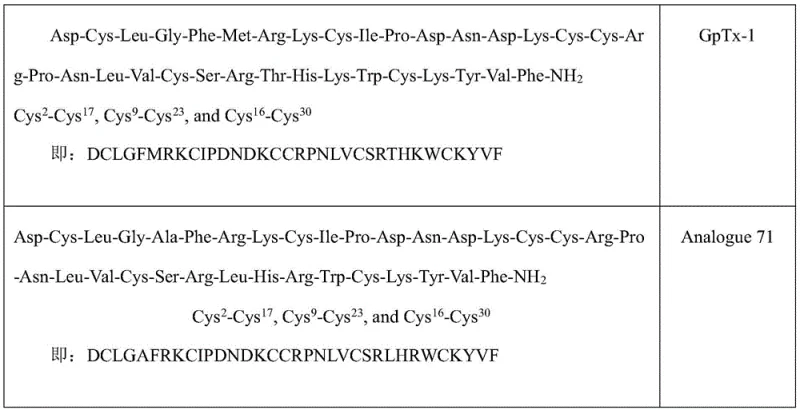
For procurement managers and supply chain directors, the implications of this patent extend beyond mere chemical curiosity; it represents a viable pathway for cost reduction in pharmaceutical intermediate manufacturing. The ability to synthesize fragments in parallel drastically reduces the total production cycle time compared to linear elongation. Furthermore, the method utilizes standard Fmoc-chemistry reagents and resins, ensuring that the supply chain remains resilient and reliant on commercially available raw materials rather than exotic catalysts. This report analyzes the technical nuances of this synthesis route, providing a comprehensive guide for stakeholders evaluating partners for the commercial scale-up of complex peptide APIs.
The Limitations of Conventional Methods vs. The Novel Approach
The Limitations of Conventional Methods
Traditional solid-phase peptide synthesis (SPPS) for sequences exceeding 30 residues often suffers from diminishing returns as the chain lengthens. In a stepwise approach, each coupling cycle introduces a small percentage of failure sequences, leading to a cumulative buildup of deletion impurities that are structurally similar to the target peptide. For a molecule like GpTx-1, which contains multiple cysteine residues requiring precise disulfide bond formation, the presence of these truncated sequences complicates the downstream oxidation and folding steps immensely. Purification becomes a nightmare of overlapping peaks in preparative HPLC, driving up solvent consumption and reducing overall yield. Additionally, long exposure to repetitive coupling and deprotection cycles increases the risk of side reactions, such as aspartimide formation or racemization, which can render the final batch unsuitable for therapeutic use.
The Novel Approach
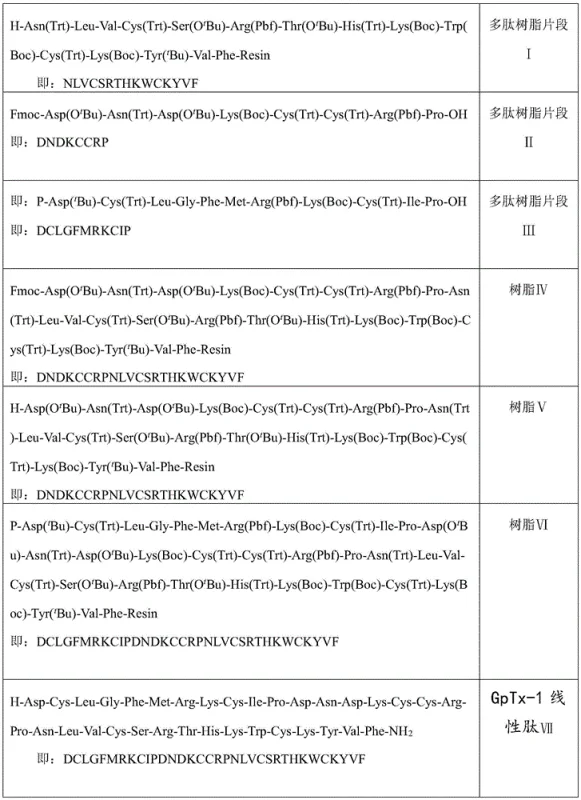
The patented strategy revolutionizes this workflow by employing a convergent fragment condensation approach. Instead of building the peptide one amino acid at a time from C-terminus to N-terminus, the synthesis is divided into three distinct segments: Fragment I (residues 20-34), Fragment II (residues 12-19), and Fragment III (residues 1-11). These fragments are synthesized independently and simultaneously, allowing for rigorous quality control of each segment before assembly. The critical innovation lies in the selection of cleavage points; the patent specifies cutting at Proline residues. This is chemically astute because Proline, being an imino acid, lacks the amide proton necessary to form the racemization-prone oxazolone intermediate during activation. Consequently, the coupling of these large fragments proceeds with minimal loss of chiral integrity, resulting in a crude linear peptide with an HPLC purity exceeding 70%, a figure that is exceptionally high for a peptide of this complexity.
Mechanistic Insights into Proline-Mediated Fragment Condensation
The core chemical mechanism driving the success of this synthesis is the suppression of epimerization during the activation of the C-terminal carboxyl group of the incoming peptide fragment. In standard peptide coupling, activating agents like carbodiimides can induce the formation of a 5(4H)-oxazolone ring if the alpha-proton is acidic enough, leading to racemization. However, by designing the fragments such that the C-terminus of the incoming fragment (Fragment II and III) is a Proline residue, this pathway is effectively blocked. The nitrogen in the Proline ring is part of a pyrrolidine structure, meaning there is no amide hydrogen to be abstracted. This ensures that when Fragment II is coupled to the N-terminus of Fragment I (which is anchored on Rink Amide AM resin), and subsequently Fragment III is coupled to the growing chain, the stereochemistry at the junction points remains strictly L-configured. This mechanistic safeguard is vital for maintaining the biological activity of the final Nav1.7 inhibitor.
Furthermore, the protection strategy employed utilizes a robust orthogonal scheme compatible with Fmoc-SPPS. Side chains are protected with acid-labile groups such as Trt (Trityl) for Cysteine and Histidine, Boc (tert-butyloxycarbonyl) for Lysine and Tryptophan, and Pbf (2,2,4,6,7-pentamethyldihydrobenzofuran-5-sulfonyl) for Arginine. The use of CTC (2-chlorotrityl chloride) resin for Fragments II and III allows for their release under very mild acidic conditions (e.g., 1% TFA in DCM). This mild cleavage preserves the acid-labile side-chain protecting groups, ensuring that the fragments remain fully protected when they are coupled to the main chain. This "side-chain protection retention" is crucial because it prevents premature aggregation or unwanted side reactions during the fragment condensation steps, thereby enhancing the solubility and reactivity of the intermediates in organic solvents like DMF and DCM.
How to Synthesize GpTx-1 Efficiently
The synthesis of GpTx-1 via this fragment method requires precise execution of resin loading, fragment assembly, and final global deprotection. The process begins with the independent preparation of the three peptide-resin fragments using standard Fmoc chemistry cycles, ensuring each coupling reaches completion as verified by ninhydrin testing. Once the fragments are prepared, Fragments II and III are cleaved from their CTC resins using dilute TFA to maintain side-chain protection. These free acid fragments are then activated, typically using DIC and HOBt, and sequentially coupled to the N-terminus of Fragment I which remains anchored on the solid support. This convergent assembly builds the full-length linear peptide on the resin. The detailed standardized synthesis steps, including specific reagent ratios and reaction times, are outlined below.
- Synthesize three protected peptide fragments (I, II, and III) independently using standard Fmoc-SPPS on Rink Amide and CTC resins.
- Cleave Fragments II and III from their respective resins using mild acidic conditions (e.g., 1% TFA/DCM) while retaining side-chain protecting groups.
- Sequentially couple Fragment II and then Fragment III onto Fragment I (resin-bound) using DIC/HOBt activation to form the full-length linear peptide resin.
- Perform global deprotection and cleavage from the resin using a TFA-based cocktail, followed by oxidative folding to form the correct disulfide bonds.
Commercial Advantages for Procurement and Supply Chain Teams
For organizations tasked with securing a reliable supply of high-value peptide intermediates, the adoption of this fragment condensation technology offers substantial strategic benefits. The primary advantage is the drastic simplification of the production timeline. By synthesizing three fragments in parallel rather than one long chain sequentially, the total reactor occupancy time is significantly reduced. This parallelization translates directly into increased throughput capacity, allowing manufacturers to meet tight clinical trial deadlines or commercial launch schedules with greater confidence. Moreover, the high crude purity achieved (>70%) means that the burden on the purification team is lightened, reducing the consumption of expensive preparative HPLC columns and organic solvents, which are major cost drivers in peptide manufacturing.
- Cost Reduction in Manufacturing: The elimination of transition metal catalysts and the reliance on standard organic coupling reagents like DIC and HOBt removes the need for expensive and complex heavy metal scavenging steps. In traditional solution-phase synthesis or certain catalytic methods, removing trace metals to meet ICH Q3D guidelines can add significant cost and time. This solid-phase method inherently avoids metal contamination, streamlining the downstream processing. Additionally, the high yield of the correct sequence reduces the amount of starting material wasted on failed batches, leading to a more economical use of protected amino acids, which are often the most expensive raw materials in the bill of materials.
- Enhanced Supply Chain Reliability: The modular nature of this synthesis enhances supply chain resilience. If a specific batch of one fragment fails quality control, only that specific module needs to be remanufactured, rather than scrapping an entire 34-residue chain. This modularity reduces the risk of total batch loss. Furthermore, the reagents required—such as Rink Amide resin, Fmoc-protected amino acids, and standard activators—are commodity chemicals available from multiple global suppliers. This diversification of the supply base mitigates the risk of single-source bottlenecks, ensuring continuous production capability even during market fluctuations.
- Scalability and Environmental Compliance: Scaling solid-phase peptide synthesis from gram to kilogram scales is a well-understood engineering challenge, and this fragment method makes it even more feasible. The use of CTC resin for the soluble fragments allows for handling in solution phase for the coupling steps if needed, offering flexibility in reactor design. From an environmental perspective, while SPPS generates solvent waste, the higher efficiency and fewer purification cycles of this method result in a lower overall solvent footprint per gram of final API compared to inefficient stepwise methods. The waste streams are primarily organic solvents (DMF, DCM, TFA) which can be distilled and recycled, aligning with modern green chemistry initiatives in pharmaceutical manufacturing.
Frequently Asked Questions (FAQ)
The following questions address common technical and commercial inquiries regarding the production of GpTx-1 and its analogues. These answers are derived directly from the experimental data and claims within the patent documentation, providing clarity on the feasibility and robustness of the described technology. Understanding these details is essential for technical due diligence when selecting a contract development and manufacturing organization (CDMO).
Q: Why is the fragment condensation method preferred over stepwise synthesis for GpTx-1?
A: GpTx-1 is a 34-amino acid peptide. Stepwise synthesis often leads to accumulated deletion sequences and low crude purity. The fragment method allows parallel synthesis of shorter segments, significantly improving overall yield and facilitating easier purification of the final product.
Q: What is the specific advantage of cleaving at Proline residues in this synthesis?
A: Cleaving at Proline residues is a strategic choice to prevent racemization. Unlike other amino acids, Proline is a secondary amine and does not form the oxazolone intermediate that typically causes epimerization during fragment activation and coupling.
Q: What purity levels can be achieved with this manufacturing process?
A: According to the patented methodology, the crude linear peptide achieves an HPLC purity of over 70%, and the final purified and lyophilized product consistently reaches purity levels exceeding 98.0%.
Partnering with NINGBO INNO PHARMCHEM: Your Reliable GpTx-1 Supplier
As the demand for non-opioid pain therapeutics grows, the ability to manufacture complex peptides like GpTx-1 with high fidelity becomes a critical competitive advantage. NINGBO INNO PHARMCHEM stands at the forefront of this capability, leveraging advanced solid-phase technologies to deliver high-purity peptide intermediates. Our facility is equipped with extensive experience scaling diverse pathways from 100 kgs to 100 MT/annual commercial production, ensuring that we can support your needs from early-stage discovery through to full-scale commercialization. We maintain stringent purity specifications and operate rigorous QC labs to guarantee that every batch meets the exacting standards required for clinical applications.
We invite potential partners to engage with our technical procurement team to discuss how this fragment condensation technology can be adapted to your specific pipeline requirements. By requesting a Customized Cost-Saving Analysis, you can gain deeper insights into how our optimized processes can reduce your overall cost of goods sold. We encourage you to contact us today to obtain specific COA data and route feasibility assessments for GpTx-1, Analogue 71, or other complex peptide targets, and let us demonstrate our commitment to being your trusted partner in pharmaceutical innovation.