
Revolutionizing Chiral Biaryl Alcohol Synthesis with Engineered TbSADH Mutants for Commercial Scale-up
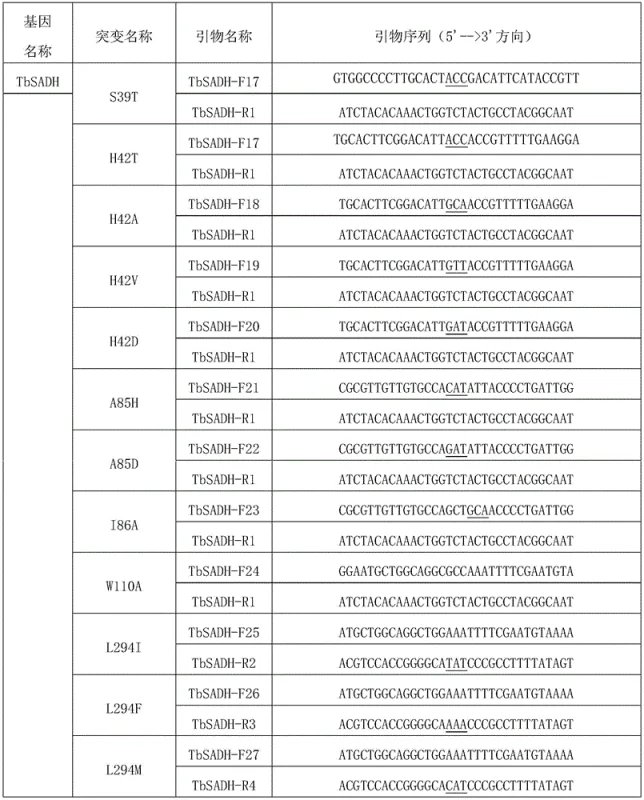
The pharmaceutical industry continuously seeks robust and sustainable pathways for producing optically pure chiral intermediates, particularly for antihistamine drugs like carbinoxamine and bepotastine besylate. Patent CN111100851B introduces a groundbreaking advancement in this domain by disclosing a series of engineered alcohol dehydrogenase (TbSADH) mutants derived from Thermoanaerobacter brockii. These mutants overcome the inherent limitations of the wild-type enzyme, which previously showed no activity towards bulky biaryl ketone substrates. By utilizing directed evolution techniques to modify specific amino acid residues within the catalytic center pocket, specifically at positions 39, 42, 84, 85, 86, 104, 110, and 294, the invention enables the highly efficient asymmetric reduction of prochiral biaryl ketones. This technological leap provides a reliable pharmaceutical intermediate supplier with a powerful tool to access high-purity chiral diaryl alcohols, such as (S)-(4-chlorophenyl)pyridine-2-methanol, with exceptional stereocontrol that was previously unattainable with natural biocatalysts.
The Limitations of Conventional Methods vs. The Novel Approach
The Limitations of Conventional Methods
Traditional chemical synthesis routes for producing chiral biaryl secondary alcohols often rely on complex multi-step sequences involving hazardous reagents and extreme conditions. For instance, conventional methods may utilize 2-cyanopyridine as a starting material, requiring Grignard reagents like 4-chlorophenylmagnesium bromide and concentrated sulfuric acid, followed by reduction using transition metal catalysts such as Pd(PPh3)4. While these chemical approaches can achieve high enantiomeric excess values, they necessitate rigorous protection and deprotection strategies for functional groups on the pyridine ring, significantly increasing process complexity and waste generation. Furthermore, alternative catalytic hydrogenation methods employing Noyori-type organometallic catalysts, such as Ruthenium or Rhodium complexes, demand high hydrogen pressures ranging from 8 to 10 bar. These processes not only pose significant safety risks due to high-pressure operations but also introduce the challenge of removing trace heavy metal residues from the final API intermediate, which requires costly purification steps to meet stringent regulatory standards for pharmaceutical products.
The Novel Approach
In stark contrast to these legacy chemical methodologies, the novel biocatalytic approach described in the patent leverages engineered TbSADH mutants to achieve direct asymmetric reduction under remarkably mild and environmentally benign conditions. The core innovation lies in the rational design of the enzyme's substrate-binding pocket, transforming an inactive wild-type protein into a highly active biocatalyst capable of accepting sterically demanding biaryl ketones. As illustrated in the reaction scheme below, the mutant enzyme facilitates the direct conversion of (4-chlorophenyl)pyridine-2-methanone into the corresponding chiral alcohol without the need for protecting groups or high-pressure equipment. This shift from chemocatalysis to biocatalysis represents a paradigm shift in cost reduction in pharmaceutical intermediate manufacturing, as it operates in aqueous phosphate buffers at ambient temperatures around 30°C and neutral pH levels. The elimination of toxic organic solvents and precious metals simplifies the downstream processing workflow, thereby enhancing the overall sustainability and economic viability of producing high-purity OLED material precursors and pharmaceutical building blocks.
Mechanistic Insights into TbSADH-Mediated Asymmetric Reduction
The success of this biocatalytic platform hinges on precise structural modifications within the enzyme's active site, specifically targeting the large and small pockets that govern substrate recognition and orientation. The wild-type TbSADH possesses a rigid catalytic center that cannot accommodate the bulky aryl groups of biaryl ketones, resulting in zero catalytic activity. Through semi-rational directed evolution, specific residues such as Alanine 85 and Isoleucine 86, located in the small pocket, were mutated to smaller or differently shaped amino acids like Glycine, Leucine, or Valine. These mutations effectively expand the steric volume of the binding pocket, allowing the bulky biaryl substrate to enter and align correctly for hydride transfer from the NADPH cofactor. For example, the double mutant A85G/I86L demonstrates a profound improvement in binding affinity, enabling the enzyme to process substrates that were previously inaccessible. This structure-function relationship highlights the critical role of residue 85 and 86 in modulating the enantioselectivity, where subtle changes in side-chain volume dictate whether the enzyme produces the (S) or (R) enantiomer with high fidelity.
Furthermore, the mechanism involves a sophisticated cofactor regeneration system that ensures the economic feasibility of the reaction on a commercial scale. The reduction reaction consumes NADPH, converting it to NADP+, which must be recycled to sustain catalytic turnover. The patented process ingeniously utilizes isopropanol as a sacrificial co-substrate, which is oxidized to acetone by the same TbSADH mutant while regenerating NADPH from NADP+. This self-sufficient cofactor cycling eliminates the necessity for adding auxiliary enzymes like glucose dehydrogenase, which are often required in other biocatalytic systems. The stability of the TbSADH mutants is another crucial mechanistic advantage; derived from a thermophilic organism, these enzymes retain activity at elevated temperatures up to 86°C, although the reaction is optimally run at 30°C to maximize selectivity. This thermal robustness ensures that the biocatalyst remains stable throughout the reaction duration of 24 hours, maintaining consistent conversion rates and preventing enzyme denaturation that could lead to batch failures or inconsistent product quality in large-scale manufacturing environments.
How to Synthesize (S)-(4-chlorophenyl)pyridine-2-methanol Efficiently
The synthesis of this valuable chiral intermediate is streamlined through a straightforward fermentation and biotransformation protocol that is amenable to industrial scale-up. The process begins with the construction of recombinant E. coli BL21(DE3) strains harboring the plasmid-encoded TbSADH mutant genes, such as A85G/I86L or A85V/I86S, which are selected for their superior (S)-selectivity. Following induction with IPTG at low temperatures to ensure soluble expression, the biomass is harvested and can be utilized directly as whole cells or processed into crude enzyme powder. The biotransformation is conducted in a simple phosphate buffer system containing the ketone substrate, a catalytic amount of NADP+, and isopropanol for cofactor regeneration. Detailed standardized synthesis steps see the guide below.
- Construct recombinant E. coli strains expressing specific TbSADH mutants (e.g., A85G/I86L) via site-directed mutagenesis of the catalytic pocket residues.
- Cultivate the engineered strains in TB medium with kanamycin, induce expression with IPTG at 20°C, and harvest whole cells or prepare crude enzyme powder.
- Perform asymmetric reduction in phosphate buffer (pH 7.4) at 30°C using isopropanol for cofactor regeneration, achieving high conversion and enantiomeric excess.
Commercial Advantages for Procurement and Supply Chain Teams
For procurement managers and supply chain directors, the adoption of this TbSADH mutant technology offers substantial strategic benefits beyond mere technical performance. The transition from metal-catalyzed hydrogenation to enzymatic reduction fundamentally alters the cost structure of manufacturing chiral diaryl alcohols. By removing the dependency on expensive precious metal catalysts like Ruthenium and Rhodium, companies can achieve significant cost savings in raw material procurement. Additionally, the avoidance of high-pressure hydrogenation equipment reduces capital expenditure requirements and lowers the operational risks associated with handling flammable gases. The simplified downstream processing, which no longer requires extensive metal scavenging steps, further contributes to cost reduction in manufacturing by shortening production cycles and reducing solvent consumption. These factors collectively enhance the margin potential for high-value pharmaceutical intermediates, making the supply chain more resilient against fluctuations in the prices of rare earth metals and specialty chemicals.
- Cost Reduction in Manufacturing: The elimination of precious metal catalysts and high-pressure reactors drastically lowers both CAPEX and OPEX. The use of inexpensive isopropanol for cofactor regeneration instead of coupled enzyme systems reduces reagent costs significantly. Furthermore, the high conversion rates (>99% for optimal mutants) minimize raw material waste, ensuring that nearly all input substrate is converted to valuable product, which directly improves the overall process yield and economic efficiency without compromising purity standards.
- Enhanced Supply Chain Reliability: Relying on biocatalysis diversifies the supply base away from geo-politically sensitive sources of rare metals. The recombinant enzyme can be produced in standard fermentation facilities using widely available E. coli hosts, ensuring a stable and continuous supply of the biocatalyst. The robustness of the TbSADH mutants allows for flexible manufacturing schedules, as the enzyme powder can be stored and used on demand, reducing the risk of production delays caused by catalyst shortages or logistics issues associated with hazardous chemical transport.
- Scalability and Environmental Compliance: The aqueous nature of the reaction medium aligns perfectly with green chemistry principles, significantly reducing the environmental footprint of the manufacturing process. The absence of toxic heavy metals simplifies waste treatment and disposal, ensuring compliance with increasingly stringent environmental regulations. This biocatalytic route is inherently scalable from gram to ton quantities using standard stirred-tank reactors, facilitating the commercial scale-up of complex pharmaceutical intermediates without the need for specialized high-pressure infrastructure, thus accelerating time-to-market for new drug candidates.
Frequently Asked Questions (FAQ)
The following questions address common technical and operational inquiries regarding the implementation of this biocatalytic technology. These insights are derived directly from the experimental data and embodiments detailed in the patent documentation, providing clarity on substrate scope, enzyme stability, and process parameters. Understanding these aspects is crucial for R&D teams evaluating the feasibility of integrating this pathway into their existing production workflows.
Q: What are the advantages of TbSADH mutants over traditional chemical synthesis for chiral alcohols?
A: Unlike traditional methods requiring precious metal catalysts (Ru, Rh), high pressure, and protection groups, TbSADH mutants operate under mild aqueous conditions (30°C, pH 7.4) with superior stereoselectivity (>99% ee) and eliminate heavy metal contamination risks.
Q: Which specific mutations improve activity towards bulky biaryl ketones?
A: Mutations at positions 85 and 86 within the small substrate binding pocket, such as A85G/I86L and A85V/I86S, significantly expand the pocket volume, allowing efficient binding and reduction of sterically hindered biaryl ketones like (4-chlorophenyl)pyridine-2-methanone.
Q: Is cofactor regeneration required for this biocatalytic process?
A: Yes, the process utilizes NADP+ as a cofactor. However, the system employs isopropanol as a co-substrate to regenerate NADPH in situ, eliminating the need for additional expensive enzymes like glucose dehydrogenase for cofactor cycling.
Partnering with NINGBO INNO PHARMCHEM: Your Reliable (S)-(4-chlorophenyl)pyridine-2-methanol Supplier
The development of high-performance TbSADH mutants marks a significant milestone in the green synthesis of chiral pharmaceutical intermediates, offering a viable path to high-purity products with minimal environmental impact. NINGBO INNO PHARMCHEM stands at the forefront of this technological evolution, leveraging our extensive experience scaling diverse pathways from 100 kgs to 100 MT/annual commercial production. Our state-of-the-art facilities are equipped to handle the fermentation and biotransformation processes required for these engineered enzymes, ensuring that we can meet the rigorous demand for stringent purity specifications and consistent quality required by global pharmaceutical clients. Our rigorous QC labs employ advanced analytical techniques to verify enantiomeric excess and chemical purity, guaranteeing that every batch meets the highest industry standards.
We invite potential partners to engage with our technical procurement team to discuss how this innovative biocatalytic route can optimize your supply chain. By requesting a Customized Cost-Saving Analysis, you can gain a clear understanding of the economic benefits specific to your production volume. We encourage you to contact us to obtain specific COA data and route feasibility assessments tailored to your project needs. Let us collaborate to bring safer, more efficient, and cost-effective chiral building blocks to your drug development pipeline, ensuring a competitive edge in the global market.