
Revolutionizing Hydroxylated Amino Acid Production with the V77A Leucine-5-Hydroxylase Mutant for Industrial Scale-Up
The landscape of fine chemical manufacturing is undergoing a profound transformation driven by the urgent need for sustainable, high-efficiency synthetic routes, particularly in the production of complex chiral intermediates. Patent CN109576234B introduces a groundbreaking advancement in this sector by disclosing a highly active leucine-5-hydroxylase mutant, specifically designated as V77A, derived from Nostoc punctiforme. This innovation addresses the critical bottleneck of low catalytic efficiency that has historically plagued the enzymatic production of hydroxylated amino acids. By leveraging precise molecular biology techniques, including inverse PCR for site-directed mutagenesis, the inventors have successfully engineered a variant that exhibits superior kinetic properties compared to its wild-type counterpart. For global procurement leaders and R&D directors seeking a reliable pharmaceutical intermediate supplier, this technology represents a pivotal shift towards more robust and economically viable biocatalytic processes. The ability to efficiently functionalize remote carbon positions on amino acid scaffolds opens new avenues for synthesizing valuable precursors used in antibiotics, feed additives, and specialized nutritional ingredients, thereby securing a competitive edge in the supply of high-purity pharmaceutical intermediates.
The Limitations of Conventional Methods vs. The Novel Approach
The Limitations of Conventional Methods
Traditionally, the synthesis of hydroxylated amino acids, such as 5-hydroxy-L-leucine, has relied heavily on chemical synthesis pathways that are fraught with significant technical and economic challenges. These conventional chemical routes often necessitate the use of harsh reaction conditions, including extreme temperatures and pressures, which not only escalate energy consumption but also pose severe safety risks in large-scale manufacturing environments. Furthermore, achieving regioselective hydroxylation at the distant 5-position of the leucine side chain via chemical means is notoriously difficult, frequently resulting in complex mixtures of isomers and byproducts that require extensive and costly downstream purification steps. The reliance on heavy metal catalysts or toxic protecting group strategies in these traditional methods generates substantial hazardous waste, creating a heavy burden on environmental compliance and waste management systems. Consequently, the overall yield of the desired chiral product is often compromised, leading to inflated production costs and inconsistent supply continuity for downstream drug manufacturers who demand stringent quality specifications.
The Novel Approach
In stark contrast to these cumbersome chemical methodologies, the novel approach detailed in the patent utilizes an engineered biocatalyst that operates under mild, physiological conditions, effectively bypassing the limitations of traditional chemistry. The V77A mutant enzyme facilitates the direct hydroxylation of the terminal carbon atom with exceptional regioselectivity and stereospecificity, eliminating the need for complex protection and deprotection sequences. This enzymatic strategy not only simplifies the process flow but also drastically reduces the generation of toxic byproducts, aligning perfectly with the principles of green chemistry and sustainable manufacturing. By employing a recombinant expression system in E. coli, the production of the biocatalyst itself becomes scalable and cost-effective, ensuring a steady supply of the enzyme for industrial applications. This biological route offers a streamlined pathway to high-value intermediates, providing a compelling solution for cost reduction in pharmaceutical intermediate manufacturing while maintaining the high purity standards required for medical and nutritional applications.
Mechanistic Insights into Fe(II)/Alpha-Ketoglutarate Dependent Hydroxylation
The catalytic prowess of the V77A mutant is rooted in its classification as a non-heme iron(II) and alpha-ketoglutarate-dependent dioxygenase, a class of enzymes renowned for their ability to activate inert C-H bonds. The mechanism involves the coordination of the substrate, L-leucine or L-methionine, within the enzyme's active site, where the iron center activates molecular oxygen to generate a highly reactive ferryl-oxo species. This potent oxidant is capable of abstracting a hydrogen atom from the specific C-5 position of the leucine side chain, initiating a radical rebound mechanism that installs the hydroxyl group with precise stereochemical control. The mutation at position 77, where valine is substituted by alanine, is hypothesized to optimize the steric environment of the active site, allowing for better substrate accommodation and enhanced turnover rates. This structural refinement results in the observed significant boost in specific activity, enabling the enzyme to process substrates more rapidly and efficiently than the wild-type protein.
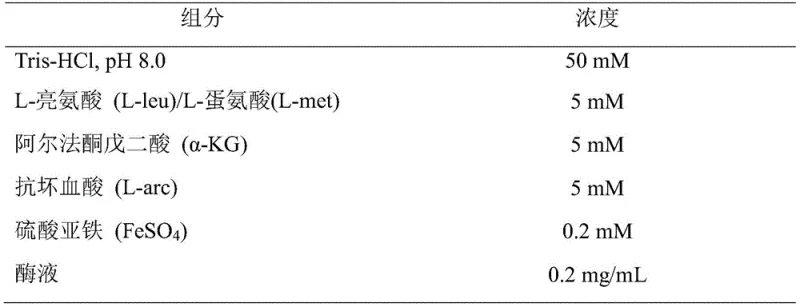
Furthermore, the impurity profile of the reaction is inherently cleaner due to the enzyme's high substrate specificity, which minimizes off-target oxidation events that are common in non-enzymatic radical reactions. The requirement for cofactors such as alpha-ketoglutarate and ascorbic acid ensures that the catalytic cycle is continuously regenerated, maintaining high conversion rates over extended reaction periods. Understanding this mechanistic framework is crucial for process engineers aiming to optimize reaction parameters such as pH, temperature, and cofactor ratios to maximize space-time yields. The ability of this single enzyme variant to also catalyze the sulfoxidation of methionine highlights its versatility, making it a valuable tool for producing a diverse range of oxidized amino acid derivatives that serve as key building blocks in the synthesis of complex bioactive molecules and antibiotic precursors like grisein.
How to Synthesize 5-Hydroxy-L-Leucine Efficiently
The implementation of this biocatalytic route requires a systematic approach to gene construction, protein expression, and reaction engineering to fully realize its industrial potential. The process begins with the precise construction of the mutant gene via inverse PCR, followed by heterologous expression in a robust host strain to ensure high titers of soluble enzyme. Once the biocatalyst is prepared, the reaction conditions must be carefully controlled to maintain enzyme stability and activity throughout the conversion process. The following guide outlines the standardized protocol for leveraging this technology, ensuring reproducibility and scalability for commercial production needs. Detailed standard operating procedures for the synthesis steps are provided in the section below.
- Construct the mutant gene mLEH via inverse PCR site-directed mutagenesis using the wild-type Nostoc punctiforme gene as a template.
- Express the V77A mutant in E. coli BL21(DE3) hosts and purify the enzyme using Ni-NTA affinity chromatography followed by gel filtration.
- Conduct the hydroxylation reaction at 30°C and pH 7.4 using L-leucine substrate, supplemented with FeSO4, alpha-ketoglutarate, and ascorbic acid cofactors.
Commercial Advantages for Procurement and Supply Chain Teams
For procurement managers and supply chain directors, the adoption of the V77A mutant technology translates into tangible strategic advantages that extend beyond mere technical performance. The primary benefit lies in the substantial optimization of the cost structure associated with producing hydroxylated amino acids. By utilizing an enzyme with nearly 70% higher activity for leucine substrates, manufacturers can significantly reduce the amount of biocatalyst required per batch, directly lowering the variable costs associated with enzyme production and purification. This efficiency gain eliminates the need for expensive transition metal catalysts and the subsequent rigorous removal steps often mandated by regulatory bodies for pharmaceutical ingredients, thereby streamlining the entire manufacturing workflow. The mild reaction conditions further contribute to cost reduction in API manufacturing by reducing energy consumption for heating or cooling and minimizing the wear and tear on reactor equipment, leading to lower capital expenditure and maintenance overheads over the lifecycle of the production facility.
- Cost Reduction in Manufacturing: The enhanced specific activity of the V77A mutant allows for higher substrate loading and faster reaction kinetics, which dramatically increases the volumetric productivity of the bioreactors. This intensification of the process means that the same quantity of product can be generated in a shorter timeframe or with smaller equipment footprints, effectively maximizing asset utilization. Additionally, the elimination of toxic chemical reagents and organic solvents reduces the costs associated with hazardous material handling, storage, and disposal, providing a clear economic advantage over traditional synthetic routes. The simplified downstream processing, driven by the high selectivity of the enzyme, further lowers the cost of goods sold by reducing the number of purification columns and solvent exchanges required to meet final product specifications.
- Enhanced Supply Chain Reliability: Dependence on complex chemical supply chains for specialized reagents often introduces vulnerability to market fluctuations and geopolitical disruptions. By shifting to a fermentation-based production model for both the enzyme and the final product, companies can insulate their supply chains from these external shocks. The raw materials for this bioprocess, such as glucose and simple amino acids, are commodity chemicals with stable and abundant global supplies, ensuring consistent production continuity. This reliability is critical for meeting the just-in-time delivery requirements of major pharmaceutical clients who cannot afford interruptions in their API synthesis schedules. Furthermore, the scalability of microbial fermentation allows for rapid capacity expansion to meet surging demand without the long lead times associated with constructing new chemical synthesis plants.
- Scalability and Environmental Compliance: As regulatory pressure mounts for greener manufacturing practices, the V77A mutant offers a compliant pathway that aligns with global sustainability goals. The aqueous nature of the reaction and the biodegradability of the biocatalyst minimize the environmental footprint, facilitating easier permitting and reducing the risk of regulatory fines. The process generates significantly less hazardous waste compared to chemical oxidation methods, simplifying waste treatment protocols and lowering disposal costs. This environmental stewardship not only protects the company's reputation but also future-proofs the manufacturing operation against increasingly stringent environmental regulations, ensuring long-term operational viability and market access in regions with strict ecological standards.
Frequently Asked Questions (FAQ)
The following questions address common technical and commercial inquiries regarding the implementation of this enzymatic technology, derived directly from the patent specifications and experimental data. These insights are intended to clarify the operational parameters and potential applications for stakeholders evaluating this process for integration into their existing manufacturing portfolios. Understanding these details is essential for conducting accurate feasibility studies and risk assessments prior to technology transfer.
Q: What represents the primary advantage of the V77A mutant over the wild-type enzyme?
A: The V77A mutant demonstrates a substantial increase in specific enzyme activity, showing a 69.53% improvement for leucine substrates and a 23.26% improvement for methionine substrates compared to the wild type, significantly enhancing catalytic efficiency.
Q: What are the optimal reaction conditions for this biocatalytic process?
A: The enzymatic reaction operates optimally at a mild temperature of 30°C and a neutral pH of 7.4, requiring cofactors such as ferrous sulfate, alpha-ketoglutarate, and ascorbic acid to facilitate the oxidation process.
Q: Can this enzyme be applied to substrates other than leucine?
A: Yes, the V77A mutant retains broad substrate specificity and can effectively catalyze the sulfoxidation of methionine to produce methionine sulfoxide, expanding its utility in synthesizing diverse chiral intermediates.
Partnering with NINGBO INNO PHARMCHEM: Your Reliable 5-Hydroxy-L-Leucine Supplier
At NINGBO INNO PHARMCHEM, we recognize the transformative potential of advanced enzyme engineering technologies like the V77A mutant in reshaping the production of high-value chiral intermediates. As a premier CDMO partner, we possess extensive experience scaling diverse pathways from 100 kgs to 100 MT/annual commercial production, ensuring that innovative laboratory discoveries are seamlessly translated into robust industrial realities. Our state-of-the-art facilities are equipped with rigorous QC labs and advanced fermentation capabilities designed to meet stringent purity specifications required by the global pharmaceutical industry. We are committed to leveraging such cutting-edge biocatalytic solutions to deliver superior quality intermediates that empower our clients to accelerate their drug development pipelines with confidence and efficiency.
We invite forward-thinking partners to collaborate with us to explore the full commercial potential of this hydroxylation technology. Our technical team is ready to provide a Customized Cost-Saving Analysis tailored to your specific production volumes and quality requirements. We encourage you to contact our technical procurement team today to request specific COA data and comprehensive route feasibility assessments, allowing you to make informed decisions that drive value and innovation in your supply chain.