
Scalable Biocatalytic Production of Optically Pure (R)-Citronellal Using Engineered OYE3-Mut
The global demand for optically pure intermediates in the flavor, fragrance, and pharmaceutical sectors continues to drive innovation in asymmetric synthesis technologies. Patent CN111454918A introduces a groundbreaking advancement in this field by disclosing a highly stereoselective alkenol reductase mutant, designated as OYE3-Mut, specifically engineered for the preparation of (R)-citronellal. This compound serves as a critical chiral building block for the synthesis of L-menthol, a high-value commodity in the flavor industry, as well as a key intermediate for various bioactive pharmaceutical agents. The patent details a sophisticated biocatalytic strategy that overcomes the inherent limitations of wild-type enzymes, achieving an exceptional enantiomeric excess (e.e.) of greater than 99% (R). By leveraging a dual-enzyme cascade system involving OYE3-Mut and glucose dehydrogenase (GDH), this technology enables the efficient conversion of citral isomers into high-purity (R)-citronellal under mild, environmentally benign conditions. For industry leaders seeking a reliable flavor & fragrance intermediate supplier, this biocatalytic route represents a significant leap forward in process efficiency and product quality.
The Limitations of Conventional Methods vs. The Novel Approach
The Limitations of Conventional Methods
Traditional chemical synthesis routes for (R)-citronellal, such as the multi-step process pioneered by Takasago Corporation, often involve complex reaction sequences starting from myrcene. These methods typically require harsh reaction conditions, expensive transition metal catalysts, and rigorous purification steps to remove trace metal impurities, which is a critical concern for pharmaceutical applications. Furthermore, direct chemical hydrogenation of natural citral, which exists as a mixture of cis-(Z) and trans-(E) isomers in a roughly 2:3 ratio, frequently results in poor stereocontrol. When using wild-type enol reductases like OYE3, the enzyme exhibits different catalytic efficiencies and stereoselectivities for the two isomers, often producing (S)-citronellal from the cis-isomer and (R)-citronellal from the trans-isomer. This complementary but conflicting activity leads to a racemic or low-purity product mixture, with reported e.e. values as low as 23.6% for (R)-citronellal when using (E/Z)-citral mixtures. Such low optical purity necessitates costly and yield-reducing downstream resolution processes, significantly impacting the overall economic viability and sustainability of the manufacturing process.
The Novel Approach
In stark contrast to these conventional limitations, the novel approach described in the patent utilizes a rationally designed mutant enzyme, OYE3-Mut, which has been engineered through site-directed mutagenesis to exhibit exquisite substrate specificity. By introducing specific amino acid substitutions—mutating Serine at position 296 to Phenylalanine and Tryptophan at position 116 to Glycine—the enzyme's active site architecture is fundamentally altered. This structural modification effectively disables the enzyme's ability to bind and reduce the (Z)-citral isomer while preserving and even enhancing its high stereoselectivity towards the (E)-citral isomer. Consequently, when applied to a mixture of (E/Z)-citral, the OYE3-Mut catalyst selectively converts the (E)-isomer into (R)-citronellal with an e.e. value exceeding 99%, leaving the (Z)-isomer untouched. This kinetic resolution capability simplifies the reaction profile dramatically, eliminating the formation of unwanted (S)-enantiomers and removing the need for complex chiral separation steps post-reaction. 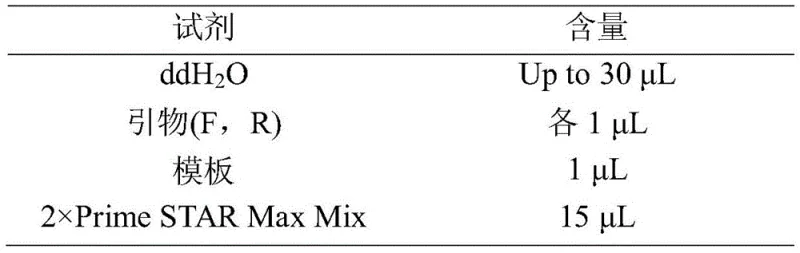
Mechanistic Insights into OYE3-Mut Catalyzed Asymmetric Reduction
The superior performance of the OYE3-Mut mutant is rooted in precise protein engineering that modulates the steric and electronic environment of the enzyme's catalytic pocket. The wild-type OYE3 enzyme possesses a flexible active site that accommodates both cis and trans isomers of citral, leading to the observed lack of selectivity. The double mutation (S296F/W116G) introduces a bulky phenylalanine residue at position 296, which creates a steric clash with the methyl group of the (Z)-citral isomer, thereby preventing it from adopting the correct orientation for hydride transfer from the FMN cofactor. Simultaneously, the substitution of tryptophan with the smaller glycine at position 116 likely alleviates steric hindrance for the (E)-isomer, facilitating optimal binding. This "lock-and-key" refinement ensures that only the desired substrate geometry is processed. Furthermore, the reaction mechanism relies on a classic Old Yellow Enzyme (OYE) pathway where the reduced FMN cofactor transfers a hydride to the beta-carbon of the alpha,beta-unsaturated aldehyde, followed by protonation from a tyrosine residue in the active site. The strict control over the pro-chiral face of the substrate presented to the hydride source is what dictates the formation of the (R)-configuration with such high fidelity.
To ensure the economic feasibility of this redox biocatalysis, the patent describes a robust cofactor regeneration system coupled with the primary reduction reaction. The reduction of citral consumes NADPH, converting it to NADP+. To prevent the accumulation of oxidized cofactor and the cessation of the reaction, a second enzyme, Glucose Dehydrogenase (GDH), is employed. GDH catalyzes the oxidation of D-glucose to D-glucono-1,5-lactone, simultaneously reducing NADP+ back to NADPH. This creates a self-sustaining catalytic cycle where only catalytic amounts of the expensive nicotinamide cofactor are required, while inexpensive glucose serves as the terminal electron donor. This dual-enzyme cascade not only drives the reaction to completion but also maintains the redox balance within the reaction vessel. The use of a PIPES buffer system at pH 7.0 and a moderate temperature of 30°C further ensures enzyme stability and longevity, allowing for extended reaction times up to 11 hours to achieve maximum conversion without significant enzyme denaturation or loss of activity.
How to Synthesize (R)-Citronellal Efficiently
The implementation of this biocatalytic process involves a streamlined workflow that integrates microbial fermentation with enzymatic transformation. The protocol begins with the construction of recombinant E. coli strains capable of expressing both the OYE3-Mut reductase and the GDH cofactor regeneration enzyme. Following the fermentation and induction phases, the biomass is harvested and processed to obtain the biocatalyst, which can be used either as whole cells or as purified enzyme preparations depending on the specific purity requirements of the final application. The detailed standardized synthesis steps see the guide below.
- Construct recombinant E. coli BL21(DE3) strains harboring pET28b-OYE3-Mut and pET28b-GDH plasmids via transformation and selection.
- Ferment the engineered strains in LB medium with kanamycin, induce expression with IPTG at 25°C, and harvest wet cells by centrifugation.
- Perform biotransformation using cell lysates or whole cells with (E/Z)-citral substrate, glucose, and NADP+ cofactor at 30°C for 11 hours.
Commercial Advantages for Procurement and Supply Chain Teams
For procurement managers and supply chain directors, the adoption of the OYE3-Mut biocatalytic process offers transformative advantages over traditional chemical synthesis, particularly regarding cost structure and supply reliability. The shift from multi-step chemical synthesis to a one-step enzymatic reduction drastically simplifies the manufacturing workflow. By eliminating the need for precious metal catalysts and the associated removal processes, the material costs are significantly reduced. Moreover, the high stereoselectivity of the mutant enzyme means that the crude product requires minimal downstream purification to meet stringent optical purity specifications. This reduction in processing steps directly translates to lower energy consumption, reduced solvent usage, and decreased waste generation, aligning with modern green chemistry principles and reducing the environmental compliance burden for manufacturing facilities.
- Cost Reduction in Manufacturing: The economic impact of this technology is profound due to the elimination of expensive chiral resolution steps. In conventional processes where low e.e. values are obtained, a significant portion of the product mass is the unwanted enantiomer, which must be separated and often discarded or racemized, representing a direct loss of yield and revenue. With the OYE3-Mut system delivering >99% e.e., the effective yield of the desired isomer is maximized relative to the substrate input. Additionally, the use of glucose as a cheap reducing equivalent instead of stoichiometric chemical reductants like sodium borohydride or hydrogen gas under high pressure lowers the raw material expenditure substantially. The ability to use crude citral mixtures without prior isomer separation further reduces upstream material costs.
- Enhanced Supply Chain Reliability: Biocatalytic processes are inherently more scalable and flexible than complex chemical syntheses reliant on specialized equipment for high-pressure hydrogenation or cryogenic conditions. The fermentation-based production of the enzyme catalyst ensures a consistent and renewable supply of the biocatalyst, mitigating risks associated with the volatility of petrochemical feedstocks. Since the reaction operates at ambient pressure and mild temperatures, it can be implemented in standard stainless steel reactors available in most multipurpose chemical plants, reducing the capital expenditure required for technology transfer. This accessibility ensures that supply chains remain robust and less susceptible to disruptions caused by equipment failure or specialized resource shortages.
- Scalability and Environmental Compliance: From a sustainability perspective, this enzymatic route offers a clear path to commercial scale-up of complex flavor & fragrance intermediates with a reduced carbon footprint. The aqueous nature of the reaction medium minimizes the release of volatile organic compounds (VOCs) compared to organic solvent-heavy chemical processes. The byproduct of the cofactor regeneration step is gluconolactone, which hydrolyzes to gluconic acid, a benign and biodegradable substance. This simplifies wastewater treatment protocols and reduces the costs associated with hazardous waste disposal. For companies aiming to meet corporate sustainability goals and regulatory standards regarding effluent quality, this technology provides a compliant and future-proof manufacturing solution.
Frequently Asked Questions (FAQ)
The following questions address common technical and operational inquiries regarding the implementation of the OYE3-Mut technology for (R)-citronellal production. These insights are derived directly from the experimental data and embodiments disclosed in the patent documentation, providing clarity on substrate scope, enzyme stability, and process parameters. Understanding these details is crucial for R&D teams evaluating the feasibility of integrating this biocatalytic route into their existing production pipelines.
Q: How does the OYE3-Mut mutant improve stereoselectivity compared to wild-type OYE3?
A: The OYE3-Mut mutant features dual mutations (S296F and W116G) that alter the active site geometry. This modification prevents the enzyme from utilizing (Z)-citral while maintaining high activity for (E)-citral, resulting in an enantiomeric excess (e.e.) increase from 23.6% to >99% for (R)-citronellal.
Q: What is the role of Glucose Dehydrogenase (GDH) in this reaction system?
A: GDH serves as a cofactor regeneration enzyme. It oxidizes D-glucose to gluconolactone while reducing NADP+ back to NADPH, which is essential for sustaining the continuous catalytic cycle of the OYE3-Mut reductase without requiring stoichiometric amounts of expensive cofactors.
Q: Can this process handle natural citral mixtures containing both cis and trans isomers?
A: Yes, the process is specifically designed to handle (E/Z)-citral mixtures. Unlike wild-type enzymes that produce low optical purity from mixtures, OYE3-Mut selectively reduces the (E)-isomer to (R)-citronellal with >99% e.e. while leaving the (Z)-isomer unreacted, effectively acting as a kinetic resolution.
Partnering with NINGBO INNO PHARMCHEM: Your Reliable (R)-Citronellal Supplier
At NINGBO INNO PHARMCHEM, we recognize the strategic value of advanced biocatalytic technologies like the OYE3-Mut system in securing a competitive edge in the global market for high-value chiral intermediates. Our team of expert process chemists and biologists possesses extensive experience scaling diverse pathways from 100 kgs to 100 MT/annual commercial production, ensuring that laboratory breakthroughs are seamlessly translated into robust industrial processes. We are committed to delivering products with stringent purity specifications, supported by our rigorous QC labs equipped with state-of-the-art chiral HPLC and GC capabilities to verify enantiomeric excess and chemical purity at every batch. Our infrastructure is designed to handle sensitive biocatalytic reactions with precision, maintaining the integrity of the enzyme catalysts and the quality of the final (R)-citronellal product.
We invite potential partners to engage with our technical procurement team to discuss how this innovative synthesis route can be tailored to your specific volume and quality requirements. By collaborating with us, you gain access to a Customized Cost-Saving Analysis that quantifies the potential economic benefits of switching to this enzymatic process for your specific supply chain context. We encourage you to request specific COA data and route feasibility assessments to validate the performance of our (R)-citronellal against your internal standards. Let us help you optimize your sourcing strategy with a solution that combines scientific excellence with commercial reliability.