
Revolutionizing L-Glufosinate-Ammonium Production: High-Efficiency Enzymatic Synthesis for Global Agrochemical Supply Chains
The agrochemical industry is currently witnessing a paradigm shift in the manufacturing of chiral herbicide intermediates, driven by the urgent need for more sustainable and efficient production methods. A pivotal development in this sector is documented in patent CN112779233A, which discloses a novel recombinant glufosinate-ammonium dehydrogenase and its application in the preparation of L-glufosinate-ammonium. This technology represents a significant leap forward from traditional chemical synthesis and earlier biocatalytic attempts, offering a route that combines exceptional reaction speed with unparalleled stereoselectivity. By leveraging staggered extension PCR gene rearrangement technology, researchers have constructed a gene library that yields enzyme variants with drastically improved catalytic performance. The implications for global supply chains are profound, as this method addresses long-standing bottlenecks related to reaction time, raw material costs, and product purity. For procurement and technical leaders, understanding the mechanics of this innovation is crucial for evaluating future sourcing strategies and optimizing production budgets in the competitive herbicide market.
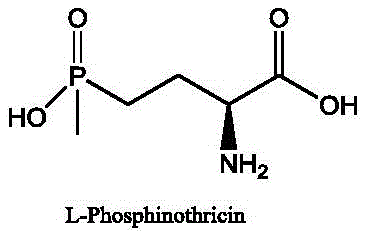
The Limitations of Conventional Methods vs. The Novel Approach
The Limitations of Conventional Methods
Historically, the production of L-glufosinate-ammonium has been plagued by inefficiencies inherent in both chemical resolution and earlier enzymatic processes. Traditional chemical synthesis often results in racemic mixtures, requiring costly and wasteful resolution steps to isolate the biologically active L-isomer, which inherently limits the theoretical yield to 50%. Furthermore, earlier biocatalytic methods relying on transaminases have faced significant operational hurdles that hinder industrial scalability. A primary defect of the transaminase route is the reversible nature of the reaction, which prevents the complete conversion of the keto acid substrate into the desired amino acid product, typically capping conversion rates at around 90%. To drive the equilibrium towards product formation, these processes require a massive excess of amino donors, often more than four equivalents of L-glutamic acid. This excess not only inflates raw material costs but also creates a complex mixture that complicates downstream separation and purification, thereby increasing waste treatment burdens and overall manufacturing expenses.
The Novel Approach
In stark contrast to these legacy methods, the novel approach utilizing recombinant glufosinate-ammonium dehydrogenase offers a transformative solution that effectively dismantles these technical barriers. This new enzymatic route facilitates an irreversible reductive amination reaction, allowing for theoretically 100% conversion of the substrate, 2-carbonyl-4-(hydroxymethylphosphinyl)-butyric acid, into L-glufosinate-ammonium. The kinetic advantages are staggering; where transaminase systems might require up to 40 hours to reach completion, this recombinant dehydrogenase system achieves full catalysis in merely 20 minutes under optimized conditions. This dramatic reduction in reaction time translates directly into increased reactor throughput and reduced capital expenditure per unit of production. Moreover, the system utilizes inexpensive inorganic amino donors such as ammonium sulfate, eliminating the need for costly organic amino donors and simplifying the reaction matrix. The result is a streamlined process that not only enhances yield but also significantly reduces the complexity of product isolation, making it an ideal candidate for cost-sensitive, high-volume agrochemical manufacturing.
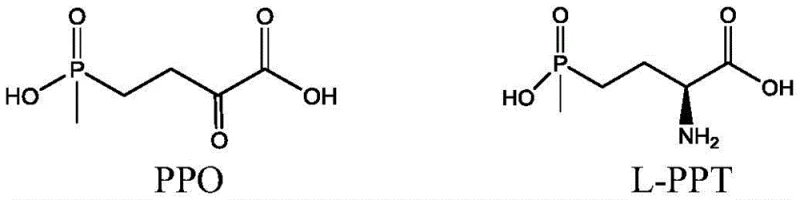
Mechanistic Insights into Recombinant Glufosinate-Ammonium Dehydrogenase Catalysis
The core of this technological breakthrough lies in the sophisticated protein engineering strategy employed to develop the recombinant enzyme. By utilizing staggered extension PCR gene rearrangement, the inventors successfully recombined genetic sequences from various Pseudomonas species and existing mutants to create a chimeric enzyme with superior properties. This recombinant glufosinate-ammonium dehydrogenase, specifically the variant designated as W1, exhibits a catalytic activity that is 31% and 35% higher than previous mutant standards. The mechanism involves the stereospecific reduction of the keto group in the substrate PPO, utilizing NADPH as a cofactor to transfer a hydride ion with precise spatial orientation. This ensures that the resulting amino group is installed exclusively in the L-configuration, achieving an enantiomeric excess (ee) value greater than 99.5%. Such high stereoselectivity is critical for agrochemical efficacy, as the D-isomer is biologically inactive and constitutes an impurity that must be strictly controlled to meet regulatory standards for herbicide registration and environmental safety.
Beyond the primary catalytic step, the process incorporates an efficient coenzyme circulation system that is vital for economic viability. Since NADPH is an expensive cofactor, it cannot be used in stoichiometric amounts for industrial processes. The patent describes coupling the dehydrogenase with either a glucose dehydrogenase or a formate dehydrogenase system to regenerate NADPH in situ. In the glucose dehydrogenase system, glucose is oxidized to gluconolactone, recycling NADP+ back to NADPH, while in the formate dehydrogenase system, ammonium formate serves as the electron donor. This coupling ensures that the costly cofactor is continuously recycled throughout the reaction, minimizing the need for external addition and drastically lowering the variable cost of the biocatalytic process. This dual-enzyme system operates harmoniously within the E. coli host, maintaining a stable redox balance that supports high substrate loading concentrations of up to 108g/L without significant loss of enzymatic activity or stability.
How to Synthesize L-Glufosinate-Ammonium Efficiently
The implementation of this synthesis route requires precise control over fermentation and biocatalytic conditions to maximize the potential of the recombinant strains. The process begins with the construction of the expression vector, where the gene encoding the recombinant dehydrogenase is ligated into a plasmid such as pETDuet-1, often alongside the gene for the cofactor regeneration enzyme. This vector is then transformed into a robust host strain like E. coli BL21(DE3), which is cultured under controlled conditions to induce high-level protein expression. The resulting wet cell mass serves as the biocatalyst for the conversion reaction. The reaction medium is carefully buffered to maintain a pH of approximately 7.5, which is optimal for enzyme activity, and the temperature is regulated, typically around 40°C, to balance reaction rate with enzyme stability. Detailed standardized synthesis steps see the guide below.
- Construct a recombinant glufosinate-ammonium dehydrogenase gene library using staggered extension PCR technology to screen for high-activity variants.
- Express the selected recombinant enzyme in E. coli BL21(DE3) host cells alongside a coenzyme regeneration system such as glucose dehydrogenase.
- Perform asymmetric reductive amination of 2-carbonyl-4-(hydroxymethylphosphinyl)-butyric acid using ammonium sulfate as the amino donor under controlled pH and temperature.
Commercial Advantages for Procurement and Supply Chain Teams
For procurement managers and supply chain directors, the adoption of this recombinant dehydrogenase technology offers compelling strategic advantages that extend beyond mere technical performance. The primary benefit lies in the substantial cost reduction in agrochemical intermediate manufacturing driven by the elimination of expensive chiral precursors and the minimization of waste. By utilizing cheap inorganic nitrogen sources like ammonium sulfate instead of costly amino acids, the raw material cost profile is significantly improved. Furthermore, the drastic reduction in reaction time from days to minutes allows for a much higher utilization rate of existing fermentation and reaction infrastructure, effectively increasing capacity without the need for new capital investment. This efficiency gain translates into a more competitive pricing structure for the final herbicide active ingredient, providing a buffer against market volatility and raw material price fluctuations.
- Cost Reduction in Manufacturing: The economic impact of this technology is driven by the fundamental shift in reaction stoichiometry and downstream processing requirements. Unlike transaminase routes that generate large amounts of byproduct keto acids from excess amino donors, this dehydrogenase route produces a much cleaner reaction profile. This simplicity means that purification steps such as crystallization or chromatography can be performed with higher recovery rates and lower solvent consumption. The removal of the need for expensive chiral resolving agents or complex chemical protection/deprotection steps further strips out cost from the value chain. Consequently, manufacturers can achieve a leaner cost structure that enhances margin potential while offering more attractive pricing to downstream formulators and distributors in the global agrochemical market.
- Enhanced Supply Chain Reliability: Supply chain resilience is significantly bolstered by the robustness and speed of this biocatalytic process. The ability to complete the key synthetic step in 20 minutes reduces the risk of batch failures due to prolonged exposure to potential contaminants or enzyme degradation. Moreover, the reliance on widely available bulk chemicals like glucose or formate and ammonium salts reduces dependency on specialized, single-source chiral building blocks that are often subject to supply disruptions. The high conversion rate ensures that raw material utilization is maximized, reducing the volume of inventory required to meet production targets. This efficiency allows for more agile response to demand spikes, ensuring that critical herbicide intermediates are available when needed to support planting seasons and agricultural cycles worldwide.
- Scalability and Environmental Compliance: From an environmental and regulatory perspective, this process aligns perfectly with the industry's move towards greener chemistry. The high atom economy of the reductive amination reaction means less waste is generated per kilogram of product, simplifying wastewater treatment and reducing the environmental footprint of the manufacturing site. The use of biocatalysis operates under mild conditions of temperature and pressure, reducing energy consumption compared to high-temperature chemical synthesis. This not only lowers utility costs but also aids in meeting increasingly stringent environmental regulations regarding carbon emissions and hazardous waste disposal. The scalability of the E. coli expression system is well-proven in the industry, ensuring that the transition from laboratory scale to multi-ton commercial production can be achieved with predictable results and minimal technical risk.
Frequently Asked Questions (FAQ)
The following questions address common technical and commercial inquiries regarding the implementation of this recombinant dehydrogenase technology. These insights are derived directly from the patent data and are intended to clarify the operational benefits for potential partners and licensees. Understanding these details is essential for making informed decisions about technology adoption and supply chain integration.
Q: How does the recombinant dehydrogenase method compare to traditional transaminase routes?
A: The recombinant dehydrogenase method significantly outperforms transaminase routes by achieving complete substrate conversion in approximately 20 minutes, compared to the 40 hours typically required for transaminase catalysis. Additionally, it eliminates the need for excessive amino donors, simplifying downstream purification.
Q: What is the optical purity achievable with this enzymatic process?
A: The process utilizes a highly stereoselective recombinant enzyme that consistently delivers an enantiomeric excess (ee) value greater than 99.5%, ensuring the production of high-purity L-glufosinate-ammonium suitable for stringent agrochemical applications.
Q: Is this biocatalytic route scalable for industrial manufacturing?
A: Yes, the method employs robust E. coli expression systems and inexpensive inorganic amino donors like ammonium sulfate. The rapid reaction kinetics and high substrate loading capacity of 108g/L demonstrate strong potential for large-scale commercial production.
Partnering with NINGBO INNO PHARMCHEM: Your Reliable L-Glufosinate-Ammonium Supplier
The technological potential of this recombinant dehydrogenase route positions it as a cornerstone for the next generation of herbicide manufacturing. At NINGBO INNO PHARMCHEM, we recognize the critical importance of translating such high-level patent innovations into reliable commercial reality. As a seasoned CDMO partner, we possess extensive experience scaling diverse pathways from 100 kgs to 100 MT/annual commercial production, ensuring that the theoretical benefits of this enzymatic process are fully realized in a GMP-compliant environment. Our facility is equipped with rigorous QC labs and stringent purity specifications that guarantee every batch of L-glufosinate-ammonium meets the highest international standards for agrochemical intermediates. We are committed to bridging the gap between laboratory discovery and industrial application, providing our clients with a secure and efficient source of high-value chiral intermediates.
We invite global agrochemical companies to collaborate with us to optimize their supply chains using this advanced technology. By partnering with our technical procurement team, you can request a Customized Cost-Saving Analysis tailored to your specific production volumes and quality requirements. We encourage you to reach out to us to obtain specific COA data and route feasibility assessments that demonstrate how this enzymatic synthesis can enhance your product portfolio. Let us help you secure a competitive advantage through superior process chemistry and reliable supply continuity.
Engineering Bottleneck?
Can't scale up this synthesis? Upload your target structure or CAS, and our CDMO team will evaluate the industrial feasibility within 24 hours. Request Evaluation →