
Advanced Synthesis of Carbapenem Intermediates via Biphasic Catalytic Hydrogenation for Commercial Scale-Up
Advanced Synthesis of Carbapenem Intermediates via Biphasic Catalytic Hydrogenation for Commercial Scale-Up
The pharmaceutical industry continuously seeks robust methodologies for synthesizing critical beta-lactam antibiotic intermediates, particularly those serving as the core scaffolds for carbapenems like Meropenem and Biapenem. Patent CN100497338C introduces a transformative preparation method for 4-methyl-7-oxo-1-azabicyclo[3.2.0]hept-2-ene-2-carboxylic acid derivatives, addressing long-standing challenges in purification and scalability. This technology leverages a novel biphasic solvent system during catalytic hydrogenation to streamline the deprotection of sensitive precursors. By fundamentally altering the reaction medium and post-treatment workflow, this approach eliminates the reliance on expensive buffer systems and complex chromatographic separations. For R&D directors and procurement managers, this represents a significant opportunity to enhance the supply chain reliability of high-purity pharmaceutical intermediates. The following analysis details the technical merits and commercial viability of this patented process.
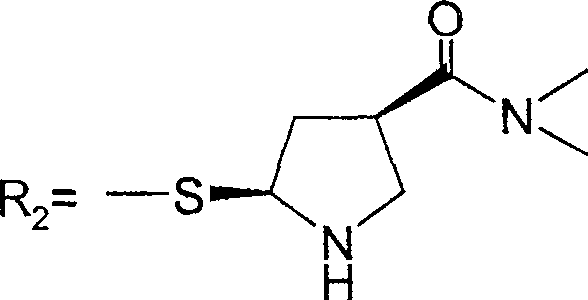
The Limitations of Conventional Methods vs. The Novel Approach
The Limitations of Conventional Methods
Historically, the synthesis of these vital carbapenem intermediates has been plagued by cumbersome purification protocols that hinder efficient large-scale manufacturing. Conventional literature methods, such as those cited in the Journal of Antibiotics and Chemical Pharmaceutical Bulletin, typically employ a mixture of water and tetrahydrofuran buffered with phosphate salts or methylmorpholine sulfonate (MOPS). While effective on a laboratory scale, these buffer systems introduce significant downstream processing burdens. After the catalytic hydrogenation deprotection step, the reaction mixture contains substantial amounts of buffer salts and organic impurities that must be rigorously removed. This necessitates the use of ion exchange column chromatography, a technique that is notoriously difficult to scale due to resin capacity limitations and high solvent consumption. Furthermore, the final isolation of the product often requires energy-intensive freeze-drying or high-pressure reverse osmosis to remove water, drastically increasing production costs and cycle times.
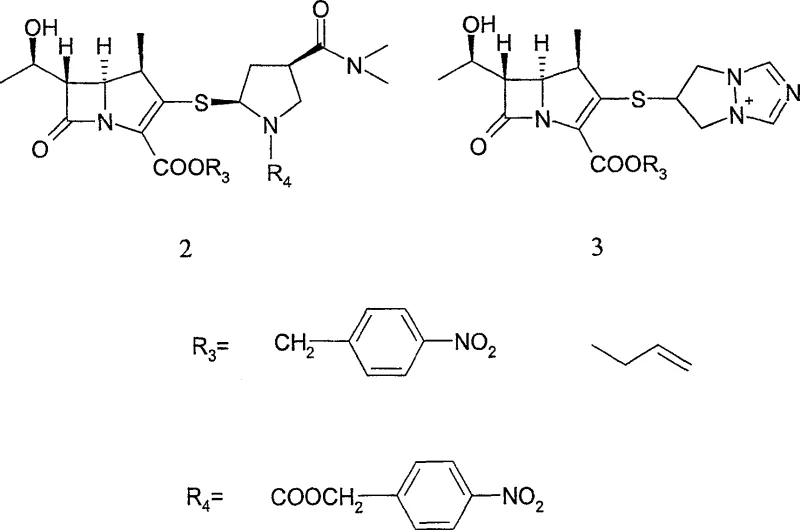
The Novel Approach
In stark contrast, the methodology disclosed in CN100497338C utilizes a strategic biphasic solvent system composed of water and a water-immiscible organic solvent, such as ethyl acetate, toluene, or dichloromethane. This innovation fundamentally changes the partitioning behavior of the reaction components. During the catalytic hydrogenation, the protecting groups (such as p-nitrobenzyl esters) are cleaved, and the resulting byproducts preferentially dissolve in the organic phase. Meanwhile, the target zwitterionic product, being highly water-soluble, remains exclusively in the aqueous phase. This natural phase separation effectively purifies the product in situ, rendering the use of ion exchange columns obsolete. The process culminates in a simple crystallization step induced by adding a water-miscible solvent like acetone to the separated aqueous layer. This shift from chromatography to crystallization is a game-changer for industrial feasibility.
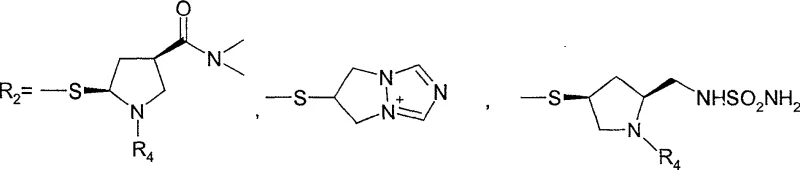
Mechanistic Insights into Biphasic Catalytic Hydrogenation
The core of this technological advancement lies in the precise control of phase transfer and catalytic selectivity during the hydrogenolysis of the protecting groups. The reaction employs 5% to 10% palladium on carbon (Pd/C) as a heterogeneous catalyst, which facilitates the cleavage of the p-nitrobenzyl ester and silyl ether protecting groups under mild hydrogen pressure ranging from 2 to 10 kg/cm². The biphasic nature of the solvent system acts as a continuous extraction process; as the deprotection occurs at the catalyst surface, the lipophilic deprotected fragments (like p-nitrotoluene) migrate into the organic layer, preventing them from re-adsorbing onto the product or the catalyst. This dynamic equilibrium ensures that the aqueous phase remains remarkably free of organic impurities. Additionally, the absence of buffering salts prevents the formation of inorganic salt waste streams, which are common in traditional MOPS-buffered reactions. The reaction temperature is strictly maintained between 0°C and 30°C to preserve the stereochemical integrity of the sensitive beta-lactam ring and the hydroxyethyl side chain.
Impurity control is further enhanced by the specific choice of organic solvents which are immiscible with water yet capable of dissolving the starting material and byproducts. Solvents such as ethyl acetate or toluene are selected not only for their partitioning coefficients but also for their ease of removal and low toxicity profile compared to chlorinated solvents. The subsequent addition of a water-miscible anti-solvent, such as acetone or ethanol, to the purified aqueous phase reduces the solubility of the target carboxylic acid derivative, inducing rapid and high-yield crystallization. This crystallization mechanism effectively excludes trace residual impurities that might have remained in the aqueous phase, resulting in a final product with exceptional purity specifications suitable for direct use in subsequent coupling reactions for API synthesis. The elimination of freeze-drying also mitigates the risk of thermal degradation associated with prolonged exposure to vacuum and heat.
How to Synthesize 4-Methyl-7-Oxo-1-Azabicyclo Heptene Derivatives Efficiently
The implementation of this synthesis route requires careful attention to solvent ratios and catalyst loading to maximize yield and purity. The patent specifies that the organic phase should be used in an amount of 10 to 200 times the weight of the raw material, with a preferred range of 30 to 100 times, ensuring complete dissolution and effective extraction. The aqueous phase is typically used in a ratio of 5 to 80 times the raw material weight. Following the hydrogenation, which proceeds to completion at room temperature, the layers are allowed to separate naturally or via centrifugation. The detailed standardized synthetic steps, including specific molar equivalents and workup procedures validated by the patent examples, are outlined below for technical reference.
- Dissolve the protected precursor compound in a biphasic solvent system consisting of water and a water-immiscible organic solvent such as ethyl acetate or toluene.
- Add 5% to 10% palladium on carbon (Pd/C) catalyst and conduct catalytic hydrogenation at 0-30°C under a pressure of 2-10 kg/cm².
- Separate the aqueous phase containing the product, add a water-miscible organic solvent like acetone to induce crystallization, and filter to obtain the purified solid.
Commercial Advantages for Procurement and Supply Chain Teams
For procurement managers and supply chain heads, the transition from buffer-mediated chromatography to biphasic crystallization offers profound economic and logistical benefits. The primary advantage is the drastic simplification of the manufacturing infrastructure. By removing the need for large-scale ion exchange columns and freeze-dryers, manufacturers can significantly reduce capital expenditure (CAPEX) on specialized equipment. Operational expenditure (OPEX) is similarly reduced due to lower energy consumption and decreased solvent usage, as the biphasic solvents can often be recovered and recycled. This process intensification leads to shorter batch cycle times, allowing for increased throughput within existing facility footprints. Furthermore, the reliance on commodity solvents like ethyl acetate and acetone enhances supply chain security, as these materials are readily available globally compared to specialized chromatography resins or buffers.
- Cost Reduction in Manufacturing: The elimination of ion exchange chromatography and freeze-drying steps removes two of the most cost-intensive operations in pharmaceutical intermediate production. Chromatography resins are expensive consumables that require frequent replacement and regeneration, while freeze-drying is extremely energy-demanding. By replacing these with liquid-liquid extraction and crystallization, the overall cost of goods sold (COGS) is substantially lowered. Additionally, the simplified workflow reduces labor hours required for monitoring and operating complex purification trains, contributing to further operational savings without compromising the quality of the final intermediate.
- Enhanced Supply Chain Reliability: The robustness of the biphasic method ensures consistent product quality across different batches, which is critical for maintaining regulatory compliance in API manufacturing. The process is less sensitive to minor variations in raw material quality compared to chromatographic methods, which can suffer from column fouling. Moreover, the use of standard chemical reactors and filtration equipment means that production can be easily transferred between different manufacturing sites or scaled up rapidly to meet market demand surges. This flexibility minimizes the risk of supply disruptions caused by equipment bottlenecks or specialized resource shortages.
- Scalability and Environmental Compliance: From an environmental perspective, this method aligns well with green chemistry principles by reducing waste generation. The absence of buffer salts means there is no saline wastewater to treat, simplifying effluent management. The organic solvents used are volatile and can be distilled for reuse, minimizing hazardous waste disposal costs. The scalability is inherently superior because crystallization is a unit operation that scales linearly, whereas chromatography often faces non-linear challenges when moving from pilot to commercial scale. This makes the technology ideal for meeting the growing global demand for carbapenem antibiotics efficiently and sustainably.
Frequently Asked Questions (FAQ)
The following questions address common technical inquiries regarding the implementation and optimization of this biphasic hydrogenation process. These insights are derived directly from the experimental data and claims presented in the patent documentation, providing clarity on reaction parameters and product specifications. Understanding these details is essential for process engineers evaluating the feasibility of adopting this technology for commercial production lines.
Q: How does the biphasic solvent system improve purity compared to conventional buffer methods?
A: The biphasic system allows impurities and deprotected byproducts to partition into the organic phase, while the target zwitterionic product remains in the aqueous phase, eliminating the need for ion exchange chromatography.
Q: What are the critical reaction conditions for the catalytic hydrogenation step?
A: The reaction requires mild temperatures between 0°C and 30°C and a hydrogen pressure range of 2 to 10 kg/cm² using 5% to 10% Pd/C catalyst to ensure selective deprotection without ring degradation.
Q: Why is this method considered more suitable for industrial scale-up?
A: By replacing complex freeze-drying and column chromatography with simple liquid-liquid separation and crystallization, the process significantly reduces equipment requirements and operational complexity.
Partnering with NINGBO INNO PHARMCHEM: Your Reliable 4-Methyl-7-Oxo-1-Azabicyclo Heptene Derivative Supplier
At NINGBO INNO PHARMCHEM, we recognize the critical role that high-quality intermediates play in the global supply of life-saving antibiotics. Our technical team possesses extensive experience scaling diverse pathways from 100 kgs to 100 MT/annual commercial production, ensuring that the transition from laboratory innovation to industrial reality is seamless. We are committed to delivering products with stringent purity specifications, utilizing rigorous QC labs to verify every batch against the highest industry standards. Our capability to implement advanced purification techniques, such as the biphasic crystallization method described in CN100497338C, allows us to offer cost-effective solutions without sacrificing quality.
We invite pharmaceutical partners to collaborate with us to optimize their supply chains for carbapenem intermediates. By leveraging our manufacturing expertise, you can achieve significant efficiencies in your production processes. Please contact our technical procurement team to request a Customized Cost-Saving Analysis tailored to your specific volume requirements. We are ready to provide specific COA data and route feasibility assessments to demonstrate how our advanced manufacturing capabilities can support your long-term strategic goals.