
Advanced Microwave-Assisted Synthesis of 4,4'-Butylene Bis-Phenyl Diphosphite for Industrial Polymer Stabilization
The chemical industry is currently witnessing a paradigm shift towards greener, more efficient synthesis routes for high-performance polymer additives, a trend exemplified by the innovative methodology disclosed in patent CN115304638A. This patent details a sophisticated approach for synthesizing 4,4'-butylene bis-(3-methyl-6-tert-butylphenyl)-tetrakis(tridecyl) diphosphite, a critical auxiliary antioxidant used extensively to protect polymers from thermal and oxidative degradation. Unlike conventional methods that rely on harsh mineral acids and generate substantial hazardous waste, this novel process leverages the unique properties of deep eutectic solvents (DES) combined with microwave irradiation. By utilizing a eutectic mixture of choline chloride and either p-toluenesulfonic acid or malonic acid, the technology achieves a dual function where the medium acts simultaneously as the reaction solvent and the catalytic driver. This integration not only streamlines the operational workflow but also addresses the growing regulatory pressure on chemical manufacturers to reduce their environmental footprint while maintaining rigorous quality standards required by global polymer producers.
The Limitations of Conventional Methods vs. The Novel Approach
The Limitations of Conventional Methods
Historically, the production of hindered phenol intermediates like 4,4'-butylene bis(3-methyl-6-tert-butylphenol) has relied heavily on traditional Brønsted acid catalysts such as hydrochloric acid, sulfuric acid, or p-toluenesulfonic acid dissolved in volatile organic solvents. These legacy processes suffer from inherent inefficiencies, including prolonged reaction times that often extend beyond several hours, leading to increased energy consumption and reduced reactor turnover rates. Furthermore, the use of strong mineral acids necessitates extensive post-reaction workup procedures, including multiple washing steps to neutralize residual acidity, which generates large volumes of saline wastewater that are costly and environmentally damaging to treat. The patent background explicitly notes that these traditional routes frequently result in suboptimal product yields and purity levels, often requiring additional purification steps that erode profit margins and complicate the supply chain for reliable polymer additive suppliers seeking consistent batch-to-batch quality.
The Novel Approach
In stark contrast, the methodology outlined in CN115304638A introduces a transformative strategy by employing deep eutectic solvents (DES) composed of choline chloride and organic acids under microwave irradiation. This approach fundamentally alters the reaction landscape by providing a highly polar environment that facilitates rapid proton transfer and stabilizes transition states, thereby accelerating the condensation of 3-methyl-6-tert-butylphenol with n-butyraldehyde. The integration of microwave energy ensures uniform and rapid heating throughout the reaction mixture, eliminating thermal gradients that often lead to byproduct formation in conventional heating methods. Consequently, this novel route achieves intermediate yields exceeding 91% within merely 10 to 15 minutes, a drastic improvement over the hours required by older technologies. Moreover, the recyclability of the DES system allows for multiple reuse cycles without significant loss of catalytic activity, presenting a compelling value proposition for cost reduction in polymer additive manufacturing by minimizing raw material waste and solvent procurement costs.
Mechanistic Insights into Microwave-Assisted Condensation in Deep Eutectic Solvents
The core chemical transformation involves the acid-catalyzed condensation of a hindered phenol with an aldehyde to form a methylene-bridged bis-phenol structure, which serves as the backbone for the final phosphite antioxidant. In this specific mechanism, the deep eutectic solvent functions through a network of hydrogen bonds between the hydrogen bond donor (the organic acid) and the hydrogen bond acceptor (choline chloride). This interaction lowers the melting point of the mixture and creates a liquid medium with high ionic character, which enhances the solubility of the polar transition states involved in the electrophilic aromatic substitution. The microwave irradiation couples directly with the polar molecules and ions in the DES, generating heat internally and instantaneously rather than relying on conductive heat transfer from vessel walls. This 'molecular heating' effect significantly lowers the activation energy barrier for the condensation reaction, allowing it to proceed rapidly at moderate temperatures (55-65°C) while suppressing side reactions such as polymerization of the aldehyde or over-alkylation of the phenol ring.
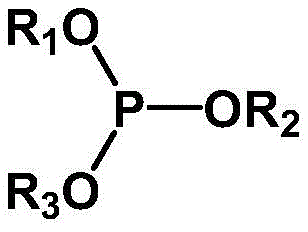
Following the formation of the bis-phenol intermediate, the synthesis proceeds to a transesterification step where the intermediate reacts with triphenyl phosphite and tridecyl alcohol. This step is critical for introducing the long-chain tridecyl groups that impart compatibility with various polymer matrices. The presence of the high-purity intermediate is paramount here, as impurities carried over from the first step can poison the base catalyst used in transesterification or lead to colored bodies in the final product. The patent specifies the use of inorganic bases like potassium hydroxide at elevated temperatures (140-170°C) to drive the equilibrium towards the desired tetra-tridecyl diphosphite. The rigorous control of stoichiometry, specifically maintaining a molar ratio of intermediate to tridecyl alcohol to triphenyl phosphite around 1:4:2, ensures complete conversion while minimizing the presence of unreacted phenolic species. This precise mechanistic control is what enables the production of high-purity OLED material or polymer additives that meet the exacting standards of international R&D directors who prioritize impurity profiles and thermal stability in their formulations.
How to Synthesize 4,4'-Butylene Bis-Phenyl Diphosphite Efficiently
The synthesis protocol described in the patent offers a clear pathway for scaling this chemistry from laboratory benchtop to commercial production vessels. The process begins with the in-situ or ex-situ preparation of the deep eutectic solvent, followed by the microwave-assisted condensation to generate the key intermediate with exceptional purity. This intermediate is then isolated via crystallization, a step that further enhances purity by excluding soluble impurities, before being subjected to the final phosphitylation reaction. The detailed标准化 synthesis steps见下方的指南 provide a robust framework for process engineers to replicate these results, ensuring that the critical parameters such as microwave power (300-400W) and reaction time (10-15 min) are strictly adhered to for optimal outcomes.
- Prepare the deep eutectic solvent by mixing choline chloride and p-toluenesulfonic acid (or malonic acid) at 100°C until transparent.
- React 3-methyl-6-tert-butylphenol with n-butyraldehyde in the DES under microwave irradiation (300-400W) at 60°C for 10-15 minutes to form the intermediate.
- Perform transesterification of the intermediate with triphenyl phosphite and tridecyl alcohol at 150°C, followed by vacuum distillation to isolate the final high-purity product.
Commercial Advantages for Procurement and Supply Chain Teams
For procurement managers and supply chain heads, the adoption of this microwave-assisted DES technology translates into tangible operational efficiencies and risk mitigation strategies. The most significant advantage lies in the drastic simplification of the downstream processing; because the deep eutectic solvent can be separated and reused multiple times, the demand for fresh solvent purchases is significantly reduced, leading to substantial cost savings in raw material procurement. Furthermore, the elimination of corrosive mineral acids removes the need for specialized corrosion-resistant equipment and reduces the safety hazards associated with handling strong acids, thereby lowering insurance and maintenance overheads. The high selectivity of the reaction means that less energy is wasted on separating complex mixtures of byproducts, allowing for a more streamlined distillation and filtration process that shortens the overall production cycle time.
- Cost Reduction in Manufacturing: The economic benefits of this process are driven primarily by the recyclability of the catalytic solvent system and the energy efficiency of microwave heating. By reusing the deep eutectic solvent for up to six cycles without significant degradation in performance, manufacturers can drastically cut down on the volume of chemical waste generated, which directly correlates to lower disposal fees and reduced consumption of fresh reagents. Additionally, the rapid reaction kinetics mean that reactors can be turned over much faster, increasing the annual production capacity of existing infrastructure without the need for capital-intensive expansion, effectively lowering the unit cost of the final antioxidant product.
- Enhanced Supply Chain Reliability: Supply continuity is often threatened by the volatility of raw material markets and regulatory constraints on waste discharge. This synthetic route mitigates these risks by utilizing readily available and stable starting materials like choline chloride and common organic acids, which are less subject to supply shocks than specialized catalysts. The robustness of the process, evidenced by its ability to maintain high yields and purity even after multiple solvent recycling loops, ensures a consistent output of high-quality material. This reliability is crucial for reducing lead time for high-purity polymer additives, allowing downstream customers to maintain leaner inventory levels without fear of stockouts.
- Scalability and Environmental Compliance: As global regulations on industrial emissions tighten, the ability to demonstrate a 'green' manufacturing process becomes a competitive differentiator. This technology inherently aligns with green chemistry principles by minimizing waste generation and avoiding volatile organic solvents in the critical condensation step. The scalability is supported by the fact that microwave technology has matured for industrial applications, allowing for the commercial scale-up of complex polymer additives with a significantly smaller environmental footprint. This compliance advantage facilitates smoother regulatory approvals in key markets, ensuring uninterrupted market access for the final product.
Frequently Asked Questions (FAQ)
The following questions address common technical and commercial inquiries regarding the implementation of this advanced synthesis technology. They are derived directly from the experimental data and beneficial effects reported in the patent documentation, providing clarity on how this method compares to industry standards. Understanding these details is essential for technical teams evaluating the feasibility of integrating this route into their existing manufacturing portfolios or for procurement specialists assessing the long-term value of sourcing materials produced via this method.
Q: What are the primary advantages of using Deep Eutectic Solvents (DES) over traditional mineral acids in this synthesis?
A: Unlike traditional catalysts like hydrochloric or sulfuric acid which generate significant wastewater and require complex neutralization, the DES system ([ChCl][TsOH] or [ChCl][MA]) acts as both solvent and catalyst. Crucially, the patent data demonstrates that these solvents can be regenerated and reused for at least 6 cycles while maintaining product purity above 99.0%, drastically reducing waste disposal costs and raw material consumption.
Q: How does microwave irradiation impact the reaction kinetics compared to conventional heating?
A: The patent comparative examples highlight a dramatic improvement in efficiency. While conventional oil-bath heating requires approximately 3 hours to achieve lower yields (around 84%), the microwave-assisted method completes the reaction in just 10 to 15 minutes with yields exceeding 91%. This rapid kinetic enhancement allows for significantly higher throughput in commercial reactors.
Q: What is the expected purity profile of the intermediate BBM produced by this method?
A: The process is designed to maximize the quality of the critical intermediate, 4,4'-butylene bis(3-methyl-6-tert-butylphenol). Experimental data indicates that the intermediate achieves a purity of 99.5% to 99.73% directly after recrystallization. This high initial purity is essential for ensuring the final phosphite antioxidant meets stringent specifications for color and thermal stability in polymer applications.
Partnering with NINGBO INNO PHARMCHEM: Your Reliable 4,4'-Butylene Bis-(3-Methyl-6-Tert-Butylphenyl)-Tetrakis(Tridecyl) Diphosphite Supplier
At NINGBO INNO PHARMCHEM, we recognize that the transition to advanced manufacturing technologies requires a partner with deep technical expertise and proven scalability. Our team possesses extensive experience scaling diverse pathways from 100 kgs to 100 MT/annual commercial production, ensuring that the promising results seen in patent literature can be reliably translated into industrial reality. We operate stringent purity specifications and maintain rigorous QC labs equipped to analyze complex impurity profiles, guaranteeing that every batch of antioxidant delivered meets the exacting requirements of high-performance polymer applications. Our commitment to quality assurance means that we can consistently deliver materials that support the longevity and stability of your final plastic or rubber products.
We invite you to engage with our technical procurement team to discuss how this innovative synthesis route can be tailored to your specific supply chain needs. By requesting a Customized Cost-Saving Analysis, you can gain deeper insights into the potential economic benefits of switching to this greener manufacturing process. We encourage you to contact us today to obtain specific COA data and route feasibility assessments, allowing you to make informed decisions that drive both performance and profitability in your operations.