
Advanced Biocatalytic Synthesis of Amides: Enhancing Purity and Commercial Scalability
Advanced Biocatalytic Synthesis of Amides: Enhancing Purity and Commercial Scalability
The pharmaceutical and fine chemical industries are constantly seeking more efficient, sustainable, and cost-effective methods for synthesizing critical intermediates. Patent CN1269950C introduces a groundbreaking biotechnological process for the preparation of acid amides, specifically addressing the limitations of previous microbial methods. This innovation utilizes novel microorganisms from the genera Amycolatopsis, Actinomadura, and Rhodococcus, which possess superior Nitrile Hydratase activity. By leveraging these specific strains, such as Amycolatopsis NA40 (DSM 11617) and various Rhodococcus isolates, manufacturers can achieve high-yield conversion of nitriles to amides under mild conditions. This technology represents a significant leap forward in biocatalysis, offering a pathway to produce high-purity compounds like niacinamide with reduced environmental impact and simplified downstream processing compared to traditional chemical hydrolysis or older biological routes.
The Limitations of Conventional Methods vs. The Novel Approach
The Limitations of Conventional Methods
Historically, the industrial production of amides like niacinamide has relied on chemical hydrolysis or older biotechnological processes using strains such as Rhodococcus rhodochrous J1. While effective to a degree, these conventional methods suffer from significant drawbacks that impact both cost and quality. A primary issue with the J1 strain is its production of a distinct red pigment during fermentation, which necessitates complex and expensive decolorization steps to meet pharmaceutical purity standards. Furthermore, these older strains often exhibit lower thermal stability and are susceptible to substrate inhibition, particularly by 3-cyanopyridine, which limits the maximum achievable concentration and overall volumetric productivity. The need for induction agents like urea derivatives in some prior art processes further complicates the medium formulation and increases raw material costs, creating bottlenecks in large-scale manufacturing operations.
The Novel Approach
The novel approach detailed in the patent overcomes these hurdles by employing newly isolated strains that naturally lack pigment production and demonstrate enhanced enzymatic properties. For instance, Amycolatopsis NA40 produces white aerial mycelium and orange substrate mycelium, completely eliminating the need for decolorization procedures and thereby streamlining the purification workflow. These new microorganisms exhibit remarkably higher specific activities and better affinity for substrates, as evidenced by a significantly lower Km value for 3-cyanopyridine compared to prior art strains. Additionally, certain Rhodococcus strains disclosed, such as GF270 and GF376, show superior thermostability, retaining activity at temperatures where conventional strains would denature. This robustness allows for more flexible process control and potentially faster reaction rates, directly translating to improved operational efficiency and reduced production costs for manufacturers.
Mechanistic Insights into Nitrile Hydratase-Catalyzed Hydration
The core of this technology lies in the action of Nitrile Hydratase, an enzyme that catalyzes the hydration of the cyano group (-CN) to a carboxamide group (-CONH2). This bio-transformation is highly specific and occurs under mild aqueous conditions, typically requiring cobalt ions (Co2+) as an essential cofactor for enzyme activation. The mechanism involves the coordination of the nitrile substrate to the metal center within the enzyme's active site, facilitating the nucleophilic attack by a water molecule. The patent highlights that the enzyme extracted from Amycolatopsis NA40 has an optimal pH of 6.5 ± 1.0 and an optimum temperature of 35-40°C. Crucially, the enzyme displays a Km value of 41.7mM for 3-cyanopyridine, which is substantially lower than the 200mM observed for the J1 strain, indicating a much higher binding affinity and catalytic efficiency at lower substrate concentrations. This kinetic advantage is vital for minimizing residual substrate and maximizing product yield in industrial reactors.
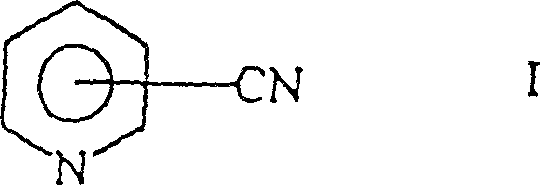
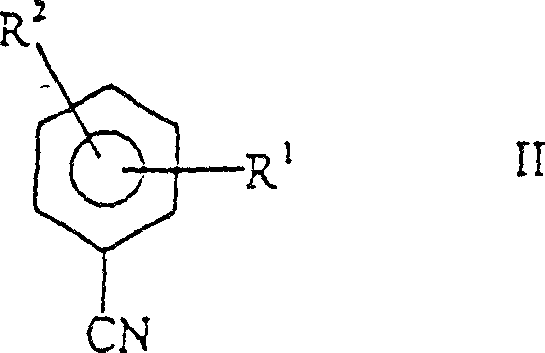
Furthermore, the substrate scope of these novel enzymes is broad, accommodating both aliphatic and aromatic nitriles. The patent specifies that the process is effective for nitriles containing 1-10 carbon atoms or aromatic systems with 4-10 carbon atoms, including substituted variants. As illustrated in the structural representations, the enzyme can tolerate various substituents on the aromatic ring, such as halogens or alkyl groups, without significant loss of activity. This versatility makes the technology applicable to a wide range of fine chemical intermediates beyond just niacinamide. The ability to process substituted benzonitriles and cyanopyridines efficiently opens up opportunities for synthesizing diverse amide derivatives required in agrochemical and pharmaceutical applications, providing a flexible platform technology for custom synthesis.
How to Synthesize Niacinamide Efficiently
The synthesis of niacinamide using this biocatalytic route involves a streamlined sequence of cultivation and bio-transformation steps designed to maximize enzyme expression and product recovery. The process begins with the aerobic cultivation of the selected microbial strain, such as Amycolatopsis NA40, in a optimized medium containing a cobalt source to ensure full metallation of the Nitrile Hydratase. Once sufficient biomass is achieved, the cells are harvested and suspended in a buffer system, where they act as whole-cell biocatalysts or are processed to obtain crude enzyme extracts. The detailed standardized synthesis steps see the guide below.
- Cultivate specific microbial strains such as Amycolatopsis NA40 (DSM 11617) or Rhodococcus GF270 in a medium containing cobalt ions as a cofactor to induce Nitrile Hydratase expression.
- Prepare the reaction mixture by suspending the harvested cells or enzyme extract in a buffered solution (pH 4.5-10) and adding the nitrile substrate, such as 3-cyanopyridine.
- Maintain the bio-transformation at optimal temperatures between 35-40°C until conversion is complete, followed by separation of the amide product via crystallization.
Commercial Advantages for Procurement and Supply Chain Teams
For procurement managers and supply chain directors, the adoption of this biotechnological process offers tangible strategic benefits that extend beyond simple technical metrics. The elimination of pigment-related purification steps significantly reduces the consumption of adsorbents and solvents, leading to substantial cost savings in downstream processing. Moreover, the high thermostability and substrate tolerance of the new strains reduce the risk of batch failures due to thermal runaway or substrate inhibition, ensuring more consistent supply continuity. The ability to operate at higher substrate concentrations means that reactors can produce more product per batch, effectively increasing asset utilization and reducing the capital expenditure required for a given production volume. These factors combine to create a more resilient and cost-efficient supply chain for critical amide intermediates.
- Cost Reduction in Manufacturing: The most immediate financial benefit arises from the simplified purification train. Since the Amycolatopsis strains do not produce the troublesome red pigments associated with older Rhodococcus varieties, the expensive and time-consuming decolorization unit operations can be entirely removed. This reduction in processing steps not only lowers utility and material costs but also shortens the overall cycle time per batch. Additionally, the higher specific activity of the enzyme means less biomass is required to achieve the same conversion rate, reducing fermentation costs and waste generation. The qualitative improvement in process efficiency translates directly into a lower cost of goods sold (COGS) for the final amide product.
- Enhanced Supply Chain Reliability: Supply chain stability is heavily dependent on the robustness of the manufacturing process. The novel strains disclosed in the patent exhibit superior tolerance to high substrate loads and maintain activity over a broader pH and temperature range. This robustness minimizes the likelihood of production delays caused by sensitive biological parameters drifting out of specification. Furthermore, the use of readily available nitrile starting materials, which are commodity chemicals, ensures that raw material sourcing remains stable and unaffected by niche supply constraints. The combination of a robust biocatalyst and common feedstocks creates a dependable supply foundation for long-term contracts.
- Scalability and Environmental Compliance: Scaling biocatalytic processes is often challenging due to oxygen transfer limitations and heat generation, but the high activity and stability of these enzymes mitigate such risks. The process operates under mild aqueous conditions, avoiding the harsh acids or bases typically used in chemical hydrolysis, which significantly reduces the burden on wastewater treatment facilities. The absence of heavy metal catalysts (other than the trace cobalt required for enzyme function, which is sequestered within the cell) aligns well with increasingly stringent environmental regulations regarding metal residues in pharmaceutical products. This green chemistry profile facilitates easier regulatory approval and supports corporate sustainability goals.
Frequently Asked Questions (FAQ)
The following questions address common technical and commercial inquiries regarding the implementation of this patented biocatalytic technology. These answers are derived directly from the experimental data and specifications provided in the patent documentation, ensuring accuracy for R&D and technical procurement teams evaluating this route. Understanding these specifics is crucial for assessing the feasibility of integrating this process into existing manufacturing lines or new product development pipelines.
Q: What are the advantages of using Amycolatopsis NA40 over Rhodococcus rhodochrous J1?
A: Amycolatopsis NA40 offers significantly higher specific activity and a lower Km value (41.7mM vs 200mM) for 3-cyanopyridine, indicating better substrate affinity. Furthermore, unlike the J1 strain which produces a red pigment requiring costly decolorization steps, NA40 produces white mycelium, simplifying downstream purification.
Q: What are the optimal reaction conditions for this enzymatic process?
A: The process operates effectively within a broad pH range of 4.5 to 10, with an optimum around pH 6.5 to 7.0. The optimal temperature for the bio-transformation is typically between 35°C and 40°C, ensuring high enzyme stability and conversion rates without thermal degradation.
Q: Can this process be scaled for industrial production of niacinamide?
A: Yes, the patent demonstrates high substrate tolerance, achieving concentrations up to 4.0M 3-cyanopyridine with a relative yield of 97.3%. The robustness of the strains against substrate inhibition and their thermostability makes them highly suitable for commercial scale-up in pharmaceutical intermediate manufacturing.
Partnering with NINGBO INNO PHARMCHEM: Your Reliable Niacinamide Supplier
At NINGBO INNO PHARMCHEM, we recognize the transformative potential of advanced biocatalysis in modern chemical manufacturing. As a leading CDMO partner, we possess extensive experience scaling diverse pathways from 100 kgs to 100 MT/annual commercial production, ensuring that innovative laboratory processes like the one described in CN1269950C can be successfully translated into industrial reality. Our facilities are equipped with rigorous QC labs and adhere to stringent purity specifications, guaranteeing that every batch of niacinamide or custom amide intermediate meets the highest global standards. We are committed to leveraging such cutting-edge technologies to deliver superior value to our partners.
We invite you to discuss how this high-efficiency biocatalytic route can optimize your supply chain and reduce manufacturing costs. Our technical team is ready to provide a Customized Cost-Saving Analysis tailored to your specific volume requirements. Please contact our technical procurement team today to request specific COA data and route feasibility assessments, and let us help you secure a competitive advantage in the global market for high-purity pharmaceutical intermediates.