
Advanced Iridium-Catalyzed Synthesis of Pseudo-C2 Symmetric Chiral Diallyl Intermediates for Commercial Scale-Up
The chemical landscape for constructing complex chiral scaffolds has been significantly advanced by the disclosure in patent CN114105822A, which introduces a robust methodology for synthesizing pseudo-C2 symmetric chiral diallyl substituted compounds. This innovation addresses a critical bottleneck in fine chemical synthesis where the introduction of multiple chiral allylic centers often leads to poor stereocontrol due to steric interference. By leveraging a specialized iridium catalytic system, this technology enables the efficient assembly of these intricate molecular architectures with exceptional enantioselectivity exceeding 95% ee and yields ranging from 55% to 98%. For R&D directors and procurement strategists in the agrochemical and pharmaceutical sectors, this represents a pivotal shift towards more reliable and high-purity intermediate sourcing. The ability to generate such complex pseudo-C2 symmetric structures in a single catalytic step drastically simplifies the synthetic route compared to traditional multi-step approaches, thereby enhancing the overall feasibility of producing high-value active ingredients.
The Limitations of Conventional Methods vs. The Novel Approach
The Limitations of Conventional Methods
Historically, the synthesis of molecules containing double chiral allyl structural units has been plagued by significant technical hurdles that impede efficient commercial production. Conventional methods often struggle with the obvious mutual interference between the two chiral allyl groups during the reaction process, leading to low reactivity and extremely difficult control of stereoselectivity. This lack of precision frequently results in complex mixtures of diastereomers and enantiomers, necessitating costly and time-consuming purification steps that erode profit margins. Furthermore, existing catalytic systems often fail to maintain high turnover numbers when faced with the steric bulk of pseudo-C2 symmetric substrates, requiring excessive catalyst loading that is economically unsustainable for large-scale manufacturing. The scarcity of efficient reports on catalytic asymmetric synthesis for these specific structural motifs highlights a gap in the market that traditional chemistry has failed to fill effectively.
The Novel Approach
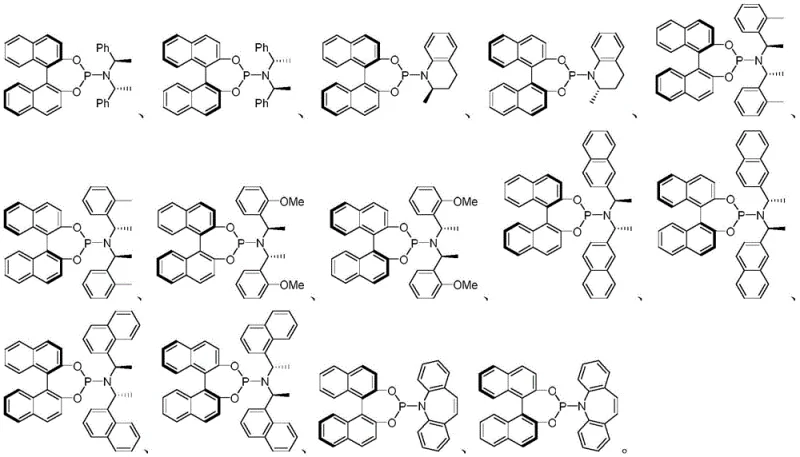
The novel approach detailed in the patent data overcomes these historical limitations through the strategic application of an iridium complex catalyst paired with specific chiral phosphoramidite ligands. This system creates a highly defined chiral environment that effectively manages the steric interactions between the reacting species, allowing for the simultaneous installation of two chiral allyl groups with remarkable precision. Unlike older methods that might require protecting group strategies or sequential additions, this one-pot catalytic transformation streamlines the workflow significantly. The reaction operates under mild conditions, typically between 0°C and 30°C, which minimizes energy consumption and reduces the risk of thermal degradation of sensitive functional groups. This breakthrough not only improves the optical purity of the final product but also enhances the overall atom economy of the process, making it a superior choice for modern green chemistry initiatives in fine chemical manufacturing.

Mechanistic Insights into Iridium-Catalyzed Asymmetric Allylic Alkylation
The core of this technological advancement lies in the sophisticated mechanistic pathway facilitated by the iridium-phosphoramidite complex. The catalytic cycle begins with the formation of an active cationic iridium species upon mixing the metal salt, such as [Ir(COD)Cl]2, with the chiral ligand L1 in the presence of an organic base. This active catalyst then coordinates with the allylic substrate, likely forming a pi-allyl iridium intermediate that is rigidly held within the chiral pocket created by the bulky binaphthyl-based ligand framework. The nucleophile, typically a stabilized carbon nucleophile like tert-butyl cyanoacetate, attacks this intermediate with high facial selectivity dictated by the ligand's stereochemistry. The unique pseudo-C2 symmetry of the ligand ensures that the transition state is energetically favored for the formation of the desired enantiomer, effectively suppressing the formation of unwanted isomers. This precise control is crucial for maintaining the high enantiomeric excess observed in the experimental data, where values consistently exceed 99% for many substrates.
Furthermore, the versatility of this mechanism is evidenced by its tolerance to a wide array of electronic and steric environments on the substrate. The catalytic system accommodates various substituents on the aryl rings of the allylic substrate, including electron-withdrawing groups like halogens and trifluoromethyl groups, as well as electron-donating groups like methoxy and methyl. This broad scope suggests that the rate-determining step and the stereodetermining step are robust enough to handle significant variations in substrate electronics without compromising selectivity. The use of bases such as cesium carbonate or organic amines facilitates the deprotonation of the nucleophile without interfering with the delicate metal-ligand coordination sphere. Understanding these mechanistic nuances allows process chemists to fine-tune reaction conditions for specific derivatives, ensuring consistent quality across different batches of production.
How to Synthesize Pseudo-C2 Symmetric Chiral Diallyl Compounds Efficiently
The practical implementation of this synthesis route is designed for operational simplicity, making it accessible for both laboratory scale optimization and pilot plant operations. The process generally involves the in situ generation of the catalyst followed by the addition of substrates under inert atmosphere protection. Detailed standardized synthetic steps for specific derivatives can be found in the guide below, which outlines the precise molar ratios and solvent choices required to replicate the high yields reported in the patent literature. By adhering to these optimized parameters, manufacturers can avoid common pitfalls associated with catalyst deactivation or substrate decomposition.
- Prepare the active iridium catalyst by reacting an iridium salt like [Ir(COD)Cl]2 with a chiral phosphoramidite ligand in an organic solvent with an organic base at 30-70°C.
- Combine the catalyst with substrate-1 (e.g., tert-butyl cyanoacetate) and substrate-2 (allylic carbonate) in a solvent like dichloromethane with a base such as cesium carbonate.
- Maintain the reaction temperature between 0-30°C under inert gas protection, monitor by TLC, and purify the final product via silica gel column chromatography to achieve >95% ee.
Commercial Advantages for Procurement and Supply Chain Teams
For procurement managers and supply chain heads, the adoption of this iridium-catalyzed technology offers tangible strategic benefits that extend beyond mere chemical elegance. The primary value proposition lies in the substantial cost reduction in agrochemical intermediate manufacturing achieved through higher efficiency and reduced waste. Because the reaction delivers high yields and exceptional optical purity directly from the reactor, the need for extensive downstream purification, such as repeated recrystallizations or preparative chiral chromatography, is significantly diminished. This reduction in processing steps translates directly into lower operational expenditures and shorter production cycles, allowing for faster time-to-market for new drug candidates or crop protection agents. Additionally, the use of commercially available ligands and standard iridium salts ensures that the supply chain for raw materials remains stable and resilient against market fluctuations.
- Cost Reduction in Manufacturing: The elimination of complex multi-step sequences in favor of a direct catalytic coupling significantly lowers the overall cost of goods sold. By avoiding the use of stoichiometric chiral auxiliaries which generate large amounts of waste, this catalytic approach aligns with sustainable manufacturing goals while improving the bottom line. The high turnover frequency of the iridium catalyst means that less precious metal is required per kilogram of product, further optimizing the cost structure. Moreover, the mild reaction conditions reduce energy costs associated with heating or cooling, contributing to a more economical production profile.
- Enhanced Supply Chain Reliability: The broad substrate scope of this methodology ensures that supply chains are not vulnerable to the shortage of a single specific starting material. Since the reaction tolerates diverse functional groups, procurement teams have the flexibility to source alternative precursors if supply disruptions occur. The robustness of the reaction conditions also means that production can be maintained consistently across different manufacturing sites without significant re-validation efforts. This reliability is critical for maintaining continuous supply of key intermediates to downstream formulation plants.
- Scalability and Environmental Compliance: The process is inherently scalable due to its simple operation and lack of hazardous reagents, facilitating the transition from gram-scale research to ton-scale commercial production. The reduction in solvent usage and waste generation supports stricter environmental compliance standards, reducing the burden on waste treatment facilities. The ability to produce high-purity compounds with minimal impurities also simplifies regulatory filings, accelerating the approval process for new products in regulated markets.
Frequently Asked Questions (FAQ)
The following questions address common technical and commercial inquiries regarding the implementation of this synthesis technology. These answers are derived from the specific technical disclosures and experimental data provided in the patent documentation, ensuring accuracy and relevance for industry professionals. Understanding these details helps stakeholders make informed decisions about integrating this chemistry into their existing portfolios.
Q: What is the primary advantage of the iridium-catalyzed method described in CN114105822A?
A: The primary advantage is the ability to construct pseudo-C2 symmetric structures with two chiral allyl groups simultaneously with high stereoselectivity (>95% ee) and yields up to 98%, overcoming the mutual interference issues common in traditional synthesis.
Q: Can this synthesis method be scaled for industrial production of agrochemical intermediates?
A: Yes, the method utilizes commercially available ligands and standard iridium salts under mild conditions (0-30°C), making it highly suitable for commercial scale-up and cost reduction in agrochemical intermediate manufacturing.
Q: What types of substrates are compatible with this catalytic system?
A: The system demonstrates broad substrate tolerance, accepting various substituted aryl groups including halogens, alkyls, and heterocycles like pyridyl and thienyl, ensuring versatility for diverse pharmaceutical and pesticide applications.
Partnering with NINGBO INNO PHARMCHEM: Your Reliable Pseudo-C2 Symmetric Chiral Diallyl Compound Supplier
As the demand for high-purity chiral intermediates continues to grow in the pharmaceutical and agrochemical sectors, partnering with an experienced CDMO becomes essential for success. NINGBO INNO PHARMCHEM possesses extensive experience scaling diverse pathways from 100 kgs to 100 MT/annual commercial production, ensuring that your project needs are met with precision and reliability. Our stringent purity specifications and rigorous QC labs guarantee that every batch of pseudo-C2 symmetric chiral diallyl compounds meets the highest international standards, minimizing risks associated with impurity profiles in final drug substances. We are committed to delivering consistent quality that supports your long-term development goals.
We invite you to contact our technical procurement team to discuss how this advanced iridium-catalyzed technology can be tailored to your specific project requirements. By requesting a Customized Cost-Saving Analysis, you can gain deeper insights into the economic benefits of switching to this more efficient synthetic route. We encourage potential partners to reach out for specific COA data and route feasibility assessments to validate the suitability of these intermediates for your next-generation products. Let us help you accelerate your development timeline with our proven expertise in complex chiral synthesis.