
Scalable Synthesis of Novel N-Acylpyrazole Roten Ethers for Advanced Insecticide Manufacturing
Scalable Synthesis of Novel N-Acylpyrazole Roten Ethers for Advanced Insecticide Manufacturing
The global agrochemical sector is constantly seeking novel molecular scaffolds that offer enhanced efficacy and environmental safety profiles. Patent CN102399230B introduces a significant advancement in this domain through the design and preparation of a new class of compounds known as N-acylpyrazole roten ethers. These molecules represent a strategic modification of the traditional rotenoid skeleton, specifically engineered to improve stability and biological activity against key agricultural pests. As a leading entity in fine chemical manufacturing, we recognize the immense potential of this technology to serve as a reliable agrochemical intermediate supplier solution for next-generation bio-rational insecticides. The core innovation lies in the specific substitution pattern at the nitrogen atom of the pyrazole ring and the etherification of the phenolic hydroxyl group, creating a robust chemical architecture that resists rapid degradation while maintaining potent toxicity against targets like the broad bean aphid.
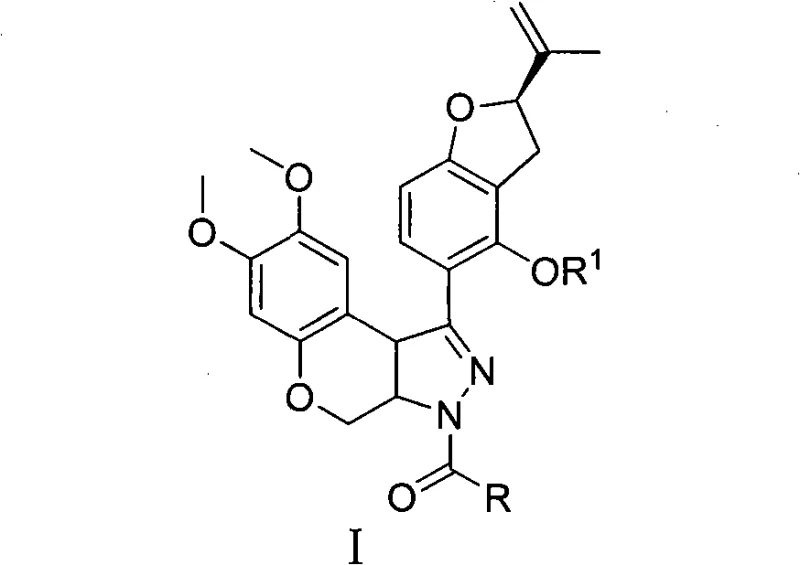
This patent disclosure provides a comprehensive roadmap for the synthesis of these high-value intermediates, detailing a versatile two-step protocol that allows for significant structural diversification. By modifying the R and R1 substituents, manufacturers can tune the physicochemical properties of the final active ingredient to optimize formulation stability and field performance. For R&D directors focused on pipeline expansion, this platform technology offers a fertile ground for developing proprietary insecticide candidates that circumvent existing resistance mechanisms. The structural novelty described in CN102399230B ensures freedom to operate in many jurisdictions, making it an attractive asset for companies looking to secure long-term supply chains for high-purity agrochemical intermediates.
The Limitations of Conventional Methods vs. The Novel Approach
The Limitations of Conventional Methods
Traditional approaches to modifying natural rotenoids often suffer from significant drawbacks related to chemical instability and limited structural diversity. Natural rotenone and its direct derivatives are prone to rapid photodegradation and hydrolysis under field conditions, which necessitates frequent re-application and increases the overall environmental load. Furthermore, conventional synthetic routes frequently rely on harsh reaction conditions or non-selective transformations that generate complex mixtures of byproducts, complicating downstream purification and driving up manufacturing costs. Many prior art methods fail to adequately protect sensitive functional groups during derivatization, leading to low overall yields and inconsistent batch quality. For procurement managers, these inefficiencies translate into volatile pricing and unreliable supply availability, as the production of unstable intermediates requires specialized handling and storage infrastructure that not all contract manufacturers possess.
The Novel Approach
The methodology outlined in CN102399230B overcomes these historical challenges through a rational design strategy that prioritizes both stability and synthetic efficiency. By introducing an acyl group at the N-position of the pyrazole ring and simultaneously etherifying the phenolic oxygen, the new compounds achieve a balanced lipophilicity and metabolic stability that outperforms earlier generations of pyrazole-rotene hybrids. This dual-modification approach effectively shields the core pharmacophore from enzymatic attack while preserving the binding affinity required for insecticidal action. From a process chemistry perspective, the route utilizes mild reaction conditions and readily available starting materials, significantly reducing the operational complexity associated with scale-up. This represents a paradigm shift in cost reduction in insecticide manufacturing, as it eliminates the need for expensive protecting group strategies and allows for streamlined isolation procedures that maximize throughput.
Mechanistic Insights into Two-Step Functionalization Strategy
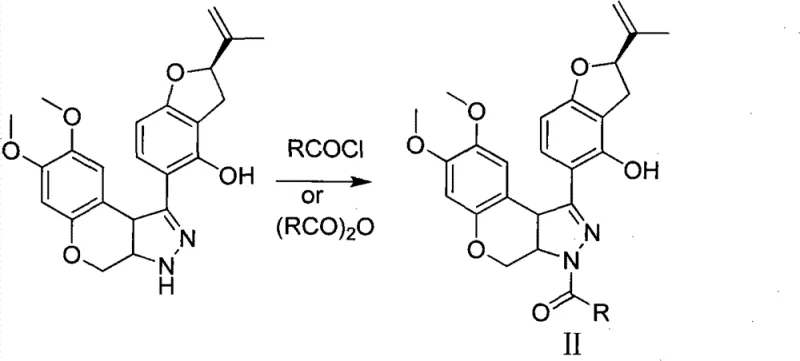
The synthesis of N-acylpyrazole roten ethers proceeds via a logical and highly controllable two-step sequence that ensures precise regioselectivity. The first critical transformation involves the acylation of the precursor (2R)-5-[7,8-dimethoxy-3,3a,4,9b-tetrahydrobenzopyrano[3,4-c]pyrazol-1-yl]-2-(propen-2-yl)-2,3-dihydrobenzofuran-4-ol. In this step, the nucleophilic nitrogen atom of the pyrazole ring attacks the electrophilic carbonyl carbon of an acid chloride or acid anhydride. This reaction is typically conducted in a 1:1 molar ratio to prevent over-acylation or side reactions at other nucleophilic sites within the molecule. The choice of acylating agent directly dictates the nature of the 'R' group in the final product, allowing chemists to introduce everything from simple acetyl groups to more complex branched alkyl chains. This modularity is crucial for structure-activity relationship (SAR) studies, enabling rapid iteration of analogues to identify the most potent candidates for commercial development.
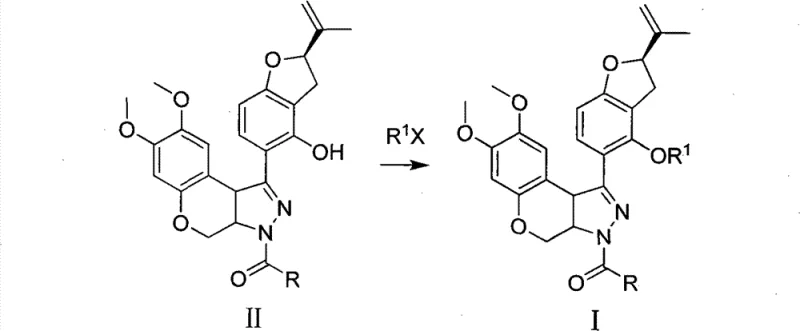
Following the successful formation of the N-acyl intermediate, the second stage focuses on the alkylation of the phenolic hydroxyl group to generate the final ether linkage. This transformation is achieved by reacting the N-acylpyrazole rotenol with a variety of alkylating agents in the presence of a base and often a phase transfer catalyst. The mechanism involves the deprotonation of the phenol to form a phenoxide ion, which then undergoes an SN2 nucleophilic substitution with the alkyl halide or sulfate ester. This step is particularly sensitive to steric hindrance and the leaving group ability of the alkylating agent, which explains the variance in yields observed across different examples in the patent. For instance, primary alkyl halides generally react more efficiently than bulky secondary halides. Understanding these mechanistic nuances is vital for process engineers aiming to optimize reaction parameters such as temperature, solvent polarity, and stoichiometry to achieve consistent commercial scale-up of complex agrochemical intermediates.
How to Synthesize N-Acylpyrazole Roten Ether Efficiently
The practical execution of this synthesis requires careful attention to reaction monitoring and workup procedures to ensure high purity standards. The process begins with the dissolution of the pyrazole-rotene precursor in a suitable organic solvent, followed by the controlled addition of the acylating agent under inert atmosphere to minimize moisture interference. Once the N-acylation is complete, the intermediate can often be carried forward without extensive purification, although isolation may be preferred for quality control purposes. The subsequent alkylation step demands precise temperature control, typically ranging from ambient to moderately elevated temperatures (e.g., 40°C to 60°C), to drive the reaction to completion without promoting decomposition of the sensitive rotenoid core. Detailed standard operating procedures for each specific analogue are essential for maintaining batch-to-batch consistency.
- React (2R)-5-[7,8-dimethoxy-3,3a,4,9b-tetrahydrobenzopyrano[3,4-c]pyrazol-1-yl]-2-(propen-2-yl)-2,3-dihydrobenzofuran-4-ol with acid chloride or acid anhydride in a 1: 1 molar ratio to obtain N-acylpyrazole rotenol.
- React the resulting N-acylpyrazole rotenol intermediate with a suitable alkylating agent (such as dimethyl sulfate, bromoethane, or benzyl chloride) in the presence of a base and phase transfer catalyst to yield the final N-acylpyrazole roten ether.
Commercial Advantages for Procurement and Supply Chain Teams
For procurement managers and supply chain heads, the adoption of this synthetic route offers tangible benefits that extend beyond mere chemical novelty. The primary advantage lies in the substantial simplification of the raw material supply chain. The reagents required for this synthesis, including various acid chlorides, acid anhydrides, and common alkyl halides, are commodity chemicals produced on a massive global scale. This abundance ensures that manufacturers are not dependent on single-source suppliers for exotic starting materials, thereby reducing lead time for high-purity agrochemical intermediates and mitigating the risk of supply disruptions. Furthermore, the use of standard solvents like dichloromethane, DMF, and acetone aligns with existing infrastructure in most fine chemical plants, eliminating the need for costly capital investment in specialized equipment.
- Cost Reduction in Manufacturing: The economic viability of this process is driven by its high atom economy and the elimination of unnecessary synthetic steps. By avoiding complex multi-step protection and deprotection sequences common in older methodologies, the overall production cost is significantly lowered. The ability to use stoichiometric amounts of reagents (1:1 ratio) minimizes waste generation and reduces the burden on waste treatment facilities. Additionally, the moderate reaction conditions reduce energy consumption associated with heating or cooling, contributing to a lower carbon footprint and reduced utility costs. These factors combine to create a highly competitive cost structure that allows for aggressive pricing strategies in the final insecticide market.
- Enhanced Supply Chain Reliability: The robustness of the chemical transformations described in CN102399230B translates directly into supply chain resilience. The reactions are tolerant to minor variations in input quality, meaning that technical grade starting materials can often be used without compromising the final product specification. This flexibility allows manufacturers to source materials from a broader vendor base, fostering competition and driving down input costs. Moreover, the stability of the intermediate N-acylpyrazole rotenols allows for inventory buffering; these intermediates can be stockpiled during periods of low demand and rapidly converted to the final ether products when market needs surge, ensuring continuous availability for downstream formulators.
- Scalability and Environmental Compliance: Scaling this process from laboratory to industrial production is straightforward due to the absence of hazardous reagents like heavy metal catalysts or pyrophoric organometallics. The byproducts generated, primarily inorganic salts and simple organic acids, are easily managed through standard aqueous workups and wastewater treatment protocols. This alignment with green chemistry principles facilitates regulatory approval and simplifies the permitting process for new manufacturing lines. The high purity achievable through simple recrystallization or washing steps reduces the need for energy-intensive chromatographic purifications, further enhancing the environmental profile and operational efficiency of the manufacturing site.
Frequently Asked Questions (FAQ)
The following questions address common technical and commercial inquiries regarding the production and application of N-acylpyrazole roten ethers. These insights are derived directly from the experimental data and claims presented in the patent literature, providing a factual basis for decision-making. Understanding these details is crucial for stakeholders evaluating the feasibility of integrating this technology into their existing product portfolios or supply networks.
Q: What are the primary advantages of N-acylpyrazole roten ethers over traditional rotenone derivatives?
A: According to patent CN102399230B, these novel compounds exhibit superior insecticidal activity and enhanced chemical stability compared to prior art derivatives, addressing the degradation issues often found in natural rotenoids.
Q: What is the typical yield range for the alkylation step in this synthesis?
A: Experimental data within the patent indicates variable yields depending on the specific alkylating agent used, ranging from approximately 31% for ethyl ethers to over 72% for 2-methylallyl ethers, demonstrating the flexibility of the route.
Q: Can this synthesis be scaled for commercial insecticide production?
A: Yes, the process utilizes standard organic reactions (acylation and alkylation) with commercially available reagents like acid chlorides and alkyl halides, making it highly amenable to kilogram-to-ton scale manufacturing without requiring exotic catalysts.
Partnering with NINGBO INNO PHARMCHEM: Your Reliable N-Acylpyrazole Roten Ether Supplier
At NINGBO INNO PHARMCHEM, we possess the technical expertise and infrastructure necessary to bring the innovations described in CN102399230B from the laboratory bench to full-scale commercial reality. Our team of seasoned process chemists has extensive experience scaling diverse pathways from 100 kgs to 100 MT/annual commercial production, ensuring that your supply needs are met with precision and reliability. We understand that the transition from pilot plant to industrial reactor involves unique challenges, which is why our stringent purity specifications and rigorous QC labs are designed to detect and eliminate even trace impurities that could affect the efficacy of the final insecticide. Our commitment to quality assurance guarantees that every batch of N-acylpyrazole roten ether meets the highest international standards for agrochemical intermediates.
We invite you to collaborate with us to explore the full potential of this novel chemical class. By leveraging our custom synthesis capabilities, you can accelerate your R&D timeline and secure a competitive edge in the marketplace. Please contact our technical procurement team today to request a Customized Cost-Saving Analysis tailored to your specific volume requirements. We are ready to provide specific COA data and route feasibility assessments to demonstrate how our optimized manufacturing processes can deliver superior value and performance for your insecticide formulations.