
Revolutionizing Cephalosporin Intermediate Production with Graphene-Supported Copper Catalysis
The pharmaceutical industry is constantly seeking more efficient and environmentally benign pathways for synthesizing critical cephalosporin intermediates. Patent CN112707919B presents a groundbreaking advancement in this domain by introducing a method for synthesizing 3-decarbamoyl cefuroxime acid using a novel graphene-supported copper catalyst. This technology addresses long-standing challenges associated with traditional amidation processes, specifically the instability of acyl chloride intermediates and the generation of hazardous phosphorus waste. By leveraging the unique synergistic effects between graphene oxide and copper nanoparticles, this process achieves high yields and exceptional stereochemical control under remarkably mild conditions. For global manufacturers, this represents a significant leap forward in process intensification, offering a robust alternative to legacy synthetic routes that rely on harsh reagents and cryogenic temperatures.
The Limitations of Conventional Methods vs. The Novel Approach
The Limitations of Conventional Methods
Traditional synthesis routes for 3-decarbamoyl cefuroxime acid typically involve the preparation of N-methoxyimino furan acetyl chloride (SMIF-Cl) as a key amidation reagent. This conventional approach is fraught with significant operational and safety hazards, primarily due to the requirement for aggressive acylating agents such as phosphorus oxychloride or phosphorus pentachloride. These reagents not only generate substantial amounts of solid phosphate micro-waste and wastewater but also create an acidic environment that promotes the isomerization of the Z-methoxyimino group into unwanted E-isomer impurities. Furthermore, SMIF-Cl is highly unstable at room temperature, necessitating complex synthesis steps and storage under strictly controlled low-temperature conditions ranging from -20°C to -40°C, which drastically increases energy consumption and operational complexity.
The Novel Approach
In stark contrast, the novel methodology disclosed in the patent utilizes furan ammonium salt directly as the starting material, bypassing the need for unstable acyl chloride intermediates entirely. Under the catalytic action of the graphene-supported copper system, the amidation reaction proceeds efficiently at mild temperatures between 10°C and 30°C, eliminating the energy-intensive cryogenic requirements of previous methods. This direct amidation strategy not only simplifies the synthetic sequence by removing multiple protection and activation steps but also inherently suppresses the formation of trans-isomeric impurities. The result is a streamlined process that delivers the target intermediate with superior purity profiles while avoiding the use of hazardous phosphorus-based reagents, thereby aligning perfectly with modern green chemistry principles and regulatory expectations for cleaner manufacturing.
Mechanistic Insights into Graphene-Supported Copper Catalysis
The efficacy of this synthesis relies on the sophisticated interplay between the graphene support and the dispersed copper nanoparticles. The graphene oxide component provides an acidic microenvironment through its abundant surface carboxyl groups, which facilitates the transformation of the furan ammonium salt into a reactive furan carboxylic acid molecular structure directly on the catalyst surface. Simultaneously, the copper nanoparticles act as the primary active sites for catalyzing the nucleophilic attack of the amino group at the 7-position of 7-aminocephalosporanic acid. This dual-function mechanism ensures that the carbon-nitrogen bond construction occurs with high specificity and rate, driving the reaction to completion without the need for external activating agents that typically compromise stereochemical integrity.
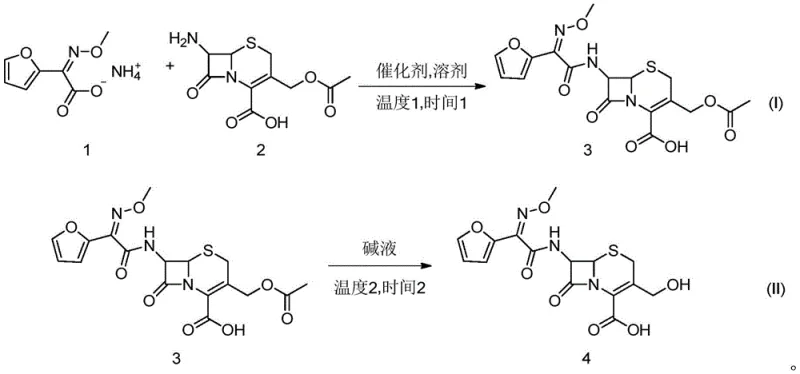
Controlling impurity profiles is critical for downstream antibiotic production, and this catalytic system excels in maintaining the geometric configuration of the methoxyimino side chain. The mild reaction conditions prevent the acid-catalyzed isomerization that plagues traditional methods, keeping the content of trans-isomeric impurities below 0.05 percent. Additionally, the heterogeneous nature of the catalyst allows for precise control over the reaction kinetics, minimizing side reactions that could lead to ring opening or degradation of the beta-lactam core. Following the amidation, the subsequent hydrolysis step removes the acetyl group at the 3-position efficiently, and the catalyst can be recovered via simple filtration, demonstrating the robustness of the material design in maintaining activity over multiple cycles without leaching significant metal residues into the product.
How to Synthesize 3-Decarbamoyl Cefuroxime Acid Efficiently
The implementation of this catalytic route offers a straightforward protocol for laboratory and pilot-scale operations, focusing on simplicity and reproducibility. The process begins with the preparation of the reaction mixture by combining the furan ammonium salt and the graphene-supported copper catalyst in a suitable organic solvent such as tetrahydrofuran or dimethylformamide. Once the catalyst is dispersed, a solution of 7-aminocephalosporanic acid in aqueous sodium hydroxide is introduced to initiate the amidation phase at ambient or slightly elevated temperatures. Detailed standardized synthesis steps including specific molar ratios, solvent volumes, and crystallization parameters are provided in the guide below to ensure consistent high-quality output.
- Prepare the first mixture by stirring furan ammonium salt and graphene-supported copper catalyst in a solvent like THF or DMF.
- Dissolve 7-aminocephalosporanic acid in sodium hydroxide solution to form the second mixture, then add it to the first mixture for amidation at 10-30°C.
- Add alkali liquor for hydrolysis at -20 to -10°C, filter to recover the catalyst, and crystallize the filtrate with hydrochloric acid.
Commercial Advantages for Procurement and Supply Chain Teams
For procurement managers and supply chain directors, the adoption of this graphene-copper catalytic technology translates into tangible strategic benefits regarding cost structure and operational reliability. By eliminating the dependency on volatile and hazardous phosphorus reagents, manufacturers can significantly reduce the costs associated with specialized waste treatment and regulatory compliance for hazardous materials handling. The ability to operate at near-ambient temperatures rather than deep cryogenic conditions leads to substantial energy savings and reduces the burden on refrigeration infrastructure, allowing for more flexible production scheduling and lower utility overheads across the manufacturing facility.
- Cost Reduction in Manufacturing: The removal of expensive and dangerous acylating reagents like phosphorus pentachloride directly lowers the raw material bill of materials while simultaneously reducing the cost of waste disposal. The high recovery rate of the graphene-supported copper catalyst means that the effective consumption of the catalytic material per kilogram of product is minimal, further driving down variable production costs. Additionally, the simplified process flow reduces labor hours and equipment occupancy time, resulting in a more economically efficient overall manufacturing cycle compared to traditional multi-step syntheses.
- Enhanced Supply Chain Reliability: Utilizing stable furan ammonium salts instead of unstable acyl chlorides mitigates the risk of raw material degradation during storage and transport, ensuring a more consistent supply of quality inputs. The robustness of the catalyst and the tolerance of the reaction conditions mean that production batches are less susceptible to failure due to minor fluctuations in temperature or mixing, leading to higher batch success rates and more predictable delivery timelines for downstream API manufacturers who rely on this critical intermediate.
- Scalability and Environmental Compliance: The heterogeneous nature of the catalyst facilitates easy separation via filtration, a unit operation that scales linearly and reliably from pilot plants to multi-ton commercial reactors without complex engineering modifications. The drastic reduction in phosphorus-containing waste streams simplifies effluent treatment processes, making it easier for facilities to meet increasingly stringent environmental discharge regulations and maintain their social license to operate in regulated markets without the need for expensive retrofits to waste management systems.
Frequently Asked Questions (FAQ)
The following questions address common technical and commercial inquiries regarding the implementation of this patented synthesis method. These answers are derived directly from the experimental data and beneficial effects described in the patent documentation, providing clarity on performance metrics and operational parameters. Understanding these details is essential for technical teams evaluating the feasibility of integrating this catalytic system into existing production lines for cephalosporin intermediates.
Q: How does the graphene-supported copper catalyst improve product purity?
A: The catalyst creates an acidic microenvironment that stabilizes the Z-methoxyimino group, preventing isomerization into trans-isomers and ensuring purity over 99%.
Q: What are the environmental benefits of this synthesis method?
A: This method eliminates the need for phosphorus oxychloride or phosphorus pentachloride, significantly reducing hazardous phosphate waste and wastewater generation.
Q: Is the catalyst reusable in industrial applications?
A: Yes, the heterogeneous nature of the graphene-supported copper catalyst allows for simple filtration and washing, achieving recovery rates exceeding 99%.
Partnering with NINGBO INNO PHARMCHEM: Your Reliable 3-Decarbamoyl Cefuroxime Acid Supplier
At NINGBO INNO PHARMCHEM, we recognize the transformative potential of advanced catalytic technologies like the graphene-supported copper system in optimizing pharmaceutical intermediate production. As a dedicated CDMO partner, we possess extensive experience scaling diverse pathways from 100 kgs to 100 MT/annual commercial production, ensuring that innovative laboratory methods are successfully translated into robust industrial processes. Our commitment to quality is underpinned by stringent purity specifications and rigorous QC labs that verify every batch meets the highest standards for stereochemical purity and residual metal content, guaranteeing a reliable supply for your antibiotic synthesis needs.
We invite you to collaborate with us to leverage these technological advancements for your supply chain. Our technical team is prepared to provide a Customized Cost-Saving Analysis tailored to your specific volume requirements, demonstrating how this greener synthesis route can improve your margins. Please contact our technical procurement team today to request specific COA data and route feasibility assessments, and let us help you secure a sustainable and cost-effective source for high-purity 3-decarbamoyl cefuroxime acid.