
Advanced Biocatalytic Synthesis of (R)-1-(4-Trifluoromethylphenyl) Ethanol for Commercial API Production
Advanced Biocatalytic Synthesis of (R)-1-(4-Trifluoromethylphenyl) Ethanol for Commercial API Production
The pharmaceutical industry's relentless pursuit of efficient, sustainable, and cost-effective synthetic routes for active pharmaceutical ingredients (APIs) has brought biocatalysis to the forefront of process chemistry. Patent CN113584090A introduces a groundbreaking biological preparation method for synthesizing (R)-1-(4-trifluoromethylphenyl) ethanol, a pivotal chiral intermediate in the manufacture of the chemokine CCR5 antagonist AD101. This compound serves as a critical building block for next-generation anti-HIV therapeutics and DP1 receptor antagonists used in treating niacin-induced flushing. The disclosed technology leverages the resting cells of Geotrichum silvicola ZJPH1811 to catalyze the asymmetric reduction of 1-(4-trifluoromethylphenyl) ethanone. By shifting away from traditional chemical synthesis, this innovation offers a pathway that is not only environmentally benign but also operationally simpler, addressing the growing demand for reliable pharmaceutical intermediate suppliers who can deliver high-purity materials with a reduced carbon footprint.
The Limitations of Conventional Methods vs. The Novel Approach
The Limitations of Conventional Methods
Historically, the synthesis of optically pure (R)-1-(4-trifluoromethylphenyl) ethanol has relied heavily on chemical asymmetric reduction or isolated enzyme systems, both of which present significant hurdles for commercial scale-up. Traditional chemical routes often employ chiral catalysts such as oxazaborolidine in conjunction with hazardous reducing agents like borane-dimethyl sulfide (BH3·Me2S). These reagents are not only prohibitively expensive but also pose severe safety risks due to their pyrophoric nature and the generation of toxic boron-containing waste streams that require complex disposal protocols. Furthermore, alternative biological approaches utilizing free enzymes, such as the carbonyl reductase ChKRED20, necessitate intricate enzyme separation and purification processes. These methods often require the continuous addition of expensive cofactors like NADPH, driving up the overall cost of goods sold (COGS) and complicating the manufacturing workflow, thereby limiting their viability for cost reduction in API manufacturing.
The Novel Approach
In stark contrast, the novel approach detailed in the patent utilizes whole-cell biocatalysis with Geotrichum silvicola ZJPH1811, effectively bypassing the need for enzyme purification and external cofactor supplementation. This method employs microbial resting cells that naturally contain the necessary reductase enzymes and cofactor regeneration systems within their cellular machinery. The process operates under mild reaction conditions, typically between 25°C and 50°C, in a phosphate buffer system, eliminating the need for extreme temperatures or pressures associated with chemical hydrogenation. By using the microorganism itself as the catalyst, the process drastically simplifies the operational steps, reduces solvent usage, and minimizes waste generation. This shift represents a paradigm change in the commercial scale-up of complex pharmaceutical intermediates, offering a robust platform that aligns with green chemistry principles while maintaining high productivity and selectivity.
Mechanistic Insights into Biocatalytic Ketone Reduction
The core of this technological advancement lies in the stereoselective reduction of the prochiral ketone substrate to the corresponding chiral alcohol. The resting cells of Geotrichum silvicola ZJPH1811 express specific carbonyl reductases that facilitate the hydride transfer from the cofactor NADPH to the carbonyl carbon of 1-(4-trifluoromethylphenyl) ethanone. Crucially, the inclusion of a co-substrate, such as L-lysine, glucose, or glycerol, plays a vital role in the in situ regeneration of the oxidized cofactor NADP+ back to NADPH. This internal recycling mechanism ensures that the reaction proceeds to completion without the need for stoichiometric amounts of expensive external cofactors. The enzymatic active site imposes strict steric constraints, favoring the formation of the (R)-enantiomer over the (S)-enantiomer, which is essential for the biological activity of the downstream CCR5 antagonist.
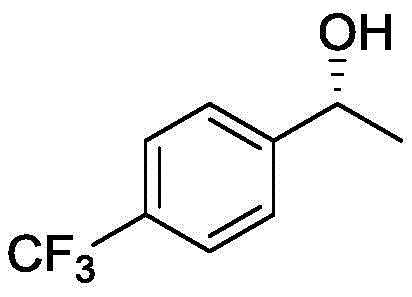
Optimization of the reaction parameters reveals that the choice of co-substrate significantly influences the enantiomeric excess (e.e.) of the final product. While the baseline biocatalytic reduction without a co-substrate yields an e.e. value of approximately 74.6%, the strategic addition of L-lysine as an auxiliary substrate elevates the optical purity to an impressive 98.0%. This enhancement suggests that L-lysine not only aids in cofactor regeneration but may also stabilize the enzyme conformation or modulate the cellular environment to favor the desired stereoisomer. Understanding these mechanistic nuances allows process chemists to fine-tune the fermentation and biotransformation conditions, ensuring consistent quality and high-purity pharmaceutical intermediate output that meets stringent regulatory specifications for chirality.
How to Synthesize (R)-1-(4-Trifluoromethylphenyl) Ethanol Efficiently
The synthesis protocol outlined in the patent provides a clear roadmap for implementing this biocatalytic process in a GMP-compliant facility. The procedure begins with the activation and fermentation of the Geotrichum silvicola strain to generate sufficient wet biomass, followed by the biotransformation step where the substrate is introduced to the cell suspension. The integration of co-substrate feeding strategies and precise pH control during the conversion phase is critical for maximizing yield and selectivity. For a comprehensive understanding of the specific operational parameters, including media composition and incubation times, please refer to the standardized synthesis steps provided below.
- Cultivate Geotrichum silvicola ZJPH1811 in optimized fermentation media containing lactose and ammonium sulfate to generate wet biomass.
- Suspend wet cells in phosphate buffer (pH 6.0-8.0) with 1-(4-trifluoromethylphenyl) ethanone substrate and L-lysine co-substrate.
- Incubate at 30-40°C for 24 hours, followed by ethyl acetate extraction and silica gel chromatography to isolate the target (R)-alcohol.
Commercial Advantages for Procurement and Supply Chain Teams
For procurement managers and supply chain directors, the transition to this biocatalytic platform offers tangible strategic benefits beyond mere technical feasibility. The elimination of hazardous chemical reagents and the simplification of the downstream processing workflow translate directly into substantial cost savings and risk mitigation. By adopting a whole-cell system, manufacturers can avoid the capital expenditure associated with specialized equipment for handling pyrophoric materials and the ongoing costs of waste treatment for heavy metal or boron residues. This process intensification allows for a more streamlined supply chain, reducing the dependency on volatile global markets for specialty chemical catalysts and enhancing the overall resilience of the production network against disruptions.
- Cost Reduction in Manufacturing: The economic advantage of this method is primarily driven by the replacement of expensive chiral chemical catalysts and stoichiometric reducing agents with inexpensive, renewable microbial biomass. The ability to use crude wet cells directly without enzyme purification removes a significant unit operation from the manufacturing process, thereby lowering energy consumption and labor costs. Furthermore, the high atom economy of the biocatalytic reduction minimizes raw material waste, contributing to a leaner cost structure that supports competitive pricing for the final API intermediate without compromising on quality standards.
- Enhanced Supply Chain Reliability: Utilizing a fermentation-based production model ensures a consistent and scalable supply of the catalyst, as the microbial strain can be preserved and propagated indefinitely. Unlike chemical catalysts which may face supply bottlenecks or batch-to-batch variability, the biological catalyst offers remarkable stability and reproducibility. This reliability is crucial for long-term supply agreements, enabling partners to secure a steady flow of high-purity intermediates. The robustness of the strain under various fermentation conditions further guarantees that production timelines can be met consistently, reducing lead time for high-purity pharmaceutical intermediates.
- Scalability and Environmental Compliance: The process is inherently designed for scalability, moving seamlessly from laboratory shake flasks to industrial fermenters without significant re-optimization. The use of aqueous buffers and mild temperatures aligns perfectly with modern environmental, health, and safety (EHS) regulations, significantly reducing the facility's environmental footprint. This compliance not only avoids potential regulatory fines but also enhances the corporate sustainability profile, a key metric for modern pharmaceutical procurement. The simplified work-up involving ethyl acetate extraction and standard chromatography facilitates easy scale-up, ensuring that commercial volumes can be achieved efficiently.
Frequently Asked Questions (FAQ)
The following questions address common technical and commercial inquiries regarding the implementation of this biocatalytic technology. These insights are derived directly from the experimental data and beneficial effects reported in the patent documentation, providing clarity on the process capabilities and limitations. Understanding these details is essential for technical teams evaluating the feasibility of integrating this route into their existing manufacturing portfolios.
Q: What is the enantiomeric excess (e.e.) achievable with this biocatalytic method?
A: By optimizing the co-substrate system, specifically using L-lysine, the process achieves an enantiomeric excess (e.e.) value of up to 98.0%, ensuring high optical purity required for API synthesis.
Q: How does this biological method compare to traditional chemical reduction?
A: Unlike chemical methods requiring expensive chiral catalysts like oxazaborolidine and hazardous boron reagents, this whole-cell biocatalysis operates under mild aqueous conditions, significantly reducing environmental impact and safety risks.
Q: Is the Geotrichum silvicola strain stable for large-scale fermentation?
A: Yes, the strain ZJPH1811 demonstrates robust performance in fermentation, allowing for the production of wet biomass that can be used directly as resting cells, simplifying the supply chain for bulk manufacturing.
Partnering with NINGBO INNO PHARMCHEM: Your Reliable (R)-1-(4-Trifluoromethylphenyl) Ethanol Supplier
At NINGBO INNO PHARMCHEM, we recognize the critical importance of securing a dependable source for complex chiral intermediates like (R)-1-(4-trifluoromethylphenyl) ethanol. As a leading CDMO partner, we possess extensive experience scaling diverse pathways from 100 kgs to 100 MT/annual commercial production, ensuring that your project needs are met with precision and speed. Our state-of-the-art facilities are equipped with rigorous QC labs capable of verifying stringent purity specifications, including chiral HPLC analysis to guarantee the optical integrity of every batch. We are committed to delivering solutions that bridge the gap between innovative patent technologies and commercial reality, providing you with a competitive edge in the global marketplace.
We invite you to engage with our technical procurement team to discuss how this advanced biocatalytic route can be tailored to your specific project requirements. By requesting a Customized Cost-Saving Analysis, you can gain deeper insights into the potential economic benefits of switching to this greener, more efficient synthesis method. We encourage you to contact us today to obtain specific COA data and route feasibility assessments, allowing us to demonstrate our capability as your trusted partner in the development and supply of high-value pharmaceutical intermediates.