
Advanced Photo-Catalytic Bromination Strategy for High-Purity Trifloxystrobin Manufacturing
Introduction to Next-Generation Trifloxystrobin Synthesis
The global demand for high-efficiency, broad-spectrum fungicides has placed Trifloxystrobin (CAS 141517-21-7) at the forefront of modern agrochemical research. As a strobilurin derivative, it offers exceptional protective and curative activity against a wide range of fungal pathogens, including powdery mildew and rust, while maintaining a favorable environmental profile due to its rapid degradation in soil and water. However, the industrial realization of this potent active ingredient has historically been hindered by the complexities and hazards associated with synthesizing its critical intermediates. Patent CN102659623A introduces a transformative approach to this challenge, detailing a novel synthetic methodology that prioritizes safety, economic efficiency, and environmental sustainability. This technical insight report analyzes the breakthrough mechanisms within this patent, providing R&D directors and supply chain leaders with a clear understanding of how this technology reshapes the manufacturing landscape for high-purity agrochemical intermediates.
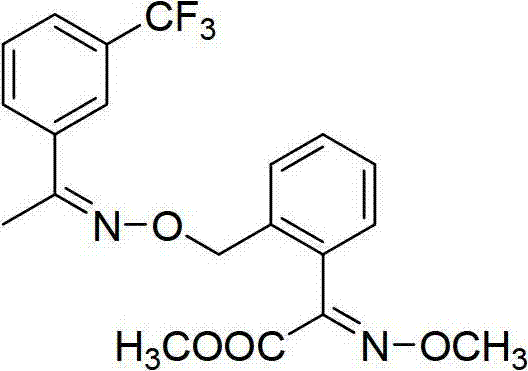
The core innovation lies in the replacement of dangerous peroxidation reagents with a controlled photo-catalytic bromination system. By leveraging common fluorescent lighting augmented with specific fluorescent powders, the process achieves a highly efficient radical substitution that was previously difficult to control. This shift not only mitigates the severe safety risks of explosion and combustion inherent in older methods but also resolves the critical issue of wastewater treatment, reducing bromine-containing effluent from 18 tons per ton of product to effectively zero through solvent recycling. For procurement managers seeking a reliable agrochemical intermediate supplier, understanding this transition from hazardous batch processes to continuous, light-driven chemistry is essential for evaluating long-term supply stability and cost structures.
The Limitations of Conventional Methods vs. The Novel Approach
The Limitations of Conventional Methods
Historically, the synthesis of the key intermediate, (E)-2-(2-bromomethylphenyl)-2-methoxyiminoacetic acid methyl ester, relied heavily on peroxidation reagents to catalyze the bromination process. These conventional methods suffered from catastrophic drawbacks that rendered them increasingly obsolete in modern regulatory environments. Firstly, the reaction often proceeded incompletely, resulting in crude products with low purity that were notoriously difficult to purify using standard industrial techniques. The chemical instability of the intermediates produced via peroxidation meant they were prone to decomposition under heat, friction, or impact, posing a constant threat of fire or explosion during handling and storage. Furthermore, the environmental burden was immense; for every single ton of product manufactured, approximately 18 tons of bromine-laden wastewater were generated, creating a massive disposal challenge and significant ecological liability. These factors combined to create a production bottleneck where safety concerns and waste treatment costs severely limited the commercial scale-up of complex agrochemical intermediates.
The Novel Approach
In stark contrast, the methodology described in CN102659623A utilizes a sophisticated yet operationally simple photo-bromination strategy. By employing liquid bromine in conjunction with a dual-light source system comprising fluorescent lamps and auxiliary fluorescent powders, the reaction achieves a conversion rate of up to 98% with product purity consistently above 95%. The use of an organic solvent and water biphasic system, specifically utilizing solvents like carbon tetrachloride or dichloromethane mixed with water, facilitates effective mass transfer while allowing for easy separation and recycling. This approach eliminates the need for unstable peroxides entirely, thereby removing the risk of explosive decomposition. Moreover, the post-treatment process is streamlined; simple washing with saturated sodium bicarbonate and brine, followed by drying and solvent recovery, yields the solid intermediate directly. This drastic simplification of the workflow translates to cost reduction in agrochemical manufacturing by minimizing unit operations and maximizing throughput without compromising on safety or quality standards.
Mechanistic Insights into Photo-Catalyzed Radical Bromination
The success of this synthesis hinges on the precise manipulation of photochemical energy to drive the radical bromination of the methyl group on the aromatic ring. The mechanism initiates when the fluorescent lamp, typically a T8 low-pressure mercury vapor arc discharge lamp with a power range of 65W to 85W, emits ultraviolet radiation. This UV energy is absorbed by the fluorescent powder coating—selected from compounds such as anthracene, phenanthrene, or coumarin derivatives—which then re-emits the energy as visible light in the 270-800nm wavelength range. This specific spectral output is critical for efficiently homolyzing the bromine-bromine bond in liquid bromine to generate bromine radicals. These radicals then abstract a hydrogen atom from the benzylic methyl group of the starting material, (E)-2-(2-methylphenyl)-2-methoxyiminoacetic acid methyl ester, creating a stable benzylic radical that rapidly reacts with another bromine molecule to form the desired bromomethyl product. The addition of sodium acetate acts as an acid scavenger, neutralizing the HBr byproduct and driving the equilibrium forward, ensuring high conversion rates.

Controlling impurities, particularly dibrominated side products, is a major focus of this mechanistic design. In traditional thermal or uncontrolled photo-reactions, over-bromination is a common failure mode. However, by carefully regulating the dropping rate of liquid bromine (specified as 1 drop every 5 seconds) and strictly controlling the irradiation time (20 minutes initial reaction followed by 30 minutes with fluorescent powder assistance), the process kinetically favors mono-bromination. The presence of the water phase in the solvent system also plays a subtle role in moderating the reaction temperature and solvating ionic byproducts, further suppressing side reactions. For R&D teams, this level of control demonstrates that reducing lead time for high-purity agrochemical intermediates is achievable not just through faster reactors, but through smarter, wavelength-specific catalysis that inherently selects for the desired product pathway, minimizing the need for extensive downstream purification.
How to Synthesize (E)-2-(2-bromomethylphenyl)-2-methoxyiminoacetic Acid Methyl Ester Efficiently
The practical execution of this synthesis requires careful attention to the sequential addition of reagents and the management of the light source to ensure reproducibility at scale. The process begins with the complete dissolution of the starting ester in the organic-aqueous solvent mixture, followed by the addition of sodium acetate to buffer the system. Once the solution is homogeneous, liquid bromine is introduced dropwise under constant stirring and illumination. The critical phase involves the timed addition of the fluorescent powder after the initial bromine addition, which boosts the photon flux density exactly when the concentration of radicals needs to be maintained for completion. Following the reaction, the workup involves standard aqueous washes to remove inorganic salts and acid residues, followed by drying and solvent evaporation. The resulting solid intermediate is then ready for the final condensation step with m-fluorotrimethylacetophenone oxime.
- Dissolve (E)-2-(2-methylphenyl)-2-methoxyiminoacetic acid methyl ester in an organic solvent/water mixture with sodium acetate.
- Add liquid bromine dropwise under fluorescent light irradiation with fluorescent powder assistance to generate the brominated intermediate.
- React the isolated intermediate with m-fluorotrimethylacetophenone oxime in DMF using sodium hydride to yield the final Trifloxystrobin product.
Commercial Advantages for Procurement and Supply Chain Teams
For procurement managers and supply chain heads, the transition to this photo-bromination technology offers profound strategic advantages beyond mere technical novelty. The elimination of hazardous peroxidation reagents fundamentally alters the risk profile of the manufacturing site, reducing insurance premiums and regulatory compliance burdens associated with storing and handling explosive materials. This safety enhancement directly contributes to supply continuity, as facilities are less likely to face shutdowns due to safety audits or incidents. Furthermore, the ability to recycle solvents such as carbon tetrachloride or dichloromethane creates a closed-loop system that significantly lowers raw material consumption costs. By converting a linear, waste-generating process into a circular, efficient one, manufacturers can achieve substantial cost savings that can be passed down the supply chain, enhancing competitiveness in the global agrochemical market.
- Cost Reduction in Manufacturing: The economic benefits of this process are driven by the removal of expensive and dangerous catalysts and the drastic reduction in waste disposal fees. Traditional methods incurred heavy costs related to treating 18 tons of wastewater per ton of product; this new method reduces that volume to near zero, effectively eliminating a major operational expense. Additionally, the high yield (>98%) means less raw material is wasted on failed batches or side products, optimizing the cost of goods sold (COGS). The use of common, off-the-shelf fluorescent lighting equipment instead of specialized high-energy UV reactors also lowers capital expenditure (CAPEX) for new production lines, making the technology accessible for rapid deployment.
- Enhanced Supply Chain Reliability: Supply chain resilience is bolstered by the stability and simplicity of the reagents involved. Liquid bromine and fluorescent powders are commodity chemicals with robust global supply networks, unlike specialized peroxidation catalysts which may have limited suppliers. The robustness of the reaction conditions—operating at room temperature with standard lighting—means that production is less susceptible to disruptions caused by utility failures or equipment malfunctions. This reliability ensures that delivery schedules for critical fungicide intermediates can be met consistently, supporting the just-in-time manufacturing models of downstream formulators and protecting against market volatility.
- Scalability and Environmental Compliance: Scaling this process from pilot to commercial production is straightforward because it avoids the thermal runaway risks associated with exothermic peroxide reactions. The photochemical nature of the reaction allows for modular scaling, where additional light banks can be added to increase capacity without redesigning the entire reactor vessel. From an environmental perspective, the process aligns with increasingly stringent global regulations on halogenated waste and volatile organic compounds (VOCs). By demonstrating a commitment to green chemistry principles through solvent recycling and waste minimization, companies can secure long-term operating licenses and maintain a positive corporate social responsibility (CSR) profile, which is increasingly important for partnerships with major multinational agrochemical corporations.
Frequently Asked Questions (FAQ)
The following questions address common technical and commercial inquiries regarding the implementation of this photo-bromination technology. These answers are derived directly from the experimental data and claims presented in the patent literature, providing a factual basis for decision-making. Understanding these details helps stakeholders assess the feasibility of adopting this route for their specific production needs.
Q: How does the photo-bromination method improve safety compared to traditional peroxide methods?
A: Traditional methods utilize peroxidation reagents which are chemically unstable and prone to decomposition, combustion, or explosion upon friction or impact. The patented photo-bromination method replaces these hazardous oxidants with liquid bromine and visible light, significantly reducing the risk factor and eliminating the generation of 18 tons of bromine-containing wastewater per ton of product.
Q: What represents the key innovation in the light source configuration for this synthesis?
A: The process utilizes common fluorescent lamps (T8 low-pressure mercury vapor arc discharge lamps) combined with specific fluorescent powders (such as anthracene or fluorescein). This combination converts UV radiation into visible light wavelengths (270-800nm) that efficiently catalyze the radical bromination, overcoming the low efficiency issues of previous light-source attempts.
Q: Is this synthesis route suitable for large-scale industrial production?
A: Yes, the method is designed for commercial scale-up. It achieves yields above 98% with product purity exceeding 95%. Furthermore, the solvent system allows for recycling, which drastically lowers production costs and environmental impact, making it economically viable for meeting growing market demands.
Partnering with NINGBO INNO PHARMCHEM: Your Reliable Trifloxystrobin Supplier
At NINGBO INNO PHARMCHEM, we recognize that the adoption of advanced synthetic routes like the one detailed in CN102659623A requires a partner with deep technical expertise and proven manufacturing capabilities. As a leading CDMO, we possess extensive experience scaling diverse pathways from 100 kgs to 100 MT/annual commercial production, ensuring that the transition from laboratory innovation to industrial reality is seamless. Our facilities are equipped with state-of-the-art photochemical reactors and rigorous QC labs capable of verifying stringent purity specifications, guaranteeing that every batch of Trifloxystrobin intermediate meets the highest international standards. We understand that consistency is key in the agrochemical sector, and our robust quality management systems are designed to deliver that reliability batch after batch.
We invite you to collaborate with us to leverage this cutting-edge technology for your supply chain. Our technical team is ready to provide a Customized Cost-Saving Analysis tailored to your specific volume requirements, demonstrating exactly how this greener synthesis route can improve your bottom line. We encourage potential partners to contact our technical procurement team to request specific COA data and route feasibility assessments. By partnering with NINGBO INNO PHARMCHEM, you gain access not just to a product, but to a strategic alliance focused on innovation, safety, and sustainable growth in the global agrochemical market.