
Advanced Rhodium-Catalyzed Synthesis of Silicon-Centered Chiral Tetra-Substituted Silanes for Commercial Scale
The field of organosilicon chemistry has long recognized the immense potential of silicon-centered chiral compounds, yet their practical synthesis has remained a formidable challenge for the global chemical industry. Patent CN111747978A introduces a groundbreaking methodology that addresses these historical bottlenecks by utilizing a rhodium-catalyzed tandem reaction to construct silicon-centered chiral tetra-substituted silanes with exceptional precision. This innovation represents a significant leap forward for manufacturers seeking reliable specialty chemical supplier capabilities, as it transforms complex stereochemical problems into streamlined, one-step synthetic processes. The technology leverages the unique reactivity of dihydrosilanes and alkenes under mild conditions, bypassing the need for harsh reagents or multi-step protection strategies that typically inflate production costs and timelines. By enabling the direct formation of silicon stereocenters with excellent enantioselectivity, this patent provides a robust foundation for the commercial scale-up of complex polymer additives and pharmaceutical intermediates that require high-purity silicon-centered chiral tetra-substituted silane structures.
For research and development teams, the implications of this technology are profound, offering a new toolkit for designing advanced materials with tailored stereochemical properties. The ability to access these structures efficiently means that downstream applications in medicinal chemistry and materials science can be accelerated significantly, reducing the time-to-market for new products. Furthermore, the method's compatibility with a wide range of functional groups ensures that it can be integrated into existing synthetic routes without necessitating complete process overhauls. This flexibility is crucial for cost reduction in advanced materials manufacturing, as it allows companies to optimize their supply chains by sourcing simpler, more economical starting materials while achieving superior product quality. As the demand for chiral silicon compounds grows in sectors ranging from agrochemicals to electronic materials, adopting this catalytic approach positions enterprises at the forefront of technological innovation and operational efficiency.
The Limitations of Conventional Methods vs. The Novel Approach
The Limitations of Conventional Methods
Historically, the enantioselective formation of silicon-centered chirality has relied heavily on kinetic resolution strategies or the use of chiral auxiliaries, both of which suffer from inherent inefficiencies that hinder large-scale adoption. Traditional methods often struggle with the long carbon-silicon bonds which do not favor the formation of compact transition states, making it difficult to distinguish between enantiomeric planes with high fidelity. Additionally, silicon atoms frequently bond with structurally similar groups, complicating the stereochemical differentiation required for high enantiomeric excess. These limitations result in processes that are not only low-yielding but also restricted to a narrow scope of substrates, forcing manufacturers to develop custom solutions for each new target molecule. The reliance on stoichiometric chiral reagents further exacerbates cost and waste issues, creating significant barriers for reducing lead time for high-purity silicon-centered chiral tetra-substituted silanes in a commercial setting. Consequently, the industry has faced a persistent gap between the theoretical value of chiral silanes and the practical ability to produce them economically and consistently.
The Novel Approach
In stark contrast to these legacy techniques, the novel approach detailed in the patent utilizes a rhodium-catalyzed enantioselective C-H silylation and alkene hydrosilylation tandem reaction to overcome these structural and energetic barriers. By employing specific chiral transition metal catalysts, such as rhodium complexes paired with Josiphos or Segphos ligands, the method achieves precise control over the stereochemistry of the silicon center during the bond-forming event. This catalytic cycle initiates with the oxidative addition of the Si-H bond to the metal center, followed by a directed C-H activation that ensures the reaction occurs at the desired position with high regioselectivity. The subsequent capture of the intermediate by an alkene completes the construction of the tetra-substituted silane in a single operational step, eliminating the need for intermediate isolation or additional reagents. 
This streamlined mechanism not only improves overall yields but also dramatically expands the range of compatible substrates, including those with sensitive functional groups that would decompose under traditional conditions. The ability to use economical dihydrosilanes and simple alkenes as starting materials further enhances the commercial viability of this route, making it an attractive option for procurement managers focused on cost reduction in advanced materials manufacturing. The robustness of the catalytic system ensures consistent performance across different batches, providing the supply chain reliability necessary for long-term production contracts and strategic partnerships.
Mechanistic Insights into Rhodium-Catalyzed Enantioselective C-H Silylation
The core of this technological breakthrough lies in the sophisticated catalytic cycle that governs the formation of the silicon stereocenter, driven by the interplay between the rhodium metal center and the chiral ligand environment. The reaction begins with the activation of the dihydrosilane substrate, where the silicon-hydrogen bond undergoes oxidative addition to the rhodium catalyst, generating a reactive silyl-rhodium hydride species. This intermediate is then positioned by the chiral ligand to facilitate a highly selective C-H bond activation on the adjacent aromatic ring, a step that is critical for establishing the initial stereochemical bias. The use of bidentate phosphine ligands, such as Josiphos L6 or Segphos L2, creates a rigid chiral pocket that effectively differentiates between the prochiral faces of the silicon atom, ensuring that the subsequent bond formation occurs with high enantiomeric excess. 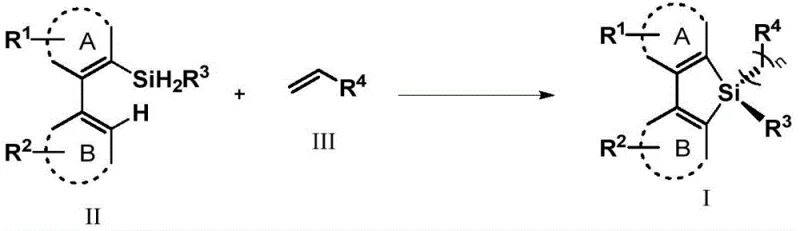
Following the C-H activation, the resulting organometallic intermediate undergoes insertion of the alkene coupling partner, which serves as both a reactant and a trap for the reactive silyl species. This tandem sequence prevents the decomposition or racemization of the intermediate monohydrosilane, a common pitfall in other silicon functionalization methods. The final reductive elimination step releases the chiral tetra-substituted silane product and regenerates the active catalyst, allowing the cycle to continue with high turnover numbers. From an impurity control perspective, the high stereoselectivity of the catalyst minimizes the formation of unwanted enantiomers, simplifying downstream purification and reducing the burden on quality control laboratories. This mechanistic efficiency translates directly into higher process purity and reduced waste generation, aligning with modern green chemistry principles and regulatory requirements for pharmaceutical and electronic grade chemicals.
Furthermore, the tolerance of this catalytic system towards various electronic and steric environments allows for the synthesis of diverse derivatives without compromising stereochemical integrity. Whether the substrate contains electron-donating groups like methoxy or electron-withdrawing groups like trifluoromethyl, the catalyst maintains its activity and selectivity, demonstrating remarkable versatility. This adaptability is essential for R&D directors who need to explore structure-activity relationships or optimize material properties without being constrained by synthetic limitations. The detailed understanding of this mechanism provides a solid foundation for further process optimization and scale-up, ensuring that the transition from laboratory discovery to industrial production is smooth and predictable.
How to Synthesize Silicon-Centered Chiral Tetra-Substituted Silanes Efficiently
Implementing this synthesis route requires careful attention to reaction conditions and reagent quality to maximize yield and enantioselectivity. The process typically involves combining the dihydrosilane substrate and the alkene coupling reagent in an anhydrous solvent such as toluene under an inert atmosphere to prevent catalyst deactivation. The rhodium catalyst precursor and the chiral ligand are then added in specific molar ratios, often with a slight excess of ligand to ensure complete complexation and optimal stereocontrol. Reaction temperatures are generally maintained at moderate levels, often between room temperature and 60 degrees Celsius, to balance reaction rate with selectivity. 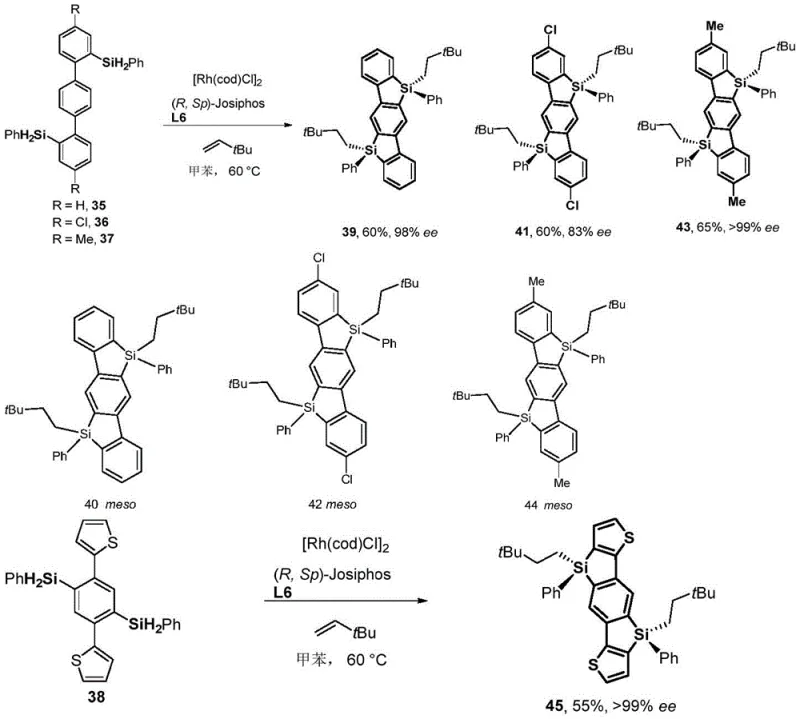
- Prepare the dihydrosilane substrate and alkene coupling reagent in anhydrous toluene under inert atmosphere.
- Add the rhodium catalyst precursor and chiral Josiphos or Segphos ligand to initiate the enantioselective C-H silylation.
- Stir the reaction mixture at controlled temperatures followed by purification via silica gel column chromatography.
Commercial Advantages for Procurement and Supply Chain Teams
From a commercial perspective, this patented technology offers substantial benefits that directly address the pain points of procurement managers and supply chain heads in the fine chemical sector. The elimination of external oxidants and the use of atom-economical tandem reactions significantly reduce the consumption of auxiliary reagents, leading to a leaner and more cost-effective manufacturing process. By utilizing economically available dihydrosilanes and alkenes as starting materials, companies can achieve significant cost savings compared to routes that require expensive chiral pool starting materials or complex multi-step sequences. The robustness of the rhodium catalytic system also enhances supply chain reliability, as the reaction conditions are less sensitive to minor variations in raw material quality, reducing the risk of batch failures and production delays. This stability is crucial for maintaining consistent inventory levels and meeting the strict delivery schedules demanded by downstream customers in the pharmaceutical and electronics industries.
Moreover, the scalability of this process is supported by its straightforward workup and purification procedures, which typically involve standard silica gel chromatography or crystallization techniques familiar to industrial chemists. The high enantioselectivity achieved reduces the need for costly chiral separation steps, further lowering the overall cost of goods sold and improving profit margins. Environmental compliance is another key advantage, as the method generates less chemical waste and avoids the use of hazardous oxidizing agents, aligning with increasingly stringent global regulations on industrial emissions and waste disposal. For supply chain heads, this means easier permitting and reduced liability, facilitating smoother operations across different geographic regions. The ability to produce high-purity silicon-centered chiral tetra-substituted silanes with such efficiency positions manufacturers as preferred partners for clients seeking sustainable and reliable specialty chemical supplier solutions.
- Cost Reduction in Manufacturing: The tandem nature of the reaction combines two bond-forming events into a single step, effectively halving the processing time and resource consumption associated with sequential synthetic approaches. By avoiding the use of stoichiometric chiral auxiliaries and external oxidants, the process minimizes raw material costs and waste treatment expenses, driving down the overall manufacturing footprint. The high catalyst turnover allows for the use of lower catalyst loadings without sacrificing performance, which is particularly beneficial given the cost of precious metal rhodium complexes. These factors collectively contribute to a more competitive pricing structure for the final chiral silane products, enabling companies to offer better value to their customers while maintaining healthy margins.
- Enhanced Supply Chain Reliability: The use of stable and commercially available starting materials ensures that production is not vulnerable to supply disruptions of exotic or custom-synthesized reagents. The robust catalytic conditions tolerate a wide range of functional groups, meaning that variations in substrate quality are less likely to cause reaction failures, thereby increasing the predictability of production schedules. This reliability is essential for building long-term contracts with major pharmaceutical and technology firms that require guaranteed supply continuity for their critical manufacturing lines. Additionally, the simplified process flow reduces the number of unit operations required, minimizing the potential for equipment bottlenecks and maintenance downtime that can disrupt supply chains.
- Scalability and Environmental Compliance: The reaction operates under mild conditions without the need for high pressure or extreme temperatures, making it inherently safer and easier to scale from kilogram to tonne quantities in standard reactor vessels. The absence of hazardous oxidants and the generation of minimal byproducts simplify waste management and reduce the environmental impact of the manufacturing process. This aligns with corporate sustainability goals and regulatory requirements, facilitating easier approval for new production facilities and expansions. The ability to scale up while maintaining high enantioselectivity ensures that product quality remains consistent regardless of batch size, which is a critical requirement for regulated industries like pharmaceuticals where process validation is paramount.
Frequently Asked Questions (FAQ)
The following questions address common technical and commercial inquiries regarding the implementation of this rhodium-catalyzed synthesis technology. These answers are derived directly from the experimental data and beneficial effects described in the patent documentation, providing clarity on the method's capabilities and limitations. Understanding these details is essential for stakeholders evaluating the feasibility of integrating this process into their existing manufacturing portfolios or supply networks. The information covers aspects ranging from substrate compatibility to process scalability, ensuring a comprehensive overview for decision-makers.
Q: What are the primary advantages of this rhodium-catalyzed method over traditional kinetic resolution?
A: This method allows for the direct construction of silicon stereocenters from simple starting materials with high enantioselectivity, avoiding the low yields and narrow substrate scope associated with traditional kinetic resolution techniques.
Q: Is this process scalable for industrial production of advanced materials?
A: Yes, the reaction utilizes economical substrates and robust catalytic conditions that do not require external oxidants, making it highly suitable for commercial scale-up in the production of functional silanes.
Q: What types of substrates are compatible with this silicon-centered chirality synthesis?
A: The protocol demonstrates broad tolerance for various functional groups including electron-donating and withdrawing substituents, as well as complex bioactive molecules and metallocene derivatives.
Partnering with NINGBO INNO PHARMCHEM: Your Reliable Silicon-Centered Chiral Tetra-Substituted Silane Supplier
At NINGBO INNO PHARMCHEM, we recognize the transformative potential of the rhodium-catalyzed synthesis described in patent CN111747978A and are fully equipped to bring this technology to commercial reality for our global partners. Our team possesses extensive experience scaling diverse pathways from 100 kgs to 100 MT/annual commercial production, ensuring that the transition from laboratory innovation to industrial supply is seamless and efficient. We maintain stringent purity specifications and operate rigorous QC labs to guarantee that every batch of silicon-centered chiral tetra-substituted silane meets the highest standards required by the pharmaceutical and advanced materials sectors. Our commitment to quality and consistency makes us a trusted partner for companies looking to secure a stable supply of these high-value intermediates.
We invite you to collaborate with us to optimize your supply chain and reduce manufacturing costs through the adoption of this advanced catalytic technology. Our technical procurement team is ready to provide a Customized Cost-Saving Analysis tailored to your specific production needs, demonstrating how this route can improve your bottom line. Please contact us to request specific COA data and route feasibility assessments that will help you make informed decisions about integrating these chiral silanes into your product portfolio. Together, we can drive innovation and efficiency in the fine chemical industry.
Engineering Bottleneck?
Can't scale up this synthesis? Upload your target structure or CAS, and our CDMO team will evaluate the industrial feasibility within 24 hours. Request Evaluation →