
Scalable Metal-Free Synthesis of Alpha-Selenocyanones for Advanced Pharmaceutical Intermediates
Introduction to Advanced Selenium Chemistry
The strategic incorporation of selenium functionalities into organic frameworks remains a cornerstone of modern medicinal chemistry, particularly for the development of chemoprotective agents and specialized intermediates. As detailed in the recent intellectual property disclosure CN113788773A, a significant technological leap has been achieved in the one-step synthesis of α-selenocyanone compounds. This patent outlines a transformative methodology that constructs the critical carbon-selenium bond directly from ketones containing α-hydrogens, utilizing elemental selenium and trimethylsilyl cyanide (TMSCN) as the cyanide source. Unlike traditional multi-step sequences that often suffer from poor atom economy, this novel approach operates under additive-free and metal-free conditions, providing a highly concise and efficient pathway. For R&D directors and procurement specialists alike, this represents a pivotal shift towards greener, more cost-effective manufacturing protocols that do not compromise on the structural complexity required for high-value pharmaceutical intermediates.
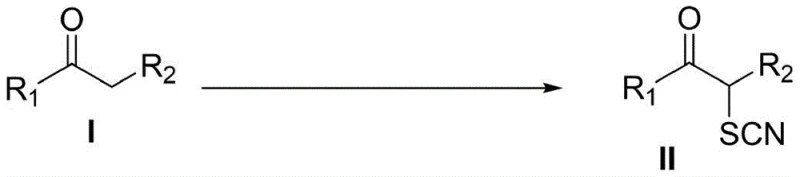
The Limitations of Conventional Methods vs. The Novel Approach
The Limitations of Conventional Methods
Historically, the synthesis of α-selenocyanated carbonyl compounds has been plagued by significant operational and economic hurdles that hinder large-scale adoption. Conventional strategies frequently rely on pre-functionalized selenium reagents, such as selenocyanate salts or organoselenium halides, which are not only expensive to procure but also pose severe handling risks due to their toxicity and unpleasant odor. Furthermore, many established catalytic systems necessitate the use of transition metals like palladium or copper to facilitate the C-Se bond formation. While effective on a milligram scale, these metal-catalyzed routes introduce a critical bottleneck for commercial production: the stringent requirement to remove trace metal residues to meet ICH Q3D guidelines for elemental impurities in drug substances. This purification burden drastically increases processing time, consumes valuable chromatography media, and ultimately inflates the cost of goods sold, making these traditional methods less viable for the reliable supply of bulk pharmaceutical intermediates.
The Novel Approach
In stark contrast to these legacy issues, the methodology disclosed in patent CN113788773A introduces a paradigm-shifting strategy that leverages the direct reactivity of elemental selenium powder. By employing TMSCN as a safe and stable cyanide donor in conjunction with dimethyl sulfoxide (DMSO) as the solvent, the reaction proceeds smoothly under air atmosphere without the need for inert gas protection or exotic ligands. This metal-free protocol effectively bypasses the need for costly catalysts and the associated downstream metal scavenging steps. The process demonstrates exceptional functional group tolerance, accommodating substrates with halogens, ethers, and varying steric environments while maintaining robust yields. For a reliable pharmaceutical intermediate supplier, this translates to a streamlined workflow where raw material costs are minimized, and the environmental footprint is significantly reduced through the elimination of heavy metal waste streams, aligning perfectly with modern green chemistry mandates.
Mechanistic Insights into Metal-Free Selenocyanation
The mechanistic elegance of this transformation lies in the synergistic activation of the ketone substrate and the elemental selenium species within the polar aprotic medium. It is hypothesized that the DMSO solvent plays a dual role, acting not merely as a dissolution medium but potentially facilitating the generation of reactive selenium species capable of attacking the enolizable α-position of the ketone. The presence of TMSCN provides a steady reservoir of cyanide equivalents that trap the intermediate selenylated species, driving the equilibrium towards the formation of the stable α-selenocyanone product. This direct insertion mechanism avoids the formation of unstable selenolate intermediates that typically require rigorous exclusion of moisture and oxygen in other methods. The reaction kinetics are optimized at temperatures between 80-100°C, with 90°C identified as the thermal sweet spot that balances reaction rate with selectivity, ensuring that side reactions such as over-oxidation or polymerization are kept to a minimum while maximizing the conversion of the starting ketone.
From an impurity control perspective, the absence of transition metals fundamentally alters the impurity profile of the final product. In metal-catalyzed processes, the primary concern is often the formation of metal-complexed byproducts or homocoupling products derived from the catalyst cycle. Here, the impurity spectrum is dominated primarily by unreacted starting materials or simple hydrolysis products, which are far easier to separate via standard aqueous workups and crystallization techniques. The patent data indicates that even with electronically diverse substrates, such as para-fluoro substituted aromatic ketones or cyclic aliphatic ketones, the reaction maintains high fidelity. This predictability is crucial for process chemists aiming to lock down a robust control strategy, as it ensures that the critical quality attributes of the high-purity alpha-selenocyanone remain consistent across different batches, regardless of minor fluctuations in raw material sourcing.
How to Synthesize Alpha-Selenocyanone Efficiently
Implementing this synthesis route in a pilot or production setting requires precise adherence to the stoichiometric ratios and thermal profiles established in the patent examples to ensure optimal reproducibility. The process begins with the charging of the ketone substrate, elemental selenium powder, and TMSCN into a reactor equipped with magnetic or mechanical stirring, followed by the addition of DMSO. The mixture is then heated to the target temperature of 90°C and maintained for approximately 12 hours under ambient air conditions, eliminating the need for expensive nitrogen blanketing systems. Following the reaction period, the workup involves a straightforward aqueous quench and extraction with ethyl acetate, allowing for the recovery of the crude product which is subsequently purified via flash chromatography. For a detailed breakdown of the specific molar ratios, safety precautions regarding TMSCN handling, and purification parameters, please refer to the standardized operating procedure below.
- Charge a reactor with the ketone substrate containing alpha-hydrogens, elemental selenium powder, and trimethylsilyl cyanide (TMSCN) in a molar ratio optimized between 1: 2.5:4.
- Add dimethyl sulfoxide (DMSO) as the solvent and stir the mixture under an air atmosphere at a temperature range of 80-100°C, preferably 90°C, for approximately 12 hours.
- Upon completion, quench the reaction with water, extract the product with ethyl acetate, concentrate the organic phase, and purify via silica gel flash chromatography.
Commercial Advantages for Procurement and Supply Chain Teams
For procurement managers and supply chain heads, the adoption of this metal-free selenocyanation technology offers tangible strategic advantages that extend beyond mere technical feasibility. The most immediate impact is observed in the reduction of raw material complexity; by substituting expensive organoselenium reagents and transition metal catalysts with commodity chemicals like selenium powder and TMSCN, the direct material costs are significantly lowered. Furthermore, the elimination of metal catalysts removes the necessity for specialized metal scavenger resins and the associated validation testing for heavy metals, which represents a substantial hidden cost in traditional API manufacturing. This simplification of the bill of materials enhances supply chain resilience, as the key reagents are widely available from multiple global vendors, reducing the risk of single-source bottlenecks that often plague the procurement of specialized fine chemicals.
- Cost Reduction in Manufacturing: The economic benefits of this process are driven primarily by the drastic simplification of the downstream processing workflow. Since the reaction does not introduce transition metals, the costly and time-consuming steps of metal scavenging and the rigorous analytical testing required to certify low ppm levels of residual metals are entirely eliminated. This reduction in unit operations leads to shorter cycle times and lower consumption of solvents and purification media, resulting in substantial cost savings per kilogram of produced intermediate. Additionally, the use of elemental selenium, which is generally more affordable and stable than pre-functionalized selenium reagents, further optimizes the input costs, making the overall manufacturing process highly competitive for cost-sensitive applications in agrochemical and pharmaceutical sectors.
- Enhanced Supply Chain Reliability: From a logistics and continuity perspective, this methodology mitigates several key risks associated with complex synthetic routes. The reliance on air-stable reagents and the ability to run the reaction under an air atmosphere means that the process is less sensitive to infrastructure failures, such as nitrogen supply interruptions, which can halt production in sensitive metal-catalyzed processes. Moreover, the broad substrate scope demonstrated in the patent suggests that the same platform technology can be applied to a wide variety of ketone precursors without extensive re-optimization. This flexibility allows manufacturers to respond rapidly to changing demand for different analogues, ensuring a steady supply of diverse intermediates without the need for dedicated, single-product production lines, thereby maximizing asset utilization and delivery reliability.
- Scalability and Environmental Compliance: Scaling chemical processes often exposes safety and environmental weaknesses that are not apparent at the gram scale, but this protocol is inherently designed for robustness. The absence of pyrophoric reagents or highly toxic volatile organometallics simplifies the safety case for large-scale reactors, reducing the engineering controls required for containment. Environmentally, the process aligns with green chemistry principles by minimizing waste generation; the primary byproduct is trimethylsilanol or related siloxanes, which are easier to manage than heavy metal sludge. This cleaner profile facilitates easier regulatory approval and waste disposal, lowering the environmental compliance burden and supporting the corporate sustainability goals of modern chemical enterprises seeking to reduce their ecological footprint while maintaining high production volumes.
Frequently Asked Questions (FAQ)
The following questions address common technical and commercial inquiries regarding the implementation of this alpha-selenocyanone synthesis technology. These insights are derived directly from the experimental data and claims presented in the patent literature, aimed at clarifying the operational parameters and potential limitations for industrial application. Understanding these nuances is essential for technical teams evaluating the feasibility of integrating this route into existing manufacturing portfolios, ensuring that all critical aspects from safety to purity specifications are adequately addressed before scale-up initiatives commence.
Q: Does this synthesis method require transition metal catalysts?
A: No, the patented process described in CN113788773A operates under strictly metal-free conditions, utilizing elemental selenium and TMSCN without any additional transition metal promoters, which significantly simplifies downstream purification.
Q: What is the substrate scope for this selenocyanation reaction?
A: The method demonstrates broad compatibility with various ketone substrates, including aryl alkyl ketones, cyclic ketones, and those bearing electron-withdrawing or donating groups such as halogens and alkoxy substituents, maintaining yields above 60%.
Q: How does this method improve supply chain reliability for selenium intermediates?
A: By eliminating expensive and supply-constrained transition metal catalysts and using readily available elemental selenium and TMSCN, the process reduces raw material volatility and ensures consistent production continuity for large-scale manufacturing.
Partnering with NINGBO INNO PHARMCHEM: Your Reliable Alpha-Selenocyanone Supplier
At NINGBO INNO PHARMCHEM, we recognize the critical role that advanced selenium chemistry plays in the development of next-generation therapeutics and agrochemicals. As a leading CDMO partner, we possess extensive experience scaling diverse pathways from 100 kgs to 100 MT/annual commercial production, ensuring that innovative laboratory discoveries like the metal-free selenocyanation process are successfully translated into robust industrial realities. Our state-of-the-art facilities are equipped with rigorous QC labs capable of verifying stringent purity specifications, guaranteeing that every batch of alpha-selenocyanone intermediate meets the exacting standards required by global regulatory bodies. We are committed to delivering high-purity pharmaceutical intermediates that empower our clients to accelerate their drug discovery pipelines with confidence and speed.
We invite you to collaborate with our technical procurement team to explore how this efficient synthesis route can be tailored to your specific project needs. By leveraging our expertise, you can obtain a Customized Cost-Saving Analysis that quantifies the potential economic benefits of switching to this metal-free protocol for your specific molecule. We encourage you to contact us today to request specific COA data for our selenium-containing building blocks and to discuss comprehensive route feasibility assessments that will secure your supply chain and optimize your manufacturing costs for the long term.