
Advanced Recycling Technology for High-Purity N-Phosphonomethyliminodiacetic Acid Production
The global demand for high-efficiency herbicides continues to drive innovation in the synthesis of key organophosphorus intermediates, specifically N-phosphonomethyliminodiacetic acid (PIDA), a critical precursor for glyphosate production. Patent CN1116426A introduces a transformative manufacturing methodology that shifts the paradigm from traditional batch processing to a highly efficient, continuous recycling operation. This technical disclosure outlines a robust process wherein iminodiacetic acid reacts with phosphorous acid and a formaldehyde source within an aqueous medium mediated by concentrated sulfuric acid. Unlike prior art methods that relied on alkali metal salts and generated substantial inorganic waste, this novel approach leverages the unique solubility characteristics of the sulfuric acid system to enable the repeated recycling of the mother liquor. By integrating a strategic filtration and distillation sequence, the process achieves exceptional raw material utilization while maintaining rigorous purity standards essential for downstream agrochemical applications. The implications of this technology extend far beyond the laboratory, offering a scalable solution for industrial producers seeking to optimize their supply chains and reduce environmental footprints simultaneously.
The Limitations of Conventional Methods vs. The Novel Approach
The Limitations of Conventional Methods
Historically, the production of N-phosphonomethyliminodiacetic acid has been plagued by inefficiencies inherent in the use of alkali metal salts of iminodiacetic acid, such as the sodium salt. Traditional protocols, as referenced in earlier patents like US 3,288,846, often necessitated the use of strong mineral acids to liberate the free acid form, resulting in the co-production of large quantities of inorganic salts like sodium sulfate. These salts accumulate rapidly in the reaction medium, severely limiting the potential for recycling the filtrate and forcing manufacturers to dispose of significant volumes of saline wastewater. Furthermore, the reliance on hydrochloric acid in some conventional routes introduced challenges related to corrosion and the handling of volatile acidic gases, complicating the engineering requirements for large-scale reactors. The inability to effectively recycle the mother liquor meant that unreacted starting materials and partially converted intermediates remaining in the filtrate were lost, driving up the overall cost of goods sold and increasing the environmental burden of the manufacturing process. Consequently, procurement teams have long faced volatility in pricing due to the wasteful nature of these legacy synthetic routes.
The Novel Approach
The methodology disclosed in CN1116426A fundamentally resolves these bottlenecks by utilizing iminodiacetic acid directly in the presence of sulfuric acid, thereby eliminating the formation of problematic alkali metal salts. This strategic substitution allows the filtrate from the product isolation step to be recycled multiple times without the catastrophic buildup of insoluble inorganic by-products that characterize older methods. The process incorporates a sophisticated water management system where water is selectively removed from the recycled filtrate, often via distillation at temperatures ranging from 60°C to 140°C, to maintain the optimal concentration of reactants for subsequent cycles. By controlling the purge rate of the filtrate stream, typically removing between 25% to 40% of the volume at each iteration, the system effectively manages the concentration of organic impurities while retaining the majority of unreacted phosphorous acid and formaldehyde. This closed-loop architecture not only drastically reduces the volume of effluent requiring treatment but also ensures a consistent supply of high-purity PIDA, making it an ideal candidate for cost reduction in herbicide manufacturing on a commercial scale.
Mechanistic Insights into Sulfuric Acid-Mediated Condensation
The core chemical transformation involves a Mannich-type condensation where the secondary amine of iminodiacetic acid reacts with formaldehyde and phosphorous acid to form the carbon-phosphorus bond characteristic of the phosphonate structure. In the sulfuric acid medium, the reaction kinetics are finely tuned by the protonation state of the amine and the electrophilicity of the formaldehyde species. The use of concentrated sulfuric acid serves a dual purpose: it acts as a catalyst to accelerate the condensation reaction and provides a medium where the product, N-phosphonomethyliminodiacetic acid, exhibits low solubility upon cooling, facilitating its precipitation and isolation. Crucially, the absence of competing alkali cations prevents the formation of stable salt complexes that would otherwise remain in solution, thereby enabling the high recovery rates observed in the patent examples. The reaction is typically conducted at elevated temperatures, preferably between 110°C and 120°C, which provides sufficient thermal energy to overcome the activation barrier for the P-C bond formation while remaining below the threshold where significant thermal decomposition of the phosphonate moiety occurs.
Impurity control is achieved through the precise management of the recycling loop and the stoichiometric balance of reagents. The patent data indicates that maintaining a molar ratio of phosphorous acid to iminodiacetic acid between 1:1 and 1.5:1, alongside a slight excess of formaldehyde, drives the conversion to completion while minimizing the formation of side products such as N,N-bis(phosphonomethyl) derivatives. The distillation step plays a pivotal role in this purification strategy by removing excess water and volatile components like unreacted formaldehyde, which could otherwise participate in unwanted polymerization reactions in subsequent cycles. By analyzing the cumulative separation rates and conversion efficiencies across multiple cycles, it becomes evident that the system reaches a steady state where the input of fresh reactants balances the output of product and purge waste. 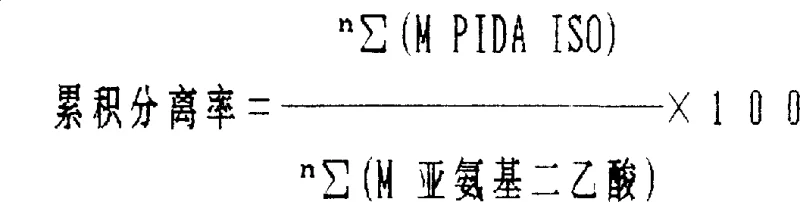
 This mathematical rigor ensures that the process remains robust even after numerous iterations, providing R&D directors with the confidence that the impurity profile will remain within acceptable specifications for high-purity agrochemical intermediate production.
How to Synthesize N-Phosphonomethyliminodiacetic Acid Efficiently
The synthesis protocol detailed in the patent offers a streamlined pathway for producing N-phosphonomethyliminodiacetic acid that is uniquely suited for industrial adaptation. The process begins with the preparation of a reaction mixture containing iminodiacetic acid, phosphorous acid, and sulfuric acid in an aqueous environment, followed by the controlled addition of a formaldehyde source such as paraformaldehyde or aqueous formalin. The reaction is heated to the optimal range of 110°C to 120°C and maintained for a duration sufficient to achieve high conversion, typically around one to two hours depending on the scale. Upon completion, the mixture is cooled to induce crystallization of the product, which is then separated via filtration. The critical innovation lies in the treatment of the resulting filtrate, which is subjected to distillation to adjust water content before being returned to the reactor for the next batch, creating a semi-continuous operation that maximizes throughput. For a comprehensive guide on the specific operational parameters and safety considerations, the detailed standardized synthesis steps are provided in the section below.
- React iminodiacetic acid with phosphorous acid and a formaldehyde source in an aqueous solution containing concentrated sulfuric acid at 105-125°C.
- Filter the reaction mixture to recover the precipitated N-phosphonomethyliminodiacetic acid product.
- Recover the filtrate, optionally remove water via distillation, and recycle the filtrate to the next reaction step with fresh reactants.
Commercial Advantages for Procurement and Supply Chain Teams
For procurement managers and supply chain heads, the adoption of this sulfuric acid-mediated recycling process represents a significant opportunity to enhance operational resilience and reduce total landed costs. The primary economic driver is the drastic reduction in raw material consumption achieved through the efficient recycling of unreacted phosphorous acid and formaldehyde contained within the mother liquor. By eliminating the generation of massive quantities of inorganic salt waste, such as sodium sulfate, manufacturers can substantially lower their waste disposal fees and reduce the regulatory burden associated with saline effluent treatment. This process intensification allows for a more compact plant footprint, as the need for large-scale crystallization tanks to handle salt by-products is removed, thereby optimizing capital expenditure for new facilities. Furthermore, the ability to operate in a continuous or semi-continuous mode improves equipment utilization rates, ensuring a more reliable supply of critical intermediates to downstream glyphosate production lines without the stop-start delays typical of traditional batch processes.
- Cost Reduction in Manufacturing: The elimination of alkali metal salts from the reaction equation removes the need for expensive salt separation and disposal infrastructure, leading to substantial cost savings in utility and waste management sectors. The recycling of the filtrate ensures that valuable reactants are not lost to the waste stream, effectively lowering the stoichiometric requirement for fresh phosphorous acid and formaldehyde per kilogram of final product. Additionally, the use of sulfuric acid, a commodity chemical with stable pricing, replaces more volatile or corrosive alternatives, contributing to a more predictable cost structure for long-term contracts. The overall process efficiency translates into a lower cost of goods sold, providing a competitive edge in the global market for agrochemical intermediates.
- Enhanced Supply Chain Reliability: The robustness of the recycling loop ensures consistent production output even when facing fluctuations in raw material quality, as the system can accommodate minor variations through the purge mechanism. By reducing the dependency on complex multi-step purification sequences required to remove inorganic salts, the lead time for producing high-purity N-phosphonomethyliminodiacetic acid is significantly shortened. This agility allows suppliers to respond more rapidly to spikes in demand from the herbicide sector, ensuring continuity of supply for major agricultural clients. The simplified process flow also reduces the number of potential failure points in the manufacturing line, enhancing overall plant reliability and uptime.
- Scalability and Environmental Compliance: The process is inherently scalable, having been demonstrated to function effectively across multiple recycling cycles without degradation in performance, making it suitable for expansion from pilot plants to multi-ton annual production capacities. The reduction in liquid effluent volume and the absence of heavy salt loads simplify compliance with increasingly stringent environmental regulations regarding industrial wastewater discharge. This eco-friendly profile aligns with the sustainability goals of modern agrochemical companies, facilitating easier permitting for new manufacturing sites and improving the corporate social responsibility standing of the supply chain partners.
Frequently Asked Questions (FAQ)
The following questions address common technical and commercial inquiries regarding the implementation of this advanced recycling technology for PIDA production. These insights are derived directly from the experimental data and process descriptions found in the patent literature, providing a factual basis for decision-making. Understanding these nuances is crucial for technical teams evaluating the feasibility of adopting this route for their specific manufacturing contexts. The answers highlight the balance between reaction efficiency, impurity control, and operational practicality.
Q: Why is sulfuric acid preferred over hydrochloric acid in this recycling process?
A: Sulfuric acid allows for the direct use of iminodiacetic acid rather than its alkali metal salts, preventing the accumulation of inorganic salts like sodium sulfate which would otherwise limit the number of recycling cycles due to solubility issues.
Q: How is by-product accumulation managed during multiple recycling cycles?
A: By-product accumulation is counteracted by purging a portion of the filtrate stream, typically between 25% to 40%, at each cycle, ensuring that impurity levels do not reach excessive concentrations that would degrade product quality.
Q: What are the optimal temperature conditions for the reaction step?
A: The reaction is preferably conducted at temperatures between 110°C and 120°C to maximize reaction rate while minimizing the formation of thermal degradation by-products.
Partnering with NINGBO INNO PHARMCHEM: Your Reliable N-Phosphonomethyliminodiacetic Acid Supplier
At NINGBO INNO PHARMCHEM, we recognize the critical importance of efficient and sustainable manufacturing processes in the modern agrochemical industry. As a premier CDMO partner, we possess extensive experience scaling diverse pathways from 100 kgs to 100 MT/annual commercial production, ensuring that innovative technologies like the sulfuric acid recycling process are translated into reality with precision. Our facilities are equipped with rigorous QC labs and adhere to stringent purity specifications, guaranteeing that every batch of N-phosphonomethyliminodiacetic acid meets the exacting standards required for glyphosate synthesis. We are committed to delivering high-purity agrochemical intermediates that empower our clients to produce safer and more effective crop protection solutions globally.
We invite you to engage with our technical procurement team to discuss how our capabilities can support your specific supply chain needs. By requesting a Customized Cost-Saving Analysis, you can gain deeper insights into how our optimized manufacturing routes can reduce your overall production expenses. We encourage potential partners to contact us directly to obtain specific COA data and route feasibility assessments tailored to your project requirements, ensuring a seamless transition from development to commercial supply.