
Advanced Manufacturing of 3,14,15-Triacetyl Aconitine for Scalable Cardiac Drug Production
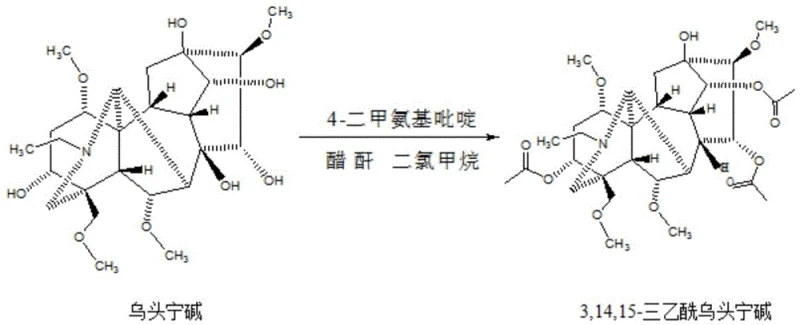
The pharmaceutical industry is constantly seeking more efficient and environmentally sustainable routes for synthesizing complex alkaloid derivatives, particularly those serving as critical intermediates for cardiovascular therapeutics. Patent CN112250632B introduces a groundbreaking preparation method for 3,14,15-triacetyl aconitine, a pivotal compound in the development of anti-heart failure medications. This innovation addresses long-standing challenges in the acetylation of aconitine by replacing hazardous solvents and energy-intensive purification steps with a milder, catalytic system. By utilizing 4-dimethylaminopyridine (DMAP) as a highly efficient nucleophilic catalyst in dichloromethane, the process achieves superior conversion rates under significantly reduced thermal stress. This technical advancement not only enhances the safety profile of the manufacturing process but also streamlines the downstream processing, making it an ideal candidate for reliable pharmaceutical intermediate supplier networks aiming for green chemistry compliance.
The Limitations of Conventional Methods vs. The Novel Approach
The Limitations of Conventional Methods
Historically, the synthesis of acetylated aconitine derivatives has been plagued by severe operational and environmental drawbacks, as evidenced by prior art such as document CN110066248. Traditional protocols typically rely on pyridine serving dual roles as both the solvent and the base, which necessitates reaction temperatures exceeding 120°C to drive the acetylation to completion. This high-temperature requirement not only poses significant safety risks due to the volatility and toxicity of pyridine but also increases the likelihood of thermal degradation of the sensitive alkaloid backbone. Furthermore, the post-reaction purification in these legacy methods invariably depends on silica gel column chromatography, a technique that is notoriously difficult to scale up for industrial production. The extensive consumption of elution solvents, the generation of substantial solid waste from spent silica, and the labor-intensive nature of column operations create a bottleneck that severely limits production efficiency and drives up the overall cost of goods sold for these high-value intermediates.
The Novel Approach
In stark contrast, the novel methodology disclosed in the patent leverages the superior nucleophilic catalytic activity of DMAP to facilitate acetylation under remarkably mild conditions. By switching the reaction medium to dichloromethane and introducing a catalytic amount of DMAP, the reaction temperature is drastically lowered to a range of 30-45°C, effectively preserving the structural integrity of the aconitine scaffold. This shift eliminates the need for toxic pyridine in large quantities, thereby reducing the environmental footprint and improving operator safety within the manufacturing facility. Most critically, the new process replaces the cumbersome column chromatography step with a straightforward recrystallization procedure using mixed solvents such as ethyl acetate and n-hexane. This simplification of the purification workflow not only accelerates the production cycle time but also significantly reduces solvent usage and waste disposal costs, aligning perfectly with modern principles of cost reduction in pharmaceutical intermediates manufacturing.
Mechanistic Insights into DMAP-Catalyzed Acetylation
The core of this technological breakthrough lies in the mechanistic efficiency of 4-dimethylaminopyridine (DMAP) as an acylation catalyst, which operates through a distinct nucleophilic catalysis pathway that is far more effective than simple pyridine catalysis. In this mechanism, the highly nucleophilic nitrogen atom of the DMAP molecule attacks the carbonyl carbon of the acetic anhydride to form a highly reactive N-acetylpyridinium intermediate. This activated acetyl species is a much stronger electrophile than the original acetic anhydride, allowing it to rapidly transfer the acetyl group to the hydroxyl groups at the 3, 14, and 15 positions of the aconitine molecule. The steric and electronic properties of the dimethylamino group on the pyridine ring enhance the nucleophilicity of the catalyst, enabling the reaction to proceed rapidly even at the reduced temperature of 40°C. This kinetic advantage ensures high conversion rates without the need for the thermal energy input required in non-catalytic or weakly catalytic systems, thereby minimizing side reactions and decomposition pathways that often plague high-temperature syntheses.
Furthermore, the selectivity of this catalytic system is crucial for maintaining the purity profile required for pharmaceutical applications. The mild reaction conditions prevent the hydrolysis of existing ester groups or the rearrangement of the complex diterpenoid skeleton, which are common risks under harsh acidic or basic conditions at elevated temperatures. The use of dichloromethane as a solvent provides an optimal polarity environment that solubilizes both the polar aconitine substrate and the acetic anhydride reagent while remaining inert to the reaction conditions. Following the acylation, the workup procedure involving pH adjustment to neutrality (pH 6.5-7.5) effectively quenches any remaining acetic anhydride and removes the catalyst without inducing degradation. This precise control over the reaction environment ensures that the final crude product contains minimal impurities, facilitating the subsequent recrystallization step to yield high-purity 3,14,15-triacetyl aconitine suitable for downstream drug synthesis.
How to Synthesize 3,14,15-Triacetyl Aconitine Efficiently
The synthesis protocol outlined in the patent offers a robust and reproducible framework for producing this critical intermediate with high efficiency and consistency. The process begins by dissolving aconitine in dichloromethane and adding acetic anhydride along with a catalytic quantity of DMAP, followed by heating the mixture to reflux at a controlled temperature of roughly 40°C for approximately four hours. Upon completion, the reaction is quenched by the addition of water and a base such as ammonia water to neutralize the mixture, followed by phase separation to isolate the organic layer containing the product. The detailed standardized synthetic steps, including specific molar ratios and recrystallization parameters, are provided in the technical guide below to ensure successful replication in your pilot or production facilities.
- React aconitine with acetic anhydride in dichloromethane using 4-dimethylaminopyridine (DMAP) as a catalyst under reflux at 30-45°C.
- Quench the reaction mixture with water and adjust pH to 6.5-7.5 using ammonia water or sodium carbonate solution.
- Separate the organic layer, concentrate, and purify the crude product via recrystallization using ethyl acetate and n-hexane.
Commercial Advantages for Procurement and Supply Chain Teams
For procurement managers and supply chain directors, the adoption of this patented synthesis route translates into tangible strategic benefits that extend beyond mere technical feasibility. The elimination of silica gel column chromatography represents a massive reduction in operational complexity and material consumption, directly impacting the bottom line by removing a major cost center associated with solvent purchase and hazardous waste disposal. Additionally, the shift to lower reaction temperatures reduces energy consumption for heating and cooling cycles, contributing to a more sustainable and cost-effective manufacturing profile. These improvements collectively enhance the reliability of the supply chain by reducing the risk of batch failures and shortening the overall lead time for high-purity pharmaceutical intermediates, ensuring a steady flow of materials for drug development pipelines.
- Cost Reduction in Manufacturing: The transition from a chromatography-based purification to a recrystallization-based workflow fundamentally alters the cost structure of production. By removing the need for large volumes of chromatography solvents and disposable silica gel, the process significantly lowers the variable costs associated with each kilogram of product produced. Moreover, the recovery and recycling of dichloromethane and recrystallization solvents are far more straightforward and economical than managing the complex waste streams generated by column chromatography. This streamlined approach allows for substantial cost savings in raw materials and waste treatment, making the final product more price-competitive in the global market without compromising on quality standards.
- Enhanced Supply Chain Reliability: The simplicity and robustness of the new method greatly improve the predictability of production schedules. Unlike column chromatography, which can be prone to variability and bottlenecks during scale-up, recrystallization is a unit operation that is well-understood and easily controlled in large reactors. This stability ensures that delivery timelines are met consistently, reducing the risk of stockouts for downstream pharmaceutical manufacturers. Furthermore, the use of common, commercially available solvents like dichloromethane and ethyl acetate mitigates the risk of supply disruptions that might occur with more specialized or regulated reagents, thereby securing the continuity of supply for this critical cardiac drug intermediate.
- Scalability and Environmental Compliance: From an environmental and regulatory perspective, this process offers a clear path to compliant large-scale manufacturing. The reduction in toxic pyridine usage and the elimination of solid silica waste align with increasingly stringent environmental regulations regarding volatile organic compounds (VOCs) and hazardous waste generation. The milder reaction conditions also reduce the safety risks associated with high-pressure or high-temperature operations, lowering insurance and safety compliance costs. These factors make the technology highly attractive for commercial scale-up of complex pharmaceutical intermediates, allowing manufacturers to expand capacity with confidence while meeting corporate sustainability goals and regulatory requirements.
Frequently Asked Questions (FAQ)
The following questions address common technical and commercial inquiries regarding the implementation of this synthesis technology, derived directly from the patent specifications and experimental data. Understanding these details is essential for R&D teams evaluating the feasibility of technology transfer and for procurement specialists assessing the quality and consistency of the supply. The answers provided reflect the specific advantages and operational parameters defined in the intellectual property, ensuring accuracy and relevance for decision-makers.
Q: What are the key advantages of the DMAP-catalyzed method over traditional pyridine methods?
A: The DMAP-catalyzed method described in patent CN112250632B operates at significantly lower temperatures (approx. 40°C vs >120°C) and replaces toxic pyridine with dichloromethane. Furthermore, it eliminates the need for silica gel column chromatography, allowing for simple recrystallization which is far more suitable for industrial scale-up.
Q: How is the purity of 3,14,15-triacetyl aconitine ensured without column chromatography?
A: High purity is achieved through optimized reaction conditions that minimize byproduct formation and a robust recrystallization process using mixed solvents like ethyl acetate and n-hexane. This approach effectively removes impurities while maintaining high yield, avoiding the solvent waste associated with column chromatography.
Q: Is this synthesis route suitable for large-scale commercial production?
A: Yes, the process is specifically designed for industrialization. The use of common solvents like dichloromethane, mild reaction temperatures, and a purification step based on recrystallization rather than chromatography makes the process highly scalable, cost-effective, and environmentally friendlier for mass manufacturing.
Partnering with NINGBO INNO PHARMCHEM: Your Reliable 3,14,15-Triacetyl Aconitine Supplier
At NINGBO INNO PHARMCHEM, we recognize the critical role that high-quality intermediates play in the development of life-saving cardiovascular therapies. Our team possesses extensive experience scaling diverse pathways from 100 kgs to 100 MT/annual commercial production, ensuring that the transition from laboratory bench to industrial reactor is seamless and efficient. We are committed to delivering products that meet stringent purity specifications through our rigorous QC labs, utilizing advanced analytical techniques to verify the identity and potency of every batch. Our capability to implement the green synthesis methods described in patent CN112250632B allows us to offer a superior product profile that balances performance with environmental responsibility.
We invite you to collaborate with us to optimize your supply chain for 3,14,15-triacetyl aconitine and related alkaloid derivatives. By engaging with our technical procurement team, you can request a Customized Cost-Saving Analysis tailored to your specific volume requirements and quality needs. We encourage potential partners to contact us directly to obtain specific COA data and route feasibility assessments, ensuring that our solutions align perfectly with your project milestones and commercial objectives.