
Advanced Copper-Catalyzed Synthesis of Chiral Trifluoromethyl Nitriles for Commercial Scale-up
Introduction to Patent CN111620793B Technology
The pharmaceutical and fine chemical industries are constantly seeking robust methodologies for constructing chiral building blocks, particularly those containing trifluoromethyl groups which enhance metabolic stability and bioavailability. Patent CN111620793B discloses a groundbreaking preparation method for chiral nitrile compounds, specifically focusing on the asymmetric trifluoromethyl cyanation of olefins. This technology utilizes a copper catalyst system in conjunction with a chiral ligand, TMSCN, and Togni-I to convert olefin compounds of formula I into valuable chiral nitrile compounds of formula II. The significance of this invention lies in its ability to produce optically active trifluoromethyl-containing chiral β-carbonyl nitrile compounds with good yields and excellent enantioselectivity under relatively mild conditions.
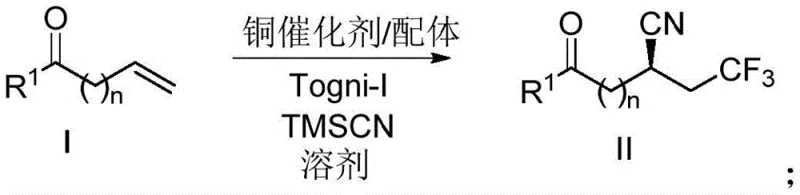
These chiral nitrile intermediates are pivotal precursors in organic synthesis, capable of being smoothly converted into amines, carboxylic acids, and heterocycles. Specifically, chiral β-carbonyl nitrile compounds are highly prized because they can be readily transformed into γ-lactams and γ-amino acids, structural motifs that are ubiquitous in bioactive molecules and pharmaceutical agents. By addressing the limitations of existing synthetic routes, this patent provides a highly efficient pathway for the construction of these complex molecular architectures, positioning it as a critical asset for reliable pharmaceutical intermediate supplier networks aiming to streamline their production pipelines.
The Limitations of Conventional Methods vs. The Novel Approach
The Limitations of Conventional Methods
Historically, the synthesis of chiral β-carbonyl nitrile compounds has been fraught with significant technical challenges that hinder large-scale industrial application. Traditional methods primarily include Lewis acid-catalyzed asymmetric hydrocyanation of α,β-unsaturated carbonyl compounds, asymmetric reduction of β-cyanoacrylates, and transition metal-catalyzed asymmetric cross-coupling reactions of alkyl halides. These conventional approaches often suffer from severe drawbacks, such as the requirement for harsh reaction conditions including high pressure and cryogenic temperatures, which escalate energy consumption and equipment costs. Furthermore, many of these legacy processes exhibit poor reaction selectivity and atom economy, leading to complex purification procedures and substantial waste generation. The reliance on expensive reagents and the difficulty in controlling stereochemistry further limit their practical utility in cost-sensitive manufacturing environments.
The Novel Approach
In stark contrast, the methodology described in patent CN111620793B offers a transformative solution by employing a copper-catalyzed asymmetric trifluoromethyl cyanation strategy. This novel approach operates under inert gas protection in organic solvents, utilizing a synergistic system of a copper catalyst, a chiral ligand, TMSCN, and Togni-I. The reaction conditions are remarkably mild, typically proceeding at temperatures between -40°C and 40°C, which drastically reduces the thermal load on the production facility. The method achieves good yields and excellent corresponding selectivity, effectively overcoming the selectivity issues plaguing older techniques. By enabling the direct functionalization of olefins with both cyano and trifluoromethyl groups in a single step, this process simplifies the synthetic route, enhances overall efficiency, and provides an environmentally friendly alternative that is highly conducive to practical application and industrial production.
Mechanistic Insights into Copper-Catalyzed Asymmetric Trifluoromethyl Cyanation
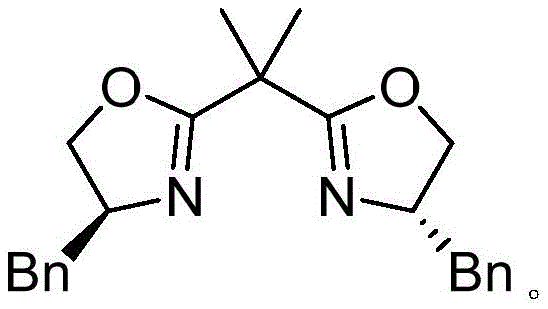
The core of this technological breakthrough lies in the precise orchestration of the catalytic cycle involving copper and chiral dinitrogen ligands. The reaction initiates with the activation of the copper catalyst by the chiral ligand, forming a reactive chiral copper complex that dictates the stereochemical outcome of the transformation. Togni-I serves as the electrophilic trifluoromethylating agent, while TMSCN provides the cyanide source. The mechanism likely involves the coordination of the olefin substrate to the chiral copper center, followed by the sequential or concerted addition of the trifluoromethyl and cyano groups across the double bond. The steric environment created by the chiral ligand, such as the chiral bisoxazoline ligands depicted in the patent, ensures that the addition occurs from a specific face of the olefin, thereby securing high enantiomeric excess.
Impurity control is inherently managed through the high selectivity of the catalytic system. The specific choice of ligand and copper salt minimizes side reactions such as polymerization of the olefin or non-selective radical pathways. The patent highlights that the structure of the R1 group on the substrate has minimal impact on the reaction, suggesting a robust catalytic cycle that tolerates various electronic and steric environments. This tolerance is crucial for maintaining high purity profiles in the final product, as it reduces the formation of regioisomers or byproducts that would otherwise complicate downstream processing. The ability to consistently achieve high optical purity makes this method particularly attractive for the synthesis of high-purity pharmaceutical intermediates where strict regulatory standards for impurities must be met.
How to Synthesize Chiral Trifluoromethyl Nitriles Efficiently
The synthesis protocol outlined in the patent is designed for operational simplicity and reproducibility, making it accessible for both laboratory optimization and plant-scale execution. The process generally involves preparing the catalytic mixture under nitrogen or argon, adding the reagents at controlled low temperatures, and allowing the reaction to proceed to completion before standard workup procedures. The detailed standardized synthesis steps below provide a clear roadmap for implementing this chemistry effectively.
- Prepare the catalytic system by mixing a copper catalyst (e.g., CuOAc) and a chiral bisoxazoline ligand in an organic solvent like methyl tert-butyl ether under inert gas protection.
- Add the olefin substrate, TMSCN, and Togni-I reagent to the reaction mixture at low temperatures ranging from -40°C to 0°C and stir for approximately 24 hours.
- Upon completion, quench the reaction, filter through silica gel, remove solvents under reduced pressure, and purify the crude product via column chromatography.
Commercial Advantages for Procurement and Supply Chain Teams
For procurement managers and supply chain heads, the adoption of this copper-catalyzed technology presents compelling economic and logistical benefits. The shift from harsh, high-pressure methods to mild, atmospheric pressure conditions significantly lowers the barrier to entry for manufacturing, reducing the need for specialized high-pressure reactors and extensive safety infrastructure. This transition translates directly into capital expenditure savings and lower operational risks. Furthermore, the use of commercially available reagents like TMSCN and Togni-I, combined with earth-abundant copper catalysts, ensures a stable and cost-effective supply chain for raw materials, mitigating the risks associated with scarce or volatile precious metal catalysts.
- Cost Reduction in Manufacturing: The elimination of extreme reaction conditions such as high pressure and deep cryogenic temperatures leads to substantial cost savings in energy consumption and equipment maintenance. By avoiding expensive transition metals often used in cross-coupling reactions and utilizing a highly selective catalytic system, the process minimizes waste and reduces the burden on purification units. This streamlined workflow enhances overall process economics, allowing for cost reduction in pharmaceutical intermediate manufacturing without compromising on the quality or purity of the final active ingredients.
- Enhanced Supply Chain Reliability: The broad substrate scope of this reaction means that a single manufacturing platform can produce a diverse array of chiral nitrile derivatives by simply varying the starting olefin. This flexibility enhances supply chain resilience, allowing manufacturers to quickly adapt to changing market demands or raw material availability. The robustness of the reaction conditions ensures consistent batch-to-batch quality, reducing the likelihood of production delays caused by failed runs or out-of-specification products, thereby securing a reliable supply of critical intermediates for downstream drug synthesis.
- Scalability and Environmental Compliance: The mild nature of the reaction facilitates easier scale-up from kilogram to tonne quantities, as heat and mass transfer challenges are less pronounced compared to exothermic high-pressure processes. Additionally, the improved atom economy and reduced solvent usage contribute to a smaller environmental footprint, aligning with increasingly stringent global environmental regulations. This sustainability advantage not only future-proofs the manufacturing process but also appeals to eco-conscious partners and stakeholders in the global pharmaceutical value chain.
Frequently Asked Questions (FAQ)
The following questions address common technical and commercial inquiries regarding the implementation of this patented synthesis method. These insights are derived directly from the experimental data and technical specifications provided in patent CN111620793B, offering clarity on reaction scope, conditions, and potential applications for industry professionals evaluating this technology for their production portfolios.
Q: What are the primary advantages of this copper-catalyzed method over conventional synthesis routes?
A: Unlike conventional methods that often require harsh conditions such as high pressure or extremely low temperatures, this novel approach operates under mild conditions (-40°C to 40°C) with excellent enantioselectivity and good yields, significantly improving operational safety and efficiency.
Q: What is the substrate scope for the R1 group in this trifluoromethyl cyanation reaction?
A: The reaction demonstrates broad adaptability, accommodating various R1 groups including substituted or unsubstituted alkyl, aryl, heteroaryl, ester, and amide functionalities, making it highly versatile for synthesizing diverse pharmaceutical intermediates.
Q: Which key reagents are essential for achieving high stereoselectivity in this process?
A: The process relies on a combination of a copper catalyst, a chiral dinitrogen ligand (specifically chiral bisoxazoline ligands), Togni-I as the trifluoromethyl source, and TMSCN as the cyanide source to ensure high optical purity.
Partnering with NINGBO INNO PHARMCHEM: Your Reliable Chiral Nitrile Compounds Supplier
At NINGBO INNO PHARMCHEM, we recognize the transformative potential of the copper-catalyzed asymmetric trifluoromethyl cyanation technology described in patent CN111620793B for advancing pharmaceutical development. As a seasoned CDMO partner, we possess extensive experience scaling diverse pathways from 100 kgs to 100 MT/annual commercial production, ensuring that innovative laboratory methods are successfully translated into robust industrial processes. Our commitment to quality is underpinned by stringent purity specifications and rigorous QC labs, guaranteeing that every batch of chiral nitrile compounds meets the exacting standards required for global regulatory submissions.
We invite you to collaborate with us to leverage this advanced synthetic methodology for your next project. Our technical team is ready to provide a Customized Cost-Saving Analysis tailored to your specific molecule, demonstrating how this efficient route can optimize your budget and timeline. Please contact our technical procurement team today to request specific COA data and route feasibility assessments, and let us help you secure a competitive edge in the market with high-quality, cost-effective chiral intermediates.