
Advanced Fluorene-Modified Zinc Porphyrin Synthesis for High-Efficiency Photovoltaic Applications
Advanced Fluorene-Modified Zinc Porphyrin Synthesis for High-Efficiency Photovoltaic Applications
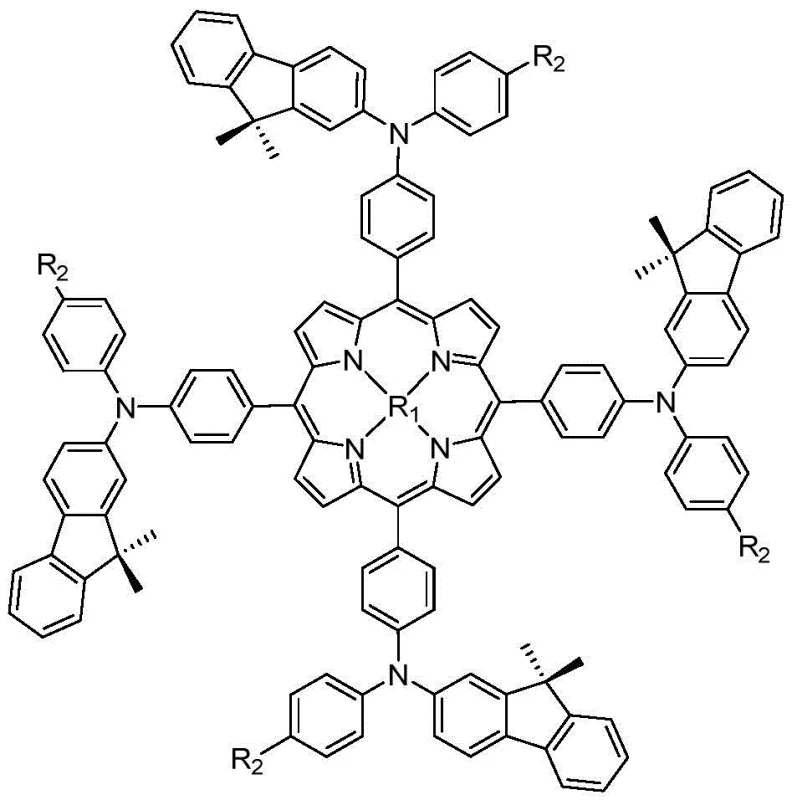
The rapid evolution of the photovoltaic sector demands materials that balance high performance with manufacturing feasibility, a challenge addressed directly by the innovations detailed in patent CN113214272A. This document discloses a novel class of fluorene-modified zinc porphyrin hole transport materials designed to overcome the limitations of traditional organic small molecules like Spiro-OMeTAD. By integrating a planar pi-conjugated porphyrin core with fluorene-modified triarylamine structural units, the invention achieves a remarkable synergy of electronic properties and processability. The resulting compounds, particularly the exemplified ZnP-FL, demonstrate exceptional solubility in standard processing solvents and deliver a verified energy conversion efficiency of 19.31% in perovskite solar cell configurations. For R&D directors and procurement specialists seeking a reliable photovoltaic material supplier, this technology represents a significant leap forward in stabilizing device performance while simplifying the supply chain for next-generation energy solutions.
The Limitations of Conventional Methods vs. The Novel Approach
The Limitations of Conventional Methods
Historically, the commercialization of perovskite solar cells has been hindered by the reliance on Spiro-OMeTAD as the standard hole transport material, despite its well-documented drawbacks regarding cost and synthetic complexity. The multi-step synthesis of Spiro-OMeTAD involves expensive precursors and rigorous purification protocols that drastically inflate the manufacturing overhead, making large-scale deployment economically challenging for the renewable energy sector. Furthermore, the inherent instability of many conventional organic hole transporters under operational conditions often leads to rapid device degradation, necessitating frequent replacements and undermining the long-term viability of solar installations. These factors create a bottleneck for cost reduction in electronic chemical manufacturing, as the industry struggles to find alternatives that do not compromise on power conversion efficiency or device longevity.
The Novel Approach
The patented methodology introduces a strategic molecular design that replaces the problematic spiro-core with a robust porphyrin scaffold functionalized with fluorene derivatives. This structural modification not only enhances the pi-stacking interactions essential for efficient charge carrier mobility but also significantly improves the thermal and morphological stability of the hole transport layer. The synthesis route described allows for the precise tuning of energy levels through the selection of specific substituents, such as methoxy or methylthio groups, ensuring optimal alignment with the perovskite absorber layer. By shifting to this porphyrin-based architecture, manufacturers can achieve high-purity OLED material equivalents for photovoltaics that offer superior electron blocking capabilities and sustained performance metrics without the prohibitive costs associated with legacy materials.
Mechanistic Insights into Palladium-Catalyzed Cross-Coupling and Metalation
The core of this synthetic breakthrough lies in a sophisticated palladium-catalyzed cross-coupling reaction, likely following a Buchwald-Hartwig amination mechanism, which facilitates the robust attachment of bulky fluorene-modified diarylamine groups to the porphyrin periphery. The reaction conditions specified, utilizing tris(dibenzylideneacetone)dipalladium [Pd2(dba)3] and tri-tert-butylphosphine in a toluene solvent system at elevated temperatures (100-140°C), ensure complete conversion of the brominated porphyrin precursor. This catalytic cycle is critical for forming the carbon-nitrogen bonds that define the molecule's electronic landscape, and the use of strong bases like sodium tert-butoxide drives the deprotonation steps necessary for the oxidative addition and reductive elimination phases of the catalytic loop. The careful control of stoichiometry, with molar ratios optimized to minimize homocoupling side reactions, is essential for maintaining the structural integrity of the final product.
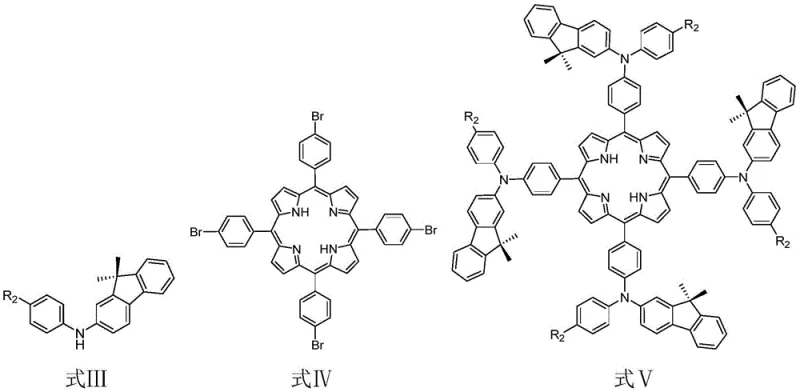
Following the initial coupling, the subsequent metalation step involves the coordination of a central metal ion, specifically zinc in the preferred embodiment, into the porphyrin cavity. This process, typically conducted in polar aprotic solvents like N,N-dimethylformamide (DMF) with zinc acetate, locks the planar conformation of the macrocycle and modifies the frontier molecular orbitals to favor hole extraction over electron recombination. From an impurity control perspective, the protocol emphasizes rigorous purification via silica gel column chromatography and recrystallization, which effectively removes residual palladium catalysts and unreacted amines that could act as trap states in the final device. This attention to detail in the post-reaction workup ensures that the commercial scale-up of complex polymer additives and small molecule semiconductors meets the stringent purity requirements necessary for high-efficiency photovoltaic applications.
How to Synthesize ZnP-FL Efficiently
The practical implementation of this technology is demonstrated through a streamlined two-step procedure that begins with the coupling of a brominated porphyrin core with a fluorene-containing amine derivative. This initial stage requires precise temperature control at approximately 120°C under an inert nitrogen atmosphere to prevent oxidation of the sensitive phosphine ligands and ensure high yields of the intermediate free-base porphyrin. Once the intermediate is isolated and purified, it undergoes a metallation reaction with zinc acetate, transforming the optical and electronic properties of the molecule to create the final active hole transport material known as ZnP-FL. For detailed operational parameters and safety guidelines, please refer to the standardized synthesis steps outlined below.
- Perform a palladium-catalyzed coupling reaction between brominated porphyrin and fluorene-modified diarylamine in toluene at 120°C for 24 hours.
- Purify the intermediate compound via silica gel column chromatography using petroleum ether and dichloromethane.
- React the purified intermediate with zinc acetate in DMF at 120°C for 10 hours to finalize the zinc porphyrin structure.
Commercial Advantages for Procurement and Supply Chain Teams
From a supply chain perspective, the transition to this fluorene-modified porphyrin architecture offers substantial logistical benefits by utilizing widely available commodity chemicals as starting materials. The reliance on standard solvents like toluene and DMF, along with commercially sourced palladium catalysts and zinc salts, eliminates the need for exotic or hard-to-source reagents that often plague the supply chains of specialized electronic chemicals. This accessibility translates directly into reducing lead time for high-purity photovoltaic materials, as procurement teams can secure raw materials from multiple global vendors without being locked into single-source dependencies. Furthermore, the robustness of the reaction conditions allows for flexible manufacturing schedules, mitigating the risks associated with production delays.
- Cost Reduction in Manufacturing: The simplified synthetic route significantly lowers the overall cost of goods sold by reducing the number of purification steps and eliminating the need for expensive chiral resolutions or cryogenic reactions. By avoiding the complex multi-step synthesis required for Spiro-OMeTAD, manufacturers can achieve a leaner production process that minimizes waste generation and solvent consumption. This efficiency gain is compounded by the high yields reported in the patent examples, which maximize the output per batch and reduce the unit cost of the final hole transport material.
- Enhanced Supply Chain Reliability: The use of stable intermediates and robust reaction conditions ensures consistent batch-to-batch quality, which is critical for maintaining the performance standards of downstream solar cell assembly lines. Because the starting materials are common industrial chemicals, the risk of supply disruption due to geopolitical issues or raw material shortages is substantially mitigated. This reliability allows supply chain managers to forecast inventory needs more accurately and maintain optimal stock levels without the fear of sudden price spikes or availability gaps.
- Scalability and Environmental Compliance: The synthesis protocol is inherently scalable, moving seamlessly from gram-scale laboratory experiments to kilogram or ton-scale commercial production without requiring fundamental changes to the reactor setup or process parameters. Additionally, the ability to recycle solvents and the relatively low toxicity profile of the reagents compared to heavy metal alternatives support stricter environmental compliance standards. This scalability ensures that as demand for perovskite solar cells grows, the supply of the hole transport material can expand in parallel to meet market needs.
Frequently Asked Questions (FAQ)
The following questions address common technical and commercial inquiries regarding the synthesis and application of these advanced hole transport materials. These answers are derived directly from the experimental data and claims presented in the patent documentation to provide clarity for potential partners and technical evaluators. Understanding these specifics is crucial for assessing the feasibility of integrating this material into existing manufacturing workflows.
Q: What is the energy conversion efficiency of the ZnP-FL based solar cell?
A: According to patent CN113214272A, the perovskite solar cell utilizing the ZnP-FL hole transport layer achieves an energy conversion efficiency of 19.31%.
Q: Why is this porphyrin derivative preferred over Spiro-OMeTAD?
A: Unlike Spiro-OMeTAD, which suffers from complex synthesis and high costs, this fluorene-modified zinc porphyrin offers a simpler synthetic route, better solubility in common solvents, and superior long-term stability.
Q: What catalysts are used in the synthesis?
A: The synthesis utilizes a palladium catalyst system, specifically tris(dibenzylideneacetone)dipalladium [Pd2(dba)3] combined with tri-tert-butylphosphine ligands.
Partnering with NINGBO INNO PHARMCHEM: Your Reliable ZnP-FL Supplier
At NINGBO INNO PHARMCHEM, we recognize the transformative potential of fluorene-modified zinc porphyrins in the next generation of photovoltaic technology. As a premier CDMO partner, we possess extensive experience scaling diverse pathways from 100 kgs to 100 MT/annual commercial production, ensuring that your transition from lab-scale discovery to mass market deployment is seamless and efficient. Our state-of-the-art facilities are equipped with rigorous QC labs capable of meeting stringent purity specifications, guaranteeing that every batch of ZnP-FL delivered meets the exacting standards required for high-efficiency perovskite solar cells.
We invite you to collaborate with our technical team to explore how this innovative material can optimize your product lineup and reduce overall system costs. Please contact our Customized Cost-Saving Analysis department to request specific COA data and route feasibility assessments tailored to your unique production requirements. Our dedicated technical procurement team is ready to assist you in securing a stable, high-quality supply of these critical electronic materials.