
Advanced Electrochemical Synthesis of Thiourea Compounds for Commercial Scale-up
Introduction to Green Electrochemical Thiourea Synthesis
The pharmaceutical and agrochemical industries are constantly seeking sustainable methodologies to construct bioactive scaffolds, and the recent disclosure in patent CN114150335A presents a transformative approach to synthesizing thiourea compounds. This technology leverages electrochemical organic synthesis to directly couple tertiary amines with phenyl isothiocyanates, bypassing the need for harsh chemical oxidants or complex transition metal catalysts. By utilizing a diaphragm-free electrolytic cell under constant current conditions, this method achieves high conversion rates at ambient temperature and pressure, representing a significant leap forward in green chemistry. For R&D directors and process chemists, this offers a streamlined pathway to access valuable thiourea intermediates which are critical for developing antispasmodic, hypoglycemic, and anti-tumor agents. The simplicity of the reaction setup, combined with the avoidance of toxic gases like H2S or phosgene derivatives traditionally used in thiourea synthesis, positions this electrochemical route as a superior alternative for modern manufacturing.
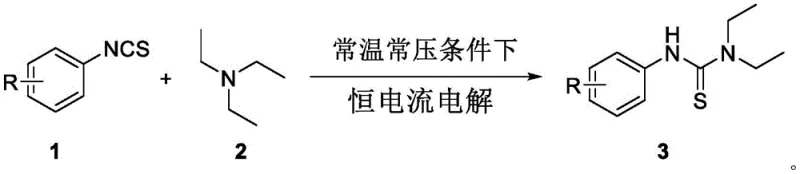
The Limitations of Conventional Methods vs. The Novel Approach
The Limitations of Conventional Methods
Historically, the preparation of thiourea derivatives has relied heavily on the reaction of primary or secondary amines with highly reactive and hazardous reagents such as carbon disulfide, thiophosgene, or isothiocyanates under stringent conditions. These traditional pathways often necessitate the use of anhydrous solvents, generate toxic byproducts like hydrogen chloride or hydrogen sulfide gas, and involve cumbersome multi-step purification procedures that lower overall process efficiency. Furthermore, recent attempts to utilize tertiary amines have been hindered by the requirement for sophisticated photocatalysts, such as N-ZnO or black TiO2 nanoparticles, which themselves demand energy-intensive synthesis protocols involving high temperatures up to 600°C under inert atmospheres. These operational complexities not only inflate the cost of goods but also introduce significant safety risks and supply chain bottlenecks, making large-scale production economically unviable for many fine chemical manufacturers seeking reliable thiourea compound suppliers.
The Novel Approach
In stark contrast, the electrochemical method disclosed in the patent utilizes electricity as a clean reagent to drive the transformation, eliminating the need for pre-synthesized metal catalysts entirely. By employing a simple undivided cell with inert electrodes like platinum or reticulated vitreous carbon, the reaction proceeds smoothly in mixed aqueous-organic solvent systems at room temperature. This novel approach drastically simplifies the operational workflow, as it avoids the handling of moisture-sensitive reagents and the disposal of heavy metal waste streams associated with photocatalytic methods. The ability to tolerate water in the solvent system further enhances the environmental profile of the process, aligning with global sustainability goals while maintaining high yields. This shift from thermal or photochemical activation to electrochemical activation represents a paradigm shift in cost reduction in pharmaceutical intermediates manufacturing, offering a safer and more direct route to complex nitrogen-sulfur containing motifs.
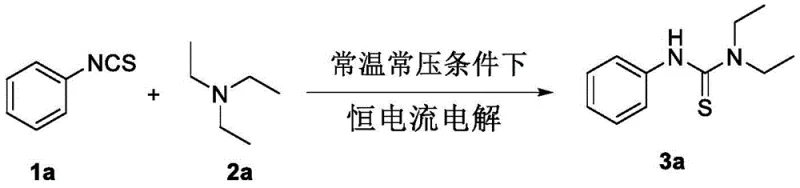
Mechanistic Insights into Electrochemical Oxidative Coupling
The core of this innovation lies in the anodic oxidation mechanism where the tertiary amine serves as both a reactant and an electron donor within the electrochemical cell. Under constant current electrolysis, the tertiary amine undergoes single-electron oxidation at the anode surface to generate a radical cation intermediate, which subsequently facilitates the nucleophilic attack or coupling with the phenyl isothiocyanate species. This electro-generated active species bypasses the high energy barriers typical of thermal reactions, allowing the formation of the thiourea bond (-HN-CS-N-) under mild conditions without external oxidants. The use of supporting electrolytes such as lithium perchlorate or tetrabutylammonium tetrafluoroborate ensures sufficient conductivity and stabilizes the charged intermediates throughout the reaction cycle. Understanding this mechanism is crucial for process optimization, as it highlights the importance of current density and electrode material selection in controlling the selectivity and rate of the transformation, ensuring minimal formation of over-oxidized byproducts.
From an impurity control perspective, the electrochemical nature of the reaction offers distinct advantages over traditional catalytic cycles which often suffer from metal leaching or catalyst degradation products. Since no transition metal catalyst is added to the system, the final product stream is inherently free from heavy metal contaminants, a critical quality attribute for high-purity pharmaceutical intermediates intended for clinical applications. The reaction conditions, specifically the use of ambient temperature and normal pressure, prevent thermal decomposition of sensitive functional groups that might be present on the aromatic ring, such as the methoxy group seen in substrate variations. This inherent selectivity reduces the burden on downstream purification processes, allowing for simpler extraction and crystallization steps to achieve the required purity specifications, thereby enhancing the overall robustness of the synthetic route for commercial scale-up of complex thiourea derivatives.
How to Synthesize Thiourea Derivatives Efficiently
To implement this synthesis effectively, operators must adhere to precise electrochemical parameters to maximize yield and reproducibility. The process begins with the preparation of the electrolyte solution, where salts like LiClO4 are dissolved in a mixture of acetonitrile and water, followed by the addition of the tertiary amine and isothiocyanate substrates. The reaction is conducted in an undivided cell equipped with platinum or carbon electrodes, stirring continuously while applying a constant current typically between 5 mA and 20 mA. Detailed standardized synthesis steps see the guide below.
- Prepare the electrolytic cell by adding electrolyte (e.g., LiClO4), solvent (MeCN/H2O), tertiary amine, and phenyl isothiocyanate into an undivided cell.
- Insert platinum or RVC electrodes, stir the mixture, and apply a constant current of 5-20 mA at room temperature for 2-6 hours.
- Upon completion, extract the electrolyte with an organic solvent like ethyl acetate, then separate and purify to obtain the thiourea product.
Commercial Advantages for Procurement and Supply Chain Teams
For procurement managers and supply chain heads, the adoption of this electrochemical technology translates into tangible strategic benefits regarding cost stability and operational flexibility. The elimination of expensive and difficult-to-source photocatalysts like nano-TiO2 removes a significant variable from the raw material cost structure, leading to substantial cost savings in the long term. Furthermore, the use of commodity chemicals such as triethylamine and readily available isothiocyanates ensures a resilient supply chain that is less susceptible to geopolitical disruptions or niche supplier monopolies. The mild reaction conditions also imply lower energy consumption for heating or cooling, contributing to a reduced carbon footprint and lower utility costs, which is increasingly important for meeting corporate sustainability targets in the fine chemical sector.
- Cost Reduction in Manufacturing: The most significant economic driver of this technology is the complete removal of transition metal catalysts, which not only saves on the initial purchase price of the catalyst but also eliminates the costly downstream processing steps required to remove trace metals from the final product. Traditional methods often require specialized scavengers or chromatography to meet strict ppm limits for heavy metals, whereas this electrochemical route produces a cleaner crude mixture that simplifies purification. Additionally, the ability to run the reaction in aqueous-organic mixtures reduces the volume of pure organic solvents required, lowering solvent recovery costs and waste disposal fees associated with hazardous organic waste streams.
- Enhanced Supply Chain Reliability: By relying on electricity as the primary driving force and using abundant starting materials, the manufacturing process becomes less dependent on complex global supply chains for specialized reagents. The robustness of the method against moisture, evidenced by the successful use of water-containing solvent systems, reduces the need for expensive anhydrous grade solvents and strict inert atmosphere controls. This tolerance simplifies warehouse storage requirements and logistics, allowing for faster turnaround times and reducing lead time for high-purity thiourea compounds, ensuring that production schedules can be met consistently without unexpected delays due to reagent quality issues.
- Scalability and Environmental Compliance: The use of a diaphragm-free cell design significantly simplifies the engineering requirements for scaling this process from laboratory to pilot and commercial plant scales. Unlike divided cells which require membrane maintenance and complex flow management, the undivided configuration allows for straightforward reactor fabrication and operation, facilitating rapid capacity expansion. Moreover, the green nature of the process, characterized by the absence of toxic gas evolution and the use of benign electrolytes, ensures easier compliance with increasingly stringent environmental regulations, minimizing the risk of regulatory shutdowns and enhancing the company's reputation as a responsible chemical manufacturer.
Frequently Asked Questions (FAQ)
The following questions address common technical and commercial inquiries regarding the implementation of this electrochemical synthesis route. These answers are derived directly from the experimental data and technical disclosures within the patent documentation to provide clarity on process capabilities and limitations. Understanding these details is essential for evaluating the feasibility of integrating this technology into existing production lines or new product development pipelines.
Q: What are the advantages of this electrochemical method over traditional catalysts?
A: Unlike traditional methods requiring complex N-ZnO or black TiO2 photocatalysts synthesized at high temperatures, this electrochemical approach operates at room temperature without additional metal catalysts, simplifying the workflow and reducing costs.
Q: Is this method scalable for industrial production?
A: Yes, the method uses a simple undivided cell configuration and common electrolytes, making it highly suitable for commercial scale-up without the need for specialized high-pressure or high-temperature equipment.
Q: What yields can be expected from this synthesis route?
A: The patent reports high yields ranging from 72% to 93% across various examples, demonstrating robust efficiency even with different substituents on the phenyl ring.
Partnering with NINGBO INNO PHARMCHEM: Your Reliable Thiourea Compounds Supplier
At NINGBO INNO PHARMCHEM, we recognize the immense potential of this electrochemical pathway to redefine the production standards for thiourea-based intermediates. As a leading CDMO partner, we possess extensive experience scaling diverse pathways from 100 kgs to 100 MT/annual commercial production, ensuring that your transition from lab-scale discovery to market-ready supply is seamless and efficient. Our state-of-the-art facilities are equipped with advanced electrochemical reactors and rigorous QC labs capable of meeting stringent purity specifications, guaranteeing that every batch delivered meets the highest quality standards required by the global pharmaceutical industry.
We invite you to collaborate with us to leverage this innovative technology for your specific project needs. Our technical team is ready to perform a Customized Cost-Saving Analysis tailored to your target molecule, evaluating how this metal-free route can optimize your bill of materials. Please contact our technical procurement team today to request specific COA data and route feasibility assessments, and let us demonstrate how our expertise can accelerate your supply chain and reduce your time to market.
Engineering Bottleneck?
Can't scale up this synthesis? Upload your target structure or CAS, and our CDMO team will evaluate the industrial feasibility within 24 hours. Request Evaluation →