
Advanced Purification Technology for High-Purity Paroxetine Hydrochloride Commercial Production
The pharmaceutical industry continuously demands higher standards for Active Pharmaceutical Ingredients (APIs), particularly for critical antidepressants like Paroxetine Hydrochloride. Patent CN102285973B introduces a groundbreaking purification methodology that addresses the longstanding challenges of impurity profiles and batch consistency in the manufacturing of this essential compound. By leveraging a sophisticated combination of silica gel column chromatography and precise gradient recrystallization, this technology enables the production of Paroxetine Hydrochloride with a purity exceeding 99.5%, significantly surpassing conventional bulk drug standards. This advancement is not merely a laboratory curiosity but represents a viable pathway for industrial-scale production that minimizes toxic side effects associated with residual impurities. For global procurement teams and R&D directors, understanding the technical nuances of this patent is crucial for securing a reliable supply chain of high-quality intermediates. The method effectively eliminates polymeric impurities and color bodies that often plague traditional synthesis routes, thereby enhancing the safety profile of the final dosage forms. As we delve into the technical specifics, it becomes evident that this approach offers a robust solution for cost reduction in pharmaceutical manufacturing by streamlining the purification workflow while maximizing yield quality.
The Limitations of Conventional Methods vs. The Novel Approach
The Limitations of Conventional Methods
Traditional synthesis and purification routes for Paroxetine Hydrochloride have historically struggled with maintaining consistent purity levels, often resulting in products with significant color differences and low content values. Existing methods, such as those described in prior art like WO00/32591, frequently rely on ultrasonic irradiation or the addition of special additives to induce crystallization, which introduces unnecessary operational complexity and running costs. These conventional techniques often fail to adequately remove trace organic solvents, heavy metals, and bacterial endotoins that are introduced during the synthesis process, leading to a final product that may not meet the stringent requirements of modern regulatory bodies. Furthermore, the use of ordinary organic chemical synthesis purification methods provides limited improvement in purity, leaving behind impurities that can affect the mass effect of the preparation and potentially cause clinical adverse reactions. The reliance on single-solvent recrystallization or suspension stirring methods often results in difficult crystallization processes or the separation of impurities with high content, compromising the overall quality of the bulk drug. Consequently, manufacturers face significant challenges in scaling these processes without incurring excessive waste or failing quality control checks, creating a bottleneck for efficient commercial scale-up of complex pharmaceutical intermediates.
The Novel Approach
The innovative method disclosed in the patent overcomes these defects by implementing a multi-step purification strategy that fundamentally changes the purity landscape for domestic and international Paroxetine Hydrochloride materials. Instead of relying on complex ultrasonic equipment or questionable additives, this approach utilizes a preparative scale silica gel column chromatography step followed by a controlled acidic recrystallization process. The process begins with dissolving the raw material in methanol and filtering out solid impurities, followed by loading onto a silica gel column with specific pore characteristics to adsorb colored impurities and by-products effectively. This is followed by elution with a methanol and water mixed solvent, concentrating the eluate, and then performing a gradient temperature reduction recrystallization in the presence of dilute hydrochloric acid. This novel sequence ensures that the final crystals are free from the polymeric impurities and solvent residues that typically degrade product quality. By optimizing the mobile phase ratio and the cooling gradient, the method achieves a purity greater than 99.5% with improved production quality and reduced toxic side effects. This streamlined approach is highly suitable for industrial large-scale production, offering a clear advantage in terms of operational simplicity and product consistency compared to legacy methods.
Mechanistic Insights into Silica Gel Chromatography and Acidic Recrystallization
The core of this purification technology lies in the specific interaction between the Paroxetine Hydrochloride molecule and the silica gel stationary phase, which acts as a highly selective filter for impurities. The patent specifies the use of silica gel with a particle diameter of 45-250 μm and a pore size of 80-100 Angstroms, which is critical for the effective adsorption of composition impurities and pigments without retaining the target molecule excessively. Unlike macroporous resins or aluminum oxide, which showed undesirable results in screening experiments, this specific silica gel configuration allows for the complete removal of color bodies and related substances that are structurally similar to the API. The mobile phase, consisting of a methanol and water volume ratio of 5 to 7:1, is optimized to ensure complete elution of the drug while leaving behind higher molecular weight impurities on the column. This chromatographic step is essential for breaking the cycle of impurity accumulation that occurs in direct crystallization methods, providing a clean slate for the final crystallization step. The mechanism relies on the differential adsorption capacities of the silica surface, ensuring that only the high-purity Paroxetine Hydrochloride is collected in the eluate fractions.
Following chromatography, the recrystallization mechanism plays a pivotal role in defining the crystal lattice purity and removing residual solvents. The addition of a dilute hydrochloric acid aqueous solution (0.001-0.1M) to the methanol solution at temperatures not higher than 80°C adjusts the pH to between 4 and 6, creating an optimal environment for crystal nucleation. The gradient cooling process, which reduces the temperature from 50-60°C down to 10-25°C over a period of 2 to 20 hours, allows for the slow and orderly growth of crystals, minimizing the entrapment of mother liquor impurities. This controlled supersaturation prevents the rapid precipitation that often leads to occluded impurities and poor crystal morphology. The use of a methanol-water mixture as the solvent system enhances the solubility profile, allowing for a more efficient separation of the target compound from remaining trace contaminants. Surprisingly, this combination of steps removes impurity materials that have a disadvantageous effect on recrystallization, resulting in a product with significantly reduced toxic side effects and improved formulation quality. This mechanistic understanding is vital for R&D directors aiming to replicate this high-purity standard in their own facilities.
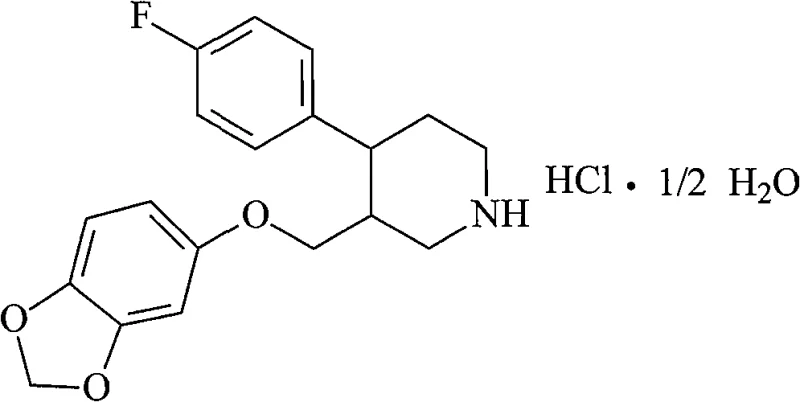
How to Synthesize Paroxetine Hydrochloride Efficiently
The synthesis and purification of Paroxetine Hydrochloride using this patented method requires precise adherence to the defined parameters to ensure the successful replication of the high-purity results. The process is designed to be scalable, moving from laboratory optimization to commercial production with minimal loss of efficiency or quality control. Operators must carefully monitor the flow velocity of the chromatography column, maintaining it between 1.0-1.5ml/min to ensure adequate contact time for impurity adsorption. Additionally, the collection of eluate fractions must be strictly managed, merging only those flow points where the medicament content is greater than 90% to guarantee the final purity specification. The subsequent recrystallization step demands accurate temperature control, with specific cooling rates applied at different stages to facilitate the formation of the desired crystal habit. Detailed standardized synthesis steps are essential for maintaining batch-to-batch consistency and meeting the rigorous demands of the pharmaceutical market.
- Dissolve crude Paroxetine Hydrochloride in methanol, filter to remove solid impurities, and load the filtrate onto a silica gel column with 80-100 Angstrom pore size.
- Elute the column using a methanol and water mixed solvent system, collect fractions with high drug content, and concentrate under reduced pressure to obtain a purified methanol solution.
- Add dilute hydrochloric acid to adjust pH to 4-6 at temperatures below 80°C, then perform gradient cooling recrystallization to isolate high-purity crystals.
Commercial Advantages for Procurement and Supply Chain Teams
For procurement managers and supply chain heads, the adoption of this purification technology translates into tangible benefits regarding cost stability and supply reliability. By eliminating the need for expensive ultrasonic equipment and special additives required by older methods, the manufacturing process becomes significantly simplified, leading to substantial cost savings in terms of both capital expenditure and operational overhead. The removal of transition steps and the use of common solvents like methanol and water reduce the complexity of solvent recovery systems, further enhancing the economic viability of the process. This simplification also means that the production line is less prone to mechanical failures or process deviations, ensuring a more consistent output of high-quality material. The ability to produce Paroxetine Hydrochloride with purity greater than 99.5% reduces the risk of batch rejection during quality control, minimizing waste and maximizing the yield of saleable product. These factors combine to create a more resilient supply chain capable of meeting the demands of global pharmaceutical markets without the volatility associated with complex, low-yield synthesis routes.
- Cost Reduction in Manufacturing: The elimination of specialized additives and ultrasonic irradiation equipment drastically reduces the operational costs associated with the crystallization process. By relying on standard silica gel chromatography and controlled temperature recrystallization, manufacturers can avoid the high maintenance and energy costs linked to advanced physical processing methods. The use of readily available solvents and the optimization of the mobile phase ratio ensure that raw material costs remain stable and predictable. Furthermore, the high purity of the final product reduces the need for re-processing or secondary purification steps, which are often costly and time-consuming. This streamlined approach allows for a more efficient allocation of resources, focusing on volume production rather than troubleshooting quality issues.
- Enhanced Supply Chain Reliability: The robustness of this purification method ensures a continuous and reliable supply of Paroxetine Hydrochloride, critical for manufacturers of antidepressant medications. The process is less sensitive to minor variations in raw material quality due to the effectiveness of the chromatographic cleaning step, which acts as a buffer against upstream inconsistencies. This reliability reduces the lead time for high-purity pharmaceutical intermediates, allowing downstream formulators to plan their production schedules with greater confidence. The scalability of the method from 100 kgs to 100 MT annual commercial production means that suppliers can easily ramp up output to meet surges in demand without compromising on quality standards. This flexibility is a key asset in a market where supply disruptions can have significant financial and reputational consequences.
- Scalability and Environmental Compliance: The process is designed with industrial scale-up in mind, utilizing equipment and conditions that are easily transferable to large-scale manufacturing plants. The use of methanol and water as primary solvents simplifies waste treatment and solvent recovery, aligning with increasingly strict environmental regulations regarding volatile organic compounds. The removal of heavy metals and bacterial endotoxins during the purification process ensures that the final product meets safety standards without the need for additional toxic clearing agents. This environmental compliance not only mitigates regulatory risk but also enhances the sustainability profile of the manufacturing operation. The ability to handle large volumes of crude material efficiently makes this method ideal for meeting the growing global demand for high-quality Paroxetine Hydrochloride.
Frequently Asked Questions (FAQ)
The following questions address common technical and commercial inquiries regarding the purification of Paroxetine Hydrochloride based on the specific details provided in the patent documentation. These answers are derived from the experimental data and process descriptions to provide clarity on the feasibility and advantages of this method. Understanding these aspects is essential for technical teams evaluating the integration of this technology into their existing production workflows. The information provided here serves as a guide for assessing the potential impact on product quality and operational efficiency.
Q: What purity level can be achieved with this purification method?
A: The patented process described in CN102285973B consistently achieves a purity level greater than 99.5% by effectively removing polymeric impurities and residual solvents through specific silica gel chromatography and controlled recrystallization.
Q: Why is silica gel chromatography preferred over macroporous resin for this compound?
A: Experimental data within the patent indicates that macroporous resin does not provide clear improvement in purity, whereas silica gel with a pore size of 80-100 Angstroms fully adsorbs colored impurities and by-products, ensuring a superior quality profile for the final API.
Q: How does the gradient cooling process impact crystal quality?
A: The method employs a specific gradient cooling strategy, reducing temperature from 80°C to room temperature over several hours, which prevents the inclusion of mother liquor impurities and ensures the formation of stable, high-purity crystals suitable for pharmaceutical formulation.
Partnering with NINGBO INNO PHARMCHEM: Your Reliable Paroxetine Hydrochloride Supplier
At NINGBO INNO PHARMCHEM, we recognize the critical importance of purity and consistency in the supply of Paroxetine Hydrochloride for the global pharmaceutical market. Our team possesses extensive experience scaling diverse pathways from 100 kgs to 100 MT/annual commercial production, ensuring that we can meet the volume requirements of major drug manufacturers without compromising on quality. We adhere to stringent purity specifications and utilize rigorous QC labs to verify that every batch meets or exceeds the 99.5% purity benchmark established by advanced purification technologies. Our commitment to technical excellence allows us to offer a reliable Paroxetine Hydrochloride supplier partnership that supports your long-term production goals. We understand the complexities of API manufacturing and are dedicated to providing solutions that enhance your supply chain resilience and product efficacy.
We invite you to collaborate with us to optimize your sourcing strategy and achieve significant improvements in your manufacturing outcomes. Our technical procurement team is ready to provide a Customized Cost-Saving Analysis tailored to your specific volume and quality requirements. We encourage you to contact us to request specific COA data and route feasibility assessments that demonstrate our capability to deliver high-purity intermediates consistently. By partnering with NINGBO INNO PHARMCHEM, you gain access to a supply chain that is both robust and responsive to the dynamic needs of the pharmaceutical industry. Let us help you secure the quality and reliability your products deserve.
Engineering Bottleneck?
Can't scale up this synthesis? Upload your target structure or CAS, and our CDMO team will evaluate the industrial feasibility within 24 hours. Request Evaluation →