
Advanced Phosphorescent Iridium Complexes for High-Efficiency OLED Display Manufacturing and Commercial Scale-Up
Advanced Phosphorescent Iridium Complexes for High-Efficiency OLED Display Manufacturing and Commercial Scale-Up
Introduction to High-Performance OLED Emitters
The rapid evolution of display technology has placed organic light-emitting diodes (OLED) at the forefront of the electronic chemical industry, driven by their superior self-luminescence and energy efficiency. Patent CN101200635A introduces a groundbreaking class of phosphorescent iridium complexes that leverage 1-phenylphthalazine derivatives as ligands to overcome traditional efficiency limits. This innovation addresses the critical bottleneck of triplet exciton utilization, theoretically enabling internal quantum efficiencies approaching 100% compared to the 25% limit of fluorescent materials. For R&D directors and procurement managers, this technology represents a significant leap forward in achieving high-purity OLED material standards while maintaining robust supply chain reliability. The structural versatility of these complexes allows for precise tuning of emission wavelengths from blue to red, catering to the diverse needs of next-generation display and optoelectronic applications.
The Limitations of Conventional Methods vs. The Novel Approach
The Limitations of Conventional Methods
Traditional organic electroluminescent materials often suffer from inherent inefficiencies due to the statistical formation ratio of singlet and triplet excitons, where only singlet states contribute to light emission in fluorescent systems. Conventional phosphorescent materials, while capable of harvesting triplet excitons, frequently encounter issues with stability and solubility that complicate the device fabrication process. Many existing iridium complexes rely on simple pyridine derivatives which may not provide sufficient steric hindrance to prevent concentration quenching at high doping levels. Furthermore, the purification of these legacy materials can be arduous, leading to inconsistent batch quality and increased production costs for reliable OLED material supplier networks. The lack of tunability in older ligand systems also restricts the ability to optimize energy transfer efficiency across different host materials.
The Novel Approach
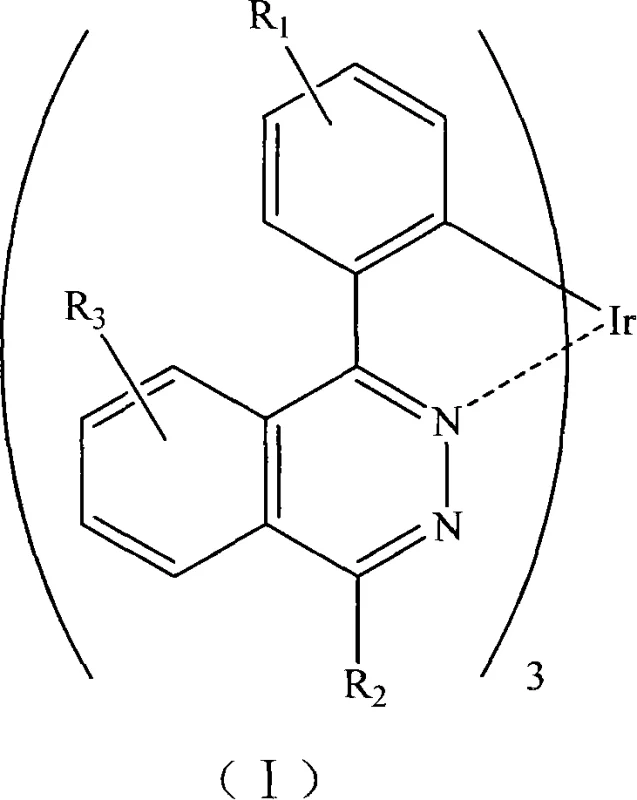
The novel approach detailed in the patent utilizes 1-phenylphthalazine derivatives to create a sophisticated coordination environment around the iridium metal ion. This specific ligand architecture not only modulates the conjugated system for optimal energy transmission but also introduces steric effects that physically separate luminescent centers. By reducing the direct interaction between complexes, the technology effectively minimizes triplet exciton self-quenching, a common failure mode in high-brightness applications. The resulting materials exhibit exceptional solubility and thermal stability, which are critical for vacuum evaporation processes used in commercial scale-up of complex display materials. This design philosophy ensures that the electroluminescent devices maintain high luminous brightness and stability over extended operational periods.
Mechanistic Insights into Iridium-Catalyzed Phosphorescence
The core mechanism behind the enhanced performance lies in the strong spin-orbit coupling induced by the heavy iridium atom, which facilitates intersystem crossing from singlet to triplet states. The 1-phenylphthalazine ligand plays a pivotal role in this process by stabilizing the metal-to-ligand charge transfer (3MLCT) state, which is responsible for the phosphorescent emission. This electronic configuration ensures that both singlet and triplet excitons contribute to light output, drastically improving the internal quantum yield of the device. The ability to fine-tune the ligand structure allows chemists to manipulate the HOMO-LUMO energy gap, thereby controlling the emission color without sacrificing efficiency. Such precise control is essential for producing high-purity OLED material batches that meet the stringent color coordinate requirements of modern display panels.
Impurity control is another critical aspect of this mechanistic design, as trace contaminants can act as quenching sites that degrade device performance. The synthetic route described promotes high selectivity, reducing the formation of side products that are difficult to separate. The steric bulk provided by the substituents on the phenylphthalazine ring further protects the iridium center from nucleophilic attack or degradation during device operation. This inherent stability translates to longer device lifetimes and reduced failure rates in the field. For supply chain heads, this means a more predictable product lifecycle and reduced risk of returns due to performance degradation. The robust nature of the complex ensures that it can withstand the rigorous conditions of device encapsulation and operation.
How to Synthesize Phosphorescent Iridium Complexes Efficiently
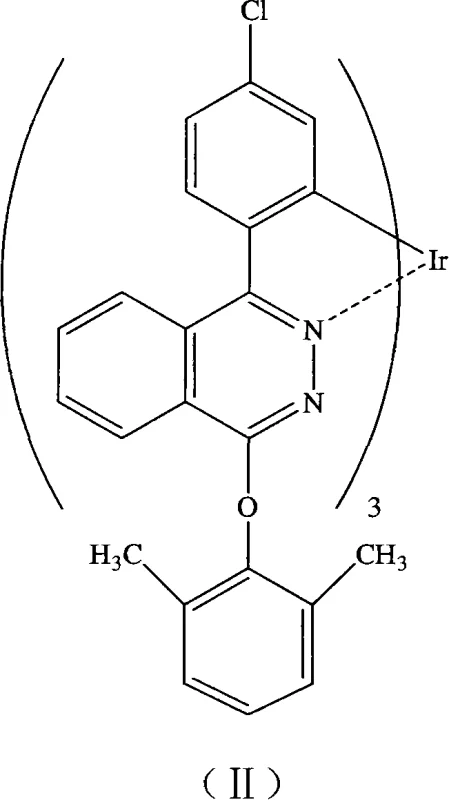
The synthesis of these advanced materials follows a logical two-step pathway that is amenable to optimization for industrial production. The process begins with the construction of the functionalized ligand, followed by the coordination of the iridium metal center under controlled conditions. This modular approach allows for the easy introduction of various substituents to tailor the material properties for specific applications. The detailed standardized synthesis steps see the guide below, which outlines the specific reaction conditions and purification protocols necessary to achieve the high purity required for electronic applications. Adhering to these protocols ensures consistent quality and reproducibility, which are paramount for maintaining trust with international procurement teams.
- Synthesize the 1-phenylphthalazine derivative ligand through condensation and substitution reactions under reflux conditions.
- Complex the ligand with trivalent iridium ions (IrCl3·3H2O) in a mixed solvent system under nitrogen protection at elevated temperatures.
- Purify the resulting phosphorescent complex using silica gel column chromatography and recrystallization to ensure high purity for device fabrication.
Commercial Advantages for Procurement and Supply Chain Teams
From a commercial perspective, the adoption of this technology offers substantial cost savings and supply chain resilience for manufacturers of electronic chemicals. The high synthesis yield and ease of purification directly translate to reduced waste and lower processing costs per kilogram of final product. By eliminating the need for complex post-synthesis treatments to remove stubborn impurities, manufacturers can streamline their production workflows and increase throughput. This efficiency is crucial for reducing lead time for high-purity OLED emitters, allowing companies to respond more quickly to market demands. Furthermore, the stability of the materials reduces the risk of degradation during storage and transport, ensuring that the product arrives at the fabrication facility in optimal condition.
- Cost Reduction in Manufacturing: The streamlined synthetic route minimizes the consumption of expensive reagents and solvents, leading to significant operational expenditure savings. By avoiding the use of difficult-to-remove catalysts or protecting groups, the overall cost of goods sold is drastically simplified. This economic efficiency allows for more competitive pricing strategies in the highly contested display material market. Additionally, the high yield reduces the raw material burden, making the process more sustainable and cost-effective over the long term.
- Enhanced Supply Chain Reliability: The robustness of the synthesis process ensures consistent output quality, which is vital for maintaining uninterrupted production lines at client facilities. The use of readily available starting materials mitigates the risk of supply disruptions caused by raw material shortages. This reliability fosters stronger partnerships between chemical suppliers and display manufacturers, as it guarantees a steady flow of critical components. Consequently, procurement managers can plan their inventory with greater confidence, knowing that the supply of high-performance emitters is secure.
- Scalability and Environmental Compliance: The reaction conditions, primarily conducted under normal pressure and moderate temperatures, are inherently safer and easier to scale than high-pressure alternatives. This facilitates the commercial scale-up of complex display materials without requiring massive capital investment in specialized high-pressure reactors. Moreover, the reduced waste generation aligns with increasingly strict environmental regulations, simplifying the compliance process for manufacturing facilities. This combination of scalability and compliance makes the technology an attractive option for long-term investment in green chemistry initiatives.
Frequently Asked Questions (FAQ)
The following questions address common technical and commercial inquiries regarding the implementation of this phosphorescent iridium technology. These answers are derived directly from the patent data to provide accurate and actionable insights for decision-makers. Understanding these details is essential for evaluating the feasibility of integrating these materials into existing production workflows. The information provided here serves as a foundation for further technical discussions and feasibility assessments with our engineering team.
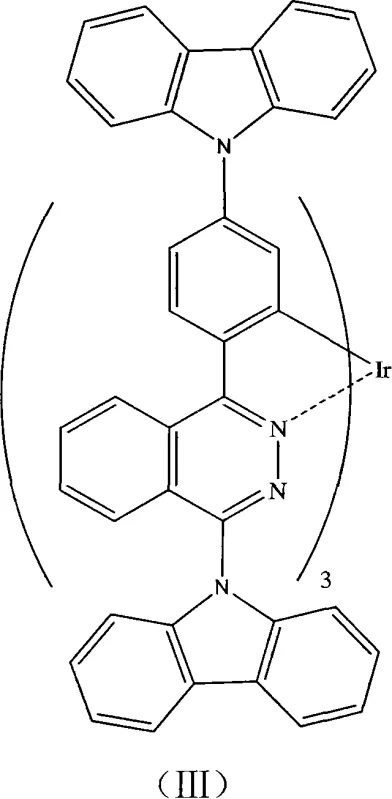
Q: How does the 1-phenylphthalazine ligand improve OLED efficiency?
A: The 1-phenylphthalazine group adjusts the conjugated system size to optimize energy transfer efficiency and reduces triplet exciton self-quenching through steric effects, significantly enhancing luminous performance.
Q: What are the stability advantages of these iridium complexes?
A: These complexes exhibit high thermal stability and solubility, which facilitates evaporation processes and improves the film-forming properties and operational stability of the final electroluminescent devices.
Q: Is this synthesis route suitable for large-scale production?
A: Yes, the preparation process is conducted under normal pressure with high synthesis yields and easy purification steps, making it highly amenable to commercial scale-up of complex display materials.
Partnering with NINGBO INNO PHARMCHEM: Your Reliable Phosphorescent Iridium Complex Supplier
NINGBO INNO PHARMCHEM stands ready to support your transition to next-generation OLED materials with our extensive experience scaling diverse pathways from 100 kgs to 100 MT/annual commercial production. Our technical team possesses the expertise to navigate the complexities of organometallic synthesis, ensuring that stringent purity specifications are met for every batch. We operate rigorous QC labs that employ advanced analytical techniques to verify the structural integrity and performance characteristics of each lot. This commitment to quality ensures that our partners receive materials that consistently perform at the highest level in their device architectures.
We invite you to engage with our technical procurement team to discuss how this technology can optimize your supply chain. Request a Customized Cost-Saving Analysis to understand the specific economic benefits for your operation. Our team is prepared to provide specific COA data and route feasibility assessments to accelerate your decision-making process. By partnering with us, you gain access to a reliable source of high-performance electronic chemicals that drive innovation in the display industry.
Engineering Bottleneck?
Can't scale up this synthesis? Upload your target structure or CAS, and our CDMO team will evaluate the industrial feasibility within 24 hours. Request Evaluation →