
Advanced Manufacturing of N-methyl N'-nitroguanidine: A Strategic Breakthrough for Agrochemical Supply Chains
The global demand for next-generation neonicotinoid insecticides continues to drive the need for efficient, scalable, and cost-effective production of key intermediates. Among these, N-methyl N'-nitroguanidine stands out as a critical building block for the synthesis of high-value agrochemicals such as thiamethoxam. A pivotal advancement in this domain is documented in Chinese Patent CN100551904C, which discloses a robust synthetic methodology that fundamentally alters the economic landscape of producing this vital compound. By shifting away from expensive precursor materials and complex high-pressure equipment, this technology offers a streamlined pathway that aligns perfectly with modern green chemistry principles and industrial efficiency standards. The core innovation lies in the strategic utilization of dicyandiamide and methylamine nitrate, creating a reaction cascade that maximizes yield while minimizing operational complexity. For R&D directors and procurement strategists alike, understanding the nuances of this patent is essential for securing a competitive edge in the agrochemical supply chain.
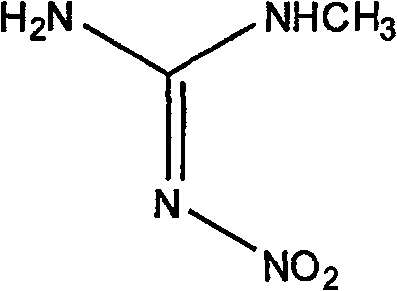
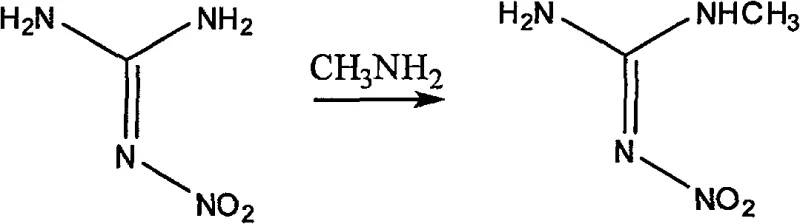
Historically, the manufacturing landscape for N-methyl N'-nitroguanidine has been constrained by significant technical and economic bottlenecks inherent in conventional synthetic routes. One prevalent traditional method, referenced in prior art such as CN1163888A, involves the direct reaction of nitroguanidine with an aqueous methylamine solution at temperatures ranging from 0 to 40°C. While chemically straightforward, this approach suffers from a critical flaw: the raw material, nitroguanidine, commands a substantially higher market price compared to alternative nitrogen sources, thereby inflating the production cost of the final intermediate. Furthermore, this legacy process often struggles with suboptimal reaction yields, leading to increased waste generation and reduced overall process efficiency. Another existing technique, described in CN1251089A, attempts to bypass nitroguanidine by neutralizing methylamine with nitric acid and reacting it with cyanamide. However, this route introduces severe engineering challenges, necessitating the use of high-pressure autoclaves and organic solvents like n-butanol. The requirement for pressurized vessels not only escalates capital expenditure for reactor infrastructure but also imposes rigorous safety protocols and maintenance schedules that can hinder continuous large-scale production.
In stark contrast to these limitations, the novel approach detailed in CN100551904C presents a paradigm shift by employing a two-step sequence that leverages abundant and inexpensive feedstocks. The process initiates with the in situ preparation of methylamine nitrate, achieved by neutralizing methylamine with nitric acid and removing water to obtain a molten state. This intermediate is then reacted directly with dicyandiamide at elevated temperatures between 90 and 140°C to form Compound I, identified as N-methyl N'-guanidine nitrate. This step is crucial as it constructs the necessary carbon-nitrogen framework without the need for exotic catalysts or extreme pressures. The subsequent transformation involves treating Compound I with concentrated sulfuric acid at mild temperatures of 15 to 35°C. This nitration step efficiently converts the guanidine nitrate into the target N-methyl N'-nitroguanidine (Compound II). The elegance of this route lies in its simplicity; it eliminates the need for high-pressure autoclaves entirely, allowing the reaction to proceed in standard enamel-lined reactors. Moreover, the use of dicyandiamide, a widely available industrial chemical, replaces the costly nitroguanidine, resulting in a dramatic reduction in raw material expenses while maintaining high product integrity.

Mechanistic Insights into Dicyandiamide-Mediated Guanidine Formation
The mechanistic underpinning of this synthesis relies on the nucleophilic attack of the amine species derived from methylamine nitrate upon the electrophilic carbon centers of the dicyandiamide molecule. In the first stage, the formation of molten methylamine nitrate serves a dual purpose: it acts as both a reactant and a reaction medium, facilitating intimate contact between the methylamine cation and the dicyandiamide substrate. The thermal energy provided at 90-140°C overcomes the activation barrier for the addition reaction, promoting the opening of the cyano group and the subsequent rearrangement to form the stable guanidine salt structure of Compound I. This solid-state or melt-phase reaction minimizes solvent usage, adhering to solvent-reduction goals often sought in process chemistry. The second stage involves an acid-catalyzed nitration where concentrated sulfuric acid acts as both a dehydrating agent and a source of the nitronium ion equivalent, or facilitates the displacement of the nitrate group to form the nitro functionality. The control of temperature in this exothermic step is paramount; maintaining the range of 15-35°C ensures that the reaction proceeds selectively towards the desired N-nitro product without inducing decomposition or forming hazardous by-products. This precise thermal management is key to achieving the reported high purity levels.
From an impurity control perspective, this route offers distinct advantages over the aqueous methylamine method. The absence of water in the initial melt reaction prevents hydrolysis side reactions that could degrade the dicyandiamide or the intermediate guanidine. Furthermore, the use of concentrated sulfuric acid in the second step helps to suppress the formation of basic impurities by keeping the reaction medium highly acidic. The crystallization of the final product from ice water, as described in the embodiments, serves as an effective purification step, leveraging the solubility differences between the target nitroguanidine and potential sulfate salts or unreacted starting materials. This intrinsic ability to generate a product with content exceeding 98% directly from the reaction workup reduces the burden on downstream purification units, such as recrystallization columns or chromatography systems, thereby streamlining the entire manufacturing workflow and enhancing the overall mass balance of the process.
How to Synthesize N-methyl N'-nitroguanidine Efficiently
The implementation of this synthesis protocol requires careful attention to thermal profiles and stoichiometric ratios to maximize the reported 90% yield. The process begins with the careful neutralization of methylamine, followed by a controlled heating phase to drive the condensation with dicyandiamide. Operators must monitor the viscosity and temperature of the melt to ensure complete conversion to Compound I before proceeding to the acid treatment. The subsequent addition of sulfuric acid must be performed under cooling to manage the exotherm effectively.
- Neutralize methylamine with nitric acid and evaporate water to obtain molten methylamine nitrate, then react with dicyandiamide at 90-140°C to form Compound I.
- React Compound I with concentrated sulfuric acid at a mass ratio of 1.6-4: 1 and a temperature of 15-35°C to yield N-methyl N'-nitroguanidine.
Commercial Advantages for Procurement and Supply Chain Teams
For procurement managers and supply chain directors, the adoption of the technology described in CN100551904C translates into tangible strategic benefits that extend far beyond simple chemical yield. The most immediate impact is observed in the reduction of the Bill of Materials (BOM) cost. By substituting high-cost nitroguanidine with dicyandiamide and methylamine, manufacturers can access a much broader and more stable supply base for their raw materials. Dicyandiamide is a commodity chemical produced in massive volumes globally, ensuring consistent availability and shielding the production schedule from the volatility often associated with specialty fine chemical intermediates. This shift not only lowers the direct cost of goods sold but also mitigates the risk of supply disruptions that could halt downstream pesticide production lines. Additionally, the elimination of n-butanol as a solvent removes the logistical complexities and costs associated with solvent recovery, storage, and disposal, further contributing to substantial cost savings in the overall operational budget.
- Cost Reduction in Manufacturing: The economic model of this process is fundamentally superior due to the replacement of expensive precursors with bulk commodities. The removal of nitroguanidine from the supply chain eliminates a significant cost driver, while the avoidance of organic solvents like n-butanol reduces both material purchase costs and waste treatment expenses. Furthermore, the high reaction yield of up to 90% ensures that raw material utilization is maximized, minimizing the financial loss associated with unreacted feedstock. This efficiency allows for a more competitive pricing structure for the final agrochemical active ingredients, providing a clear margin advantage in the marketplace.
- Enhanced Supply Chain Reliability: Reliability is bolstered by the simplicity of the required infrastructure. Since the process does not demand high-pressure autoclaves, facilities can utilize standard glass-lined or enamel reactors that are ubiquitous in fine chemical plants. This universality means that production can be easily scaled or transferred between different manufacturing sites without the need for specialized, custom-engineered pressure vessels. The reliance on common reagents like sulfuric acid and nitric acid, which are staples of the chemical industry, ensures that supply continuity is maintained even during periods of regional raw material shortages, making the supply chain more resilient to external shocks.
- Scalability and Environmental Compliance: The environmental footprint of this manufacturing route is significantly lighter, aligning with increasingly stringent global regulatory standards. The solvent-free nature of the initial step and the aqueous workup in the final step simplify effluent treatment processes, reducing the load on wastewater treatment facilities. The absence of volatile organic compounds (VOCs) from solvents like n-butanol improves workplace safety and reduces emissions compliance costs. From a scalability standpoint, the batch operations described are easily adaptable to continuous flow chemistry or larger batch sizes, facilitating the transition from pilot plant validation to multi-ton commercial production with minimal engineering hurdles.
Frequently Asked Questions (FAQ)
The following questions address common technical and commercial inquiries regarding the implementation of this synthesis method. These insights are derived directly from the experimental data and claims presented in the patent documentation, providing a factual basis for decision-making. Understanding these details is crucial for technical teams evaluating the feasibility of integrating this route into their existing manufacturing portfolios.
Q: What are the primary cost advantages of the dicyandiamide route over the traditional nitroguanidine method?
A: The traditional method relies on nitroguanidine, which is a higher-cost specialty raw material. The novel process utilizes dicyandiamide and methylamine nitrate, which are bulk commodity chemicals with significantly lower market prices, drastically reducing the overall Bill of Materials (BOM) cost.
Q: Does this synthesis method require high-pressure equipment?
A: No. Unlike alternative methods that require autoclaves and high-pressure conditions for cyanamide dehydration, this patent describes a process that operates effectively in standard enamel reaction kettles at atmospheric pressure, simplifying capital expenditure and maintenance.
Q: What purity levels can be achieved with this manufacturing process?
A: The patent data indicates that the final product, N-methyl N'-nitroguanidine, can be obtained with a content of greater than 98% and reaction yields reaching up to 90%, ensuring high quality suitable for downstream pesticide synthesis.
Partnering with NINGBO INNO PHARMCHEM: Your Reliable N-methyl N'-nitroguanidine Supplier
At NINGBO INNO PHARMCHEM, we recognize that the transition to more efficient synthetic routes is critical for maintaining competitiveness in the global agrochemical sector. As a premier CDMO partner, we possess extensive experience scaling diverse pathways from 100 kgs to 100 MT/annual commercial production, ensuring that the theoretical benefits of patents like CN100551904C are fully realized in practical, large-scale operations. Our state-of-the-art facilities are equipped with the necessary enamel reactors and rigorous QC labs to handle the specific thermal and corrosive requirements of this dicyandiamide-based process. We are committed to delivering high-purity N-methyl N'-nitroguanidine that meets stringent purity specifications, guaranteeing the quality required for the synthesis of advanced neonicotinoid insecticides.
We invite forward-thinking partners to collaborate with us to leverage this cost-effective technology for their supply chains. By engaging with our technical procurement team, you can request a Customized Cost-Saving Analysis tailored to your specific volume requirements. We encourage you to reach out today to obtain specific COA data and comprehensive route feasibility assessments, ensuring that your production of thiamethoxam and related pesticides remains robust, economical, and sustainable for the long term.