
Scalable Synthesis of Functionalized Jasmonic Acid Esters for Advanced Agrochemical Formulations
Scalable Synthesis of Functionalized Jasmonic Acid Esters for Advanced Agrochemical Formulations
The agricultural sector faces persistent challenges from parasitic weeds that devastate crop yields, necessitating the development of sophisticated chemical interventions that can disrupt the life cycle of these pests without harming the host crops. Patent CN1278787A introduces a groundbreaking class of novel jasmonic acid compounds characterized by specific functionalized side chains, including C3-C6 alkenyl, C3-C6 alkynyl, and C2-C3 hydroxyalkyl groups, which demonstrate exceptional capability as suicide germination inducers. This technological breakthrough represents a significant leap forward from traditional jasmonate chemistry, offering a versatile platform for creating next-generation agrochemical intermediates that address the critical need for selective parasitic weed control. By leveraging a robust transesterification methodology, manufacturers can now access a diverse library of bioactive esters that were previously difficult to synthesize with high fidelity, thereby opening new avenues for R&D teams focused on sustainable crop protection strategies. The ability to precisely tune the side chain functionality allows for optimized biological activity profiles, making these compounds invaluable assets for companies developing proprietary herbicide formulations or plant growth regulators.
The Limitations of Conventional Methods vs. The Novel Approach
The Limitations of Conventional Methods
Prior to the innovations detailed in the referenced patent, the landscape of jasmonic acid derivatives was largely confined to simple alkyl esters and amides of jasmonic acid and dihydrojasmonic acid, which offered limited structural diversity and consequently restricted biological utility. Traditional synthetic routes often struggled to incorporate complex functional groups such as terminal alkenes or alkynes without compromising the integrity of the sensitive cyclopentanone ring or the ester linkage, leading to low yields and difficult purification processes. Furthermore, existing methods frequently relied on harsh reaction conditions or expensive coupling reagents that were not economically viable for large-scale agricultural applications, creating a bottleneck for the commercialization of more potent jasmonate analogs. The lack of efficient protocols for introducing hydroxyalkyl or unsaturated side chains meant that potential candidates with superior germination-inducing properties remained inaccessible to agrochemical formulators, forcing reliance on less effective legacy compounds. This structural stagnation hindered the development of targeted solutions for parasitic weeds, which require precise molecular triggers to initiate suicidal germination before they can attach to host roots.
The Novel Approach
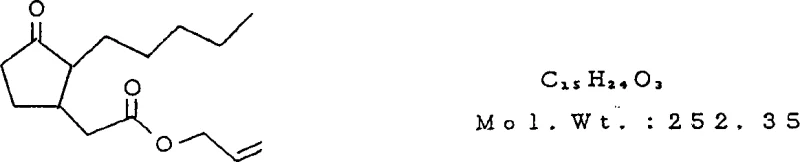
The novel approach described in the patent overcomes these historical limitations by employing a direct transesterification strategy between methyl jasmonates and specifically selected functionalized alcohols, enabling the efficient introduction of diverse side chains under mild and controllable conditions. This method utilizes readily available catalysts such as alkali metal alkoxides or protonic acids to facilitate the exchange of the methyl group with complex alcohols like allyl alcohol, propargyl alcohol, or various alkenyl alcohols, achieving high conversion rates without degrading the sensitive core structure. By operating at temperatures ranging from room temperature to 300°C and utilizing reduced pressure to continuously remove the methanol by-product, the reaction equilibrium is driven decisively towards the desired product, ensuring high yields and minimizing the formation of unwanted side products. This streamlined process not only simplifies the synthetic workflow but also significantly enhances the economic feasibility of producing these high-value intermediates, making them accessible for broad-spectrum agricultural use. The versatility of this approach allows for the rapid generation of a wide array of derivatives, empowering R&D teams to screen for optimal biological activity with unprecedented speed and efficiency.
Mechanistic Insights into Base-Catalyzed Transesterification
The core chemical transformation relies on a nucleophilic acyl substitution mechanism where the alkoxide species, generated in situ from the alcohol and the basic catalyst, attacks the carbonyl carbon of the methyl jasmonate ester. This attack forms a tetrahedral intermediate which subsequently collapses to expel the methoxide leaving group, resulting in the formation of the new functionalized ester bond while regenerating the catalytic species to continue the cycle. The efficiency of this mechanism is heavily dependent on the continuous removal of the volatile methanol by-product, which prevents the reverse reaction from occurring and ensures that the equilibrium shifts almost completely towards the formation of the target jasmonic acid derivative. Careful control of reaction parameters such as temperature and pressure is critical to maintaining the stability of the cyclopentanone ring, particularly when dealing with unsaturated side chains that might be susceptible to polymerization or isomerization under overly aggressive conditions. The choice of catalyst, whether it be sodium methoxide, titanium alkoxides, or acidic resins, allows for fine-tuning of the reaction kinetics to accommodate different alcohol substrates, ensuring consistent performance across the diverse range of target molecules described in the patent portfolio.
Impurity control is paramount in the production of agrochemical intermediates, and this process incorporates several built-in mechanisms to ensure high purity standards are met throughout the synthesis. The initial reaction phase is designed to minimize side reactions by using a slight excess of the alcohol reactant, which suppresses the formation of symmetric anhydrides or other condensation by-products that could complicate downstream purification. Following the reaction, the workup procedure involves neutralization of the catalyst with dilute acid or base, followed by multiple washing steps with water and brine to remove inorganic salts and residual catalyst traces that could affect the stability of the final product. The final purification step typically employs vacuum distillation, which effectively separates the target ester from unreacted starting materials and higher boiling point impurities based on their distinct volatility profiles. This rigorous purification protocol ensures that the resulting jasmonic acid derivatives meet the stringent purity specifications required for regulatory approval and field application, providing end-users with a reliable and consistent material for their formulation needs.
How to Synthesize Functionalized Jasmonic Acid Esters Efficiently
The synthesis of these high-value agrochemical intermediates follows a standardized protocol that balances reaction efficiency with operational safety, making it suitable for implementation in both pilot and commercial-scale facilities. The process begins with the precise charging of methyl jasmonate or methyl dihydrojasmonate into a reactor equipped with a distillation column, followed by the addition of the specific functionalized alcohol in a molar ratio optimized to drive the reaction to completion without excessive waste. A catalytic amount of sodium methoxide or an equivalent base is then introduced, and the mixture is heated to the specified temperature range while applying vacuum or inert gas flow to facilitate the removal of methanol. Detailed standardized synthesis steps see the guide below.
- Charge a reactor with methyl jasmonate or methyl dihydrojasmonate and the specific functionalized alcohol (e.g., allyl alcohol, propargyl alcohol) in a molar ratio of 1: 3 to 1:4.
- Add a basic catalyst such as sodium methoxide (approx. 0.05-20 wt% relative to alcohol) and heat the mixture to 100-150°C under atmospheric or reduced pressure.
- Remove the by-product methanol continuously via distillation to drive equilibrium, then neutralize, wash, and purify the crude ester via vacuum distillation.
Commercial Advantages for Procurement and Supply Chain Teams
From a procurement and supply chain perspective, the adoption of this transesterification technology offers substantial strategic advantages by leveraging widely available raw materials and established chemical processing infrastructure. The primary reactants, methyl jasmonates and various functionalized alcohols, are commodity chemicals that can be sourced from multiple global suppliers, mitigating the risk of supply chain disruptions and ensuring long-term availability for continuous manufacturing operations. Furthermore, the elimination of exotic reagents or complex multi-step sequences significantly reduces the overall cost of goods sold, allowing for more competitive pricing structures in the final agrochemical formulations without compromising on quality or performance. The simplicity of the reaction setup, which requires standard glass-lined or stainless steel reactors rather than specialized high-pressure equipment, lowers the barrier to entry for contract manufacturing organizations and facilitates rapid technology transfer between sites. This operational flexibility enables supply chain managers to diversify their manufacturing base and respond quickly to fluctuations in market demand, ensuring a steady flow of critical intermediates to formulation plants worldwide.
- Cost Reduction in Manufacturing: The transesterification process inherently drives cost optimization by utilizing inexpensive base catalysts like sodium methoxide and avoiding the need for costly coupling agents or protecting group strategies often associated with ester synthesis. The ability to run the reaction under solvent-free conditions or with minimal hydrocarbon solvents further reduces raw material costs and simplifies waste management procedures, leading to significant savings in disposal and environmental compliance fees. Additionally, the high atom economy of the reaction ensures that the majority of the input mass is converted into the desired product, minimizing material loss and maximizing the yield per batch. These cumulative efficiencies translate into a lower cost base for the production of high-purity jasmonic acid derivatives, providing a strong margin buffer for downstream formulation and distribution activities.
- Enhanced Supply Chain Reliability: By relying on a robust and well-understood chemical transformation, manufacturers can achieve consistent batch-to-batch reproducibility, which is critical for maintaining the reliability of the supply chain for agrochemical customers. The use of stable starting materials that are not subject to strict regulatory controls or geopolitical restrictions ensures a secure supply line, reducing the vulnerability of the production schedule to external shocks. Moreover, the scalability of the process allows for seamless transition from laboratory scale to multi-ton production runs, enabling suppliers to ramp up capacity quickly in response to seasonal demand peaks in the agricultural sector. This reliability fosters stronger partnerships with key accounts who depend on just-in-time delivery of critical intermediates to keep their own formulation lines running smoothly.
- Scalability and Environmental Compliance: The process design aligns well with modern environmental, health, and safety (EHS) standards, as it generates minimal hazardous waste and avoids the use of toxic heavy metal catalysts that would require complex remediation steps. The primary by-product, methanol, is easily captured and potentially recycled or sold as a commodity, turning a waste stream into a value-added co-product and further enhancing the sustainability profile of the operation. The absence of chlorinated solvents or persistent organic pollutants in the standard workflow simplifies the permitting process for new manufacturing sites and reduces the long-term liability associated with environmental contamination. This commitment to green chemistry principles not only satisfies regulatory requirements but also appeals to increasingly eco-conscious stakeholders in the global agrochemical industry.
Frequently Asked Questions (FAQ)
The following questions address common technical and commercial inquiries regarding the production and application of these novel jasmonic acid compounds, drawing directly from the experimental data and process descriptions provided in the patent literature. Understanding these details is essential for R&D directors and procurement specialists evaluating the feasibility of integrating these intermediates into their existing product pipelines. The answers reflect the proven capabilities of the transesterification method to deliver high-purity materials suitable for rigorous biological testing and commercial formulation.
Q: What is the primary advantage of these novel jasmonic acid esters over traditional alkyl esters?
A: The novel esters featuring alkenyl, alkynyl, or hydroxyalkyl side chains exhibit superior efficacy as suicide germination inducers for parasitic weeds compared to simple alkyl esters, offering a targeted mechanism for crop protection without harming the host plant.
Q: Can this transesterification process be scaled for industrial production?
A: Yes, the process utilizes standard industrial equipment such as 4-neck reactors with distillation columns and common catalysts like sodium methoxide, making it highly amenable to commercial scale-up from kilogram to multi-ton quantities without requiring exotic high-pressure vessels.
Q: How is high purity achieved in the final jasmonate products?
A: High purity exceeding 95% is consistently achieved through a combination of driving the reaction equilibrium by removing methanol by-product, followed by rigorous aqueous workups to remove catalyst residues and final purification via fractional vacuum distillation.
Partnering with NINGBO INNO PHARMCHEM: Your Reliable Jasmonic Acid Derivatives Supplier
At NINGBO INNO PHARMCHEM, we recognize the transformative potential of these novel jasmonic acid esters in the fight against parasitic weeds and are fully equipped to support your development and commercialization efforts with our world-class CDMO capabilities. Our team possesses extensive experience scaling diverse pathways from 100 kgs to 100 MT/annual commercial production, ensuring that your transition from bench-scale discovery to full-scale manufacturing is seamless and efficient. We adhere to stringent purity specifications and operate rigorous QC labs to guarantee that every batch of allyl dihydrojasmonate, propargyl jasmonate, or other functionalized esters meets the highest industry standards for consistency and performance. Our commitment to quality assurance means that you can rely on us as a strategic partner who understands the critical nature of agrochemical intermediates in the global food supply chain.
We invite you to engage with our technical procurement team to discuss how we can tailor our manufacturing capabilities to your specific volume and purity requirements, ensuring a supply solution that aligns with your commercial goals. By requesting a Customized Cost-Saving Analysis, you can gain deeper insights into how our optimized transesterification process can reduce your overall material costs while enhancing the efficacy of your final formulations. We encourage you to contact us today to obtain specific COA data and route feasibility assessments for any of the jasmonic acid derivatives discussed, allowing you to make informed decisions that drive innovation and profitability in your agrochemical portfolio.
Engineering Bottleneck?
Can't scale up this synthesis? Upload your target structure or CAS, and our CDMO team will evaluate the industrial feasibility within 24 hours. Request Evaluation →