
Advanced Synthesis of Stable Spergualin Derivatives for Antitumor Pharmaceutical Applications
Advanced Synthesis of Stable Spergualin Derivatives for Antitumor Pharmaceutical Applications
The pharmaceutical industry continuously seeks novel antitumor agents that combine high efficacy with improved physicochemical properties, particularly stability in aqueous environments. Patent CN85101425A presents a significant breakthrough in this domain by disclosing a series of Spergualin-related compounds containing phenylene groups. Unlike natural Spergualin, which suffers from instability in water, these novel derivatives maintain potent antitumor activity against leukemia L1210 and other cancer models while exhibiting superior stability in aqueous solutions. This technical insight report analyzes the synthetic methodology, mechanistic advantages, and commercial implications of these compounds for global pharmaceutical manufacturers seeking reliable pharmaceutical intermediate suppliers.
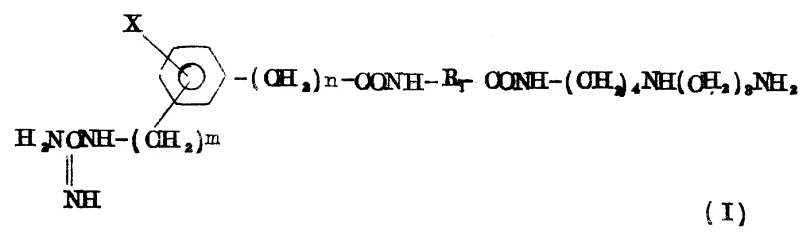
The core innovation lies in the structural modification of the Spergualin backbone. By incorporating phenylene groups into the side chain, specifically through omega-guanidinocarboxylic acid derivatives, the inventors have created molecules that resist hydrolytic degradation. This structural integrity is critical for the development of injectable formulations, where long-term shelf life and consistent potency are non-negotiable requirements for regulatory approval and clinical success.
The Limitations of Conventional Methods vs. The Novel Approach
The Limitations of Conventional Methods
Natural Spergualin, isolated from bacterial cultures, has demonstrated remarkable antitumor properties but faces severe formulation challenges due to its inherent instability in aqueous media. Traditional approaches to utilizing Spergualin often require immediate preparation of solutions or the use of complex lyophilization processes to prevent degradation. Furthermore, the lack of structural diversity in the natural product limits the ability to optimize pharmacokinetic profiles. Conventional synthesis attempts often struggle with the selective functionalization of the polyamine chain without compromising the sensitive guanidino and hydroxyl functionalities, leading to low yields and difficult purification processes that hinder cost reduction in API manufacturing.
The Novel Approach
The methodology described in CN85101425A overcomes these hurdles by introducing a modular synthetic strategy. Instead of relying on fermentation alone, the patent utilizes a semi-synthetic approach where a protected triazadecane core is condensed with various omega-guanidinocarboxylic acids bearing phenylene moieties. This allows for precise control over the side chain length and substitution pattern (ortho, meta, or para). The use of robust protecting groups such as benzyloxycarbonyl and t-butoxycarbonyl ensures that reactive sites remain inert during coupling, only to be revealed in the final step. This approach not only stabilizes the molecule against hydrolysis but also simplifies the purification of intermediates, facilitating the commercial scale-up of complex pharmaceutical intermediates.
Mechanistic Insights into Peptide Coupling and Deprotection
The synthesis mechanism relies heavily on classical peptide bond formation techniques adapted for polyamine substrates. The key step involves the condensation of a 10-aminoacyl-1,5-double-protected-1,5,10-triazadecane intermediate with an omega-guanidinocarboxylic acid derivative. This reaction can be driven by various activation methods, including the acid chloride method, carbodiimide coupling (using DCC or EDC), or active ester formation with N-hydroxysuccinimide. The choice of activation method influences the racemization risk and overall yield, with active esters often providing a balance between reactivity and stereochemical integrity.
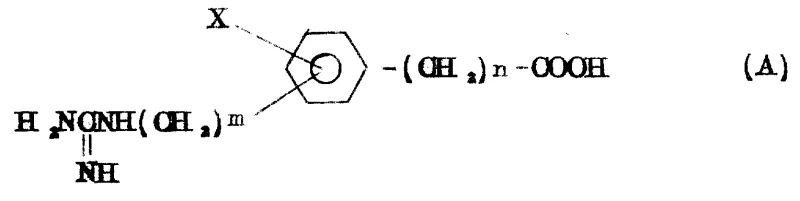
Following the coupling, the deprotection strategy is pivotal for obtaining the final active pharmaceutical ingredient. The patent details multiple orthogonal deprotection pathways. For instance, benzyloxycarbonyl groups can be cleaved via catalytic hydrogenation using palladium black, a method that is highly selective and generates benign byproducts. Alternatively, acid-labile groups like t-butoxycarbonyl can be removed using trifluoroacetic acid. This flexibility allows process chemists to tailor the final deprotection step based on the specific sensitivity of the phenylene-substituted side chain, ensuring high-purity pharmaceutical intermediate output with minimal impurity generation.
Impurity control is managed through the careful selection of solvents and reaction temperatures. The patent specifies that condensation reactions should generally be conducted at temperatures not exceeding the boiling point of the solvent, typically ranging from -50°C to 150°C, with a preference for -40°C to 120°C to minimize side reactions. Purification is achieved using ion-exchange chromatography (e.g., CM-Sephadex) and gel filtration (Sephadex LH-20), which effectively separate the target cationic polyamines from neutral organic byproducts and salts.
How to Synthesize Spergualin Phenylene Derivatives Efficiently
The synthesis of these high-value antitumor intermediates requires a disciplined approach to protecting group management and coupling efficiency. The process begins with the preparation of the triazadecane core, followed by sequential acylation and final deprotection. Detailed operational parameters, including specific molar ratios and solvent systems, are critical for reproducibility. For a comprehensive guide on executing this synthesis with optimal yield and purity, refer to the standardized protocol below.
- Prepare the 10-aminoacyl-1,5-double-protected-1,5,10-triazadecane intermediate by condensing a protected triazadecane with an N-protected amino acid derivative.
- Condense the resulting amine intermediate with an omega-guanidinocarboxylic acid derivative containing a phenylene group using standard peptide coupling methods such as the acid chloride or active ester method.
- Remove the amino and hydroxyl protecting groups from the final protected compound using catalytic hydrogenation or acid decomposition to yield the target Spergualin derivative salt.
Commercial Advantages for Procurement and Supply Chain Teams
For procurement managers and supply chain heads, the adoption of this synthetic route offers distinct strategic advantages over relying solely on natural extraction or less stable analogs. The ability to synthesize these compounds from readily available chemical building blocks reduces dependency on biological fermentation variability, thereby enhancing supply chain reliability. The robust nature of the intermediates allows for bulk storage and transportation without the stringent temperature controls often required for unstable biologics or natural products.
- Cost Reduction in Manufacturing: The synthetic pathway utilizes standard peptide coupling reagents and solvents that are commercially available at scale, avoiding the need for exotic catalysts or specialized equipment. The modular nature of the synthesis allows for the parallel production of various analogs, optimizing facility utilization. Furthermore, the high stability of the final products reduces waste associated with degradation during storage and handling, leading to substantial cost savings in the overall manufacturing lifecycle.
- Enhanced Supply Chain Reliability: By shifting from a fermentation-dependent supply to a chemical synthesis model, manufacturers can mitigate risks associated with crop failures or bacterial strain mutations. The synthetic route is scalable from kilogram to multi-ton quantities, ensuring consistent availability for clinical trials and commercial launch. The use of common protecting groups also means that raw material sourcing is diversified, reducing the risk of single-supplier bottlenecks.
- Scalability and Environmental Compliance: The deprotection methods, particularly catalytic hydrogenation, generate minimal hazardous waste compared to harsh chemical reductions. The solvents used, such as methanol, ethyl acetate, and dimethylformamide, are well-understood in terms of recovery and recycling, facilitating compliance with increasingly strict environmental regulations. The process is designed to be adaptable to continuous flow chemistry, further enhancing scalability and safety profiles for large-scale production.
Frequently Asked Questions (FAQ)
Understanding the technical nuances of Spergualin derivative synthesis is essential for effective collaboration between R&D and procurement teams. The following questions address common concerns regarding stability, formulation, and regulatory considerations associated with these phenylene-containing compounds.
Q: Why are phenylene-containing Spergualin derivatives more stable than natural Spergualin?
A: Natural Spergualin exhibits instability in aqueous solutions, limiting its formulation potential. The introduction of phenylene groups into the side chain, as described in patent CN85101425A, significantly enhances chemical stability in water while retaining potent antitumor bioactivity, making them suitable for injection solutions.
Q: What protecting group strategies are recommended for this synthesis?
A: The patent outlines the use of benzyloxycarbonyl (Z) and t-butoxycarbonyl (Boc) groups for amino protection, and benzyl or t-butyl groups for hydroxyl protection. These can be selectively removed via catalytic hydrogenation or acid treatment, allowing for flexible process optimization.
Q: Can these intermediates be scaled for commercial API production?
A: Yes, the synthesis relies on standard peptide coupling reactions and common deprotection techniques compatible with large-scale manufacturing. The use of readily available solvents and reagents supports robust commercial scale-up for reliable supply chain integration.
Partnering with NINGBO INNO PHARMCHEM: Your Reliable Spergualin Derivatives Supplier
The development of stable, phenylene-substituted Spergualin derivatives represents a significant opportunity for advancing antitumor therapy. NINGBO INNO PHARMCHEM stands ready to support your pipeline with expert contract development and manufacturing services. Our team possesses extensive experience scaling diverse pathways from 100 kgs to 100 MT/annual commercial production, ensuring that your transition from benchtop discovery to market supply is seamless. We adhere to stringent purity specifications and operate rigorous QC labs to guarantee that every batch meets the highest international standards for pharmaceutical intermediates.
We invite you to engage with our technical procurement team to discuss your specific requirements. Whether you need a Customized Cost-Saving Analysis for your current supply chain or require specific COA data and route feasibility assessments for these novel compounds, we are equipped to provide the data-driven insights necessary for your decision-making. Partner with us to secure a reliable supply of high-quality antitumor intermediates and accelerate your drug development timeline.