
Scalable Synthesis of Castanospermine 6-O-Monoesters for Global Pharmaceutical Applications
The pharmaceutical industry continuously seeks efficient pathways for synthesizing complex alkaloid derivatives, particularly those with potent biological activity such as castanospermine esters. Patent CN1111531C introduces a transformative methodology for the preparation of castanospermine 6-O-monoesters, addressing long-standing challenges in regioselectivity and process scalability. This innovation is critical for the production of antiviral and antidiabetic agents, where the specific substitution pattern at the 6-position dictates therapeutic efficacy. The core breakthrough lies in the strategic use of bis(tributyltin) oxide within a xylene solvent system, which facilitates the rapid removal of reaction by-products and ensures high purity without cumbersome purification steps. 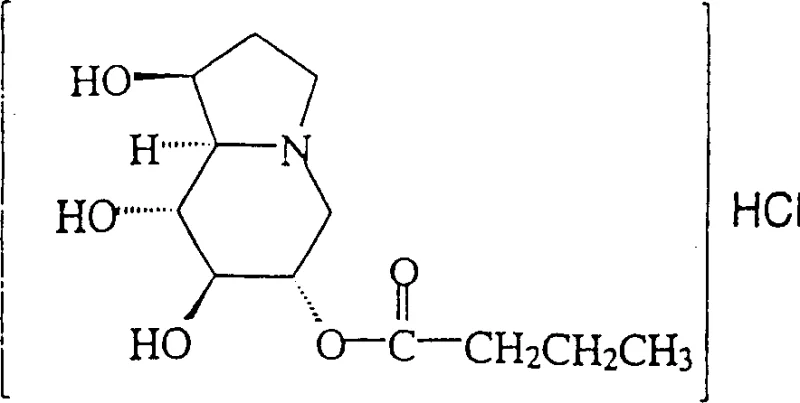 As depicted in the structure above, the target molecule requires precise modification of one specific hydroxyl group amidst four chemically similar secondary alcohols, a feat that traditional methods struggle to achieve with commercial viability. For R&D directors and procurement specialists, this patent represents a reliable pharmaceutical intermediates supplier opportunity, offering a route that balances chemical elegance with industrial practicality.
The Limitations of Conventional Methods vs. The Novel Approach
The Limitations of Conventional Methods
Historically, the synthesis of castanospermine 6-O-monoesters has been plagued by inefficiencies that hinder commercial adoption. Early attempts involved treating castanospermine with excess acyl chloride in pyridine at low temperatures, a method that resulted in complex mixtures requiring radial chromatography for purification, ultimately delivering poor yields. Subsequent approaches attempted to solve this selectivity issue through multi-step protection and deprotection sequences, which, while improving yield, extended the synthetic timeline to five distinct steps, drastically increasing material costs and waste generation. Another reported method utilized dibutyltin oxide in methanol, but this suffered from inconsistent results, with yields fluctuating wildly between 18% and 44% even after flash chromatography. These conventional pathways are fundamentally flawed for large-scale manufacturing because they rely on labor-intensive purification techniques and generate significant solvent waste, making cost reduction in pharma manufacturing nearly impossible under strict regulatory and environmental frameworks.
The Novel Approach
The methodology disclosed in CN1111531C revolutionizes this landscape by employing a one-pot strategy that leverages the unique properties of bis(tributyltin) oxide in xylenes. Unlike previous methods that struggled with water removal, this process utilizes the higher boiling point of xylenes to drive the azeotropic distillation of water more efficiently than toluene-based systems. This seemingly minor solvent switch has profound implications for reaction kinetics, significantly reducing the time required to form the crucial stannylene acetal intermediate. Furthermore, the process cleverly bypasses the isolation of the unstable free base by directly converting the reaction mixture into the stable hydrochloride salt through acid treatment. This telescoping of steps not only minimizes product loss during handling but also streamlines the workflow, allowing for the commercial scale-up of complex pharmaceutical intermediates with unprecedented consistency and yield stability across multiple pilot batches.
Mechanistic Insights into Regioselective Stannylation and Acylation
The success of this synthesis hinges on the formation of a transient cyclic stannylene acetal, which acts as a temporary protecting group to direct the incoming acyl group specifically to the 6-hydroxyl position. When castanospermine reacts with bis(tributyltin) oxide under reflux conditions, the tin species coordinates with the vicinal diols, effectively masking the 1, 7, and 8 hydroxyl groups while leaving the 6-position sterically and electronically accessible for nucleophilic attack. 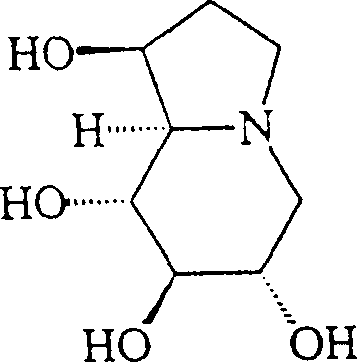 As illustrated in the reaction scheme above, the subsequent addition of an acid chloride (Formula III) at controlled low temperatures (-15°C to -20°C) ensures that the acylation occurs exclusively at the activated 6-site. This mechanistic precision eliminates the formation of regioisomers, which are notoriously difficult to separate and often constitute critical impurities in API intermediates. By maintaining strict temperature control during the acylation phase, the process suppresses side reactions such as over-acylation or hydrolysis, ensuring that the final impurity profile remains well within the stringent limits required for downstream pharmaceutical applications.
Furthermore, the direct conversion to the hydrochloride salt serves as a powerful impurity control mechanism. The free base of castanospermine esters can be prone to degradation or migration of the acyl group if isolated and stored improperly. By generating the salt in situ within the reaction vessel using anhydrous hydrogen chloride, the molecule is immediately locked into its most stable crystalline form. This approach not only simplifies the isolation procedure to a straightforward filtration and washing sequence but also ensures that residual tin by-products are effectively removed during the heptane wash steps. For quality assurance teams, this means a robust process capable of delivering high-purity castanospermine derivatives with minimal risk of batch-to-batch variability, a key requirement for validating any GMP manufacturing process.
How to Synthesize 6-O-Butyrylcastanospermine Efficiently
Implementing this synthesis requires careful attention to the azeotropic removal of water and precise temperature management during the acylation phase. The protocol begins with the reflux of castanospermine and bis(tributyltin) oxide in mixed xylenes, utilizing a Dean-Stark apparatus to continuously remove water until the reaction mixture becomes homogeneous, indicating complete stannylation. Following this, the mixture must be cooled rapidly to sub-zero temperatures before the slow addition of butyryl chloride to maintain regioselectivity. The detailed standardized synthesis steps, including specific molar ratios, stirring speeds, and crystallization parameters validated in pilot studies, are outlined below to ensure reproducibility.
- Reflux castanospermine with bis(tributyltin) oxide in xylene using a Dean-Stark trap to remove water and form the stannylene acetal intermediate.
- Cool the reaction mixture to approximately -15°C to -20°C and add the desired acid chloride (e.g., butyryl chloride) to effect regioselective acylation at the 6-position.
- Dilute with ethanol and treat with anhydrous hydrogen chloride to directly precipitate the stable hydrochloride salt, bypassing free base isolation.
Commercial Advantages for Procurement and Supply Chain Teams
For procurement managers and supply chain heads, the transition to this xylene-based process offers tangible strategic benefits beyond mere chemical yield. The elimination of multi-step protection and deprotection sequences drastically simplifies the supply chain, reducing the number of raw materials that need to be sourced, qualified, and stocked. This consolidation of steps translates directly into substantial cost savings by lowering labor hours, reducing solvent consumption, and minimizing the footprint required for production. Additionally, the use of xylenes, which are commodity solvents with established recycling protocols, enhances the environmental profile of the manufacturing process, aligning with modern green chemistry initiatives and reducing waste disposal costs associated with more exotic or hazardous solvents used in legacy methods.
- Cost Reduction in Manufacturing: The streamlined one-pot nature of this reaction eliminates the need for intermediate isolation and purification steps such as column chromatography, which are prohibitively expensive at scale. By avoiding the use of stoichiometric amounts of protecting groups and the reagents required to remove them, the overall material cost per kilogram of active ingredient is significantly lowered. Furthermore, the high efficiency of the water removal in xylene reduces energy consumption associated with prolonged heating times, contributing to a leaner and more cost-effective production model that maximizes asset utilization.
- Enhanced Supply Chain Reliability: The robustness of this method is evidenced by its successful translation from gram-scale laboratory experiments to 200-gallon pilot reactors without loss of performance. This scalability assures supply chain leaders that the process can meet fluctuating market demands without the risk of yield collapse often seen when scaling sensitive organometallic reactions. The reliance on readily available starting materials like castanospermine and common acid chlorides further mitigates supply risk, ensuring that production schedules are not held hostage by the scarcity of specialized reagents or complex catalysts.
- Scalability and Environmental Compliance: The process design inherently supports environmental compliance by facilitating the removal of tin by-products through simple aqueous workups and organic washes, preventing heavy metal contamination in the final product. The ability to recycle the xylene solvent stream after water separation adds another layer of sustainability, reducing the volume of hazardous waste generated per batch. This alignment with environmental standards not only simplifies regulatory approval processes but also future-proofs the manufacturing site against increasingly stringent global regulations regarding industrial emissions and chemical waste management.
Frequently Asked Questions (FAQ)
The following questions address common technical and commercial inquiries regarding the implementation of this patented synthesis route. These insights are derived directly from the experimental data and process descriptions found in the patent documentation, providing clarity on how this technology can be integrated into existing manufacturing workflows to optimize both quality and efficiency.
Q: Why is xylene preferred over toluene for the stannylation step?
A: Xylene allows for faster azeotropic removal of water compared to toluene, significantly reducing reaction time and improving throughput during scale-up.
Q: How does this process achieve selectivity among four similar hydroxyl groups?
A: The formation of a cyclic stannylene acetal intermediate using bis(tributyltin) oxide temporarily protects specific hydroxyls, directing the acylation exclusively to the 6-position.
Q: Is this method suitable for large-scale commercial production?
A: Yes, the patent explicitly demonstrates successful pilot-scale runs in 200-gallon reactors with consistent yields, proving its viability for industrial manufacturing.
Partnering with NINGBO INNO PHARMCHEM: Your Reliable 6-O-Butyrylcastanospermine Supplier
At NINGBO INNO PHARMCHEM, we recognize the critical importance of adopting advanced synthetic methodologies to maintain a competitive edge in the global pharmaceutical market. Our team possesses extensive experience scaling diverse pathways from 100 kgs to 100 MT/annual commercial production, ensuring that the transition from patent literature to industrial reality is seamless and efficient. We are committed to delivering high-purity intermediates that meet stringent purity specifications, supported by our rigorous QC labs which employ state-of-the-art analytical techniques to verify every batch against the highest industry standards.
We invite you to collaborate with us to leverage this innovative technology for your specific project needs. Contact our technical procurement team today to request a Customized Cost-Saving Analysis tailored to your volume requirements. We are ready to provide specific COA data and comprehensive route feasibility assessments to demonstrate how our optimized manufacturing capabilities can accelerate your development timelines and reduce your overall cost of goods sold.