
Advanced Synthesis of Acetamido Abamectin: Enhancing Purity and Scalability for Global Veterinary Markets
Advanced Synthesis of Acetamido Abamectin: Enhancing Purity and Scalability for Global Veterinary Markets
The pharmaceutical and agrochemical industries are constantly seeking robust manufacturing pathways for high-value antiparasitic agents, and the recent disclosure in patent CN115109109A presents a transformative approach to producing acetamido abamectin. This novel synthesis protocol addresses critical bottlenecks in the traditional production of this potent veterinary drug intermediate by replacing hazardous reagents with safer alternatives and streamlining unit operations. Specifically, the methodology introduces a tert-butyldimethylsilyl (TBS) protection strategy and an integrated deprotection-acetylation sequence that drastically simplifies the workflow. For R&D directors and procurement specialists, this represents a significant opportunity to optimize supply chains for high-purity acetamido abamectin while mitigating regulatory risks associated with toxic waste streams. The structural complexity of the target molecule, characterized by its macrocyclic lactone core and specific functional modifications, demands precise control over stereochemistry and regioselectivity, which this process delivers effectively.
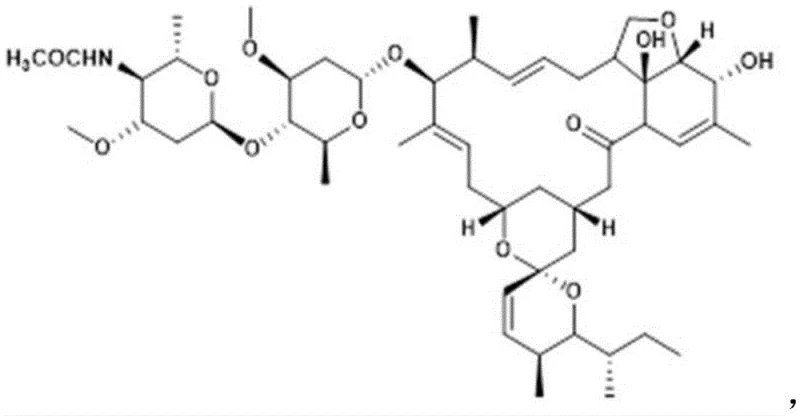
Furthermore, the economic implications of adopting this refined route extend beyond mere yield improvements; they encompass a holistic reduction in operational expenditure through solvent standardization and catalyst elimination. By utilizing isopropyl acetate as a unified solvent system, the process negates the need for energy-intensive solvent swaps that plague conventional dichloromethane-based methods. This strategic alignment of chemical efficiency and process engineering positions the technology as a cornerstone for cost reduction in veterinary pharmaceutical manufacturing. As global demand for effective antiparasitic treatments rises, the ability to scale this synthesis from laboratory bench to commercial scale-up of complex macrocyclic lactones becomes a decisive competitive advantage for forward-thinking chemical enterprises.
The Limitations of Conventional Methods vs. The Novel Approach
The Limitations of Conventional Methods
Historically, the industrial synthesis of acetamido abamectin has been hindered by reliance on chemically aggressive and economically inefficient reagents that complicate large-scale production. Traditional protocols frequently employ allyl chloroformate for hydroxyl protection, a choice that necessitates a subsequent hydrogenolysis step using expensive palladium catalysts and sodium borohydride at low temperatures. This dependency on precious metals not only inflates raw material costs but also introduces significant safety hazards related to hydrogen gas handling and pyrophoric reagents. Moreover, the oxidation steps in legacy processes often utilize phenyl dichlorophosphate as a dehydrating agent, a substance classified as a severe water pollutant and a corrosive threat to personnel safety. The cumulative effect of these choices is a fragmented process flow requiring multiple solvent exchanges, typically shifting from dichloromethane to other organic media, which burdens the facility with complex distillation and recovery infrastructure. Consequently, the overall yield suffers due to material losses during these transitional phases, and the environmental footprint remains unacceptably high for modern green chemistry standards.
The Novel Approach
In stark contrast, the methodology outlined in CN115109109A revolutionizes the production landscape by implementing a TBS protection strategy that elegantly bypasses the need for palladium-catalyzed deprotection. By selecting tert-butyldimethylsilyl chloride as the protecting agent, the process enables a mild acidic deprotection using acetic acid, which can be seamlessly integrated with the subsequent acetylation step. This integration collapses what were previously four distinct operational stages—deprotection reaction, deprotection workup, acetylation reaction, and acetylation workup—into a streamlined sequence, thereby reducing labor intensity and equipment occupancy time. Additionally, the substitution of the hazardous phenyl dichlorophosphate with a dimethyl sulfide and N-chlorosuccinimide (NCS) oxidation system markedly enhances the safety profile of the facility. The decision to maintain isopropyl acetate as the sole solvent throughout the protection and oxidation phases eliminates the logistical nightmare of solvent swapping, allowing for direct progression to downstream processing without intermediate concentration steps. This cohesive design not only boosts the content of the deprotected intermediate by approximately 5% compared to literature values but also ensures a more consistent and scalable output suitable for a reliable veterinary drug intermediate supplier.
Mechanistic Insights into TBS Protection and Integrated Acetylation
The core innovation of this synthesis lies in the strategic manipulation of the 5-position hydroxyl group using silyl ether chemistry, which offers superior stability during the harsh oxidation conditions required for the 4''-position. The mechanism initiates with the nucleophilic attack of the 5-hydroxyl oxygen on the silicon atom of tert-butyldimethylsilyl chloride, facilitated by tetramethylethylenediamine (TMEDA) as a base, forming a robust silyl ether bond. This protective group is specifically chosen because it withstands the oxidative environment of the subsequent DMS/NCS reaction yet is labile enough to be cleaved under mild acidic conditions provided by glacial acetic acid. Unlike allyl groups that require reductive cleavage, the TBS group's removal generates volatile silanol byproducts that are easily separated, preventing contamination of the final API. The oxidation mechanism itself proceeds via the activation of dimethyl sulfide by N-chlorosuccinimide to form a reactive sulfonium species, which selectively oxidizes the 4''-hydroxyl to a ketone without affecting other sensitive functionalities on the macrocyclic ring. This chemoselectivity is paramount for maintaining the biological activity of the final antiparasitic agent, ensuring that the impurity profile remains within stringent pharmacopeial limits.
Following the oxidation, the amination-reduction sequence employs zinc trifluoroacetate as a Lewis acid catalyst to activate the ketone towards nucleophilic attack by hexamethyldisilazane, forming an intermediate silyl imine. This step is critical for introducing the nitrogen functionality that defines the acetamido character of the molecule. The subsequent reduction with sodium borohydride at -15°C stereoselectively reduces the imine to the amine, preserving the chiral integrity of the adjacent centers. The true brilliance of the process, however, is manifested in the tandem deprotection-acetylation phase. Upon addition of glacial acetic acid, the acid catalyzes the hydrolysis of the TBS ether, regenerating the 5-hydroxyl group in situ. Without isolation, the newly freed hydroxyl group immediately reacts with acetic anhydride added to the same vessel, forming the final acetate ester. This "one-pot" transformation minimizes exposure of the unstable free amine and alcohol intermediates to potential degradation pathways, thereby maximizing the overall yield and purity. Such mechanistic elegance translates directly to reducing lead time for high-purity antiparasitic intermediates by cutting down on isolation and purification cycles.
How to Synthesize Acetamido Abamectin Efficiently
The practical execution of this synthesis requires precise control over temperature and stoichiometry to replicate the high yields reported in the patent examples, which range from 64% to 67% with purities exceeding 97%. The process begins with the preparation of the Abamectin B1 feed solution in isopropyl acetate, cooled to a strict range of -20°C to -10°C to prevent side reactions during silylation. Operators must carefully monitor the addition of TBSCl and TMEDA to ensure complete conversion to Intermediate 1 before proceeding to the oxidation stage, where temperature control at -20°C is equally critical to manage the exotherm of the NCS activation. The amination step involves heating to 80-105°C to drive the imine formation, followed by a rapid cooldown to -15°C for the borohydride reduction, demanding robust thermal management capabilities in the reactor setup. Finally, the integrated deprotection and acetylation are conducted at controlled temperatures ranging from room temperature down to -5°C to optimize the kinetics of both the acid cleavage and the esterification. Detailed standardized operating procedures for these critical control points are essential for technology transfer and successful manufacturing implementation.
- Protect the 5-position hydroxyl group of Abamectin B1 using tert-butyldimethylsilyl chloride (TBSCl) in isopropyl acetate at -20°C to -10°C.
- Oxidize the 4''-hydroxyl group using a dimethyl sulfide (DMS) and N-chlorosuccinimide (NCS) activation system at -20°C.
- Perform amination and reduction using zinc trifluoroacetate catalyst and hexamethyldisilazane, followed by NaBH4 reduction at -15°C.
- Execute integrated deprotection and acetylation using glacial acetic acid and acetic anhydride in an isopropyl acetate system.
- Purify the final product via crystallization from acetonitrile with activated carbon treatment to achieve high purity.
Commercial Advantages for Procurement and Supply Chain Teams
For procurement managers and supply chain directors, the adoption of this patented process offers tangible benefits that extend well beyond the laboratory, fundamentally altering the cost structure and reliability of the supply base. The elimination of palladium catalysts and the reduction in hazardous reagent usage directly correlate to a substantial decrease in raw material procurement costs and waste disposal fees. By removing the need for solvent exchange between dichloromethane and isopropyl acetate, the process significantly reduces the energy load on recovery units and minimizes solvent loss, leading to lower utility bills and a smaller carbon footprint. Furthermore, the integration of the deprotection and acetylation steps reduces the total number of batch cycles required per month, effectively increasing the throughput capacity of existing manufacturing assets without capital expansion. These efficiencies collectively contribute to a more resilient supply chain capable of meeting fluctuating market demands for veterinary pharmaceuticals with greater agility and consistency.
- Cost Reduction in Manufacturing: The replacement of expensive palladium catalysts with inexpensive acetic acid for deprotection removes a major cost driver from the bill of materials, while the avoidance of phenyl dichlorophosphate eliminates the need for specialized corrosion-resistant equipment and costly hazardous waste treatment. The consolidation of process steps reduces labor hours and reactor occupancy time, allowing for more batches to be produced within the same timeframe, which drives down the fixed cost per kilogram of the final product. Additionally, the higher yield of the deprotected intermediate means less starting material is wasted, further optimizing the material balance and improving the overall gross margin for manufacturers.
- Enhanced Supply Chain Reliability: Utilizing isopropyl acetate as a universal solvent simplifies inventory management by reducing the variety of chemicals that need to be sourced, stored, and monitored, thereby decreasing the risk of supply disruptions for niche solvents. The use of stable and commercially available reagents like TBSCl and NCS ensures that the production schedule is not vulnerable to the volatility of the precious metal market or the regulatory restrictions often placed on phosphorus-based reagents. This stability allows for longer-term contracting and more predictable delivery schedules, which is crucial for downstream formulators who rely on a steady stream of high-purity acetamido abamectin to maintain their own production lines.
- Scalability and Environmental Compliance: The process is inherently designed for scale, as the exothermic reactions are managed at temperatures that are easily achievable with standard industrial chilling systems, avoiding the need for cryogenic cooling that limits batch size. The reduction in toxic waste generation, particularly the elimination of Class 3 water pollutants, simplifies the permitting process for new facilities and reduces the liability associated with environmental compliance audits. This green chemistry approach aligns with global sustainability goals, making the end product more attractive to environmentally conscious buyers and facilitating easier registration in markets with strict ecological regulations.
Frequently Asked Questions (FAQ)
The following questions address common technical and commercial inquiries regarding the implementation of this synthesis route, providing clarity on how it compares to established industry practices. These insights are derived directly from the comparative data and beneficial effects described in the patent documentation, offering a transparent view of the technology's capabilities. Understanding these distinctions is vital for stakeholders evaluating the feasibility of integrating this process into their existing manufacturing portfolios.
Q: Why is the TBS protecting group preferred over allyl chloroformate in this synthesis?
A: The traditional allyl chloroformate method requires expensive palladium catalysts for hydrogenolysis and poses safety risks. The TBS group allows for milder acidic deprotection using acetic acid, eliminating the need for precious metal catalysts and significantly reducing material costs and safety hazards.
Q: How does the new oxidation system improve environmental compliance?
A: Conventional methods often use phenyl dichlorophosphate, a corrosive and highly toxic water pollutant. This patent utilizes a dimethyl sulfide (DMS) and N-chlorosuccinimide (NCS) system, which avoids hazardous phosphorus reagents, thereby enhancing operator safety and simplifying wastewater treatment protocols.
Q: What are the solvent advantages of using isopropyl acetate throughout the process?
A: Traditional routes often switch between dichloromethane and other solvents, necessitating complex distillation and recovery steps. By maintaining isopropyl acetate as the primary solvent from protection through acetylation, the process eliminates solvent exchange operations, reduces equipment load, and lowers energy consumption for solvent recovery.
Partnering with NINGBO INNO PHARMCHEM: Your Reliable Acetamido Abamectin Supplier
At NINGBO INNO PHARMCHEM, we recognize the critical importance of adopting advanced synthesis technologies to maintain competitiveness in the global veterinary drug market. Our team of expert chemists has thoroughly analyzed the pathway described in CN115109109A and possesses the extensive experience scaling diverse pathways from 100 kgs to 100 MT/annual commercial production required to bring this optimized process to life. We are committed to delivering stringent purity specifications through our rigorous QC labs, ensuring that every batch of acetamido abamectin meets the highest international standards for safety and efficacy. Our state-of-the-art facilities are equipped to handle the specific thermal and solvent requirements of this TBS-based route, guaranteeing a consistent and high-quality supply for our partners.
We invite you to collaborate with us to leverage these technological advancements for your product pipeline. Please contact our technical procurement team to request a Customized Cost-Saving Analysis tailored to your volume requirements, along with specific COA data and route feasibility assessments. By partnering with us, you secure access to a supply chain that is not only cost-effective but also built on the foundation of innovative and sustainable chemical engineering.