
Scalable Synthesis of Diamondback Moth Sex Pheromones for Advanced Agrochemical Applications
Scalable Synthesis of Diamondback Moth Sex Pheromones for Advanced Agrochemical Applications
The global agricultural sector is increasingly shifting towards sustainable pest management solutions, driving a surge in demand for high-purity insect pheromones. Patent CN102795997A introduces a robust and economically viable synthetic methodology for producing key diamondback moth sex pheromone components, specifically (Z)-11-hexadecen-1-yl acetate, (Z)-11-hexadecen-1-ol, and (Z)-11-hexadecenal. These compounds serve as critical active ingredients in mating disruption technologies, offering an environmentally benign alternative to broad-spectrum chemical insecticides. The disclosed technology leverages readily available starting materials like 1,11-undecanediol to construct the carbon backbone efficiently. By utilizing classic organic transformations such as the Wittig reaction and selective oxidations, this patent provides a blueprint for manufacturers seeking to optimize their agrochemical intermediate supply chains. The following analysis details the technical merits and commercial implications of this innovative process.
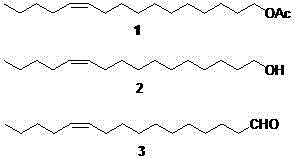
The Limitations of Conventional Methods vs. The Novel Approach
The Limitations of Conventional Methods
Historically, the synthesis of lepidopteran sex pheromones has been plagued by significant challenges regarding stereochemical control and cost efficiency. Traditional routes often rely on complex multi-step sequences involving hazardous reagents or expensive chiral pool starting materials that are difficult to source in bulk quantities. Many legacy processes suffer from poor Z/E selectivity during alkene formation, resulting in isomeric mixtures that drastically reduce the biological efficacy of the final pheromone lure. Furthermore, conventional oxidation steps frequently lack specificity, leading to over-oxidation byproducts that are notoriously difficult to separate from the target aldehyde or alcohol. These inefficiencies translate directly into higher production costs and extended lead times, creating bottlenecks for reliable agrochemical intermediate suppliers attempting to meet seasonal demand spikes. The reliance on harsh reaction conditions also raises safety concerns and increases the environmental footprint of the manufacturing process.
The Novel Approach
The methodology outlined in CN102795997A represents a paradigm shift by simplifying the synthetic architecture while maintaining rigorous control over product quality. This novel approach utilizes 1,11-undecanediol as a versatile building block, allowing for divergent synthesis pathways that can be tailored to produce the acetate, alcohol, or aldehyde forms of the pheromone. A key innovation is the strategic application of the Wittig reaction under optimized conditions to secure the thermodynamically less stable Z-alkene geometry with high fidelity. By employing mild reagents such as Pyridinium Chlorochromate (PCC) for oxidation, the process avoids the degradation of the sensitive unsaturated chain. This streamlined workflow not only reduces the total number of unit operations but also enhances the overall yield profile. For procurement teams, this translates to cost reduction in agrochemical manufacturing through minimized waste generation and simplified downstream processing requirements.
Mechanistic Insights into Wittig Olefination and Selective Oxidation
The core of this synthetic strategy relies on the precise execution of the Wittig olefination to establish the cis-double bond at the C11 position. In the first pathway, a phosphonium salt derived from n-amyl bromide is treated with a strong base, such as potassium hexamethyldisilazide (KHMDS) or n-butyllithium, at cryogenic temperatures (-78°C) to generate the reactive ylide species. This ylide then attacks the carbonyl group of an undecyl derivative, proceeding through a betaine intermediate to form the oxaphosphetane ring. The decomposition of this four-membered ring is kinetically controlled to favor the formation of the (Z)-alkene product. The second pathway reverses the polarity, utilizing a phosphonium salt derived from the undecyl chain reacting with valeraldehyde. Both routes demonstrate exceptional chemoselectivity, ensuring that the remote functional groups remain intact during the carbon-carbon bond-forming event. This mechanistic precision is vital for R&D directors focused on impurity profiles.
Following the construction of the carbon skeleton, the manipulation of the terminal functional group is achieved through controlled oxidation or esterification. The patent specifies the use of PCC in anhydrous dichloromethane to convert primary alcohols to aldehydes. Unlike stronger oxidants like Jones reagent, PCC operates under neutral conditions that prevent the migration of the double bond or the formation of carboxylic acid side products. In the esterification steps, acetyl chloride or acetic anhydride is employed in the presence of pyridine to cap the alcohol functionality. The reaction conditions are meticulously tuned to avoid hydrolysis of the newly formed ester or isomerization of the alkene. This attention to mechanistic detail ensures that the final high-purity agrochemical intermediate meets the stringent specifications required for effective field deployment in pest management programs.
How to Synthesize (Z)-11-Hexadecenyl Acetate Efficiently
The synthesis of these pheromone components is designed for operational simplicity without compromising on yield or purity. The process begins with the selective mono-functionalization of 1,11-undecanediol, followed by chain extension via the Wittig reaction described above. Subsequent steps involve hydrolysis or oxidation depending on the desired final functional group. The patent provides detailed experimental protocols that include specific solvent systems, such as petroleum ether and ethyl acetate for chromatography, ensuring reproducibility. For a comprehensive understanding of the reaction parameters and workup procedures necessary for successful implementation, please refer to the standardized synthesis guide below.
- Initiate the synthesis by protecting 1,11-undecanediol via mono-esterification or mono-bromination to create a reactive handle for chain extension.
- Perform a stereoselective Wittig reaction using either pentyltriphenylphosphonium bromide or valeraldehyde to establish the crucial Z-alkene geometry.
- Finalize the target molecule through controlled oxidation using PCC or esterification, followed by rigorous purification to ensure high pheromonal activity.
Commercial Advantages for Procurement and Supply Chain Teams
From a commercial perspective, the adoption of the synthetic routes described in CN102795997A offers substantial strategic benefits for supply chain optimization and cost management. The reliance on commodity chemicals like 1,11-undecanediol, valeraldehyde, and triphenylphosphine mitigates the risk of raw material shortages that often plague specialty chemical manufacturing. Because the reaction conditions are relatively mild and do not require exotic high-pressure equipment or extreme temperatures, the barrier to entry for scaling up production is significantly lowered. This accessibility allows for a more diversified supplier base, enhancing supply chain resilience against geopolitical or logistical disruptions. Furthermore, the high yields reported in the embodiments suggest a material-efficient process that maximizes output per batch, directly impacting the bottom line.
- Cost Reduction in Manufacturing: The elimination of expensive chiral catalysts and the use of straightforward purification techniques like column chromatography and distillation drive down operational expenditures. By avoiding complex resolution steps typically required for chiral pheromones, the process achieves significant cost savings. The high atom economy of the Wittig reaction, combined with the recyclability of solvents like THF and dichloromethane, further contributes to a lean manufacturing model. These factors collectively enable a competitive pricing structure for the final pheromone products without sacrificing quality standards.
- Enhanced Supply Chain Reliability: The modular nature of the synthesis allows for flexible production scheduling. Since the intermediates such as the phosphonium salts and mono-protected diols are stable and can be stockpiled, manufacturers can respond rapidly to fluctuating market demands. The robustness of the chemical transformations ensures consistent batch-to-batch quality, reducing the incidence of failed runs that delay shipments. This reliability is crucial for maintaining the continuity of pest control programs that depend on timely delivery of pheromone dispensers during specific breeding seasons.
- Scalability and Environmental Compliance: The process is inherently scalable, moving seamlessly from laboratory gram-scale to multi-ton commercial production. The absence of heavy metal catalysts simplifies waste treatment protocols, aligning with increasingly strict environmental regulations. The use of standard organic solvents facilitates efficient recovery and reuse systems, minimizing the environmental footprint. This compliance not only reduces disposal costs but also enhances the corporate sustainability profile of the manufacturer, a key consideration for modern agrochemical companies.
Frequently Asked Questions (FAQ)
The following questions address common technical and commercial inquiries regarding the production of diamondback moth pheromones based on the patented technology. These insights are derived directly from the experimental data and claims within the patent documentation, providing clarity on feasibility and performance. Understanding these aspects is essential for stakeholders evaluating the integration of this technology into their existing portfolios.
Q: What are the key advantages of the Wittig route described in CN102795997A?
A: The patent highlights that the Wittig reaction pathway allows for precise control over the Z-configuration of the double bond, which is critical for biological activity. Furthermore, the use of commercially available 1,11-undecanediol significantly lowers raw material costs compared to complex natural extractions.
Q: How is the purity of the final pheromone compound ensured?
A: The process incorporates multiple purification stages, including column chromatography and vacuum distillation. The specific use of mild oxidation conditions with PCC prevents over-oxidation to carboxylic acids, thereby minimizing difficult-to-remove impurities.
Q: Is this synthesis method suitable for large-scale industrial production?
A: Yes, the patent explicitly states the route is fit for industrialized production due to simple reaction conditions, safe operation parameters, and the avoidance of exotic catalysts. The raw materials are cheap and easily sourced globally.
Partnering with NINGBO INNO PHARMCHEM: Your Reliable (Z)-11-Hexadecenyl Acetate Supplier
At NINGBO INNO PHARMCHEM, we recognize the critical role that high-quality pheromones play in sustainable agriculture. Our technical team possesses extensive experience scaling diverse pathways from 100 kgs to 100 MT/annual commercial production, ensuring that your supply needs are met with precision and consistency. We adhere to stringent purity specifications and operate rigorous QC labs to guarantee that every batch of (Z)-11-hexadecenyl acetate delivers optimal biological activity. Our commitment to excellence makes us a preferred partner for global agrochemical firms seeking dependable sources of specialized intermediates.
We invite you to collaborate with us to leverage these advanced synthetic routes for your product lines. Contact our technical procurement team today to request a Customized Cost-Saving Analysis tailored to your volume requirements. We are ready to provide specific COA data and route feasibility assessments to support your R&D and sourcing initiatives, ensuring a seamless transition to more efficient manufacturing processes.