
Advanced D-A-D Hole Transport Materials for High-Efficiency Perovskite Solar Cell Manufacturing
Advanced D-A-D Hole Transport Materials for High-Efficiency Perovskite Solar Cell Manufacturing
The rapid evolution of photovoltaic technology has placed inverted perovskite solar cells (PSCs) at the forefront of renewable energy research, driven by their potential for low-temperature processing and negligible hysteresis. Central to the commercial viability of these devices is the development of robust hole transport materials (HTMs) that can replace expensive and unstable legacy options. Patent CN112300057B introduces a groundbreaking class of D-A-D (Donor-Acceptor-Donor) type hole transport materials that address critical stability and cost bottlenecks in the industry. These materials utilize a specific electron-donating carbazole derivative coupled with various nitrogen-containing six-membered heterocycles as the electron-withdrawing core. This architectural innovation results in materials with significantly higher glass transition temperatures and superior hole mobility compared to traditional polymers. For R&D directors and procurement specialists, this patent represents a pivotal shift towards dopant-free, high-efficiency solutions that simplify the supply chain while enhancing device longevity.
The Limitations of Conventional Methods vs. The Novel Approach
The Limitations of Conventional Methods
Historically, the commercialization of inverted perovskite solar cells has been hindered by the reliance on polymeric hole transport materials such as PTAA and PEDOT:PSS, which present substantial technical and economic challenges. PTAA, while effective, is prohibitively expensive for large-scale manufacturing and typically requires hygroscopic ionic additives like TCNQ to boost conductivity, which unfortunately compromises the moisture stability of the perovskite active layer. Similarly, PEDOT:PSS suffers from inherent acidity that corrodes electrode materials and limits the operational lifespan of the solar module. Furthermore, the solubility profiles of these conventional materials often conflict with the orthogonal solvent requirements needed for depositing subsequent perovskite layers, leading to interfacial defects and reduced power conversion efficiency. These limitations create a pressing demand for small-molecule alternatives that offer intrinsic conductivity without the need for destabilizing dopants.
The Novel Approach
The patented D-A-D type hole transport materials offer a sophisticated structural solution by integrating an electron-rich carbazole diamine donor with tunable electron-deficient heterocyclic acceptors. This design facilitates strong dipole-dipole interactions that promote superior molecular stacking in the solid state, thereby enhancing hole transport properties intrinsically without external doping. The versatility of this approach is evident in the ability to modulate the core 'A' unit, ranging from benzene to pyridine, pyrazine, and pyridazine, allowing for precise tuning of HOMO energy levels to match the perovskite valence band. 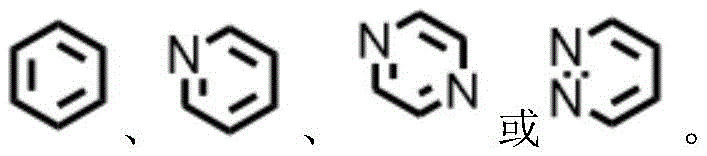 As demonstrated in the patent data, specific variants like TM-2 achieve power conversion efficiencies exceeding 16 percent, outperforming commercial PEDOT:PSS controls. This structural flexibility ensures that manufacturers can optimize materials for specific device architectures while maintaining a simplified, cost-effective synthesis pathway.
Mechanistic Insights into Pd-Catalyzed Cross-Coupling Synthesis
The synthesis of these advanced materials relies on a robust palladium-catalyzed cross-coupling reaction, specifically utilizing a Pd2dba3 and tri-tert-butylphosphine ligand system to forge the critical carbon-nitrogen bonds between the donor and acceptor units. This catalytic cycle operates efficiently in toluene at moderate temperatures around 110 degrees Celsius, ensuring high conversion rates while minimizing thermal degradation of the sensitive carbazole precursors. The use of sodium tert-butoxide as a base facilitates the deprotonation of the amine groups, enabling nucleophilic attack on the halogenated heterocyclic cores. This mechanistic pathway is highly advantageous for industrial scale-up because it avoids the use of exotic reagents or extreme conditions, relying instead on standard organometallic chemistry principles that are well-understood in fine chemical manufacturing. The reaction kinetics are optimized to proceed to completion within 16 hours, balancing throughput with the need for high purity.
Impurity control is inherently managed through the physical properties of the D-A-D products, which exhibit poor solubility in strong polar solvents like dimethyl sulfoxide but excellent solubility in weak polar solvents such as toluene and chlorobenzene. This differential solubility is exploited during the workup phase, where the crude product is precipitated using ethyl acetate, effectively separating the target molecule from unreacted starting materials and palladium residues. 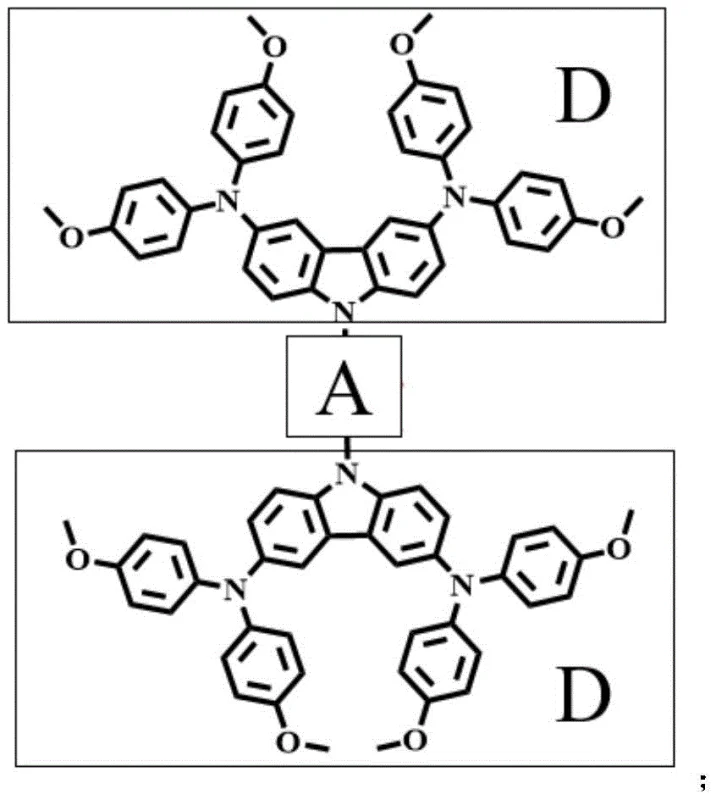 The resulting materials possess high thermal decomposition temperatures exceeding 400 degrees Celsius and glass transition temperatures ranging from 96 to 157 degrees Celsius, indicating exceptional morphological stability. This thermal robustness is critical for preventing crystallization or phase separation in the hole transport layer during the prolonged operation of solar cells under thermal stress, ensuring consistent performance over the device lifetime.
How to Synthesize D-A-D Hole Transport Material Efficiently
The preparation of these high-performance hole transport materials follows a streamlined three-step protocol that is amenable to both laboratory optimization and commercial production. The process begins with the precise stoichiometric mixing of the carbazole diamine donor and the selected halogenated heterocyclic core in anhydrous toluene under an inert atmosphere. Following the addition of the catalytic system and base, the reaction is heated to drive the coupling to completion, after which standard aqueous extraction removes inorganic salts. The final purification is achieved through a simple precipitation step, yielding high-purity solids ready for device fabrication without the need for complex column chromatography. Detailed standardized synthesis steps are provided in the guide below.
- Combine the electron-donating carbazole diamine derivative and the nitrogen-containing heterocyclic core in dry toluene under nitrogen protection.
- Add the palladium catalyst system (Pd2dba3 and t-Bu3P) and sodium tert-butoxide base, then heat the mixture to 110°C for 16 hours.
- Perform aqueous workup, concentrate the organic phase, and precipitate the final product using ethyl acetate to obtain high-purity solids.
Commercial Advantages for Procurement and Supply Chain Teams
For procurement managers and supply chain heads, the adoption of this D-A-D technology offers significant strategic advantages by decoupling performance from the high costs associated with traditional polymeric HTMs. The elimination of expensive dopants and the use of widely available commodity chemicals for the synthesis backbone drastically reduce the raw material cost profile. Furthermore, the simplified purification process involving precipitation rather than chromatography reduces solvent consumption and processing time, leading to substantial cost savings in manufacturing overhead. This efficiency translates directly into a more competitive pricing structure for the final hole transport material, making high-efficiency perovskite solar cells more economically viable for mass market deployment.
- Cost Reduction in Manufacturing: The synthetic route eliminates the need for costly post-synthesis doping agents and utilizes a catalytic system that operates with high atom economy. By avoiding the use of proprietary polymeric precursors that often carry high markups, the overall cost of goods sold is significantly lowered. Additionally, the ability to purify the product via simple precipitation reduces the reliance on expensive silica gel and large volumes of chromatographic solvents, further driving down operational expenditures.
- Enhanced Supply Chain Reliability: The raw materials required for this synthesis, including the carbazole derivatives and brominated heterocycles, are sourced from established chemical supply chains with high availability. This reduces the risk of supply disruptions that are common with specialized electronic grade polymers. The robustness of the reaction conditions also means that production can be scaled across multiple manufacturing sites without requiring highly specialized equipment, ensuring a continuous and reliable supply of critical materials for solar module assembly lines.
- Scalability and Environmental Compliance: The process utilizes toluene and ethyl acetate, which are standard industrial solvents with well-established recovery and recycling protocols, minimizing environmental impact. The absence of hygroscopic additives in the final product reduces the need for stringent dry-room conditions during device fabrication, lowering the energy footprint of the downstream manufacturing process. This alignment with green chemistry principles supports corporate sustainability goals while facilitating easier regulatory compliance in diverse global markets.
Frequently Asked Questions (FAQ)
The following questions address common technical and commercial inquiries regarding the implementation of these D-A-D hole transport materials in perovskite solar cell production lines. These insights are derived directly from the experimental data and comparative analysis presented in the patent documentation, providing a clear understanding of the material's advantages over incumbent technologies. Understanding these factors is essential for making informed decisions about material qualification and process integration.
Q: How does the D-A-D structure improve solar cell stability compared to PEDOT:PSS?
A: The D-A-D structure provides higher glass transition temperatures and better molecular packing, reducing water and oxygen ingress that typically degrades perovskite layers in PEDOT:PSS devices.
Q: Is doping required for these hole transport materials to function efficiently?
A: No, unlike PTAA which often requires hygroscopic additives like TCNQ, these D-A-D materials achieve high hole mobility and efficiency in a dopant-free state, enhancing long-term device stability.
Q: What is the scalability potential of this synthesis route?
A: The synthesis utilizes widely available raw materials and standard palladium-catalyzed coupling conditions in toluene, allowing for straightforward scale-up from grams to multi-kilogram production without complex purification steps.
Partnering with NINGBO INNO PHARMCHEM: Your Reliable D-A-D Hole Transport Material Supplier
As the global demand for high-efficiency photovoltaic solutions accelerates, securing a stable supply of advanced electronic chemicals is paramount for maintaining competitive advantage. NINGBO INNO PHARMCHEM stands ready to support your development and production needs with our extensive experience scaling diverse pathways from 100 kgs to 100 MT/annual commercial production. Our state-of-the-art facilities are equipped with rigorous QC labs capable of meeting stringent purity specifications required for next-generation optoelectronic applications. We understand the critical nature of batch-to-batch consistency in solar cell manufacturing and are committed to delivering materials that ensure optimal device performance and longevity.
We invite you to engage with our technical procurement team to discuss how our D-A-D hole transport materials can enhance your product portfolio. By requesting a Customized Cost-Saving Analysis, you can gain deeper insights into the economic benefits of switching to our dopant-free solutions. We encourage potential partners to contact us for specific COA data and route feasibility assessments to accelerate your path from laboratory validation to commercial deployment.