
Advanced Biocatalytic Synthesis of Dextro-Cis-Dichlorochrysanthemic Acid for Global Agrochemical Supply Chains
The global demand for high-efficiency pyrethroid insecticides continues to drive innovation in the synthesis of their critical chiral intermediates. Patent CN112301064A introduces a groundbreaking preparation method for dextro-cis-dichlorochrysanthemic acid, a pivotal building block in the agrochemical industry. This technology leverages a highly selective biocatalytic resolution strategy, utilizing specific esterase enzymes to hydrolyze racemic dichlorochrysanthemic acid esters directly in an aqueous environment. Unlike traditional chemical synthesis routes that often struggle with stereocontrol, this biological approach guarantees an enantiomeric excess (ee) value exceeding 99%, ensuring the final product meets the rigorous purity standards required for modern pesticide formulations. 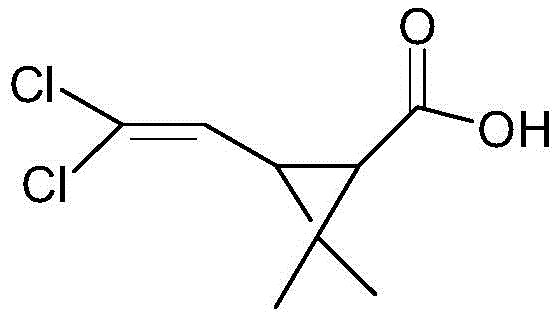 By bypassing complex purification stages, this method represents a significant leap forward for manufacturers seeking a reliable agrochemical intermediate supplier capable of delivering consistent quality at scale.
The Limitations of Conventional Methods vs. The Novel Approach
The Limitations of Conventional Methods
Historically, the production of optically active dichlorochrysanthemic acid has relied heavily on chemical resolution techniques, which are fraught with inefficiencies and environmental burdens. Traditional methods typically involve the use of chiral resolving agents to separate racemic mixtures, a process that is inherently limited by a maximum theoretical yield of 50% for the desired isomer. Furthermore, the ee value obtained through chemical resolution is often insufficient for direct application in high-performance pyrethroid synthesis, necessitating repeated crystallization and purification cycles that drastically increase processing time and solvent consumption. The reliance on scarce chemical resolving agents not only drives up raw material costs but also generates substantial hazardous waste, creating significant disposal challenges for production facilities aiming to meet modern environmental compliance standards.
The Novel Approach
In stark contrast, the novel biocatalytic approach detailed in the patent utilizes engineered esterase enzymes to achieve unparalleled selectivity under mild reaction conditions. By employing specific commercial esterases, such as the CEYR series from Sigma, the process selectively hydrolyzes the cis-configuration ester while leaving the trans-isomer largely untouched, allowing for its easy recovery and recycling. This biological specificity eliminates the need for expensive chiral auxiliaries and reduces the dependency on harsh organic solvents, as the reaction proceeds efficiently in an aqueous buffer system. The result is a streamlined workflow that delivers dextro-cis-dichlorochrysanthemic acid with an ee value greater than 99% in a single step, fundamentally transforming the economics of cost reduction in pyrethroid manufacturing by minimizing downstream processing requirements.
Mechanistic Insights into Esterase-Catalyzed Selective Hydrolysis
The core of this technological advancement lies in the precise molecular recognition capabilities of the selected esterase enzymes within the catalytic cycle. These biocatalysts possess active sites that are sterically and electronically tuned to accommodate only the specific spatial arrangement of the dextro-cis-dichlorochrysanthemic acid ester substrate. Upon binding, the enzyme facilitates the nucleophilic attack on the carbonyl carbon of the ester group, promoting hydrolysis exclusively for the target isomer while rejecting the levo- or trans-configurations due to steric hindrance. This kinetic resolution mechanism ensures that the reaction rate for the desired isomer is significantly higher than that of the unwanted isomers, driving the accumulation of the chiral acid product with exceptional optical purity without the formation of racemic byproducts that typically plague chemical catalysts.
Furthermore, the impurity control mechanism inherent in this enzymatic process provides a robust safeguard against the formation of difficult-to-remove side products. Because the reaction occurs in a controlled aqueous environment with pH regulation between 4 and 8 using buffers like ammonia or sodium carbonate, the potential for non-specific chemical degradation or isomerization of the sensitive cyclopropane ring is minimized. The enzyme's specificity acts as a molecular filter, ensuring that only the correct stereoisomer is converted to the acid form, while unreacted esters remain chemically stable and can be physically separated via simple phase separation. This high degree of selectivity simplifies the impurity profile of the crude product, reducing the burden on analytical quality control labs and ensuring that the final API intermediate meets stringent regulatory specifications for agrochemical applications.
How to Synthesize Dextro-Cis-Dichlorochrysanthemic Acid Efficiently
The synthesis protocol outlined in the patent offers a practical and scalable pathway for producing high-purity chiral acids suitable for industrial application. The process begins with the preparation of an aqueous reaction mixture containing the racemic ester substrate, where the cis-trans ratio can vary widely, offering flexibility in raw material sourcing. The reaction is initiated by adding a precise loading of the biocatalyst esterase, typically ranging from 0.1% to 1% of the substrate mass, and maintaining the system at a moderate temperature between 20-60°C for a duration of 6 to 60 hours. Detailed standardized synthesis steps see the guide below.
- Prepare an aqueous reaction system containing racemic dichlorochrysanthemic acid ester (cis/trans ratio 95/5 to 30/70) with a mass concentration of 1-20%.
- Introduce a specific biocatalyst esterase (such as Sigma CEYR205) at 0.1-1% mass loading and maintain the reaction temperature between 20-60°C for 6-60 hours.
- Separate the oil-water layers, recover the enzyme, acidify the aqueous phase to pH 2, and extract with toluene to isolate the final product with >99% ee.
Commercial Advantages for Procurement and Supply Chain Teams
For procurement managers and supply chain directors, the adoption of this biocatalytic technology translates into tangible operational improvements and risk mitigation strategies. The shift from chemical to enzymatic resolution removes the dependency on volatile and often supply-constrained chiral resolving agents, thereby stabilizing the raw material supply chain and reducing exposure to market price fluctuations. Additionally, the ability to operate in an aqueous medium significantly lowers the volume of organic solvents required for the reaction and subsequent workup, leading to substantial cost savings in solvent procurement and waste treatment logistics. This process intensification allows for higher throughput in existing reactor volumes, effectively increasing production capacity without the need for major capital expenditure on new infrastructure.
- Cost Reduction in Manufacturing: The elimination of multiple crystallization and purification steps associated with low-ee chemical resolution results in a drastically simplified production workflow. By achieving high optical purity directly from the reaction mixture, manufacturers save significantly on energy consumption, labor hours, and solvent usage, which are major cost drivers in fine chemical production. The recovery and reuse of the unreacted trans-ester further enhance the overall atom economy, ensuring that raw material costs are optimized and waste generation is minimized throughout the manufacturing lifecycle.
- Enhanced Supply Chain Reliability: The use of commercially available, immobilized esterase enzymes ensures a consistent and reliable source of catalytic activity, removing the bottlenecks often associated with custom-synthesized chemical catalysts. The mild reaction conditions (20-60°C) reduce the risk of thermal runaway or equipment failure, ensuring continuous operation and on-time delivery of critical intermediates. Furthermore, the robustness of the enzymatic process allows for flexibility in feedstock quality, as the system can tolerate varying cis-trans ratios in the starting ester, providing supply chain resilience against raw material variability.
- Scalability and Environmental Compliance: The aqueous nature of the reaction system aligns perfectly with green chemistry principles, significantly reducing the environmental footprint of the manufacturing process. The absence of heavy metal catalysts and harsh reagents simplifies wastewater treatment and ensures compliance with increasingly strict environmental regulations globally. This eco-friendly profile not only mitigates regulatory risk but also enhances the brand reputation of the end-product, appealing to downstream customers who prioritize sustainable sourcing in their agricultural supply chains.
Frequently Asked Questions (FAQ)
The following questions address common technical and commercial inquiries regarding the implementation of this biocatalytic resolution technology. These answers are derived directly from the experimental data and technical specifications provided in the patent documentation to ensure accuracy and relevance for industry stakeholders. Understanding these details is crucial for evaluating the feasibility of integrating this method into existing production lines.
Q: What is the primary advantage of the enzymatic resolution method over traditional chemical resolution?
A: The enzymatic method achieves an ee value greater than 99% directly, eliminating the need for multiple crystallization and purification steps required by chemical methods which often yield lower optical purity.
Q: Can the trans-isomer of the starting material be recovered?
A: Yes, the esterase selectively hydrolyzes the cis-configuration ester. The unreacted trans-dichlorochrysanthemic acid ester remains in the organic phase and can be separated and recycled, improving overall atom economy.
Q: What specific reaction conditions are required for this biocatalytic process?
A: The process operates under mild conditions, typically between 20-60°C in an aqueous solution buffered with ammonia, organic amines, or inorganic bases like sodium carbonate, maintaining a pH between 4 and 8.
Partnering with NINGBO INNO PHARMCHEM: Your Reliable Dextro-Cis-Dichlorochrysanthemic Acid Supplier
At NINGBO INNO PHARMCHEM, we recognize the critical role that high-purity intermediates play in the efficacy and safety of final agrochemical products. As a leading CDMO partner, we possess extensive experience scaling diverse pathways from 100 kgs to 100 MT/annual commercial production, ensuring that our clients receive a consistent and uninterrupted supply of essential materials. Our state-of-the-art facilities are equipped with rigorous QC labs and advanced analytical instrumentation to verify stringent purity specifications, guaranteeing that every batch of dextro-cis-dichlorochrysanthemic acid meets the highest industry standards for optical purity and chemical integrity.
We invite global partners to collaborate with us to leverage this advanced biocatalytic technology for their supply chains. Contact our technical procurement team today to request a Customized Cost-Saving Analysis tailored to your specific production volumes. We are ready to provide specific COA data and comprehensive route feasibility assessments to demonstrate how our optimized manufacturing processes can enhance your operational efficiency and reduce total landed costs.