
Industrial Scale Purification of Pristinamycin via Novel Resin Adsorption Technology
Industrial Scale Purification of Pristinamycin via Novel Resin Adsorption Technology
The global demand for effective antibiotics against drug-resistant Gram-positive bacteria continues to drive innovation in fermentation downstream processing. Pristinamycin, a potent streptogramin antibiotic produced by Streptomyces pristinaespiralis, represents a critical therapeutic option, particularly as an alternative to vancomycin. However, traditional isolation methods have long been plagued by low efficiency and high operational costs. A significant technological breakthrough is detailed in patent CN102465164A, which discloses a novel preparation method that fundamentally restructures the purification workflow. By integrating advanced flocculation techniques with macroporous resin adsorption and gradient desorption, this method achieves a substantial improvement in both product purity and overall yield. This report analyzes the technical merits of this process, offering strategic insights for R&D directors and procurement leaders seeking to optimize their antibiotic supply chains.
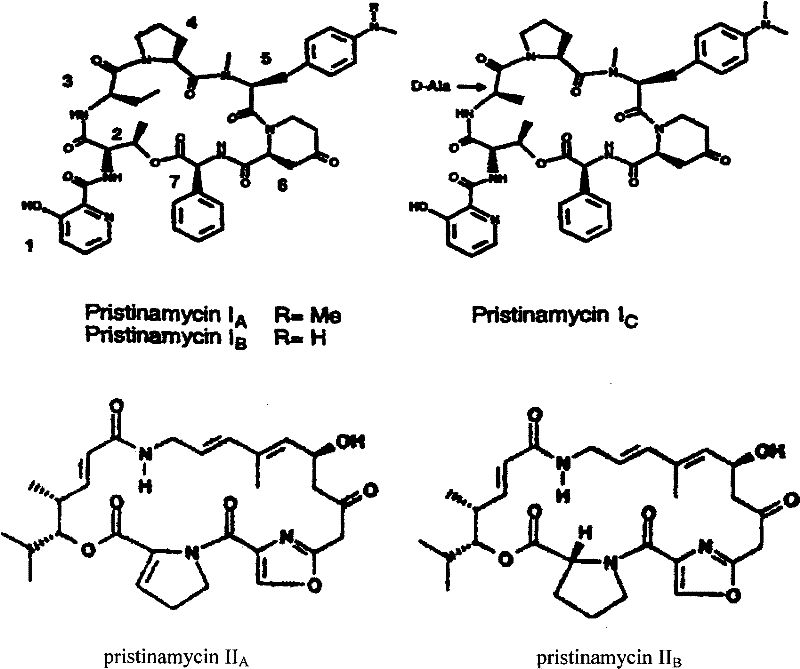
The Limitations of Conventional Methods vs. The Novel Approach
The Limitations of Conventional Methods
Historical precedents for pristinamycin isolation, such as those described in U.S. Patent 3154475 and British Patent GB998195, rely heavily on direct liquid-liquid extraction of fermented broth. These legacy processes involve adjusting the pH of the fermentation liquor followed by immediate extraction with organic solvents like dichloromethane. While conceptually simple, this approach suffers from severe practical deficiencies in an industrial setting. The presence of mycelium, residual proteins, and other biological debris in the unclarified broth leads to persistent emulsification during the extraction phase, making phase separation difficult and time-consuming. Furthermore, the filtration of the initial broth is often slow and yields a muddy filtrate, resulting in significant product loss trapped within the filter cake. Consequently, these traditional methods typically achieve a total recovery rate of only about 50%, accompanied by excessive solvent consumption and high energy costs associated with concentrating large volumes of dilute extraction liquids.
The Novel Approach
The methodology presented in CN102465164A introduces a paradigm shift by prioritizing clarification and selective adsorption prior to solvent extraction. The process begins with the acidification of the fermentation broth to a pH range of 3.0 to 4.0, followed by the addition of flocculating aids such as perlite or zeolite. This critical pretreatment step effectively aggregates suspended solids, mycelium, and foreign proteins, allowing for rapid solid-liquid separation and the generation of a highly clarified filtrate. Subsequently, the clarified liquid undergoes decolorization and adsorption using specific macroporous resins, which selectively bind the pristinamycin molecules while allowing polar impurities to pass through. This pre-concentration step drastically reduces the volume of liquid requiring subsequent solvent extraction, thereby minimizing the risk of emulsification and significantly lowering solvent usage. The result is a streamlined workflow that boosts total recovery to over 70% while simplifying operational complexity.
Mechanistic Insights into Macroporous Resin Adsorption and Separation
The core of this technological advancement lies in the precise application of macroporous adsorption resins, which function through hydrophobic interactions and van der Waals forces to capture the target antibiotic. Unlike traditional activated carbon which can be non-selective and difficult to regenerate, macroporous resins like D1300 or XAD-16 offer a defined pore structure that facilitates the diffusion of pristinamycin molecules into the resin matrix. The process employs a discontinuous gradient desorption strategy, initially flushing the resin column with a lower concentration ethanol solution (e.g., 40%) to remove weakly adsorbed impurities such as polysaccharides and pigments. Following this cleaning step, a higher concentration ethanol solution (e.g., 80%) is used to elute the tightly bound pristinamycin. This gradient technique ensures that the resulting eluate is of high quality, free from the heavy pigment load that typically complicates downstream crystallization. The selectivity of the resin system effectively acts as a molecular sieve, enriching the active pharmaceutical ingredient before it ever encounters an organic extraction solvent.
Impurity control is further enhanced through a multi-stage purification sequence that targets specific classes of contaminants at different points in the workflow. The initial flocculation step removes bulk particulate matter and proteins, while the resin adsorption step eliminates the majority of polar impurities and color bodies. Following desorption, the eluate is treated with powdered activated carbon for a final polishing step to remove trace organic impurities. The subsequent liquid-liquid extraction utilizes ethyl acetate or vinyl acetate monomer, followed by an alkaline wash with ammonium acetate or sodium bicarbonate solutions. This alkaline washing step is crucial for removing acidic impurities and fatty acids that could otherwise co-crystallize with the product. Finally, controlled crystallization at low temperatures (-5°C to 0°C) ensures the formation of high-purity crystals with a potency exceeding 8000u/mg, meeting stringent pharmaceutical standards for raw material quality.
How to Synthesize Pristinamycin Efficiently
The synthesis of high-purity pristinamycin via this fermentation downstream process requires strict adherence to specific operational parameters to maximize yield and consistency. The protocol involves a sequence of acidification, flocculation, resin adsorption, gradient elution, and controlled crystallization, each step designed to incrementally increase purity while minimizing product loss. Operators must carefully monitor pH levels during the initial acidification and maintain precise temperature controls during the crystallization phases to ensure optimal crystal growth and impurity rejection. The following guide outlines the standardized procedure derived from the patent examples, providing a roadmap for implementing this efficient purification strategy in a commercial manufacturing environment.
- Acidify the pristinamycin fermentation broth to pH 3.0-4.0 using hydrochloric acid, add flocculating aids like perlite, stir for 50-90 minutes, and filter to obtain a clarified filtrate.
- Pass the filtrate through a macroporous decolorizing resin column (e.g., D293) followed by adsorption on a macroporous resin column (e.g., D1300) to capture the active ingredient.
- Perform discontinuous gradient desorption using 40% and 80% ethanol/water solutions, treat the eluate with activated carbon, concentrate, extract with ethyl acetate, and crystallize to obtain pure pristinamycin.
Commercial Advantages for Procurement and Supply Chain Teams
For procurement managers and supply chain directors, the transition from traditional extraction methods to this novel resin-based process offers compelling economic and logistical benefits. The most significant advantage is the drastic reduction in solvent consumption and waste generation, which directly correlates to lower raw material costs and reduced environmental compliance burdens. By clarifying the broth before extraction, the process eliminates the costly and time-consuming issues associated with emulsification, leading to shorter batch cycles and higher plant throughput. Furthermore, the increase in total recovery from approximately 50% to over 70% represents a massive gain in production efficiency, allowing manufacturers to produce significantly more active ingredient from the same volume of fermentation broth. This efficiency gain translates directly into a more competitive cost structure and a more reliable supply of this critical antibiotic.
- Cost Reduction in Manufacturing: The implementation of macroporous resin adsorption significantly lowers the operational expenditure associated with solvent purchase and recovery. Traditional methods require vast quantities of dichloromethane to extract dilute products from muddy broths, whereas the new method concentrates the product on the resin column first, requiring far less solvent for the final extraction and crystallization steps. Additionally, the use of regenerable macroporous resins reduces the recurring cost of consumables compared to single-use filtration aids or non-regenerable adsorbents. The elimination of complex chromatography steps in favor of batch adsorption further simplifies the equipment requirements, reducing capital investment and maintenance costs for the manufacturing facility.
- Enhanced Supply Chain Reliability: The robustness of this purification method ensures a consistent and reliable supply of pristinamycin, which is vital for maintaining uninterrupted production of finished dosage forms. The process has been validated across a wide range of scales, from small pilot batches of 80L to large industrial runs of 10,000L, demonstrating excellent scalability without loss of efficiency. By mitigating the risks of emulsification and filtration failure, the method reduces the likelihood of batch failures or delays, thereby stabilizing lead times. This reliability is crucial for pharmaceutical companies managing tight inventory schedules and regulatory commitments for antibiotic supplies.
- Scalability and Environmental Compliance: From an environmental perspective, the reduction in solvent usage and the ability to recover and reuse ethanol and ethyl acetate aligns with modern green chemistry principles and stricter environmental regulations. The process generates less hazardous waste compared to the large volumes of chlorinated solvent waste produced by older methods. The simplicity of the operation, involving standard unit operations like filtration, column chromatography, and crystallization, makes it easily adaptable to existing infrastructure without requiring specialized or exotic equipment. This ease of scale-up ensures that manufacturers can rapidly respond to market demand surges without compromising on quality or compliance standards.
Frequently Asked Questions (FAQ)
The following questions address common technical and commercial inquiries regarding the production and supply of pristinamycin using this advanced purification technology. These answers are derived directly from the technical specifications and experimental data provided in the patent literature, ensuring accuracy and relevance for industry professionals. Understanding these details is essential for evaluating the feasibility of integrating this supply source into your existing manufacturing pipeline.
Q: How does the new resin-based method improve yield compared to traditional solvent extraction?
A: Traditional methods relying on direct solvent extraction often suffer from severe emulsification and low filtration yields, typically achieving only around 50% recovery. The novel method utilizes macroporous resin adsorption combined with flocculation, which effectively removes impurities and prevents emulsification, resulting in a total recovery rate exceeding 70%.
Q: What specific resins are recommended for the decolorization and adsorption steps?
A: For the decolorization step, macroporous resins such as D293, D301, or D330 are highly effective. For the subsequent adsorption and enrichment of pristinamycin, resins like D1300, HZ816, or XAD-16 are preferred due to their high adsorption capacity and ease of desorption.
Q: Is this process suitable for large-scale industrial production?
A: Yes, the process is specifically designed for industrial scalability. It has been successfully demonstrated at fermentation volumes ranging from 80L to 10,000L, maintaining consistent purity levels above 8000u/mg and demonstrating robust operational stability suitable for commercial manufacturing.
Partnering with NINGBO INNO PHARMCHEM: Your Reliable Pristinamycin Supplier
At NINGBO INNO PHARMCHEM, we recognize the critical importance of high-quality antibiotics in the global fight against resistant bacterial infections. Our technical team possesses extensive experience scaling diverse pathways from 100 kgs to 100 MT/annual commercial production, ensuring that we can meet the rigorous demands of international pharmaceutical markets. We are committed to delivering pristinamycin that meets stringent purity specifications, utilizing advanced QC labs to verify potency and impurity profiles for every batch. Our capability to implement efficient downstream processing technologies allows us to offer a product that balances superior quality with commercial viability.
We invite you to collaborate with us to optimize your antibiotic supply chain. Contact our technical procurement team today to request a Customized Cost-Saving Analysis tailored to your specific volume requirements. We are prepared to provide specific COA data and route feasibility assessments to demonstrate how our advanced manufacturing capabilities can support your long-term strategic goals. Let us be your partner in securing a stable and cost-effective supply of this vital therapeutic agent.