
Advanced Cu/TEMPO Catalytic Route for Commercial Scale-Up of Pyridooxazole Derivatives
The pharmaceutical and agrochemical industries are constantly seeking robust, scalable, and environmentally benign pathways for constructing complex heterocyclic scaffolds. Patent CN110240604B introduces a transformative synthetic methodology for producing pyridooxazole derivatives, a class of compounds renowned for their broad-spectrum biological activities including analgesic, anti-inflammatory, and sleep-regulating properties. This innovation leverages a synergistic catalytic system comprising copper chloride, TEMPO (2,2,6,6-tetramethylpiperidine-1-oxy radical), and phenanthroline under an oxygen atmosphere. By shifting away from harsh traditional conditions, this patent provides a critical foundation for the reliable pyridooxazole supplier market, addressing the urgent need for sustainable manufacturing processes that do not compromise on yield or purity.
The Limitations of Conventional Methods vs. The Novel Approach
The Limitations of Conventional Methods
Historically, the synthesis of pyridooxazole cores has been plagued by significant technical and economic hurdles that hinder large-scale adoption. Conventional routes often rely on expensive precious metal catalysts or stoichiometric amounts of hazardous oxidants, which drastically inflate the cost of goods sold and complicate waste management protocols. Furthermore, many existing methodologies require extreme reaction conditions, such as very high temperatures or strong acidic environments, which can lead to the degradation of sensitive functional groups and the formation of complex impurity profiles. These factors collectively result in low overall yields and necessitate cumbersome downstream purification steps, making the commercial scale-up of complex heterocyclic intermediates economically unviable for many manufacturers seeking cost-effective solutions.
The Novel Approach
In stark contrast, the methodology disclosed in CN110240604B utilizes an earth-abundant copper-based catalytic system coupled with TEMPO and molecular oxygen, representing a paradigm shift towards green chemistry. This approach operates under relatively mild thermal conditions, typically between 70-90°C, which significantly reduces energy consumption and enhances process safety. The use of oxygen as the terminal oxidant is particularly advantageous, as it generates water as the only byproduct, thereby eliminating the heavy metal waste streams associated with stoichiometric oxidants. This novel route not only simplifies the operational workflow but also ensures high atom economy, positioning it as a superior choice for cost reduction in pharmaceutical intermediates manufacturing.
Mechanistic Insights into Cu/TEMPO-Catalyzed Oxidative Cyclization
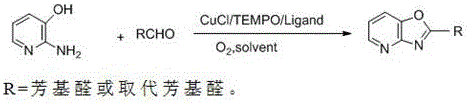
The core of this technological breakthrough lies in the efficient cooperative catalysis between the copper species and the nitroxyl radical TEMPO. Mechanistically, the reaction initiates with the condensation of 2-amino-3-hydroxypyridine and the aldehyde substrate, followed by a copper-mediated oxidative cyclization. The Cu(I)/Cu(II) redox cycle is facilitated by the phenanthroline ligand, which stabilizes the metal center and modulates its electronic properties to enhance reactivity. Simultaneously, TEMPO acts as a crucial co-catalyst, assisting in the hydrogen atom transfer steps and ensuring the rapid regeneration of the active copper species by molecular oxygen. This intricate interplay allows for the smooth formation of the oxazole ring with exceptional regioselectivity, minimizing the formation of isomeric byproducts that often plague heterocyclic synthesis.
From an impurity control perspective, this catalytic system offers distinct advantages for producing high-purity pyridooxazole derivatives. The mild reaction conditions prevent the thermal decomposition of the product or the starting materials, which is a common source of polymeric tars and degradation products in harsher methods. Additionally, the high specificity of the Cu/TEMPO system towards the desired oxidative cyclization pathway ensures that side reactions, such as over-oxidation of the aldehyde to carboxylic acid, are suppressed. This inherent selectivity simplifies the purification process, allowing manufacturers to achieve stringent purity specifications with fewer recrystallization or chromatography steps, ultimately leading to a more consistent and reliable supply of API intermediates.
How to Synthesize Pyridooxazole Derivatives Efficiently
The practical implementation of this synthesis involves a straightforward procedure that begins with dissolving the amine and aldehyde precursors in a polar organic solvent like acetonitrile or methanol. Following an initial stirring period to ensure homogeneity, the catalytic cocktail is introduced under an oxygen-rich environment, driving the reaction to completion upon reflux. The simplicity of the workup, involving solvent removal and standard chromatographic separation, makes this protocol highly attractive for both laboratory optimization and industrial production. For detailed operational parameters and specific molar ratios optimized for different substrates, please refer to the standardized synthesis guidelines below.
- Dissolve 2-amino-3-hydroxypyridine and the selected aryl aldehyde in an organic solvent such as acetonitrile or methanol, and stir the mixture at 70-90°C for 2-3 hours to ensure complete dissolution and initial interaction.
- Under a continuous oxygen atmosphere, introduce the catalytic system comprising cuprous chloride (CuCl), 2,2,6,6-tetramethylpiperidine-1-oxy radical (TEMPO), and phenanthroline ligand into the reaction solution.
- Heat the reaction mixture to reflux until completion, remove the organic solvent, and purify the resulting residue via thin layer chromatography using a petroleum ether and ethyl acetate eluent system to isolate the high-purity product.
Commercial Advantages for Procurement and Supply Chain Teams
For procurement managers and supply chain directors, the adoption of the technology described in CN110240604B translates directly into tangible strategic benefits. The shift from precious metals to base metal catalysis fundamentally alters the cost structure of production, removing the volatility associated with rhodium or palladium pricing. Moreover, the use of molecular oxygen as an oxidant eliminates the need for purchasing, storing, and disposing of hazardous chemical oxidants, thereby reducing logistical burdens and regulatory compliance costs. This streamlined process enhances the overall resilience of the supply chain by relying on widely available, commodity-grade raw materials that are less susceptible to geopolitical supply disruptions.
- Cost Reduction in Manufacturing: The replacement of expensive noble metal catalysts with inexpensive copper salts and the utilization of air or oxygen as a free oxidant leads to substantial cost savings in raw material expenditure. The elimination of costly metal scavenging steps further reduces processing time and consumable usage, driving down the overall cost per kilogram of the final intermediate without sacrificing quality or yield.
- Enhanced Supply Chain Reliability: By utilizing robust and readily available starting materials such as 2-amino-3-hydroxypyridine and common aryl aldehydes, manufacturers can secure a stable supply of inputs. The simplified reaction protocol reduces the risk of batch failures due to sensitive reagent handling, ensuring consistent delivery schedules and reducing lead time for high-purity pyridooxazole derivatives needed for downstream drug synthesis.
- Scalability and Environmental Compliance: The green nature of this process, characterized by low toxicity reagents and water as the primary byproduct, aligns perfectly with increasingly strict environmental regulations. This facilitates easier permitting for plant expansion and reduces the capital investment required for waste treatment infrastructure, enabling seamless commercial scale-up from pilot batches to multi-ton annual production capacities.
Frequently Asked Questions (FAQ)
The following questions address common technical and commercial inquiries regarding the implementation of this copper-catalyzed oxidative cyclization technology. These insights are derived directly from the experimental data and beneficial effects reported in the patent documentation, providing clarity on process feasibility and product quality assurance for potential partners and stakeholders evaluating this synthetic route.
Q: What are the primary advantages of the Cu/TEMPO catalytic system over traditional methods?
A: The Cu/TEMPO system described in patent CN110240604B offers significant advantages including the use of inexpensive and abundant copper salts instead of precious metals, mild reaction conditions (70-90°C), and the use of molecular oxygen as a green oxidant, which collectively reduce environmental impact and operational costs.
Q: What types of aldehydes are compatible with this synthesis method?
A: The method demonstrates broad substrate scope, successfully accommodating various aryl aldehydes and substituted aryl aldehydes, such as benzaldehyde, p-methoxybenzaldehyde, and p-fluorobenzaldehyde, yielding the corresponding 2-substituted oxazolopyridines with high efficiency.
Q: How does this process ensure high purity for pharmaceutical applications?
A: The process achieves high selectivity through the specific Cu/TEMPO/phenanthroline catalytic cycle, minimizing side reactions. The subsequent purification via thin layer chromatography or standard column chromatography ensures the removal of catalyst residues and unreacted starting materials, meeting stringent purity specifications required for API intermediates.
Partnering with NINGBO INNO PHARMCHEM: Your Reliable Pyridooxazole Derivatives Supplier
At NINGBO INNO PHARMCHEM, we recognize the immense potential of the Cu/TEMPO catalytic system in revolutionizing the production of bioactive heterocycles. As a premier CDMO partner, we possess extensive experience scaling diverse pathways from 100 kgs to 100 MT/annual commercial production, ensuring that the transition from laboratory discovery to industrial reality is seamless. Our state-of-the-art facilities are equipped with rigorous QC labs capable of maintaining stringent purity specifications, guaranteeing that every batch of pyridooxazole derivatives meets the exacting standards required by global pharmaceutical and agrochemical clients.
We invite forward-thinking organizations to collaborate with us to leverage this advanced synthetic technology for their specific pipeline needs. By engaging with our technical procurement team, you can request a Customized Cost-Saving Analysis tailored to your volume requirements. We encourage you to reach out today to obtain specific COA data and comprehensive route feasibility assessments, ensuring that your supply chain is optimized for efficiency, sustainability, and long-term success.